


Gentamycin Sulfate(link:https://www.bloomtechz.com/synthetic-chemical/api-researching-only/gentamycin-sulfate-powder-cas-1405-41-0.html) the chemical formula is C60H125O22N15·H2SO4, CAS 1405-41-0. It is a white or similar white crystalline powder. It is hygroscopic, easily soluble in water, poorly soluble in lipids, and insoluble in organic solvents. With good solubility, it can quickly dissolve it in water to form a uniform transparent or slightly turbid solution, which can be hydrolyzed into ammonia and urea, so its toxicity is the same as that of urea. It is also soluble in other solvents such as methanol and ethanol. Solubility depends on solvent and temperature. In water, the solubility is high and can reach more than 100 mg/mL. When the solubility exceeds saturation, crystallization will occur. The pH is usually in the alkaline range, around 7.5-8.5. This makes it somewhat stable in in vitro and in vivo environments. It has certain stability in dry, dark and low temperature conditions. However, it is sensitive to light, heat and humidity, and easily decomposes and loses activity. Hence, remind to maintain proper storage conditions to ensure its quality. Gentamycin Sulfate (Gentamycin Sulfate) is a widely used clinical antibiotic with broad-spectrum antibacterial activity. It belongs to aminoglycoside antibiotics, which can effectively inhibit the growth of Gram-positive bacteria and Gram-negative bacteria, and also has certain antibacterial effects on certain drug-resistant strains such as pneumococcus and Haemophilus influenzae.
|
|
|
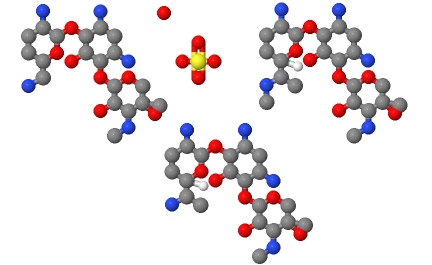
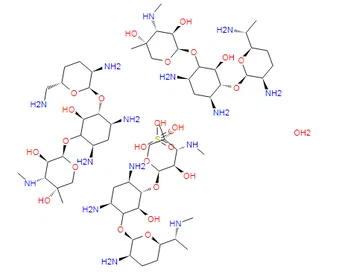
The synthesis process of Gentamicin Sulfate:
1. Primary synthesis:
Gentamicin Sulfate is a class of aminoglycoside antibiotics. Firstly, it is necessary to obtain the strains producing such antibiotics through microbial fermentation, usually bacteria of the genus Streptomyces. This primary synthetic step is deterministic and has been commercialized.
2. Modification reaction:
On the substrate obtained from the primary synthesis, a series of modification reactions are required to construct the target structure of Gentamicin Sulfate. These modification steps may include reactions such as acylation, sulfation, oxidation and reduction.
3. Deprotection reaction:
During the modification step, some protecting groups may be introduced to protect specific functional groups. In subsequent steps, these protecting groups need to be removed to expose specific functional groups. Removal of these protecting groups is usually accomplished by chemical reactions or enzymatic catalysis.
4. Restructuring and Purification:
After the modification reaction is complete, further structural adjustments to the product may be required. This may include adjusting pH, solvent environment, etc. to further optimize the structure and properties of the target compound. Then, the target product is purified from the mixture by a series of separation and purification steps, such as column chromatography, countercurrent chromatography, and liquid/gas chromatography, etc.
5. Target product and its salt formation:
The final step is to generate the target product of Gentamicin Sulfate and its salt form. A common method is to react the compound with sulfuric acid to generate Gentamicin Sulfate salt. Appropriate crystallization methods such as crystallization can be used to obtain pure products.
The above steps are just a simplified overview, the actual synthetic procedure may be more complex and may involve other intermediates and reaction steps. In addition, each step may have multiple specific chemical reactions and conditions. If more detailed information is required, it is recommended to refer to professional organic synthetic chemistry literature, pharmaceutical synthesis textbooks or patent databases.
Gentamycin Sulfate (Gentamycin Sulfate) is a widely used clinical antibiotic with broad-spectrum antibacterial activity. It belongs to aminoglycoside antibiotics, which can effectively inhibit the growth of Gram-positive bacteria and Gram-negative bacteria, and also has certain antibacterial effects on certain drug-resistant strains such as pneumococcus and Haemophilus influenzae.
1. Treatment of infection:

Gentamycin Sulfate is commonly used to treat a variety of infections, especially for bacterial infections that are resistant to other antibiotics. It can be used to treat respiratory tract infections, urinary tract infections, skin and soft tissue infections, and bone and joint infections, among others.
2. Serious infection or hospital-acquired infection:
Gentamycin Sulfate is commonly used to treat serious infections, including hospital-acquired pneumonia, intra-abdominal infection, sepsis, and lymphangitis, among others. It can be used in combination with other antibiotics to enhance the therapeutic effect.
3. Prophylactic use:
Gentamycin Sulfate is also sometimes used prophylactically before surgery or in certain risk patients to reduce the incidence of postoperative infection. For example, in cardiac surgery, Gentamycin Sulfate can be applied preoperatively to prevent infection.
4. Pediatric bone and joint infection:
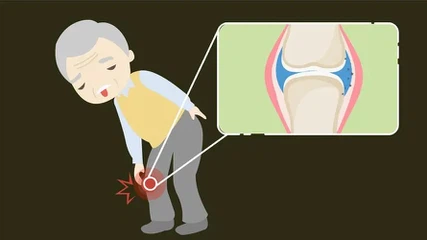
Pediatric bone and joint infection is a common pediatric infection, Gentamycin Sulfate can be used as one of the options for the treatment of this type of infection. It is often used in combination with other antibiotics to increase the effectiveness of the treatment.
5. Eye infection:
Gentamycin Sulfate may also be used in the treatment of eye infections. It can be used in the form of eye drops or ointment to treat keratitis, conjunctivitis, and other eye infections.
6. Catheter related infection:
Gentamycin Sulfate is also sometimes used to treat urinary catheter-related infections. It can be given intravenously or poured directly into a urinary catheter to prevent infection from developing and spreading.