


The development and production of our Organic Intermediate, epinephrine powder, 3 methyl 4 piperidone continue to make new breakthroughs, laying a solid foundation for our future development. The company actively strengthens various management, pays attention to the development and research of new products, takes science and technology as the guide, and wins the market with reputation. While we are developing ourselves, we bravely take up social responsibilities and continue to lead the industry to a green, intensive and innovative development model.
Dithizone reagent, CAS 60-10-6, Molecular formula C13H12N4S. Our product is AR, 98% pure substance, disulfide indicator. We implement it and provide technical support through our after-sales service. The dithizone indicator in environmental monitoring is commonly used for determining the content of zinc, lead, mercury, and cadmium using the dithizone colorimetric method. In this method, the preparation method of dithizone solution varies in many literature. This substance is a commonly used heavy metal detection technique, which is widely used for the detection of trace metal elements in food, water and other samples due to its high efficiency and accuracy. Dithiazone is a sensitive chromogenic reagent that can react with various metal ions at different pH conditions to form brightly colored chelates. These chelates can usually be extracted by organic solvents such as carbon tetrachloride and trichloromethane, and quantitatively determined by spectrophotometry.

|
Dangerous goods sign |
Xi |
|
Hazard category code |
22-36 / 37 / 38 |
|
Safety instructions |
36-26 |
|
Dangerous goods transport No. |
2811 |
|
WGK Germany |
3 |
|
RTECS No. |
lq9450000 |
|
TSCA |
Yes |
|
HazardClass |
6.1 |
|
PackingGroup |
III |
|
HS Code |
29309090 |
|
|
|



The core principle is based on the chemical reaction between metal ions and dithizone reagent under different conditions. These reactions produce chelates with specific colors, and the color and stability of these chelates depend on the type of metal ion, the pH value of the solution, and the reaction conditions. By selecting appropriate pH values and reaction conditions, specific metal ions can react with dithizone to form chelates that are easy to extract and detect.
During the reaction process, metal ions form coordination bonds with the sulfur and nitrogen atoms of the substance, forming stable chelates. These chelates typically have distinct colors and can be enriched and purified through organic solvent extraction. The extracted chelate solution can be determined by spectrophotometry. By comparing the absorbance of the sample solution with the standard solution, the content of metal ions in the sample can be calculated.
Operation steps
The operation steps usually include sample pretreatment, control of reaction conditions, generation and extraction of chelates, and spectrophotometric determination.
The sample first needs to undergo appropriate pretreatment to remove interfering substances and adjust the pH value of the sample. For water quality samples, filtration, dilution, or acidification may be necessary; For food samples, digestion, extraction, and other steps are required. The pre treated sample should ensure that the metal ions exist in a free state and that the pH value of the solution is within the appropriate range for the reaction between dithizone and metal ions.
The control of reaction conditions is the key to the dithizone colorimetric method. This includes factors such as the pH value of the solution, reaction temperature, reaction time, and concentration of dithizone. Different metal ions have different requirements for reaction conditions, so it is necessary to choose appropriate reaction conditions based on the specific properties of the metal ions. For example, the detection of zinc ions is usually carried out in an acetic acid acetate buffer solution with a pH of 4.05.0; For the detection of lead ions, it needs to be carried out in a weakly alkaline solution (pH 89).
Under suitable reaction conditions, metal ions react with dithizone to form chelates. These chelates typically have distinct colors and can be extracted using organic solvents such as carbon tetrachloride or trichloromethane. During the extraction process, sufficient shaking is required to ensure that the chelates are fully dissolved in the organic solvent. After extraction, the layers should be allowed to settle and the organic solvent layer should be collected for subsequent spectrophotometric determination.
The extracted chelate solution can be determined by spectrophotometry. Firstly, a series of standard solutions with concentration gradients need to be prepared and extracted and measured under the same conditions. Then, draw a standard curve based on the relationship between the absorbance and concentration of the standard solution. Finally, by comparing the absorbance of the sample solution with the standard curve, the content of metal ions in the sample can be calculated.

Dithizone reagent has a wide range of applications in fields such as food analysis and water quality monitoring. Here are some specific application examples:

(1) Detection of Zinc Content in Food:
Zinc in food is one of the essential trace elements for the human body, but excessive intake can also have negative effects on human health. Therefore, accurate determination of zinc content in food is of great significance for evaluating the nutritional value and safety of food. The dithizone colorimetric method is a commonly used method for detecting zinc content in food. By adjusting the pH value and reaction conditions of the solution, zinc ions can react with dithizone to form easily extractable purple red chelates. Then, after extraction with carbon tetrachloride and colorimetric quantification, the zinc content in the food can be calculated.
(2) Detection of lead content in water quality:
Lead pollution in water quality is a serious environmental problem. Lead is a toxic heavy metal element that poses great harm to human health. Therefore, accurately measuring the lead content in water quality is of great significance for ensuring the safety of drinking water. The dithizone colorimetric method is a sensitive and accurate method for detecting lead content in water quality. In weakly alkaline solutions (pH 8-9), lead ions react with dithizone to form red chelates, which can be extracted by organic solvents such as carbon tetrachloride and trichloromethane. The extracted chelate solution can be determined by spectrophotometry to calculate the lead content in water.
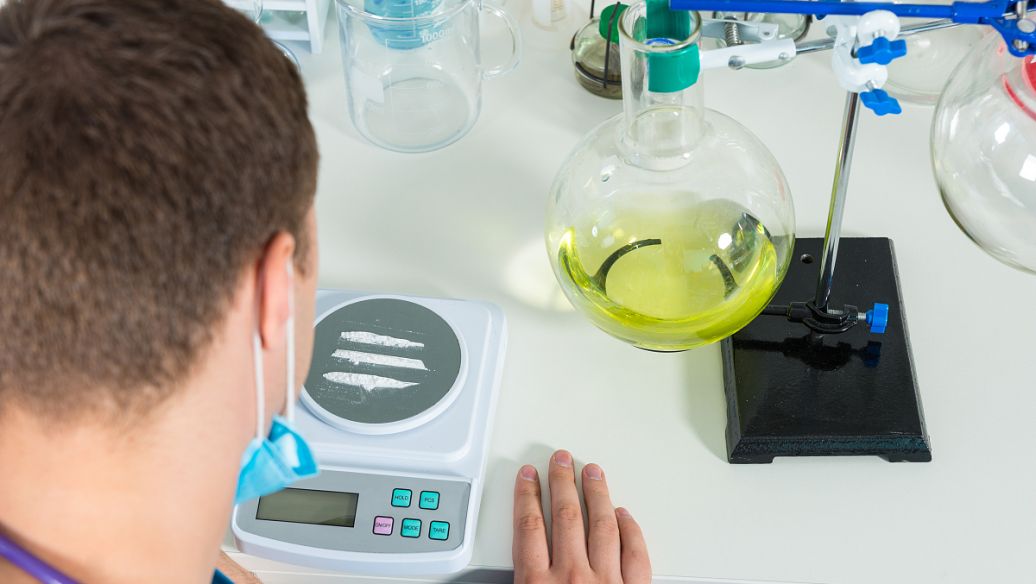

(3) Detection of mercury content in water quality:
Mercury pollution in water quality is also a serious environmental problem. Mercury is a toxic heavy metal element that poses great harm to human health. The dithizone colorimetric method can also be used for detecting mercury content in water quality. Under acidic conditions of 0.5mol/L sulfuric acid, mercury ions can rapidly and quantitatively chelate with dithizone, generating orange chelates that are soluble in organic solutions such as chloroform and carbon tetrachloride. By extraction and spectrophotometry, the mercury content in water can be accurately calculated.
(4) Detection of cadmium content in water quality:
Cadmium is a toxic heavy metal element that poses great harm to human health. The dithizone colorimetric method can also be used for detecting cadmium content in water quality. In a strongly alkaline solution, cadmium ions form a red chelate with dithizone. After extraction with chloroform and colorimetric quantification, the cadmium content in water can be calculated.


The dithizone reagent colorimetric method has the advantages of high sensitivity, easy operation, and wide applicability. However, this method also has some limitations, such as being easily affected by interfering substances and requiring strict operating conditions. In order to improve the accuracy and reliability of the dithizone colorimetric method, improvements can be made in the following aspects:
By optimizing the reaction conditions such as pH value, reaction temperature, reaction time, and concentration of dithizone in the solution, the efficiency and stability of chelate formation can be improved, thereby reducing the influence of interfering substances and improving the accuracy of detection.
Extraction is one of the key steps in the dithizone colorimetric method. By improving the extraction method, such as selecting appropriate extractants and optimizing extraction conditions, the extraction efficiency and purity of chelates can be enhanced, thereby improving the accuracy of detection.
In addition to dithizone, the application of other new colorimetric reagents can also be explored. These new colorimetric reagents may have higher sensitivity and selectivity, enabling more accurate determination of the content of specific metal ions.
The dithizone colorimetric method can be combined with other detection methods, such as inductively coupled plasma mass spectrometry (ICP-MS), atomic absorption spectroscopy (AAS), etc. These detection methods have higher sensitivity and accuracy, which can compensate for their shortcomings and improve the overall detection level.
To ensure accuracy and reliability, it is necessary to strengthen quality control and standardization work. This includes measures such as establishing strict testing standards, establishing a quality control system, and strengthening personnel training. Through these measures, the accuracy and comparability of detection results can be improved, providing more reliable technical support for fields such as food safety and water quality monitoring.
The dithizone colorimetric method is a sensitive and accurate method for heavy metal detection, with broad application prospects in fields such as food analysis and water quality monitoring. By optimizing reaction conditions, improving extraction methods, introducing new color reagents, and combining with other detection methods, accuracy and reliability can be further improved. Meanwhile, strengthening quality control and standardization work is also an important guarantee to ensure the accuracy and comparability of testing results. In the future, with the continuous progress of science and technology and the continuous innovation of detection technology, the dithizone colorimetric method is expected to be widely applied and developed in more fields.
From its humble beginnings as a laboratory curiosity, dithizone has emerged as a multifaceted reagent with applications spanning environmental science, medicine, industry, and forensics. Its ability to form stable, colored complexes with heavy metals remains unmatched, while modern techniques continue to expand its utility.
As researchers push the boundaries of analytical chemistry, dithizone will undoubtedly remain a critical tool-proving that sometimes, the simplest solutions are the most powerful. Whether safeguarding drinking water, ensuring medical transplant success, or solving crimes, dithizone exemplifies the profound impact of chemistry on our daily lives.
Our mission is to keep our products ahead of the competition by constantly upgrading the quality of Chemical Reagent Bloom Tech CAS 60-10-6 Dithizone (Pb alanysis reagent) and management functions. Based on the high quality products and our good service, our products have been exporting to many major regions. We take advanced technology as the development advantage, and conquer people's hearts with high-quality engineering quality.