


Strict quality management, mature and excellent technology and advanced and complete testing means are the reliable guarantee of the quality of our pure aspirin powder, DERMORPHIN, 4 5 Chloro 2 pyridylazo 1 3 phenylenediamine. We will take the corporate mission of promoting the progress of the times through business success as the driving force for the comprehensive promotion of social responsibility work. The company's pursuit of details and harshness of beauty lead us to continuously explore ourselves.
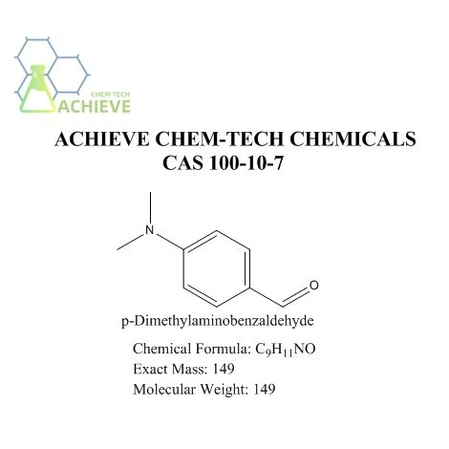
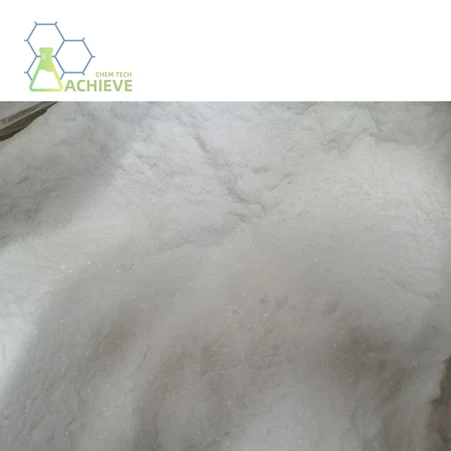
p-Dimethylaminobenzaldehyde is an organic compound with CAS 100-10-7 and chemical formula C9H11NO. Usually a light yellow or light yellow green crystal or powder. Its color may change due to factors such as purity, storage conditions, or exposure to light. It has a low solubility in water and is easily soluble in organic solvents such as ethanol and ether. The solubility of this compound in different organic solvents may vary depending on the properties and temperature of the solvent. Dimethylaminobenzaldehyde has a special odor, is volatile, and is irritating. This compound is prone to oxidation under light, therefore it needs to be stored away from light.
In addition, hydrolysis reactions are prone to occur in humid air, so para dimethylamino benzaldehyde is necessary to maintain a dry environment. As an organic compound with a unique structure, it has potential application value in photochromic materials. By studying and applying its photochromic performance, excellent photochromic materials can be developed, providing new ideas and technical support for the development of information storage, anti-counterfeiting identification, displays and other fields.

|
Chemical Formula |
C9H11NO |
|
Exact Mass |
149.08 |
|
Molecular Weight |
149.19 |
|
m/z |
149.08 (100.0%), 150.09 (9.7%) |
|
Elemental Analysis |
C, 72.46; H, 7.43; N, 9.39; O, 10.72 |
Please refer to our enterprise standard or COA. If you want to get more details, welcome to contact our sales.
Additional information of chemical compound: Density 1.10 g/mL at 20 °C, Vapor pressure < 0.1hPa (20 °C), Refractive index N20/D 1.417, Flash point is 164 ° C, Storage conditions 2-8°C
Solubility Alcohol: Passes Test (APHA ≤60)
|
|
|

p-Dimethylaminobenzaldehyde, as an organic compound with a unique structure, also has potential photochromic properties. Photochromic materials are special materials that undergo color or structural changes when exposed to specific wavelengths of light. This material has broad application potential in fields such as information storage, anti-counterfeiting recognition, display screens, and smart windows.

1. Photochromic performance of p dimethylaminobenzaldehyde reagent
P-Dimethylamine benzaldehyde undergoes color changes when exposed to specific wavelengths of light. This change usually manifests as a transition from a colorless transparent state to a colored state, or from one color to another. This color change can be controlled by changing the wavelength, intensity, or irradiation time of light. The photochromic performance of p-Dimethylamine benzaldehyde is related to its molecular structure. This compound contains two methyl groups and one aldehyde group, which undergo electronic transitions and chemical bond breaking and recombination when exposed to specific wavelengths of light, resulting in color changes.
2. Application of p-Dimethylamine benzaldehyde in photochromic materials
(1) Information storage
It can be used as an information storage material for storing and reading information. By making the compound into thin films or particles and changing its color under specific wavelength light irradiation, information encoding and decoding can be achieved. This information storage method has advantages such as high density, high stability, and anti-interference, and can be used in fields such as electronic memory and optical memory.


(2) Anti-counterfeiting identification
It can also be used in the field of anti-counterfeiting identification. By making anti-counterfeiting labels or paper from this compound and changing the color under specific wavelength light irradiation, rapid identification of genuine and counterfeit products can be achieved. This anti-counterfeiting identification method has the advantages of high sensitivity, high specificity, and difficulty in replication, and can be used in fields such as product labeling and document anti-counterfeiting.
(3) Display
It can be used as a photochromic material in displays, for displaying images or text. By making the compound into thin films or particles and changing its color under specific wavelength light irradiation, image or text display can be achieved. This type of monitor has advantages such as high resolution, high contrast, and low energy consumption, and can be used in fields such as e-books, electronic newspapers, and billboards.

Application of p-Dimethylamine benzaldehyde in electrochromic materials:
Electrochromic materials are special materials that can change their color or transparency by changing the current or voltage. This material has broad application prospects in fields such as displays, smart windows, and light modulators. P-Dimethylamine benzaldehyde, as an organic compound with a unique structure, also has potential electrochromic properties.

1. The electrochromic performance of p-Dimethylamine benzaldehyde
It undergoes color changes when subjected to current or voltage. This change usually manifests as a transition from a colorless transparent state to a colored state, or from one color to another. This color change can be controlled by changing the intensity or duration of current or voltage.
The electrochromic performance of p-Dimethylamine benzaldehyde is related to its molecular structure. This compound contains aldehyde and amino groups, which undergo electron transfer and chemical bond breakage and recombination when subjected to current or voltage, resulting in color changes.
2. Application of p-Dimethylamine benzaldehyde in electrochromic materials
(1) Display
It can be used as an electrochromic material in displays, for displaying images or text. By changing the intensity or duration of current or voltage, the color change of the compound can be controlled, thereby achieving the display of images or text. This type of monitor has advantages such as high resolution, high contrast, and low energy consumption, and can be used in fields such as e-books, electronic newspapers, and billboards.


(2) Smart Window
It can also be used in the manufacturing of smart windows. By making the compound into a thin film or particle and changing its color under the action of current or voltage, the window transmittance can be adjusted. This type of smart window has advantages such as automatic adjustment of light transmittance, energy conservation and environmental protection, and can be used in fields such as architecture and automobiles.
(3) Light modulator
P-Dimethylaminobenzaldehyde can also be used as a material for optical modulators. By changing the intensity or duration of current or voltage, the color change of the compound can be controlled, thereby achieving modulation of light intensity. This type of light modulator has advantages such as high sensitivity and stability, and can be used in fields such as communication and optical measurement.


Synthesis and Application of Photochromic Dyes
Case 1: Synthesis of Azo Photochromic Dyes
Synthesis method: Reacting product with compounds containing active amino groups (such as aniline) under acidic conditions to generate Schiff base. Then, through oxidation, coupling and other steps, the Schiff base is converted into a dye with azo structure.
Application: This azo based photochromic dye can undergo cis trans isomerization reaction under light irradiation, resulting in color change. Therefore, it can be used to prepare photochromic inks, coatings, etc. for information display, anti-counterfeiting and other fields.
Case 2: Synthesis and Application of Hydrazone Photochromic Dyes
Synthesis method: Reacting p-dimethylaminobenzaldehyd with compounds containing active carbonyl groups (such as acetone) to generate semicarbazide compounds. This type of hydrazone compound can undergo intramolecular charge transfer reactions under light irradiation, resulting in color changes.
Application: This hydrazone based photochromic dye can be used to prepare photochromic fibers, textiles, etc., for the development of smart textiles.


Preparation and Application of Photochromic Polymers
Case 1: Preparation of Polyimide Photochromic Polymers
Preparation method: Reaction of product with polyimide monomers containing active carboxyl groups to generate polyimide containing p-dimethylaminobenzaldehyd structure. This polyimide can undergo color changes under light irradiation.
Application: This polyimide based photochromic polymer can be used to prepare devices such as optical switches and optical storage. By controlling the illumination of light, the switching state of the device can be achieved, which can be used for information storage and processing.
Case 2: Preparation and Application of Polyurethane Photochromic Polymers
Preparation method: Reaction of product with polyurethane monomer containing active isocyanate groups to generate polyurethane containing p-dimethylaminobenzaldehyd structure. This polyurethane can also undergo color changes under light irradiation.
Application: This polyurethane based photochromic polymer can be used to prepare intelligent coatings, light controlled coatings, etc. By controlling the illumination of light, the color change of the coating can be achieved, which can be used for the preparation of smart windows, light controlled displays and other devices.


Preparation and Application of Photochromic Thin Films
Case 1: Preparation of photochromic film based on dimethylaminobenzaldehyde
Preparation method: Dissolve p-dimethylaminobenzaldehyde in a suitable solvent and then coat it on a substrate (such as glass, plastic, etc.). After drying, curing and other treatments, films with photochromic properties can be prepared.
Application: This photochromic film can be used to prepare smart windows. By controlling the illumination of light, the transmittance of windows can be adjusted, which can be used in fields such as energy conservation and privacy protection.
Case 2: Preparation and Application of Photochromic Thin Films with Multilayer Structure
Preparation method: A solution containing different photochromic dyes is sequentially coated on the substrate to form a multi-layered photochromic film. By adjusting the types and concentrations of dyes in each layer, photochromic effects of different colors can be achieved.
Application: This multi-layered photochromic film can be used to prepare light controlled displays. By controlling the illumination of light, different colors can be displayed on the monitor, which can be used in fields such as information display and advertising.


Remark: BLOOM TECH(Since 2008), ACHIEVE CHEM-TECH is the subsidiary of us.
Using N, N-dimethylaniline as raw material, it can be produced by two methods.
(1) Methylene-n, n-dimethylaminobenzylamine was produced by the reaction of urotropine, and N, n-dimethylaminobenzylamine was produced by transposition, and then hydrolyzed to obtain the product.
(2) Reacted with dimethylformamide in the presence of phosphorus oxychloride. In addition, another laboratory preparation method is to use n, N-dimethylaniline, sodium nitrite and formaldehyde as raw materials.
FAQ
What is p-Dimethylaminobenzaldehyde used for?
p-Dimethylaminobenzaldehyde reacts with hydrazine to form p-Dimethylaminobenzalazine azo-dye which has a distinct yellow color. It is therefore used for spectrophotometric determination of hydrazine in aqueous solutions at 457 nm.
What is Dimethylbenzaldehyde used for?
2,4DBAL is benzaldehyde which is widely used for flavor and fragrance agents, medicals, agro-chemicals, pigments, resin additives and others. Avoid contact with eyes, skin and clothing.
What is the full form of DMAB reagent?
4-(Dimethylamino)benzaldehyde (DMAB or Ehrlich's reagent) has been used as a color reagent for the determination of hydroxyproline level. [1]It forms colored condensation products (Schiff bases) with pyrroles and primary amines.
How to make p-Dimethylaminobenzaldehyde?
The most satisfactory method for the preparation of p-dimethylaminobenzaldehyde is the condensation of dimethylaniline, formaldehyde and p-nitrosodimethylaniline, followed by hydrolysis,1 a method for which details have been perfected. This preparation is referenced from: Org. Syn.
With our quality P-Dimethylaminobenzaldehyde / 4-Dimethylaminobenzaldehyde CAS 100-10-7 and considerate and fast service, we will be able to create a better relationship with you. The prerequisite for enterprises to keep moving forward is to constantly adjust their knowledge structure. Our employment principle is, people-oriented, respect for talent, respect for knowledge, and continuous learning.