


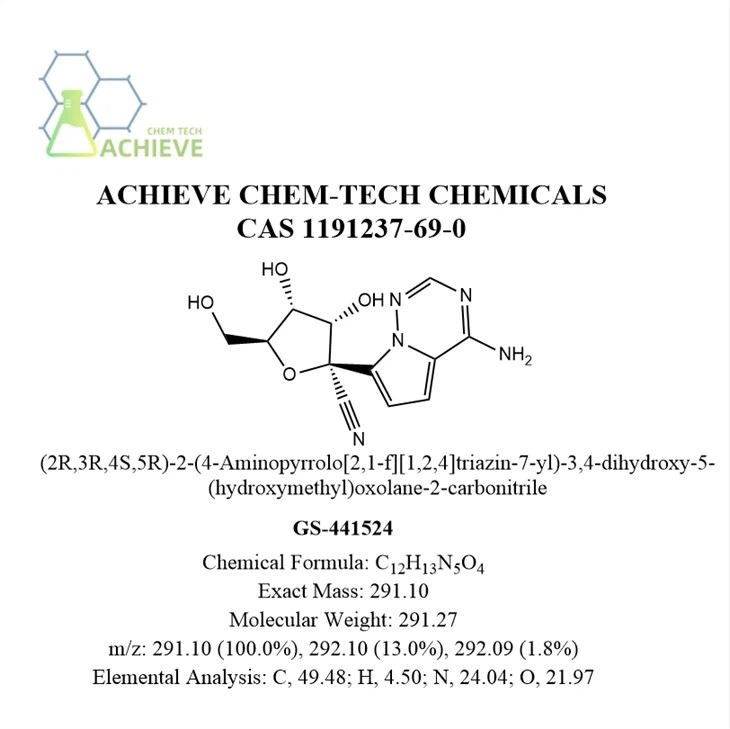


GS-441524 Remdesivir is a small-molecule adenosine analog classified as a competitive nucleoside triphosphate inhibitor, demonstrating potent broad-spectrum antiviral activity against diverse RNA virus families including Coronaviridae, Flaviviridae, and Filoviridae. As the primary intracellular nucleoside metabolite of the prodrug Remdesivir (GS-5734), GS-441524 (CAS: 1191237-69-0) is phosphorylated within host cells into its active triphosphate form (GS-443902), which competitively binds to viral RNA-dependent RNA polymerase (RdRp) and induces delayed chain termination of viral RNA synthesis, effectively blocking replication across multiple SARS-CoV-2 variants and other RNA viruses. Bloomtechz supplies research-grade GS-441524 powder with comprehensive COA documentation and dedicated technical support, ensuring high-purity material for legitimate antiviral research applications.
Client Feedback
 |
 |
 |
About Shipment
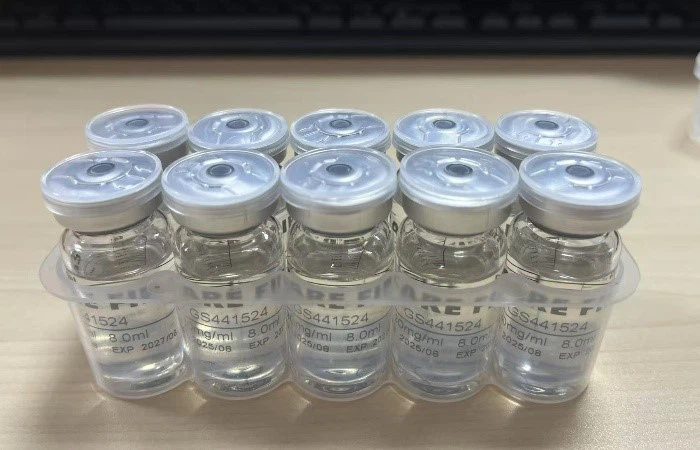
Successfully delivery all over the world:

|
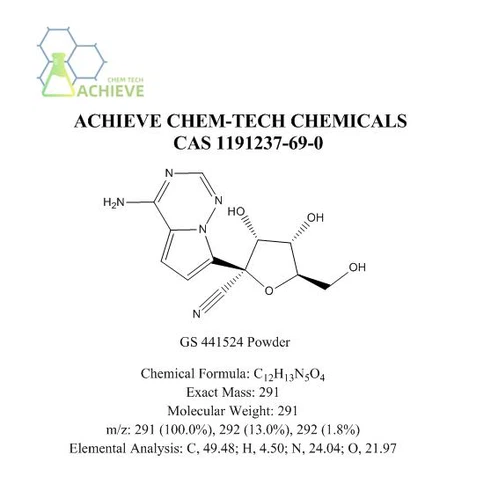
Chemical Formula |
C12H13N5O4 |
|
Exact Mass |
291.10 |
|
Molecular Weight |
291.27 |
|
m/z |
291.10 (100.0%), 292.10 (13.0%), 292.09 (1.8%) |
|
Elemental Analysis |
C, 49.48; H, 4.50; N, 24.04; O, 21.97 |
|
|
|
|
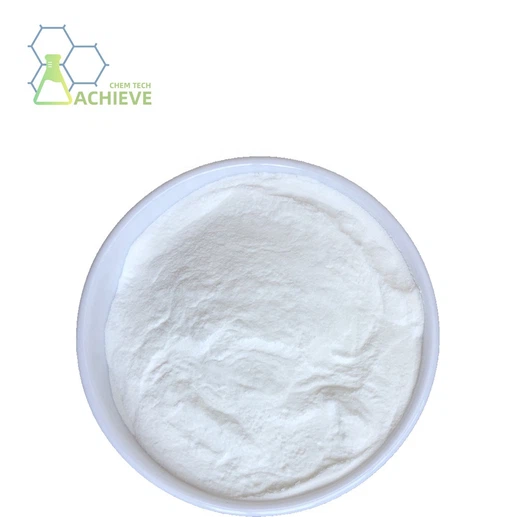
Please refer to our enterprise standard or COA. If you want to get more details, welcome to contact our sales.
Additional information of chemical compound: Density 1.84 + / - 0.1 g/cm3 (Predicted), Acidity coefficient (pKa)12.13±0.70(Predicted)

The method of synthesizing GS441524 remdesivir in the laboratory requires a series of chemical reaction steps to construct the core structure of the compound. The following is a specific description of the laboratory synthesis method for GS441524:
Starting materials: The starting materials for synthesizing GS-441524 are usually basic sugar based donors, nitrogen based donors, and phosphorus based donors. These donors are commonly used starting materials in chemical reactions and can be easily obtained under laboratory conditions.
Prior to advancing to subsequent reaction sequences, selective orthogonal protection of potentially reactive functional groups within the substrate molecule is required to circumvent interference from side reactions and non-specific reaction pathways. The introduced protecting groups must possess specific cleavage condition responsiveness, ensuring that the chemical reactivity of target functional groups can be restored in situ through precise deprotection operations at the terminal stage of synthesis, while maintaining the structural integrity of the remaining molecular framework.
The core step in GS-441524 molecular construction is the phosphorylation reaction, which requires the directional introduction of phosphate groups to target nitrogen atom sites using a high-activity phosphate donor under the drive of a specific catalytic system. Given that this phosphorylation reaction is inherently a thermodynamically reversible process, precise regulation of parameters including solvent polarity, temperature gradients, and catalyst concentration within the reaction system is necessary to break the reaction equilibrium limitation and drive the reaction efficiently toward the target product direction, while strictly controlling reaction conditions to avoid over-phosphorylation or byproduct formation.
Upon completion of the core phosphorylation transformation, the selective removal program for previously introduced protecting groups must be initiated. This step requires the use of specific deprotecting reagents under mild reaction conditions to precisely cleave the bond connecting the protecting group to the substrate, while ensuring that other sensitive functional groups and newly formed phosphorylation sites within the molecule remain unaffected, thereby preventing unintended structural degradation or functional group transformation.
Following completion of the main structural synthesis, a series of molecular modification reactions are required to optimize the target molecule's properties, including directional modification of physicochemical characteristics such as solubility adjustment and bioavailability enhancement. Subsequently, multi-stage purification techniques (such as preparative high-performance liquid chromatography and recrystallization) must be employed for deep purification of the crude product, effectively removing structural analogs, catalyst residues, and byproducts generated during the reaction process, ultimately yielding high-purity GS-441524 final product that meets research-grade standards, ensuring purity specifications satisfy downstream application requirements.
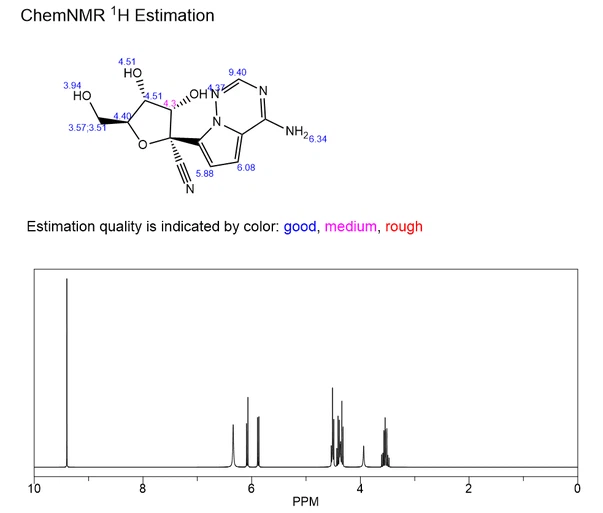
Characterization and analysis: After synthesizing GS441524, it is necessary to characterize and analyze it to confirm its chemical structure and purity. This can be achieved through analytical methods such as nuclear magnetic resonance, mass spectrometry, and high-performance liquid chromatography.
|
|
|
Remark: BLOOM TECH(Since 2008), ACHIEVE CHEM-TECH is the subsidiary of us.

It can inhibit the replication of several different types of RNA viruses, such as zoonotic severe acute respiratory syndrome (SARS) coronavirus, Middle East respiratory syndrome virus, Ebola virus, Lassa fever virus, Junin virus and respiratory syncytial virus, while showing low cytotoxicity in a wide range of cell lines. GS441524 for cats is the most widespread usage.
GS441524 is a small molecule nucleoside analogue with antiviral activity, mainly used for the treatment of infectious peritonitis in cats. The following is a detailed analysis of the antiviral activity of GS441524:

Antiviral spectrum:
GS-441524 has broad-spectrum antiviral activity and can inhibit the replication of various RNA viruses, including feline infectious peritonitis virus, feline coronavirus, canine parvovirus, porcine reproductive and respiratory syndrome virus, etc. These viruses are the main pathogens of common diseases in pets and animals, and the antiviral activity of GS-441524 provides the possibility of treating these diseases.
Mechanism of action:
The mechanism of GS-441524's antiviral activity is mainly interference with the transcription process of viral RNA. GS-441524 can compete with natural nucleotides for RNA polymerase, thereby blocking the synthesis of viral RNA. In addition, GS-441524 can also induce cell apoptosis, thereby accelerating virus clearance.


Efficacy:
In clinical trials, the therapeutic effect of GS-441524 has been verified. For feline infectious peritonitis, GS-441524 can effectively alleviate symptoms and improve the survival rate of sick cats. At the same time, GS-441524 can also effectively prevent and treat other animal viral diseases, such as canine parvovirus.
Safety:
The safety of using it in cats has been widely studied and clinically validated. According to existing data and literature reports, the vast majority of patients do not experience any abnormalities in blood indicators during use. However, there may be some possible side effects when using GS-441524, including pain at the injection site. It should be noted that GS-441524 may affect the development of permanent teeth in young cats without tooth replacement.


GS-441524 Remdesivir as a promising antiviral drug, its chemical reactivity constitutes the core of the drug's mechanism of action, and has had a profound impact on drug design, optimization, storage, and application. A deep understanding of chemical reactivity not only helps to reveal the secrets of its antiviral activity, but also provides important basis for quality control, stability improvement, and clinical application strategy formulation in drug development.

Phosphorylation reaction: activation and targeting: The primary chemical reaction inside cells is phosphorylation, which is catalyzed by specific cellular kinases to convert inactive substances into triphosphate metabolites (NTP) with antiviral activity. Phosphorylation not only enhances hydrophilicity, making it easier for it to penetrate cell membranes and accumulate within cells, but also increases its affinity for key enzymes or structures involved in viral replication, such as RNA polymerase and DNA polymerase, by increasing negative charges. This phosphorylation activation mechanism enables it to precisely target the key steps of virus replication, effectively inhibiting virus replication and transmission. It is worth noting that the efficiency and specificity of the phosphorylation process are influenced by various factors such as the type of cellular kinase, drug concentration,
and cellular environment (such as pH and ion strength), which need to be fully considered in drug design and clinical applications.
Competition with natural nucleotides: The structural design enables it to simulate natural nucleotides and competitively bind with RNA polymerase binding sites. This mechanism significantly reduces the replication of viral RNA by interfering with its normal transcription process, thereby effectively inhibiting viral proliferation. It is worth noting that the binding of this substance to RNA polymerase may also cause conformational changes in the polymerase, further inhibiting its catalytic activity. This additional inhibitory effect enhances the antiviral effect of the drug. However, its affinity for RNA polymerase and its degree of influence on polymerase conformation are influenced by various factors, including drug concentration, polymerase type, cellular environment, etc.


These factors need to be carefully evaluated in the process of drug screening and optimization.
Hydrolysis reaction: stability challenge: Under specific conditions (such as acidic environments), hydrolysis reactions are prone to occur, leading to the breakdown of drugs into their constituent amino acids or smaller molecular fragments. The hydrolysis reaction not only reduces the chemical purity, but may also affect its antiviral activity and bioavailability. Therefore, during storage, transportation, and use, it is necessary to strictly control environmental conditions (such as pH value, temperature, humidity) to reduce the occurrence of hydrolysis reactions. In addition, increasing the stability of drugs through chemical modifications such as esterification, amidation, etc. is also an effective strategy to solve hydrolysis problems.
Oxidation reaction: photosensitivity and air stability: Sensitive to light and oxygen in the air, it is prone to oxidative degradation, leading to changes in the chemical structure and loss of activity of drugs. Oxidation reactions not only reduce purity, but may also produce toxic degradation products, posing a threat to the safety and efficacy of drugs. Therefore, strict light avoidance, sealing, and antioxidant measures must be taken during production, packaging, transportation, and use to ensure the stability and safety of the drug.
Other influencing factors: In addition to the main chemical reactions mentioned above, chemical properties are also influenced by various factors such as drug concentration, solvent type, pH regulator, ionic strength, and temperature.The changes in these factors may lead to subtle changes in chemical properties,


which in turn affect their antiviral activity and safety. Therefore, in the process of drug development and application, it is necessary to conduct in-depth research on these factors to optimize drug formulations and storage conditions, ensuring the effectiveness and safety of drugs.
In summary, the chemical reactivity of GS-441524 is a complex and multifaceted field, covering multiple aspects such as phosphorylation, competition with natural nucleotides, hydrolysis, and oxidation. These characteristics collectively determine the potential application and precautions in antiviral therapy.In order to fully exert its antiviral effect, it is necessary to conduct in-depth research on its chemical reactivity and influencing factors, optimize drug formulations and storage conditions,
to ensure the safety and effectiveness of drugs. Meanwhile, future research should also explore strategies for combined use with other antiviral drugs to further improve antiviral efficacy and reduce the risk of drug resistance.
References
Li, Y., Cao, L., Li, G., Cong, F., Li, Y., Sun, J., Luo, Y., Li, G., Wang, P., Xing, F., Ji, Y., Zhao, J., & Zhang, X. (2022). Remdesivir metabolite GS-441524 effectively inhibits SARS-CoV-2 infection in mouse models. Journal of Medicinal Chemistry, 65(4), 2785–2793.
Lo, M. K., Shrivastava-Ranjan, P., Chatterjee, P., Flint, M., Beadle, J. R., Valiaeva, N., Murphy, J., Schooley, R. T., Hostetler, K. Y., Montgomery, J. M., & Spiropoulou, C. F. (2026). Broad-spectrum antiviral activity of ODBG-P-RVn: An orally-available, lipid-modified monophosphate prodrug of remdesivir parent nucleoside (GS-441524). Microbiology Spectrum, 14(2), e03254-25.
Pitts, J., Babusis, D., Vermillion, M. S., Subramanian, R., Barrett, K., Lye, D., Ma, B., Zhao, X., Riola, N., Xie, X., Kajon, A., Lu, X., Bannister, R., Shi, P. Y., Toteva, M., Porter, D. P., Smith, B. J., Cihlar, T., & Mackman, R. (2022). Intravenous delivery of GS-441524 is efficacious in the African green monkey model of SARS-CoV-2 infection. Antiviral Research, 203, 105329.
Senanayake, C. H., Iyer, N. G., Delaney, E., & Zhang, L. (2026). Development of scalable and commercial synthesis for GS-441524. Organic Process Research & Development, 30(3), 742–758.
Xie, X., Zou, J., Liu, C., Cutler, S. J., Routh, A. L., & Shi, P. Y. (2023). Expanded profiling of remdesivir as a broad-spectrum antiviral and low potential for interaction with other medications in vitro. Antiviral Research, 218, 105703.
Frequently Asked Questions
FAQ 1: What is the purity specification of your GS-441524 powder, and do you provide full analytical documentation?
+
-
Our GS-441524 is supplied at ≥99.0% purity (HPLC), verified by NMR, MS, and elemental analysis. Each batch includes a comprehensive Certificate of Analysis (COA) confirming identity, assay, related substances, residual solvents, and moisture content. As a source manufacturer, Bloomtechz maintains full batch traceability from raw material synthesis through final packaging, ensuring compliance with research-grade quality standards.
FAQ 2: What is the relationship between GS-441524 and Remdesivir, and why would researchers source the parent nucleoside directly?
+
-
GS-441524 is the active intracellular nucleoside metabolite of the prodrug Remdesivir (GS-5734). Remdesivir requires intracellular phosphoramidate cleavage to release GS-441524, which is then phosphorylated to its active triphosphate form. Researchers sourcing GS-441524 directly bypass the prodrug conversion step, enabling studies focused specifically on the active metabolite's pharmacokinetics, tissue distribution, and RdRp inhibition kinetics without confounding effects from prodrug metabolism.
FAQ 3: What are your minimum order quantities and lead times for bulk procurement?
+
-
We accommodate orders from gram-scale research quantities to multi-kilogram commercial volumes. Standard lead times are 3–7 business days for in-stock specifications, with custom synthesis or large-scale production runs scheduled within 10–15 business days. Our mature production control systems support scalable fulfillment while maintaining strict batch-to-batch consistency. All shipments include COA, MSDS, and commercial documentation for seamless customs clearance.
FAQ 4: How do you ensure product stability during international shipping?
+
-
GS-441524 is a hygroscopic crystalline solid recommended for storage at -20°C under inert atmosphere. Our packaging employs moisture-barrier aluminum foil bags with desiccant packs, sealed in insulated containers with cold-chain options for temperature-sensitive shipments. Our logistics partnerships include temperature-controlled freight services, and all packaging is validated to maintain product integrity through standard international transit durations.
FAQ 5: What technical support is available for research institutions evaluating your GS-441524 supply?
+
-
Bloomtechz provides one-on-one dedicated account management with direct access to our technical team for analytical method support, stability data requests, and formulation guidance. Our professional sales team coordinates sample requests, custom specification discussions, and regulatory documentation needs, ensuring a streamlined procurement process from initial inquiry through ongoing supply arrangements.
Hot Tags: GS-441524 Remdesivir CAS 1191237-69-0, suppliers, manufacturers, factory, wholesale, buy, price, bulk, for sale, 2 Chloro 5 Chloromethylpyridine CCMP , 2 2 Bis hydroxymethyl butyric Acid CAS 10097 02 6, 5 Ethylthio 1H Tetrazole CAS 89797 68 2, tert Butyldimethylsilyl chloride, 4 Hydroxyphenylacetic Acid CAS 156 38 7, 4 Phenoxyphenylboronic Acid CAS 51067 38 0