




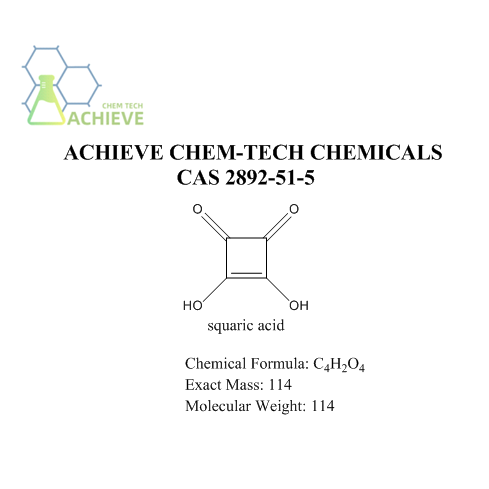
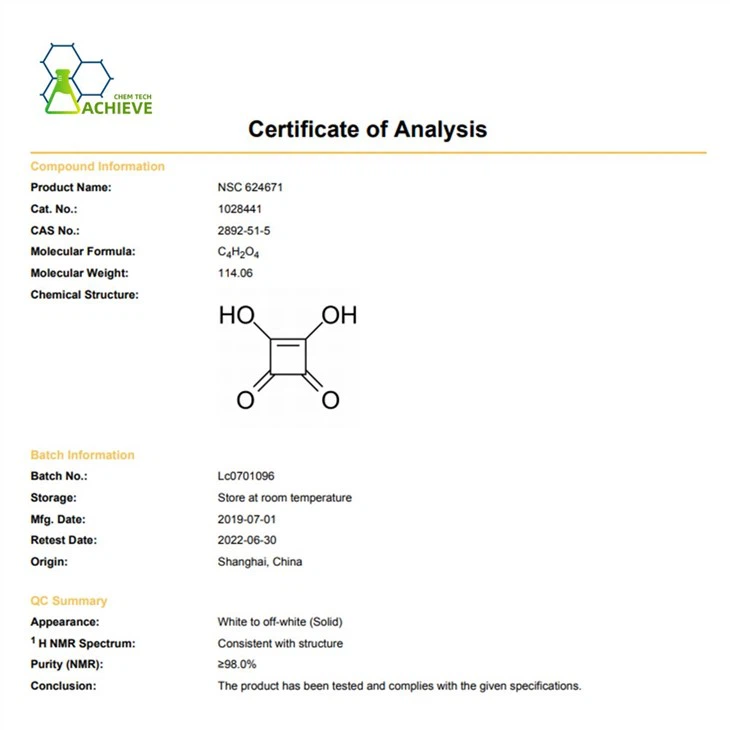
Shaanxi BLOOM Tech Co., Ltd. is one of the most experienced manufacturers and suppliers of squaric acid treatment cas 2892-51-5 in China. Welcome to wholesale bulk high quality squaric acid treatment cas 2892-51-5 for sale here from our factory. Good service and reasonable price are available.
Squaric acid treatment have many advantages and play an important role in pharmaceutical chemistry. They usually have good water solubility. In chemical biology, squaric acid analogues can be coupled with proteins or carbohydrates or used as ion receptors.(1)The accurate information of chemical compound below: Chemical Formula: C4H2O4, Exact Mass: 114, Molecular Weight: 114, m/z: 114 (100.0%), 115 (4.3%), Elemental Analysis: C, 42.12; H, 1.77; O, 56.11. (2)Quality information: Please refer our enterprise standard or COA, if you need to negotiate, welcome to consult our sales. We are a chemical researching agency & factory, we make a living on Chemistry, professional service, the best price in the best quality.
Additional information of chemical compound:
| Melting point | > 300 °C ( lit. ) |
| Boiling point | 250.96 ° C |
| Density | 1.82 g / cm3 |
| Flash point | 190 °C |
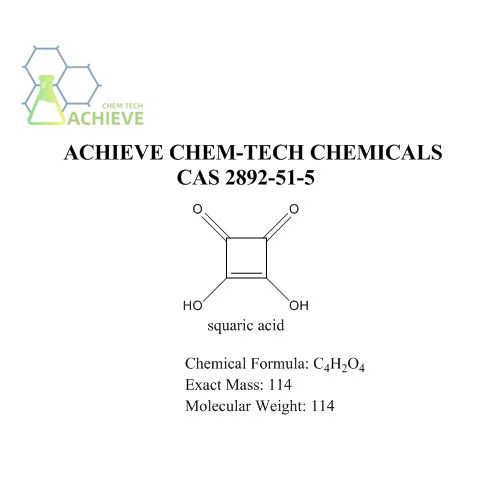
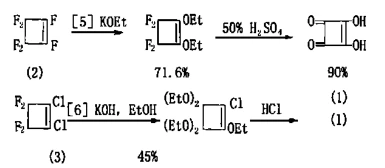
There are also various synthetic methods for cubic acid. The earliest synthetic method is to use hexafluorocyclobutene and 1,2-dichloro-3,3,4,4-tetrafluorocyclobutene as raw materials to synthesize squaric acid. The synthetic route is shown in the following figure:
Squaric acid Manufacturing Information
Remark: BLOOM TECH(Since 2008), ACHIEVE CHEM-TECH is the subsidiary of us.
The Squaric Acid Treatment therapy was first synthesized and developed in the 1960s. In the 1980s, it was established as a first-line external immune stimulation therapy for alopecia areata and vitiligo in Europe and America. It is different from hormone and calcineurin inhibitors, and its mechanism of action is to locally induce specific cellular immune remodeling without systemic hormone side effects; At the same time, the acid itself has irreplaceable industrial value in the fields of fine chemicals, optoelectronic materials, coordination chemistry, organic synthesis, pesticides, battery materials, and analytical reagents.
Basic structure, physicochemical properties, and core pharmacological mechanisms of therapy

Conjugated Structure and Physical and Chemical Characteristics of Molecules
A fully conjugated tetracyclic skeleton with four carbon electrons uniformly delocalized, easily dissociated hydroxyl groups to release hydrogen ions, in a strongly acidic environment; Sodium formate (dibutyl formate) has improved lipid solubility and can penetrate the stratum corneum of the skin, making it the standard dosage form for topical treatment; Free oxalic acid has strong water solubility and weak penetration of keratin, and is rarely used directly for skin application.
Di-n-butyl formate (SDB): a light yellow oily liquid, fat soluble, with strong skin penetration. A clinical standard treatment solution is a 0.5% -2% ethanol solution;
Core mechanism of immune action of dermatological acid therapy
After contact with the dermis layer, dibutyl formate acts as a hapten to bind to the protein of skin keratinocytes, forming a complete antigen complex and initiating a local immune cascade reaction:
Recruit dendritic cells (DCs) to mature and activate, migrate to local lymph nodes, activate CD8 ⁺ cytotoxic T cells, and Th1 type immune responses;
Reversing local Th2 dominant immune suppression in vitiligo lesions, inhibiting melanocyte autoantibody attack, repairing melanocyte survival, proliferation, and melanin synthesis;


In alopecia areata lesions, targeted clearance of self reactive T lymphocytes attacking hair follicles, release of hair follicle immune dormancy, and restart of hair growth cycle;
Localized induction of mild controllable contact dermatitis (redness, itching, scabbing), artificial establishment of moderate inflammatory microenvironment, stimulation of epidermal stem cell, melanocyte, and hair follicle stem cell regeneration;
The entire process is limited to the application area, with minimal systemic absorption into the bloodstream. There are no systemic side effects such as elevated blood sugar, osteoporosis, skin atrophy, or capillary dilation caused by adrenal cortex hormones. It should be used with caution and control during childhood and pregnancy.
Standard Procedure for Drug Administration (General Acid Therapy Specification)
Pre treatment: Clean the affected area with clean water, completely dry it, and apply Vaseline for isolation and protection on healthy skin to prevent normal skin irritation and redness;
Medication application: Apply a thin layer of 0.5% -1% dibutyl citrate ethanol solution on a cotton swab, limited to precise spot application on the lesion, and prohibit large area thick application;


Inducing inflammatory cycle: Apply medication once every 72 hours for the first time, and the effective inflammatory threshold is when there is mild erythema and itching at the affected area; Excessive redness and swelling can be prolonged for 5-7 days, while weak redness and swelling can be shortened to 48 hours;
Maintenance course: standard 3-6 months for alopecia areata, 6-12 months for vitiligo, 4-8 weeks for viral warts;
Repair and care: Apply non irritating moisturizing repair cream externally during the period of inflammation and scab formation. Do not scratch, hot water wash, or expose to direct sunlight.
Core uses of clinical treatment in dermatology
Alopecia areata is a hair follicle specific autoimmune disease, in which T cells infiltrate hair follicles and cause rapid degeneration and hair loss during the growth phase. It is divided into localized patchy alopecia areata, total alopecia, and generalized alopecia.
Localized patchy alopecia areata (1-5 patches): 0.5% dibutyl citrate is administered every 3 days, with an effective rate of 72% after 3 months. Compared with topical steroids (halometasone), the effective rate is 61%, and the recurrence rate after recovery is reduced by 28%;


Mechanism: Specific clearance of self attacking T cells around hair follicles, restoration of hair follicle papilla blood supply and proliferation signals; Hormones only broad-spectrum inhibit inflammation and cannot selectively clear pathogenic T cells.
Complete baldness/generalized baldness (complete baldness of the scalp, shedding of eyebrows, eyelashes, and body hair): Oral administration of the hormone system has significant side effects, and local acid therapy is the safe first choice; Take turns applying medication in different regions to avoid severe dermatitis in the entire area. The overall hair regeneration rate at 6 months is 58%, which is significantly better than that of calcineurin inhibitors (tacrolimus has an effective rate of 39%);
Children over 4 years old can reduce their dosage to a low concentration of 0.25% without interfering with their growth and development.
Refractory hormone resistant alopecia areata: For patients with long-term ineffective topical/oral steroids, switching to acid therapy results in a regeneration response rate of 65% within 4 months, making it the gold standard for second-line salvage treatment in European and American dermatology guidelines; No hormone dependence, no skin thinning, no excessive hair rebound.
Clinical comparative advantages: Long term use of hormones can cause vascular atrophy around hair follicles, while acid therapy can thicken local dermal microcirculation. Long term use of healthy scalp texture can maintain stability without rapid relapse after discontinuation of medication.


Standard topical therapy for melanocyte repair in vitiligo of the common type
Vitiligo autoimmune attacks epidermal melanocytes, causing depigmentation of white patches. Acid therapy is suitable for stable and progressive mild to moderate white patches, and can be used on the limbs, face, and trunk.
Localized vitiligo in stable phase (area<10% body surface area): 1% dibutyl citrate dot coating, combined with narrow-band ultraviolet NB-UVB phototherapy for synergistic enhancement; Induction of Th1 immune balance by oxalic acid, stimulation of melanocyte division by UVB, combined regimen achieved an 81% pigment recoloration rate, while hormone alone achieved a 59% recoloration rate; Uniform color reproduction, without local pigment unevenness or capillary dilation caused by hormones.
Rapid diffusion of white patches during the progression phase: Low concentration of 0.25% slowly induces mild immunity, inhibits the spread of autoantibodies to attack new melanocytes, and prevents the expansion of white patches; Oral steroids are only suitable for rapid outbreak and large-scale progression, and there is no risk of systemic immune suppression in the local area. They are suitable for long-term maintenance of anti spread.
Limb refractory vitiligo (white spots on fingers and toes, extremely difficult to color with conventional drugs): Squaric Acid Treatment combined with 308 excimer laser increased the limb color restoration rate to 47% after 6 months, compared to only 26% with a single laser; Fang acid opens the dense keratin barrier at the extremities, enhancing the efficiency of laser activation of deep melanocyte stem cells.


Mucosal vitiligo (lip and external genital mucosa vitiligo): Dilute 0.25% gently and apply thinly. The mucosal tolerance is higher than that of potent hormones, and it will not cause mucosal atrophy, dryness, or rupture; During the middle and late stages of pregnancy, small area use can be monitored by a physician, and systemic absorption can be ignored.
Taboo tip: During the progression stage, extensive white patches should not be applied to the entire area to avoid triggering homomorphic reactions and transient expansion of white patches due to widespread and severe contact dermatitis.
Immunotherapy for HPV virus warts such as common warts, plantar warts, and genital warts ablation
Traditional cryotherapy, laser therapy, and salicylic acid treatments only physically destroy the warts, failing to eliminate latent HPV virus in the epidermis, resulting in a recurrence rate as high as 40%–60%. Dibutyl squaric acid therapy, through local immune activation, clears both surface and latent viruses, significantly reducing recurrence.
For plantar warts and common warts: 1% dibutyl squaric acid is precisely applied to the warts twice a week, resulting in warts drying and falling off in 4–6 weeks. After immune activation, surrounding latent HPV is cleared, reducing the recurrence rate to 11%. Compared to salicylic acid corrosion, it causes no severe pain, no deep keratin ulcers, and leaves no permanent scars.


For genital warts (adjunctive treatment): After laser and cryotherapy remove large warts, low-concentration dibutyl squaric acid is applied to residual small subclinical lesions to activate local immunity and clear latent viruses, reducing the postoperative recurrence rate by 52%. It is a safer alternative to podophyllotoxin (teratogenic and highly corrosive) during the preconception and breastfeeding periods.
Subungual warts and periungual warts: The nail bed is fragile and cannot withstand freezing corrosion. Applying a small amount of squaric acid to the periungual lesions can slowly dissolve the warts, protect the nail matrix from damage, and prevent the normal growth of the nail from being disrupted.
Immunosoftening repair of hypertrophic scars and keloids
Excessive proliferation of fibroblasts and disorderly accumulation of collagen in scar tissue, accompanied by local chronic low-grade inflammation; Fang acid induces controllable mild inflammation, reshapes the arrangement of dermal collagen, and inhibits abnormal proliferation of fibroblasts.
Small scar tissue (postoperative hypertrophic scars on the chest, shoulder, and earlobe): Apply 0.5% oxalic acid solution thinly twice a week.


After 3 months, the scar thickness decreases by 35% and itching and pain are significantly relieved; Paired with silicone adhesive for dual synergy, it is superior to single hormone scar injection (hormone injection is prone to local skin depression and pigmentation abnormalities).
Postoperative hypertrophic surgical scars: After complete healing of the suture wound, low concentration oxalic acid maintenance is initiated to reduce excessive collagen deposition, improve scar flatness, and rapidly reduce red congestion; Not interfering with the process of epidermal healing.
Chronic allergic contact dermatitis, atopic dermatitis, stubborn lesions
Hypertrophic chronic eczema, recurrent contact dermatitis patches, and long-term steroid application can easily cause skin barrier breakdown; Intermittent acid therapy is used for small area hypertrophic lesions: low concentration medication is applied every 4 days to induce transient inflammation and restart skin barrier repair. Th2 imbalance is corrected, and the frequency of eczema itching attacks decreases by 60%; Not the first choice for treating large areas of eczema throughout the body, limited to local targeted therapy for isolated hypertrophic and stubborn plaques.


Prevention and control of local immune rejection after skin autograft surgery
After large-scale epidermal transplantation and scar skin grafting for vitiligo, a small amount of white spot recurrence area is rejected at the edge. Di-n-butyl formate is applied around the transplanted skin to regulate the local immune microenvironment, reduce the rejection attack of host T cells on transplanted melanocytes, improve the survival rate of pigment in the transplanted skin, and reduce the probability of white spot recurrence after transplantation.
Frequently Asked Questions
What is Squaric acid used for?
+
-
Squaric acid is an immunotherapy used to treat common warts.This treatment is non-toxic, and easy to use.The treatment activated your immune system to combat the warts and therefore it may cause an allergic reaction , similar to poison oak.This reaction can be managed with a topical cortisone cream.
How to apply squaric acid?
+
-
It is advised to wear gloves while applying squaric acid.A Q-tip is used to apply the solution directly on to the warts.The squaric acid evaporates leaving no residue.Initially it is applied 3 times a week preferably at night.
Hot Tags: squaric acid treatment cas 2892-51-5, suppliers, manufacturers, factory, wholesale, buy, price, bulk, for sale, Allyl Chloride CAS 107 05 1, 4 METHYL 2 METHYLSULFANYL PYRIMIDINE CAS 14001 63 9, Hydroxylamine Solution, BENZENE D6, Sodium Thiosulfate Powder CAS 7772 98 7, 2 Chloro 4 6 dimethoxypyrimidine