


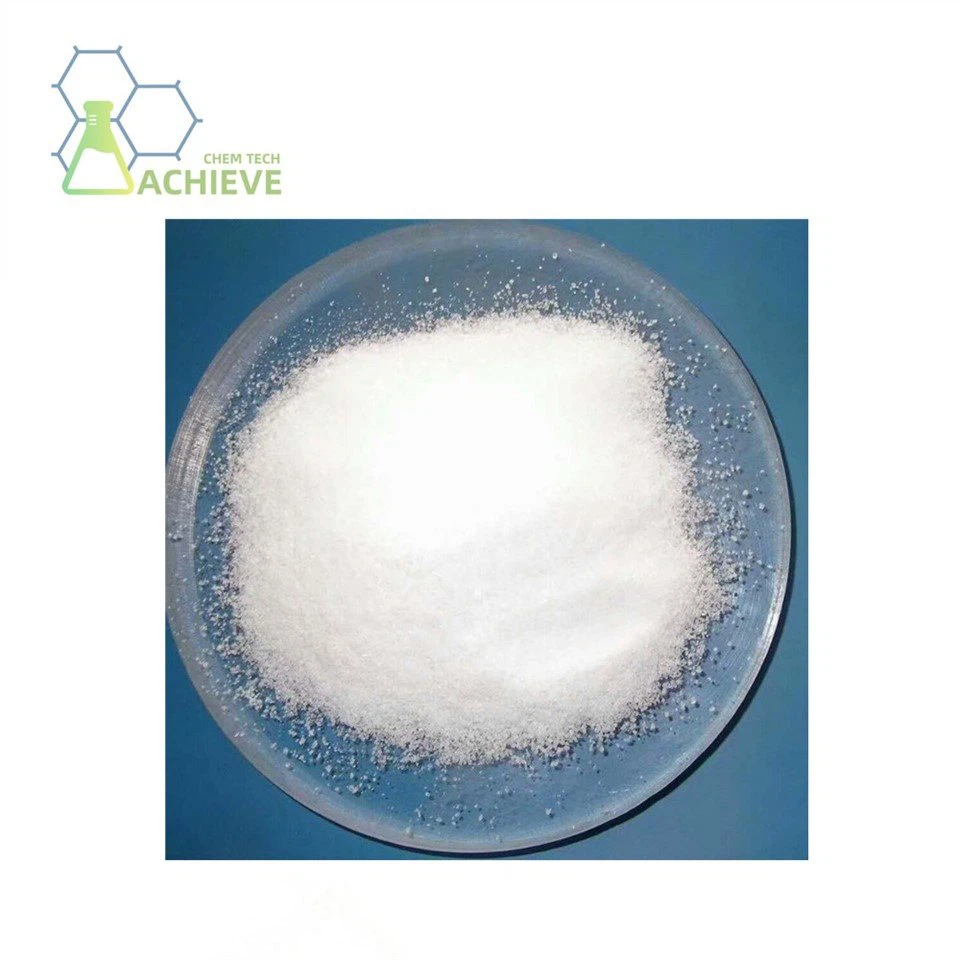


Hexachloroethane (HCE) is a colorless crystalline powder with a camphor-like odor, Molecular formula C2Cl6, CAS 67-72-1, insoluble in water, and soluble in most organic solvents such as alcohols, benzene, chloroform, and oils. It is an organic matter, used as a raw material for organic synthesis, and a degasser for aluminum and its alloys. It is one of the most toxic chlorinated hydrocarbons and has toxic effects on the human central nervous system. Stable, must be away from strong oxidant, strong alkali, metal, placed in the environment of avoiding light drying HCE can sublimation, gradually volatilized in the air; chemical stability, contact with water at room temperature does not decompose, in acid or alkali solution does not react; reaction with zinc chloride to produce carbon tetrachloride; HCE was reduced with zinc and sulfuric acid to produce tetrachloroethylene; high-temperature pyrolysis produces carbon tetrachloride, tetrachloroethylene, and chlorine gas. It is used in organic synthesis, medicine, etc. it is also used as a solvent.

|
Chemical Formula |
C2Cl6 |
|
Exact Mass |
234 |
|
Molecular Weight |
237 |
|
m/z |
236 (100.0%), 238 (79.9%), 234 (52.1%), 240 (34.1%), 242 (8.2%), 237 (2.2%), 239 (1.7%), 235 (1.1%), 244 (1.0%) |
|
|
|


Melting point 183 – 185 °C ( dec. ) ( lit. ) , boiling point 186 °C , Density : 2.091 g / mL at 25 °C ( lit. ) , Vapor density 8.16 ( vs air ) , Vapor pressure 0.4 mm Hg ( 20 ° C ) , Refractive index 1.5282 ( estimate ) , Flash point 9 °C , Storage conditions 2-8 ° C , Soluble in alcohol, benzene, chloroform, ether. , Crystals or Crystalline Powder , Color White , Water solubility 0.05 g / L ( 22 oC ) , Merck 14,4679, BRN 1740341 , Henry ' s Law Constant 1.43, 2.81, and 5.31 at 10, 20, and 30 °C, respectively ( Munz and Roberts, 1987 ) , Dangerous goods sign Xn, N, T, F , Transport of dangerous goods No. UN 9037 , Toxic MLDi. v. in dogs : 325 mg / kg (Barsoum, Saad).

The present invention relates to a hexachloroethane synthesis process, which comprises the following steps:

(1) Put tetrachloroethylene into the chlorination kettle, and then slowly introduce liquid chlorine to carry out atmospheric chlorination reaction;
(2) After the temperature reaches 80 ~ 90C, increase the chlorine flow to 25 ~ 30kg / h, and control the temperature at 105 ~ 110C for 3 ~ 8h to reach the chlorination end point, then stop the chlorine flow and keep it warm for 2 ~ 4H to obtain the chlorination product:
(3) The chlorinated product is neutralized by sodium hydroxide solution for alkali washing and layering. The upper liquid enters the wastewater system after being neutral, and the lower liquid enters the crystallizer;
(4) After the lower liquid is crystallized in the crystallizer at room temperature for 9 ~ 11h, it is centrifuged, dried, and then cooled naturally to obtain the finished hexachloroethan. The centrifuged mother liquid is returned to the chlorination kettle for reuse.
The invention has the advantages that the synthesis process of the invention can reduce the potential safety hazard, labor intensity and ensure the product content.


Molecular Structure and Basic Properties
The chemical formula of hexachloroethane is C₂Cl₆. The molecular structure consists of two carbon atoms connected by single bonds, with each carbon atom forming a bond with three chlorine atoms, resulting in a symmetrical Cl₃C-CCl₃ structure. This highly symmetrical molecular configuration endows it with unique physical and chemical properties. At normal temperature and pressure, hexachloroethane appears as a white or colorless crystalline solid, with a special odor similar to camphor. Its melting point is 183-185℃, its boiling point is 186℃ (sublimating directly under standard atmospheric pressure), and its density is 2.091 g/cm³ (at 25℃), indicating a relatively high molecular weight and density.
Stability and Reactivity
Hexachloroethane exhibits excellent chemical stability under normal temperature and pressure and is classified as a non-flammable substance. However, its stability has specific boundary conditions:
High-temperature decomposition
When the temperature exceeds 300℃, hexachloroethane begins to decompose, generating toxic and corrosive gases, including phosgene (COCl₂) and hydrogen chloride (HCl). This property requires strict control of environmental conditions during high-temperature processing or storage.
Reactivity with metals
When hexachloroethane comes into contact with alkali metals (such as sodium and potassium) and strong oxidants (such as concentrated nitric acid and potassium permanganate), it may undergo violent reactions, generating chlorides and metal chlorides. Additionally, it may release hydrogen gas when reacting with active metals like zinc and aluminum powder, presenting an explosion risk.
Solubility in solvents
Hexachloroethane is slightly soluble in water (at 25℃, the solubility is approximately 50 mg/L), but it is easily soluble in organic solvents such as ethanol, benzene, chloroform, and ether. This solubility characteristic makes it valuable in organic synthesis and industrial extraction.
Thermodynamic Properties and Phase Transformation Behavior
The phase transformation behavior of hexachloroethane exhibits uniqueness:
Sublimation characteristics: Its boiling point is close to its melting point (with a difference of only 1-2°C), and when heated under standard atmospheric pressure, it directly transforms from the solid state to the gaseous state without passing through the liquid stage. This characteristic gives it an advantage in vacuum distillation and sublimation purification processes.
Vapor pressure and volatility: At 20°C, the vapor pressure is 0.21-0.4 mmHg, indicating that it has moderate volatility at room temperature. It needs to be stored in a sealed and dark environment to prevent long-term exposure that could lead to quality loss.
Thermal decomposition kinetics: The high-temperature decomposition reaction follows a complex mechanism, and the resulting phosgene and hydrogen chloride have strong toxicity and corrosiveness. The decomposition products need to be handled in specialized equipment.
Chemical Bonds and Intermolecular Forces
The C-Cl bond in the molecule of hexachloroethane has a high bond energy (approximately 339 kJ/mol), giving the molecule overall stability. The intermolecular forces are mainly van der Waals forces. Due to the strong electronegativity of the chlorine atom, there are weak dipole-dipole interactions between the molecules. These forces affect its physical state:
Crystal structure
The hexachloroethane precipitated from ethanol or ether forms orthorhombic white needle-like crystals, with the molecules in the crystals arranged in a compact structure through van der Waals forces.

Melting behavior
Melting requires overcoming intermolecular forces, resulting in a relatively high melting point (183-185℃), which is related to the molecular weight (236.72 g/mol) and molecular symmetry.

Environmental Chemical Behavior
The environmental behavior of hexachloroethane is driven by its physical and chemical properties:
Soil adsorption: Strongly adsorbed in soil, with slow migration rate, and may remain for a long time and contaminate groundwater.
Water distribution: Low water solubility (0.05 g/L, 22℃), but easily adsorbed onto organic matter and enters the food chain through bioaccumulation.
Atmospheric transport: Medium volatility, can be diffused through the atmosphere and form pollution over long distances.
Chemical Behavior in Industrial Applications
The chemical properties of hexachloroethane support its multi-domain applications:
Metal refining: As an de-gasifying agent in the refining of aluminum and aluminum alloys, it undergoes a high-temperature decomposition reaction to remove hydrogen and inclusions from the molten metal, thereby enhancing the purity of the metal.
Organic synthesis: As a chlorinating reagent in specific organic reactions, or as a solvent in special synthesis systems.
Military applications: Used in smoke bombs and signaling devices, taking advantage of its sublimation property to quickly form a persistent smoke screen.
Polymer additives: Improve the flame retardancy and dye affinity of polymers by chemically introducing functional groups.
Safety and Toxicity Considerations
The chemical properties of hexachloroethane are closely related to its toxicity:

Acute toxicity
Inhalation of high concentrations of vapor may cause central nervous system inhibition, presenting symptoms such as dizziness and nausea.

Chronic effects
Long-term exposure may lead to liver and kidney damage. Animal experiments have shown potential harm to the nervous system and reproductive system.

Environmental risk
The decomposition products of phosgene and hydrogen chloride have acute toxicity. The waste disposal process must be strictly controlled.
FAQ
1. Why was it once the chemical specter of the "smoke battlefield"?
Hexachloroethane mixed with zinc powder was once the core component of military incendiary agents. After combustion, it produced highly toxic phosgene (COCl₂) and thick chlorine-containing smoke. This "six-chloroethane smokescreen", which was widely used during World War II, not only concealed the battlefield but also caused hidden and long-term respiratory system damage to exposed soldiers, becoming a gray legacy between early chemical warfare agents and non-lethal weapons.
2. How to become the "invisible chisel" in paleontology?
In the process of fossil preparation, hexachloroethane was used as a solvent to soften and remove the surrounding rock. Its high density and low volatility allowed for the micro-etching treatment of fragile fossils. However, due to its toxicity and the possible presence of destructive chlorine compounds, it has now been replaced by safer technologies, serving as a cautionary note in the history of laboratory safety evolution.
3. Why is it considered a "contradiction creation" in the metallurgical industry?
As an efficient degassing agent for aluminum and its alloy melts (releasing chlorine to remove hydrogen), hexachloroethane significantly improves the quality of the metal. However, at high temperatures, it simultaneously generates highly corrosive hydrogen chloride and precursor substances for dioxins. This dual nature of "clean metallurgy" and "toxic pollution" reflects the technical ethical dilemma that has long been weighed in industrial processes.
4. How does it function as a "climate time capsule" in polar research?
Due to its chemical inertness and persistence, hexachloroethane can remain in the atmosphere for several decades and is deposited in polar ice cores through circulation. Modern ice core chemical analysis can precisely trace the historical trajectory of specific industrial activities worldwide from the mid-20th century to the late 20th century by detecting its concentration peaks, and has become one of the less-known indicators for the geological markers of the Anthropocene.
Hot Tags: hexachloroethane cas 67-72-1, suppliers, manufacturers, factory, wholesale, buy, price, bulk, for sale, Acetonylacetone CAS 110 13 4, Isoamyl Nitrite, Raw Materials, 5 Bromo m xylene CAS 556 96 7, melamine powder, tris base powder