




Shaanxi BLOOM Tech Co., Ltd. is one of the most experienced manufacturers and suppliers of sodium dodecyl benzenesulfonate cas 25155-30-0 in China. Welcome to wholesale bulk high quality sodium dodecyl benzenesulfonate cas 25155-30-0 for sale here from our factory. Good service and reasonable price are available.
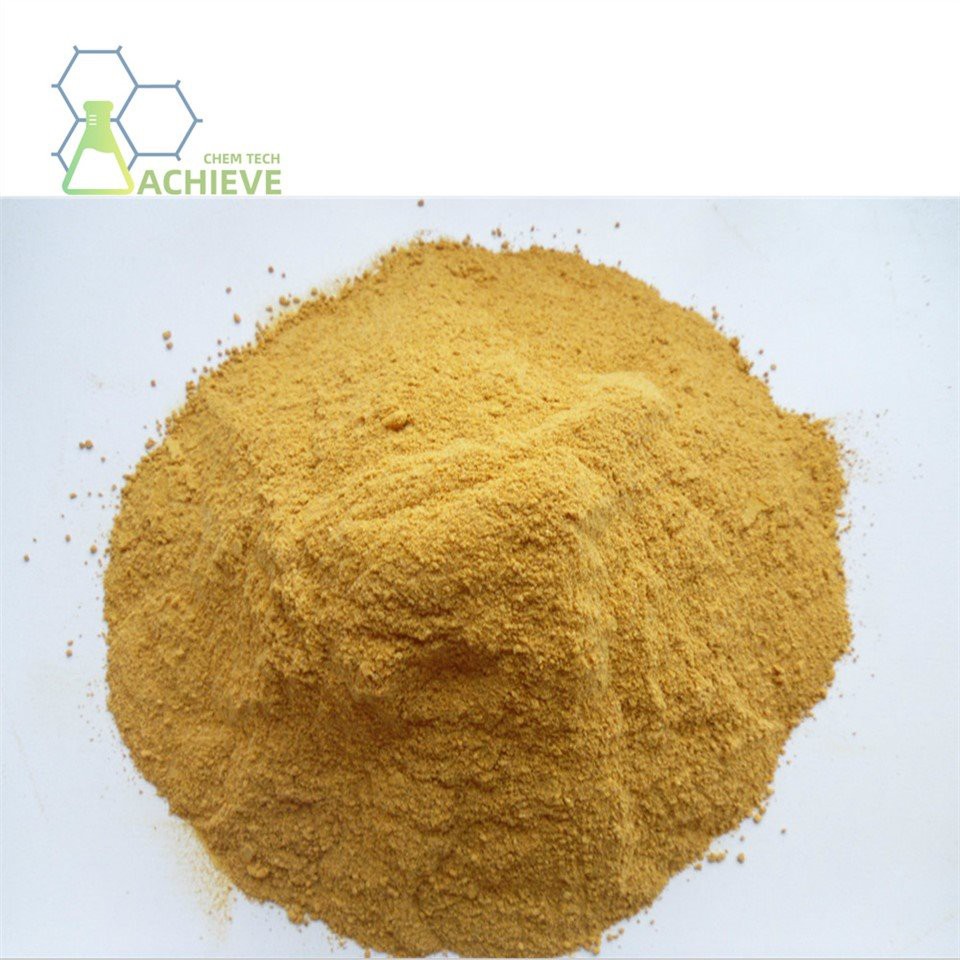
Sodium dodecyl benzenesulfonate (SDBS), molecular formula C18H29NaO3S, CAS 25155-30-0, is a common anionic surfactant that appears as a white or pale yellow powder. Difficult to evaporate, easily soluble in water, prone to moisture absorption and clumping, forms a semi transparent solution when dissolved in water. Stable chemical properties to alkali, dilute acid, and hard water, with slight toxicity. Stable chemical properties for alkali, dilute acid, and hard water, capable of establishing equilibrium systems with strong acids. It is an anionic surfactant with excellent surface activity and strong hydrophilicity. These characteristics enable it to effectively reduce the tension at the oil-water interface, thereby achieving emulsification.

Therefore, it has been widely used in fields such as cosmetics, food, printing and dyeing auxiliaries, and pesticides that require emulsion formulation. Its molecular structure contains both hydrophilic and oleophilic groups, which allows it to aggregate at the oil/water interface, reducing interfacial tension and thereby improving the stability of the emulsion.
|
Chemical Formula |
C18H29NaO3S |
|
Exact Mass |
348 |
|
Molecular Weight |
348 |
|
m/z |
348 (100.0%), 349 (19.5%), 350 (4.5%), 350 (1.8%) |
|
Elemental Analysis |
C, 62.04; H, 8.39; Na, 6.60; O, 13.77; S, 9.20 |
|
Morphological |
powder |
|
Color |
light yellow |
|
Melting point |
> 300 ° C |
|
Density |
1.344 (estimate) |
|
|
|


Sodium dodecylbenzene sulfonate is stable to alkali, dilute acid and hard water.
It can establish a balance system with strong acid:
R12-Ph-SO3Na+HCl⇌R12-Ph-SO3H+NaCl
The hydroxyl group in the sulfo group may also be substituted by a chlorine atom to generate sulfonyl chloride:
3R12-Ph-SO3Na+PCl3 →R12-Ph-SO3H+NaCl (~200℃)
Hydrolysis reaction is the reverse reaction of sulfonation reaction. Under the catalysis of strong acid, sodium dodecyl sulfate and water can be co heated to remove the sulfo group. The essence of the reaction is the electrophilic substitution reaction of H + as electrophilic agent attacking the aromatic ring.
3R12-Ph-SO3Na+H2O →R12-Ph+NaHSO4 (~200℃,H2SO4)

Laboratory preparation method:
Add 35 milliliters (34.6 grams) of dodecylbenzene into a 250 milliliter four necked flask equipped with a stirrer, thermometer, dropper, and reflux condenser. Slowly add 35 milliliters of 98% sulfuric acid while stirring. The temperature shall not exceed 40 ° C.
After addition, the temperature should be raised to 60-70 ° C for 2 hours.
Cool the above-mentioned sulfonation mixture solution to 40-50 ° C, slowly add an appropriate amount of water (about 15 mL), pour it into a separation funnel, let it stand for a moment, then stack it again, drain the lower layer (water and inorganic salts), and retain the upper layer (organic phase).
Prepare 80 milliliters of 10% sodium hydroxide solution and add it to approximately 60-70 milliliters of a 250 milliliter four necked bottle. Slowly add the organic phase while stirring, control the temperature to 40-50 ° C, adjust the pH to 7-8 with 10% sodium hydroxide, and record the total amount of 10% sodium hydroxide.
Add a small amount of sodium chloride into the above reaction system, filter after the ring penetration test is clear, and obtain a white paste product, namely sodium dodecyl benzenesulfonate.

Industrial method:
It is prepared by reacting dodecylbenzene with fumigant sulfuric acid or sulfur trioxide, and then neutralizing it with alkali.
The disadvantage of using fumigation sulfuric acid for sulfonation is that there will always be some waste acid in the sulfonated product after the reaction. The sodium sulfate produced after neutralization is introduced into the product, affecting its purity.
At present, sulfonation of sulfur trioxide air mixture is widely used in industry. Sulfur trioxide can be distilled from 60% fumigated sulfuric acid, or burned in a furnace with sulfur and dry air to obtain a mixed gas containing sulfur dioxide.
The mixed gas is introduced into a sulfonation reactor equipped with alkylbenzene for sulfurization. The sulfonated substances enter the neutralization system, neutralize with sodium hydroxide solution, and finally enter the spray drying system for drying. The obtained product is a powder with good fluidity.

Sodium dodecyl benzenesulfonate (SDBS) is an anionic surfactant widely used in various fields such as daily chemical, industrial, and pharmaceutical due to its excellent cleaning, foaming, and emulsifying properties. Its core applications are as follows:

1. Washing function
Sodium alkylbenzenesulfonate is a yellow oily substance that can be purified to form strong hexagonal or rhombohedral plate-like crystals. It has low toxicity and has been recognized as a safe chemical raw material by the International Safety Organization. Sodium alkylbenzenesulfonate can be used in fruit and tableware cleaning, with the largest amount used in detergents. Due to the use of large-scale automated production and low cost, sodium alkylbenzenesulfonate used in detergents has two types: branched chain structure (ABS) and straight chain structure (LAS).
The branched chain structure has low biodegradability and can cause pollution to the environment, while the straight chain structure is easy to biodegrade, with a biodegradability of more than 90% and a low degree of environmental pollution.
Sodium dodecyl benzenesulfonate is neutral, sensitive to water hardness, not easy to oxidize, has strong foaming power, high cleaning power, easy to mix with various additives, low cost, mature synthesis process, and wide application fields. It is an excellent anionic surfactant. It has significant decontamination effect on granular dirt, protein dirt and oily dirt, especially on granular dirt on natural fibers.


Its decontamination ability increases with the increase of washing temperature, and its effect on protein dirt is higher than that of non-ionic surfactants, and foam is rich. However, there are two drawbacks. Firstly, it has poor resistance to hard water, and its cleaning performance can decrease with the hardness of the water. Therefore, detergents that use it as the main active agent must be combined with an appropriate amount of chelating agents.
The second reason is that it has strong degreasing power, which can cause some irritation to the skin when hand washed. After washing, the clothes have a poor hand feel, and it is recommended to use cationic surfactants as softeners for rinsing. In recent years, in order to achieve better comprehensive washing effect, it is often used in combination with non-ionic surfactants such as fatty alcohol polyoxyethylene ether (AEO). The main purpose is to prepare various types of liquid, powder, and granular detergents, cleaning agents, and detergents.


2. Emulsifying dispersant
Emulsifier is a substance that improves the surface tension between various constituent phases in an emulsion, forming a uniform and stable dispersed system or emulsion. Emulsifiers are surface active substances with both hydrophilic and oleophilic groups in their molecules.
They aggregate at the oil/water interface, reducing interfacial tension and decreasing the energy required to form emulsions, thereby increasing the energy of emulsions. As an anionic surfactant, it has good surface activity, strong hydrophilicity, effectively reduces the tension at the oil-water interface, and achieves emulsification. Therefore, it has been widely used in the formulation of emulsions such as cosmetics, food, printing and dyeing auxiliaries, pesticides, etc.


3. Antistatic agent
Any object carries its own static charge, which can be negative or positive. The accumulation of static charge can affect or even harm daily life or industrial production. Chemicals that guide and eliminate the accumulated harmful charge so that it does not cause inconvenience or harm to production or life are called anti-static agents. It is an anionic surfactant that can make the surface of fabrics, plastics, and other materials more hydrophilic. At the same time, ionic surfactants also have a conductive effect, which can cause static electricity to leak in a timely manner, thereby reducing the danger and inconvenience caused by static electricity.
4. Other functions
Sodium dodecyl benzenesulfonate has a wide range of uses. In addition to the above-mentioned applications, it is also commonly used as a refining agent for cotton fabrics, a desizing agent, a leveling agent during dyeing, and a metal degreaser in metal electroplating processes; Used as a resin dispersant, felt detergent, and de ink agent in the paper industry; Used as a penetration degreaser in the leather industry; Used as an anti caking agent in the fertilizer industry; Used as an air entraining agent in various aspects of the cement industry, either alone or as a combination component.


5. The field of daily chemical cleaning: the core scenario of livelihood applications
(1) Laundry powder and laundry detergent
As the main active ingredient of laundry detergent (with a content of up to 15% -30%), SDBS destroys the adhesion between stains and clothing fibers through anionic surface activity, especially for polar stains such as oil stains and sweat stains, which have significant cleaning effects.
Features: rich and stable foam, suitable for machine washing and hand washing; Linear SDBS (LAS) has good biodegradability and meets environmental requirements.
Case: In mainstream laundry detergent formulas on the market, SDBS is often compounded with sodium carbonate, protease, etc. to improve stain removal efficiency and adjust pH value.
(2) Dishwashing detergent and utensil cleaner
When used in dishwashing detergent, SDBS can quickly disperse oil and form an emulsion, combined with mild additives such as cocoamidopropyl betaine to reduce irritation and meet the cleaning needs of direct contact with the skin.
Advantages: Low residue, easy to rinse, in compliance with food contact safety standards (such as GB 14930.1).


(3) Personal care products
A small amount is added to shampoo and shower gel as an auxiliary foaming agent (often compounded with amino acid surfactants) to enhance cleaning power while reducing the irritation of the main surfactants.
Limitations: The pure SDBS system still has a certain degree of irritation to the scalp and skin, and requires the use of complex conditioning agents (such as quaternary ammonium salts).
6. Industry and Manufacturing: Multi scenario Functional Additives
(1) Textile printing and dyeing industry
Detergent: Used for pre cooking and dyeing of cotton and linen fabrics to remove impurities such as oil and wax, ensuring uniform dyeing.
Emulsion dispersant: stabilize polymer particles in lotion polymerization (such as synthetic fiber production) to prevent agglomeration.
Case: In the reactive dye dyeing process, SDBS can improve the dispersibility of dyes in water and reduce the formation of color spots.


(2) Paper industry
De ink agent: During the process of paper recycling, SDBS emulsifies and removes ink particles from paper fibers, improving the whiteness of recycled paper.
Coating additives: Used for paper coating liquids (such as calcium carbonate coatings) to improve pigment dispersion and coating smoothness.
(3) Oil and mining industry
Drilling fluid additive: As a shale inhibitor and filtrate reducer, it stabilizes the performance of drilling fluid and prevents formation collapse.
Mineral flotation agent: adsorbs onto the surface of minerals in metal ore flotation, enhances their hydrophobicity, and improves sorting efficiency.
(4) Lotion polymerization and coating industry
As an emulsifier for styrene acrylate lotion polymerization, sodium dodecyl benzenesulfonate can control the particle size and molecular weight distribution of polymer, and is used to produce water-borne coatings, adhesives, etc.
Advantages: Good compatibility with polymers, less prone to surface defects after film formation.

FAQ
Is sodium dodecylbenzenesulfonate safe?
Sodium dodecylbenzene sulfonate (SDBS) is generally considered safe for use in cleaning products and cosmetics when formulated to be non-irritating, but it is a known skin and eye irritant in concentrated forms. It is a common surfactant (detergent) that can cause skin dryness, rash, and serious eye irritation.
Key Safety Information:
Irritation Hazard:It causes skin irritation (Category 2) and serious eye irritation/damage (Category 2A/1).
Acute Exposure: Ingestion is harmful, and inhalation of dust/powder can irritate the nose, throat, and lungs.
Environmental Impact: It is toxic to aquatic life, requiring precautions to avoid environmental release.
Not Carcinogenic: It is not listed as a carcinogen by IARC, NTP, or OSHA.
Handling Precautions:
Avoid direct contact with skin and eyes.
Wear protective gloves and eye protection.
Wash thoroughly after handling.
It is not typically designed for leaving on the skin for long periods and is mostly found in rinse-off products.
What products contain sodium dodecylbenzenesulfonate?
PRODUCT TYPE
baby sunscreen
bar soap
beach & sport sunscreen
brow liner
detangler
eyelash glue
facial cleanser
facial moisturizer/treatmen
Hot Tags: sodium dodecyl benzenesulfonate cas 25155-30-0, suppliers, manufacturers, factory, wholesale, buy, price, bulk, for sale, Dichloromethane Solution, 4 4 Methylenedianiline, 4'-Hydroxyacetophenone CAS 99-93-4, 2 ETHYLHEXYL STEARATE, ebs powder, Hydroxylamine hydrochloride powder