





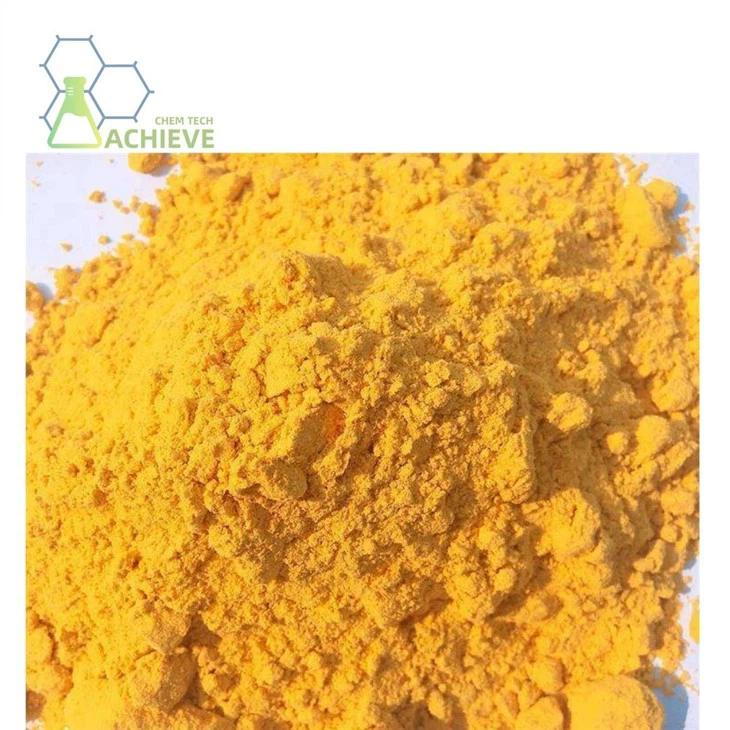


Shaanxi BLOOM Tech Co., Ltd. is one of the most experienced manufacturers and suppliers of potassium ferrocyanide trihyrate cas 14459-95-1 in China. Welcome to wholesale bulk high quality potassium ferrocyanide trihyrate cas 14459-95-1 for sale here from our factory. Good service and reasonable price are available.
Potassium ferrocyanide trihydrate, also commonly known as potassium ferrocyanide (trihydrate), is a stable inorganic coordination compound with abundant and diversified industrial and laboratory application fields. Its typical appearance takes the form of bright yellow monoclinic crystal particles; the substance dissolves smoothly in purified water and acetone, yet remains completely insoluble in ethanol, ether, methyl acetate, and liquid ammonia. This crystal is quite sensitive to strong light and ambient humidity, and will gradually deteriorate upon prolonged exposure to open air. Bloomtechz supplies this compound with controlled purity and consistent batch quality to support your lab and industrial research projects.

Additional information of chemical compound:
|
Chemical Formula |
C6H6FeK4N6O3 |
|
Exact Mass |
421.84 |
|
Molecular Weight |
422.39 |
|
m/z |
421.84(100.0%),423.84(28.9%),422.84(6.5%),419.84(6.4%), 425.84(3.1%),422.84(2.3%),422.84(2.2%),424.84(1.9%),421.84(1.8%) |
|
Elemental Analysis |
C, 17.06; H, 1.43; Fe, 13.22; K, 37.03; N, 19.90; O, 11.36 |
|
Melting point |
70℃(lit.) |
|
Density |
1.85 |
|
Storage conditions |
Store at +5℃ to +30℃. |
|
|
|


Its food-additive-grade refined products are mainly deployed as safe anti-caking additives for edible salt, effectively preventing salt particles from agglomerating and consistently keeping the salt in a free-flowing loose state.Potassium ferrocyanide trihyrate, commonly known as potassium ferrocyanide, is an important inorganic compound. It has a wide range of applications in multiple fields, and the following is a detailed explanation of its uses:
Application of chemical reagents
Metal ion detection and analysis
One of the most common uses of potassium ferrocyanide trihydrate in chemical analysis is as a detection reagent for iron ions. When potassium ferrocyanide trihydrate is mixed with iron ions under appropriate conditions, a deep blue precipitate - Prussian blue - is generated. This reaction has high selectivity and sensitivity, and is therefore widely used in various fields such as water quality monitoring, environmental monitoring.
In water quality monitoring, the level and type of water pollution can be determined by detecting the content of iron ions in the water.
For example, in groundwater pollution monitoring, if an abnormal increase in iron ion content is detected, it may indicate the presence of heavy metal pollution or organic pollution in groundwater.
At this point, using potassium ferrocyanide trihydrate for iron ion detection can quickly and accurately determine the pollution status of water quality.


In environmental pollution monitoring, potassium ferrocyanide trihydrate is also widely applied to accurately detect the free iron ion content in the atmosphere, soil, and other natural environments. By regularly tracking the dynamic changes in iron ion content in the environment, the actual degree and developing trend of environmental pollution can be objectively evaluated, providing reliable scientific basis for targeted environmental protection governance. In addition to ferric and ferrous iron ions, potassium ferrocyanide trihydrate can also be utilized to qualitatively detect various other heavy metal ions.
These metal ions react with potassium ferrocyanide trihydrate to form precipitates or complexes of different colors, which can be determined by observing color changes or conducting further analysis to determine the type and content of metal ions. For example, in the detection of copper ions, potassium ferrocyanide trihydrate can react with copper ions to form a deep blue complex, which has high selectivity and sensitivity, and is therefore widely used for quantitative and qualitative analysis of copper ions.


Formation of Prussian Blue and Its Related Applications
Prussian blue is a compound with unique color and chemical properties, and its formation mechanism involves coordination between iron ions and cyanide ions. When potassium ferrocyanide trihydrate is mixed with potassium ferrocyanide under appropriate conditions, iron ions will coordinate with cyanide ions to form Prussian blue complexes. The formation process of Prussian blue is influenced by various factors, such as reactant concentration, temperature, pH value, etc.
By adjusting these factors, the formation rate and yield of Prussian blue can be controlled to meet the demand for Prussian blue in different fields. Prussian blue has a wide range of applications in the field of chemical reagents. For example, in the dye industry, Prussian blue can be used as an important blue dye raw material for manufacturing various blue textiles and leather products. In the pigment industry, Prussian blue can be used as an important blue pigment raw material for manufacturing various blue coatings, inks, plastics, etc.


In addition, high-purity Prussian blue can also be utilized to prepare various specific special chemical reagents and efficient industrial catalysts. For example, in complex organic synthesis reactions, Prussian blue can serve as a mild catalyst or coordinating ligand for multiple chemical reactions, effectively promoting the smooth progress of the reaction and significantly raising the final target product yield.
As an indicator in titration analysis
Titration analysis is a commonly used chemical analysis method, which involves titrating a solution of known concentration (standard solution) into another solution of unknown concentration (test solution) until the reaction is complete. During the titration process, the endpoint of the reaction and the concentration of the test solution are determined by observing the color change of the indicator or performing potentiometric titration.


For example, in precise quantitative titration analysis of ferric iron ions, potassium ferrocyanide trihydrate can act as a reliable visual color indicator. When target iron ions fully react completely with the titrant inside the calibrated standard solution, the added potassium ferrocyanide trihydrate will instantly react with excess remaining titrant to form distinct Prussian blue precipitate, clearly marking the visible endpoint of the reaction. In addition, potassium ferrocyanide trihydrate can also be widely adopted for accurate titration analysis of various other metal ions, such as copper ions, zinc ions, etc.
Industrial applications
Potassium ferrocyanide trihyrate plays an important role in the pigment manufacturing industry. It can serve as a raw material or intermediate for certain pigments and participate in the synthesis process of pigments. By reacting with other compounds, pigment products with specific colors and properties can be prepared. These pigments are widely used in coatings, inks, plastics, rubber and other fields, providing rich colors and decorative effects for products.


In the printing and dyeing industry, potassium ferrocyanide trihydrate is commonly used as an oxidizing agent for printing and dyeing.It can help dyes better adhere to fibers, improving the fastness and vividness of dyeing. Meanwhile, it can also improve the solubility and dispersibility of dyes, making the dyeing process more uniform and stable. In addition, potassium ferrocyanide trihydrate can also be used in bleaching and decolorization processes to remove impurities and color spots on fibers, improving the whiteness and purity of products.
Steel and metal processing industry
In the steel industry, potassium ferrocyanide trihydrate is commonly used in the heat treatment process of steel. It can be used as an additive for carburizing or nitriding agents, promoting the diffusion and penetration of carbon or nitrogen elements into the interior of steel, and improving the hardness and wear resistance of steel. At the same time, it can also improve the microstructure and properties of steel, making it have better mechanical and processing properties.


In addition to its extensive core application in the steel manufacturing industry, potassium ferrocyanide trihydrate can also be widely utilized for fine surface treatment of various other metallic materials. It can act as a functional additive in electroplating or chemical plating working solutions to greatly enhance the firm adhesion and long-term corrosion resistance of the protective coating. At the same time, it can also be applied in precision metal polishing and surface cleaning processes to thoroughly eliminate stubborn oxides and miscellaneous impurities on the metal surface, significantly elevate the surface glossiness and intrinsic purity of the finished metal.
Explosives and Fireworks Industry
Potassium ferrocyanide trihydrate also has important applications in the explosive manufacturing industry. It can be used as a raw material or additive for explosives, participating in the synthesis and formulation design of explosives. By reacting with other compounds, explosive products with specific explosive properties and uses can be prepared. These explosives are widely used in mining, building demolition, military and other fields, providing strong support for various engineering tasks.


In addition to its special application in the industrial manufacture of explosives, potassium ferrocyanide trihydrate can also be widely adopted in the whole production process of colorful fireworks. It can serve as a stable coloring agent or smoke generator for fireworks, offering vivid rich colors and thick smoke effects for finished fireworks. Meanwhile, it can also be applied in the formulation design and technical process improvement of fireworks to boost their overall performance and intrinsic safety.
Other industrial applications
In the electronics industry, potassium ferrocyanide trihyrate can be used as an additive or modifier for certain electronic materials. By reacting or mixing with other compounds, the performance and application effectiveness of electronic materials can be improved. For example, in the fields of electronic ceramics, electronic pastes, etc., potassium ferrocyanide trihydrate can be used as an additive to improve the conductivity, thermal stability.


With the improvement of environmental awareness and the strengthening of environmental regulations, the application of potassium ferrocyanide trihydrate in the environmental protection industry is gradually increasing. It can be used in fields such as wastewater treatment and air purification to remove pollutants such as heavy metal ions and organic matter in water, and reduce the concentration of harmful gases in the air. By combining with other environmental protection technologies and equipment, effective treatment and recycling of wastewater and exhaust gas can be achieved.
Production Process
The industrial synthesis of potassium ferrocyanide trihydrate relies on the controlled complexation reaction between ferro-containing raw materials and cyanide-containing precursors under alkaline aqueous medium, followed by multi-stage purification, recrystallization and solid-liquid separation operations.
In the initial complexation stage, ferrous salt feedstock is introduced into the alkaline reaction system, where coordinated cyanide ligands gradually bind to ferrous central ions under precisely maintained temperature and pH gradients. The reaction kinetics are modulated by continuous agitation and inert gas shielding to suppress the oxidation of Fe²⁺ active centers and prevent the generation of undesired ferricyanide by-products.
Upon the completion of coordination reaction, the crude mother liquor undergoes preliminary filtration to remove insoluble suspended residues and particulate impurities. The clarified solution is then subjected to thermal concentration under reduced pressure to elevate the solute concentration, avoiding local overheating which may trigger the decomposition of coordination complexes.


Controlled cooling crystallization is subsequently implemented to induce the nucleation and growth of monoclinic potassium ferrocyanide trihydrate crystals; the cooling rate and supersaturation state are rigorously regulated to optimize crystal morphology, reduce fine crystal fragments and mitigate inclusion of foreign ions within the crystal lattice.
The harvested crystal slurry is separated via vacuum filtration or centrifugal solid-liquid separation. The filter cake is washed repeatedly with pre-cooled purified water to eliminate residual soluble salts and adsorbed mother liquor contaminants. After washing, the wet crystals enter low-temperature vacuum drying modules. Drying parameters are strictly constrained to preserve the trihydrate crystal water structure, preventing dehydration transition into anhydrous potassium ferrocyanide.
Post-drying crystals proceed through particle size classification and metal impurity detection. Qualified products are sealed under low-humidity shading conditions.Bloomtechz implements full-process inline monitoring for each production batch. We track residual free cyanide, heavy metal contaminants and crystal phase composition throughout synthesis and purification, ensuring the final product maintains stable crystal structure, high purity and minimized batch variation to satisfy rigorous analytical chemistry and material research requirements.
references
Younes M, et al. Re-evaluation of sodium ferrocyanide (E 535), potassium ferrocyanide (E 536) and calcium ferrocyanide (E 538) as food additives[J]. EFSA Journal, 2018, 16(7): e05374. DOI:10.2903/j.efsa.2018.5374
Yang N, Li H, Zhao L, et al. In Situ Generation of Prussian Blue with Potassium Ferrocyanide to Improve the Sensitivity of Chemiluminescence Immunoassay Using Magnetic Nanoparticles as Label[J]. Analytical Chemistry, 2019, 91(7): 4906-4912. DOI:10.1021/acs.analchem.9b00237
Mansour A N, Ko J K, Waller G H, et al. Structural Analysis of K₄Fe(CN)₆·3H₂O, K₃Fe(CN)₆ and Prussian Blue[J]. ECS Journal of Solid State Science and Technology, 2021, 10(10): 101008. DOI:10.1149/2162-8777/ac2591
Frequently Asked Questions
1. Can Bloomtechz provide custom impurity limits for potassium ferrocyanide trihydrate for analytical or electrochemistry projects?
+
-
Yes. Bloomtechz can adjust specifications and control targeted impurities such as free cyanide and heavy metals according to your project requirements. Whether you need ACS-grade material for lab analysis or low-impurity crystals for redox electrolyte research, we can deliver matching COA and test data to meet your project standards.
2. What protective measures does Bloomtechz use for this light-sensitive crystal during packaging and transit?
+
-
Since potassium ferrocyanide trihydrate is sensitive to light and moisture, Bloomtechz adopts light-blocking sealed packaging to avoid crystal degradation. Our packaging design prevents moisture ingress during ocean or air shipping. We also attach clear handling and storage instructions for end users.
3. Can Bloomtechz supply supporting documents for customs and factory audit for bulk shipments?
+
-
Absolutely. Bloomtechz can provide full sets of export documents including MSDS, COA, commercial invoice and packing list. All documentation is prepared to meet global customs requirements and supports your internal supplier audit and material archive management.
4. What application scenarios are best suited for Bloomtechz potassium ferrocyanide trihydrate?
+
-
Our potassium ferrocyanide trihydrate is widely used for analytical chemistry testing, pigment synthesis, electrochemistry research and metal surface treatment. The uniform crystal form and stable solubility make it ideal for laboratory route screening and industrial process scaling.
5. Does Bloomtechz offer technical guidance to prevent crystal deterioration during long-term storage?
+
-
Our technical team can share practical storage and handling guidelines. Potassium ferrocyanide trihydrate requires sealed, dark and dry storage. We will advise on suitable container selection and environmental control methods to avoid crystal discoloration and performance decline for your long-term experiments.
Hot Tags: potassium ferrocyanide trihyrate cas 14459-95-1, suppliers, manufacturers, factory, wholesale, buy, price, bulk, for sale, 2 Bromo 4 trifluoromethyl pyridine, D-Lyxose, Iridium III chloride, Copper II Acetate CAS 142 71 2, 3 5 Dichlorophenylboronic acid, Polymerization inhibitor 510 NPAL