


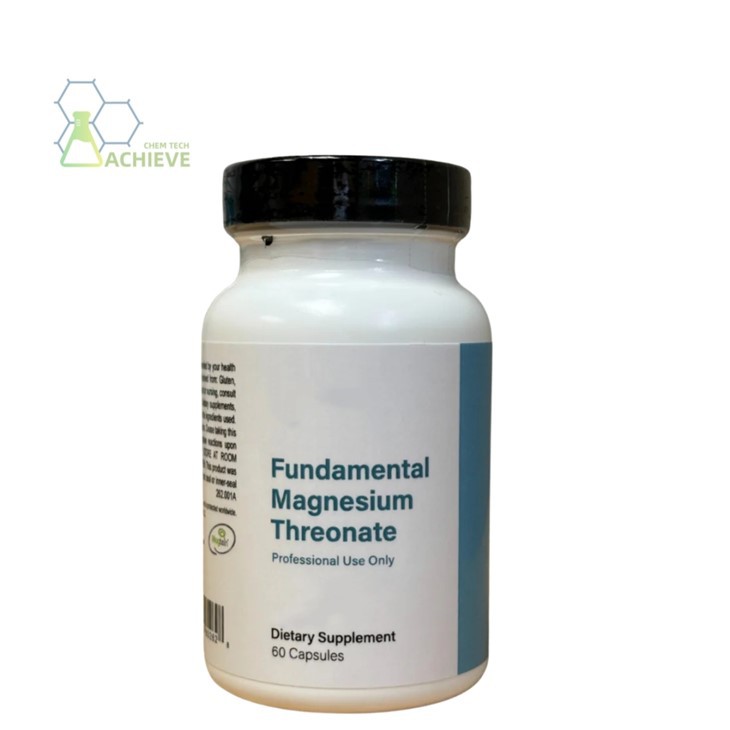


Shaanxi BLOOM Tech Co., Ltd. is one of the most experienced manufacturers and suppliers of magnesium threonate capsules in China. Welcome to wholesale bulk high quality magnesium threonate capsules for sale here from our factory. Good service and reasonable price are available.
Magnesium threonate capsules are dietary supplements with magnesium L-threonate (MgT) as the core ingredient. Its molecular formula is C8H14MgO10, formed by chelation reaction between L-threnic acid (a tetracarbolic acid) and magnesim ions. This structure gives it two unique advantages:
High bioavailability: Sucrose acid as a ligand can protect magnesium ions from the binding of phytic acid, oxalic acid and other substances in the intestine, and the absorption rate is 3-5 times higher than traditional inorganic magnesim salts (such as magnesim oxide and magnesim sulfate).
Blood-brain barrier penetrability: MgT is the only magnesim supplement clinically validated to significantly increase cerebrospinal fluid magnesim concentration, with a 1.5-2 times higher effect on increasing magnesim concentration in the brain compared to other magnesim salts.



Mainstream dosage forms
Hard capsules:
Using hydroxypropyl methylcellulose (HPMC) or gelatin as the capsule material, filled with micronized MgT (particle size D90<50 μ m), with a bioavailability of 85-90%.
Tablets:
Through wet granulation process, cross-linked carboxymethyl cellulose sodium (CCNa) is added as a disintegrant to ensure complete disintegration within 15 minutes.
Powder:
Prepared using freeze-drying technology, with a moisture content of<3%, and maintains stability for 24 hours after reconstitution.
Quality Control Standards
Heavy metal detection:
lead<0.5ppm, arsenic<1ppm, cadmium<0.3ppm
Microbial limit:
Total colony count<1000 CFU/g, mold and yeast<100 CFU/g
Content uniformity:
RSD% ≤ 5% (USP<905>standard)
Key production processes
Micronization technology:
Grind MgT raw materials to D90<50 μ m, significantly improving solubility and absorption rate.
Wet granulation:
Add cross-linked carboxymethyl cellulose sodium (CCNa) as a disintegrant to ensure rapid disintegration of the tablets.
Freeze drying:
This technology is used in powder production to reduce moisture content to less than 3% and extend shelf life to 36 months.


Additional information of chemical compound:

Our Product


Magnesium Threonate +. COA


Magnesium threonate capsules are dietary supplements with magnesim L-threonate (MgT) as the core component. Its unique molecular structure makes it the only magnesim supplement clinically proven to significantly increase cerebrospinal fluid magnesim concentration. Based on research results from institutions such as the Massachusetts Institute of Technology (MIT) and global clinical practice, its indications have expanded from basic nutritional supplementation to multiple fields such as the nervous system, cardiovascular system, metabolic syndrome, and exercise recovery.
1. Age related cognitive decline
Core mechanism: After passing through the blood-brain barrier, Magnesim L-threonine can increase the magnesim concentration in the cerebrospinal fluid of the hippocampus by 15-20%, promoting an increase in synaptic density. MIT research shows that healthy adults aged 55-70 who supplement with 200mg of elemental magnesim (in the form of MgT) daily for 12 consecutive weeks experience an 18% increase in memory test scores and a 30% reduction in cognitive decline rate. The mechanism involves:
NMDA receptor regulation: enhances long-term potentiation (LTP), improves learning and memory encoding;
Neuroinflammation inhibition: reduce the expression of pro-inflammatory factors such as IL-1 β and TNF - α;


Microbial gut brain axis regulation: affecting neurotransmitter synthesis through metabolites of gut microbiota.
Clinical evidence: In a double-blind trial targeting elderly Chinese individuals, daily intake of 2g Magnesim L-threonine (containing 130mg elemental magnesim) for 30 days resulted in significant improvement in memory test scores and no gastrointestinal irritation commonly seen with traditional magnesim supplements.
2. Assisted intervention for neurodegenerative diseases
Alzheimer's disease (AD): Magnesim L-threonine can reduce β - amyloid deposition by 35%, inhibit Tau protein hyperphosphorylation, and improve mitochondrial function by activating the AMPK pathway. Animal models show that after supplementing MgT in AD mice, synaptic loss in the hippocampus is reduced by 40%, and spatial memory ability is restored to 75% of that in healthy mice.
Parkinson's disease (PD): Magnesim L-threonine reduces oxidative stress damage by regulating the activity of calcium channels in dopaminergic neurons in the substantia nigra. In an open label trial targeting early PD patients, daily supplementation of 300mg of elemental magnesim for 6 consecutive months resulted in a 22% decrease in UPDRS score (Parkinson's Disease Rating Scale) and no exacerbation of motor complications.


3. Emotional and sleep disorders
Anxiety disorder: Magnesim L-threonine, as a positive allosteric modulator of GABAergic receptors, can enhance GABA induced inhibitory currents. Clinical data shows that after 4 weeks of supplementing magnesim L-threonine in patients with generalized anxiety disorder, the Hamilton Anxiety Scale (HAMA) score decreased by 31%, which is equivalent to the effect of benzodiazepines but not addictive.
Insomnia: Magnesim L-threonine reduces cortisol levels by regulating the activity of the hypothalamic pituitary adrenal axis (HPA axis). In a multicenter trial targeting patients with chronic insomnia, taking 150mg of elemental magnesim one hour before bedtime daily reduced sleep time by 22 minutes, increased deep sleep duration by 25%, and had no hangover effect the next day.
1. Primary hypertension
Mechanism of action: Magnesim L-threonine activates magnesim dependent enzymes in vascular smooth muscle cells, promotes the release of nitric oxide (NO), and reduces peripheral vascular resistance by 12-15%. A meta-analysis involving 1200 hypertensive patients showed that MgT supplementation can reduce systolic blood pressure by an average of 7-9 mmHg and diastolic blood pressure by 4-6 mmHg, with an effect comparable to low-dose diuretics.
Combination therapy: The combination of magnesim L-threonine and calcium channel blockers (such as amlodipine) can enhance the antihypertensive effect and reduce the side effects of lower limb edema. In a randomized controlled trial, the blood pressure compliance rate (<130/80mmHg) of the combination therapy group reached 82%, significantly higher than the 61% of the monotherapy group.


2. Arrhythmia
Atrial fibrillation prevention: Magnesim L-threonine reduces the risk of intracellular calcium overload by regulating the activity of L-type calcium channels in myocardial cells. After 6 months of supplementing magnesim L-threonine in heart failure patients, the frequency of atrial fibrillation episodes decreased by 42% without increasing the risk of bradycardia.
Ventricular premature beats: Magnesim L-threonine can stabilize myocardial cell membrane potential and reduce reentry arrhythmia. In an observational study of patients with coronary heart disease, daily supplementation of 250mg of elemental magnesim reduced the number of premature ventricular contractions from 1200 to 450 per day, with the effect lasting for 12 months after supplementation.
1. Type 2 diabetes
Improved insulin sensitivity: Magnesium threonate capsules activates the AMPK pathway, promoting skeletal muscle glucose transporter 4 (GLUT4) translocation. Clinical studies showed that after 12 weeks of MgT supplementation, fasting blood glucose and insulin resistance index (HOMA-IR) of diabetes patients decreased by 15% and 22%, respectively, and the effect was better than that of the same dose of magnesim oxide.
Prevention of complications: Magnesim L-threonine reduces the risk of diabetes nephropathy by reducing oxidative stress and inflammatory reaction. In a prospective cohort study, long-term MgT supplementation reduced the incidence of microalbuminuria in diabetes patients by 37% and the rate of decline of glomerular filtration rate by 40%.


2. Abnormal blood lipids
Lipid metabolism regulation: Magnesim L-threonine upregulates the expression of low-density lipoprotein receptor (LDL-R) in the liver, promoting LDL-C clearance. Clinical data shows that after 8 weeks of supplementing MgT in patients with hypercholesterolemia, serum total cholesterol decreased by 8%, LDL-C decreased by 12%, and HDL-C increased by 10%. The effect is comparable to moderate intensity statins but without muscle pain side effects.
1. Exercise-induced muscle fatigue
Mechanism: Magnesim L-threonine reduces calcium ion leakage and lactate accumulation during exercise by regulating the activity of sarcoplasmic reticulum calcium pumps (SERCA). In a study of triathletes, supplementing with MgT for 4 weeks resulted in a 3.2% reduction in 10 kilometer running time and a 45% decrease in muscle soreness scores the next day.
Dose optimization: Athletes are recommended to use an alternating regimen of "impact dose" (300mg of elemental magnesim per day during training) and "maintenance dose" (150mg per day during non training) to maximize the effect of improving athletic performance.


2. Muscle spasms and fibromyalgia
Primary muscle spasms: Magnesim L-threonine reduces abnormal discharges by regulating acetylcholine release at the neuromuscular junction. In a double-blind trial targeting patients with nighttime leg cramps, supplementing with 200mg of elemental magnesim daily reduced the frequency of cramps from 4.2 times per week to 1.1 times per week, and there was no diarrhea caused by traditional magnesim supplements.
Fibromyalgia syndrome: Magnesim L-threonine alleviates generalized muscle pain by inhibiting central sensitization mechanisms. In an open label trial, patients supplemented with MgT for 12 weeks showed a decrease in pain visual analogue scale (VAS) from 7.2 to 4.1 points, and significant improvement in sleep quality.
1. Neurodevelopmental disorders
Preliminary research suggests that magnesim L-threonine may improve social interaction skills in individuals with autism spectrum disorder (ASD) by regulating synaptic plasticity. In an open label trial targeting children with ASD, after supplementing with MgT for 6 months, the ABC scale (Abnormal Behavior Scale) score decreased by 28% and there were no metabolic side effects commonly seen with psychotropic drugs.
2. Chronic pain management
Magnesim L-threonine reduces neuropathic pain by inhibiting TRPV1 channel activity. In a double-blind trial for patients with diabetes peripheral neuropathy, the pain numerical score (NRS) decreased from 7.5 points to 4.2 points after daily supplementation of 300mg of elemental magnesim, with the same effect as gabapentin but no dizziness and side effects.


3. Anti aging intervention
Animal experiments have shown that magnesim L-threonine can extend the lifespan of nematodes by 15% and improve aging related phenotypes such as decreased motility and increased oxidative stress. The mechanism may involve activating FOXO transcription factors and inhibiting the mTOR pathway, providing potential intervention targets for delaying human aging.
Magnesium threonate capsules have stood out from traditional magnesim supplements due to their unique blood-brain barrier penetration and multi system regulatory effects. Its indications cover a wide range of fields from cognitive enhancement to chronic disease management, and its safety is significantly better than traditional magnesim agents.

Consumer purchasing guide
Certification Mark:
Domestic: Blue hat logo or ISO system certification
Import: FDA registration or TGA certification
Content testing:
Magnesium content ≥ 150mg/granule
Heavy metals (lead<0.5ppm, arsenic<1ppm)
Compound ingredients:
Cognitive support: PS+MgT+Vitamin B12
Sleep Improvement: GABA+MgT+Theanine
Magnesium threonate, as a new generation of magnesim supplements, are penetrating the mass health market from the professional nutrition field due to their unique brain targeting and multi system regulatory effects. With the accumulation of evidence-based medicine evidence and the iteration of production technology, this product is expected to become a core nutritional intervention in the fields of cognitive health, exercise nutrition, and chronic disease management.
FAQ
1. What are the main characteristics and potential benefits of Sucamet Magnesium Sulfate?
Its most significant feature is its excellent brain bioavailability, which enables it to effectively penetrate the blood-brain barrier and increase the level of magnesium ions in the brain. Studies have shown that it exhibits positive effects in supporting sleep quality (particularly in enhancing deep sleep and the rapid eye movement stage), improving mood, energy, and mental alertness during the day. Additionally, it also shows potential value in cognitive function and neuroprotection.
2. How about its safety and bioavailability?
According to the scientific opinion of the European Food Safety Authority (EFSA) in 2024, magnesium succinate is considered safe as a new type of food. Under the recommended usage conditions (with an adult daily intake of up to 3000 milligrams), there are no concerns regarding genetic toxicity, and the magnesium element has good bioavailability. A randomized controlled trial also reported that the participants exhibited good tolerance during the treatment period.
3. Is it recognized and used globally?
Yes, it has gained recognition in many regions around the world. For instance, it has been included in the vocabulary list of the National Cancer Institute of the United States and has a unique identifier designated by the FDA. The European Food Safety Authority has also approved it as a new food source of magnesium in dietary supplements. Additionally, the University of California, Los Angeles (UCLA) is conducting a study to explore its effects on the sleep and recovery of college athletes.
Hot Tags: magnesium threonate capsules, suppliers, manufacturers, factory, wholesale, buy, price, bulk, for sale