






Shaanxi BLOOM Tech Co., Ltd. is one of the most experienced manufacturers and suppliers of octreotide capsule in China. Welcome to wholesale bulk high quality octreotide capsule for sale here from our factory. Good service and reasonable price are available.
Octreotide capsule are an orally administered somatostatin analogue (SSA), belonging to the artificially synthesized octapeptide cyclic compound. Its active ingredient octreotide selectively binds to the somatostatin receptor (SSTR2/5 subtype), mimicking the physiological function of natural somatostatin, but with a longer duration of action. It can significantly inhibit the secretion of growth hormone (GH), glucagon, insulin and other hormones, and reduce the level of insulin-like growth factor-1 (IGF-1). It can reduce gastric acid and trypsin secretion, lower gastric motility and gallbladder emptying, inhibit cholecystokinin trypsin secretion, and protect pancreatic cells.
Our Products Form


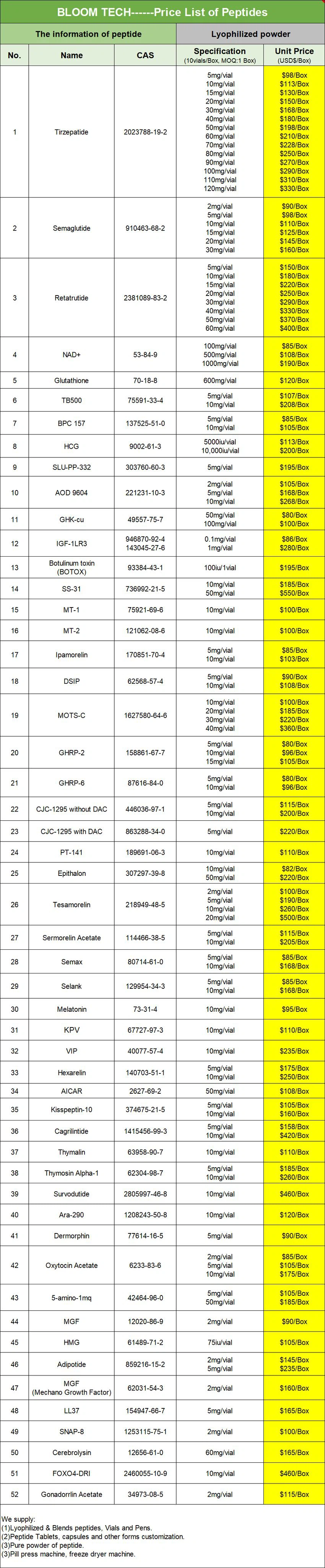
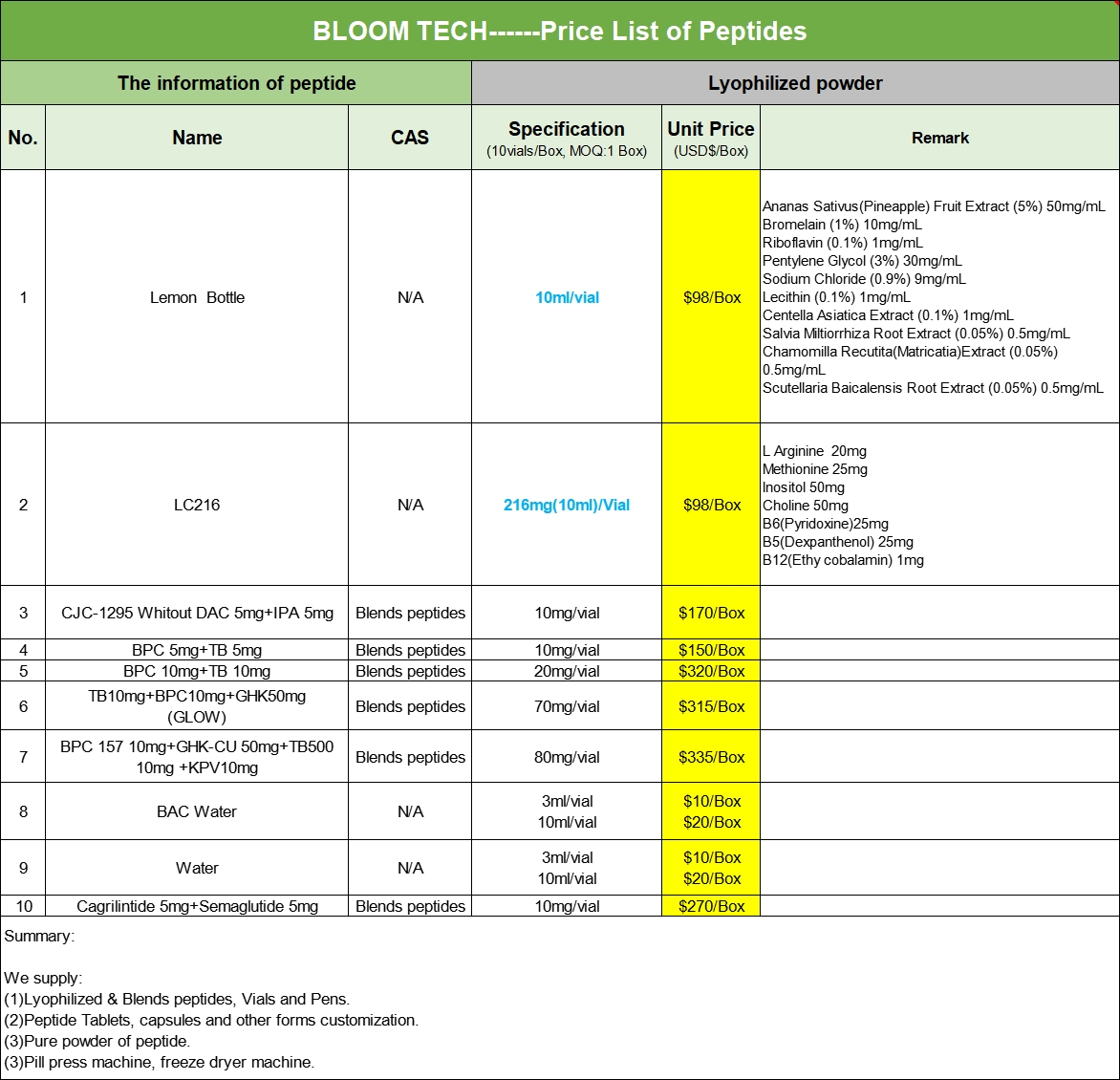

Octreotide COA


The specific molecular mechanism of octreotide induced constriction of visceral blood vessels
After combining with SSTR2 (primary) and SSTR5 (secondary) on visceral vascular smooth muscle cells, Octreotide Capsule activates multiple inhibitory signaling pathways within the cells, ultimately promoting vascular smooth muscle contraction and reducing visceral vascular blood flow. The entire process is divided into three stages: signal initiation, signal conduction, and effect realization.
Signal initiation - octreotide binds to SSTR, activating Gi/o inhibitory G protein

As a ligand, octreotide first binds to SSTR2 (or SSTR5) on the surface of visceral vascular smooth muscle cell membrane, causing a conformational change in the receptor and activating the Gi/o inhibitory G protein coupled to the receptor. This is the initiating step of the entire vascular contraction signal, and the specific mechanism is as follows:
SSTR belongs to G protein coupled receptors (GPCRs), and its intracellular segment binds to Gi/o protein (composed of alpha, beta, and gamma subunits). When in a resting state, Gi/o protein binds to GDP and is inactive.
After the binding of octreotide to SSTR, the receptor conformation changes, promoting the release of GDP from the α subunit of Gi/o protein and binding to GTP, thereby activating Gi/o protein (the α subunit is separated from the β and γ subunits and plays their respective roles).
The activation of Gi/o protein is the key first step in the contraction of visceral blood vessels by octreotide, and its core function is to "inhibit excitatory signaling pathways and activate contraction related signaling pathways", laying the foundation for subsequent vascular smooth muscle contraction. The mechanism of Gi/o protein activation is consistent with the inhibition of hormone secretion, but the subsequent signaling pathways focus differently (hormone inhibition focuses on inhibiting cAMP production, while vascular constriction focuses on regulating calcium ion concentration and smooth muscle contractile protein activity).

Signal transduction - multiple pathways work together to regulate calcium ion concentration and smooth muscle contraction
The activated Gi/o proteins (α subunit, β - γ subunit) work together through multiple signaling pathways to ultimately achieve an increase in intracellular calcium ion concentration, which is the core messenger of vascular smooth muscle contraction. An increase in intracellular calcium ion concentration can initiate smooth muscle contraction. Specifically divided into four core pathways:

Pathway 1: Inhibit adenylate cyclase (AC), reduce cAMP production, and relieve inhibition of smooth muscle contraction
The activated Gi/o protein alpha subunit directly inhibits adenylate cyclase (AC) activity in vascular smooth muscle cells.
The core function of adenylate cyclase is to catalyze ATP to generate cAMP (cyclic adenosine monophosphate), which is a second messenger that "inhibits vascular smooth muscle contraction". When cAMP concentration increases, it activates protein kinase A (PKA), which further phosphorylates smooth muscle contraction related proteins (such as myosin light chain kinase), inhibits smooth muscle contraction, and leads to vascular dilation.
Octreotide inhibits AC and reduces cAMP production, thereby relieving the inhibitory effect of cAMP on vascular smooth muscle contraction and creating conditions for smooth muscle contraction. Meanwhile, the reduction of cAMP also inhibits the relaxation of vascular smooth muscle cells, further enhancing the effect of vascular contraction.
When portal hypertension occurs in cirrhosis, the concentration of cAMP in visceral blood vessels significantly increases (due to the stimulation of AC activation by substances such as vasoactive intestinal peptide and glucagon), leading to continuous dilation of visceral blood vessels and increased blood flow. Octreotide can directly reverse this pathological state and promote vascular constriction by inhibiting AC and reducing cAMP production.


Pathway 2: Activate phospholipase C (PLC), promote the generation of IP3 and DAG, and increase intracellular calcium ion concentration
The activated Gi/o protein β - γ subunit binds to phospholipase C (PLC) in vascular smooth muscle cells, activating PLC activity.
After PLC activation, it catalyzes the hydrolysis of phosphatidylinositol 4,5-diphosphate (PIP2) on the cell membrane, generating two second messengers: inositol triphosphate (IP3) and diacylglycerol (DAG).
The function of IP3: It diffuses to the endoplasmic reticulum (calcium storage reservoir) inside the cell, binds to the IP3 receptor on the endoplasmic reticulum, promotes the release of stored calcium ions from the endoplasmic reticulum, and rapidly increases the intracellular calcium ion concentration (which is the main source of intracellular calcium ion elevation).
The function of DAG is to activate protein kinase C (PKC) in cells, which further phosphorylates vascular smooth muscle contraction related proteins, enhances smooth muscle contraction ability, and promotes the opening of calcium channels on the cell membrane, assisting in increasing extracellular calcium ion influx.
This pathway is the core pathway through which octreotide promotes vascular smooth muscle contraction. Through the synergistic effect of IP3 and DAG, it rapidly increases intracellular calcium ion concentration and initiates smooth muscle contraction process.


Pathway 3: Inhibit potassium channels, reduce potassium ion efflux, maintain cell membrane depolarization, and promote calcium channel opening
The activated Gi/o protein alpha subunit directly inhibits inward rectifying potassium channels (GIRK) and delayed rectifying potassium channels on the membrane of vascular smooth muscle cells.
The function of potassium channels is to promote the efflux of potassium ions and maintain the resting potential (negative potential) of the cell membrane. When potassium channels are inhibited, the efflux of potassium ions decreases, and the cell membrane potential shifts from the resting potential (-70~-80mV) to the depolarization direction (the potential increases to -50~-60mV).
After depolarization of the cell membrane, voltage-gated calcium channels (mainly L-type calcium channels) on the cell membrane are activated, promoting the influx of extracellular calcium ions, further increasing intracellular calcium ion concentration, and enhancing the contractile effect of vascular smooth muscle.
When portal hypertension occurs in liver cirrhosis, the potassium channel activity of visceral vascular smooth muscle cells increases, potassium ion efflux increases, cell membrane hyperpolarization leads to calcium channel closure, reduced calcium ion influx, smooth muscle relaxation, and vascular dilation. Octreotide Capsule inhibits potassium channels, reverses cell membrane hyperpolarization, promotes calcium channel opening, and provides sufficient calcium ions for smooth muscle contraction.


Pathway 4: Inhibit nitric oxide (NO) production, reduce vascular dilation, and enhance contractile effect
Nitric oxide (NO) is a potent vasodilator. During portal hypertension in liver cirrhosis, the secretion of NO by visceral endothelial cells significantly increases, leading to continuous dilation of visceral blood vessels, increased blood flow, and worsening of portal hypertension. Octreotide indirectly enhances the contractile effect of visceral blood vessels by inhibiting the production of NO, reducing vasodilation, and the specific mechanism is as follows:
After binding to SSTR2, octreotide inhibits the activity of endothelial nitric oxide synthase (eNOS) through Gi/o protein - eNOS is a key enzyme in endothelial cell synthesis of NO. After its activity is inhibited, the synthesis and release of NO are significantly reduced.
After the reduction of NO, its vasodilatory effect on vascular smooth muscle weakens, and the effects of NO mediated "inhibition of calcium channel opening" and "promotion of cAMP generation" also weaken, further enhancing the vasoconstrictive effect of octreotide.
In addition, octreotide can also inhibit the expression of inducible nitric oxide synthase (iNOS), reduce the production of NO induced by inflammatory factors such as TNF - α and IL-6, avoid visceral vascular dilation caused by inflammatory reactions, and further stabilize visceral vascular tension.

Effect realization - smooth muscle contraction of blood vessels, reduction in visceral vessel diameter, and decrease in blood flow
Through the synergistic effect of the four signaling pathways mentioned above, the concentration of calcium ions in visceral vascular smooth muscle cells significantly increases, ultimately initiating smooth muscle contraction and achieving visceral vascular contraction and reduced blood flow. The specific process is as follows:

After the increase of intracellular calcium ion concentration, calcium ions bind with troponin C (TnC) in smooth muscle cells to form a calcium ion TnC complex.
This complex promotes the separation of troponin I (TnI) from actin, relieving TnI's inhibitory effect on actin myosin binding.
After binding with myosin, myosin light chain (MLC) is phosphorylated by myosin light chain kinase (MLCK), causing conformational changes in the myosin head and sliding with actin, leading to vascular smooth muscle contraction.
After smooth muscle contraction, the diameter of visceral blood vessels (mainly the superior mesenteric artery, splenic artery, left gastric artery, etc.) significantly decreases, and vascular resistance increases, thereby reducing the blood flow of visceral organs. Clinical studies have shown that octreotide can reduce visceral blood flow by 20% -30%, with the most significant reduction in blood flow of the mesenteric artery (25% -35% reduction), which is also its core effect in reducing portal pressure.

Hot Tags: octreotide capsule, suppliers, manufacturers, factory, wholesale, buy, price, bulk, for sale