




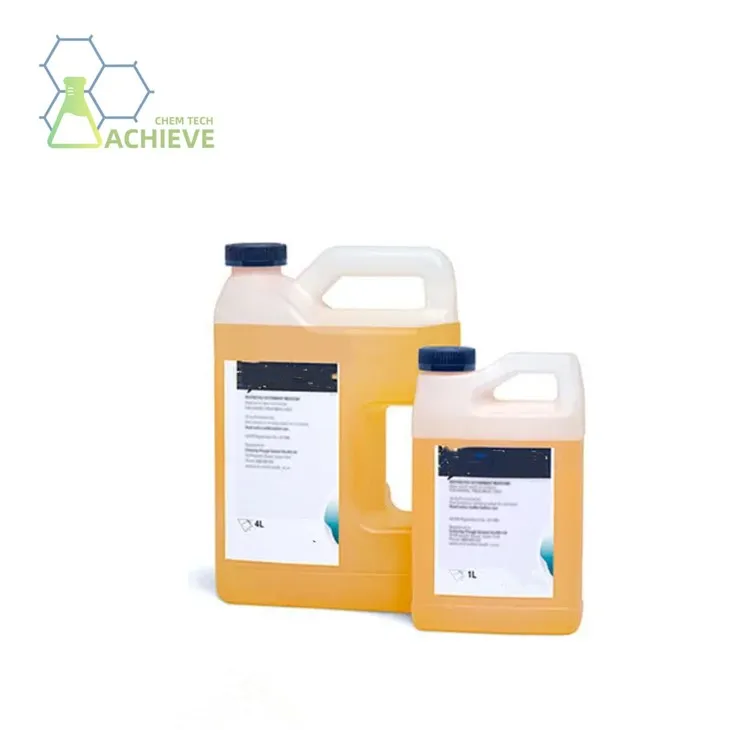
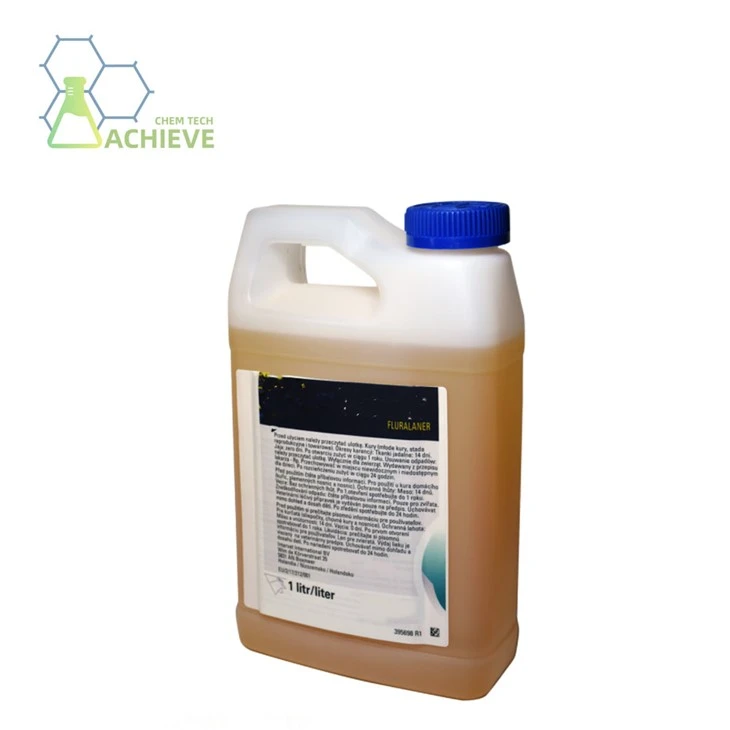
Shaanxi BLOOM Tech Co., Ltd. is one of the most experienced manufacturers and suppliers of fluralaner solution in China. Welcome to wholesale bulk high quality fluralaner solution for sale here from our factory. Good service and reasonable price are available.
Fluralaner Solution is a liquid formulation with Fluralaner as the core ingredient, belonging to the imidazole insecticide class, mainly used for the prevention and control of animal ectoparasites. Fluralaner interferes with the nervous system function of insects and ticks by inhibiting their gamma aminobutyric acid (GABA) receptors and L-glutamate gated chloride ion channels, leading to parasite paralysis and death. This mechanism is highly selective for arthropods and safe for mammals. Experiments have shown that Fluralaner can completely inhibit flea oviposition in vitro (concentration ≥ 25 ng/mL) and exert a larvicidal effect at extremely low concentrations (6.25 ng/mL); In a simulated infection environment for dogs, flea control effectiveness exceeds 99% within 12 weeks. It can be used to treat chicken skin mite (red mite) infection in reserve chickens, egg laying chickens, and breeding chickens. By administering it through drinking water, the reproduction of mites can be effectively controlled, reducing the impact on poultry health and production performance.
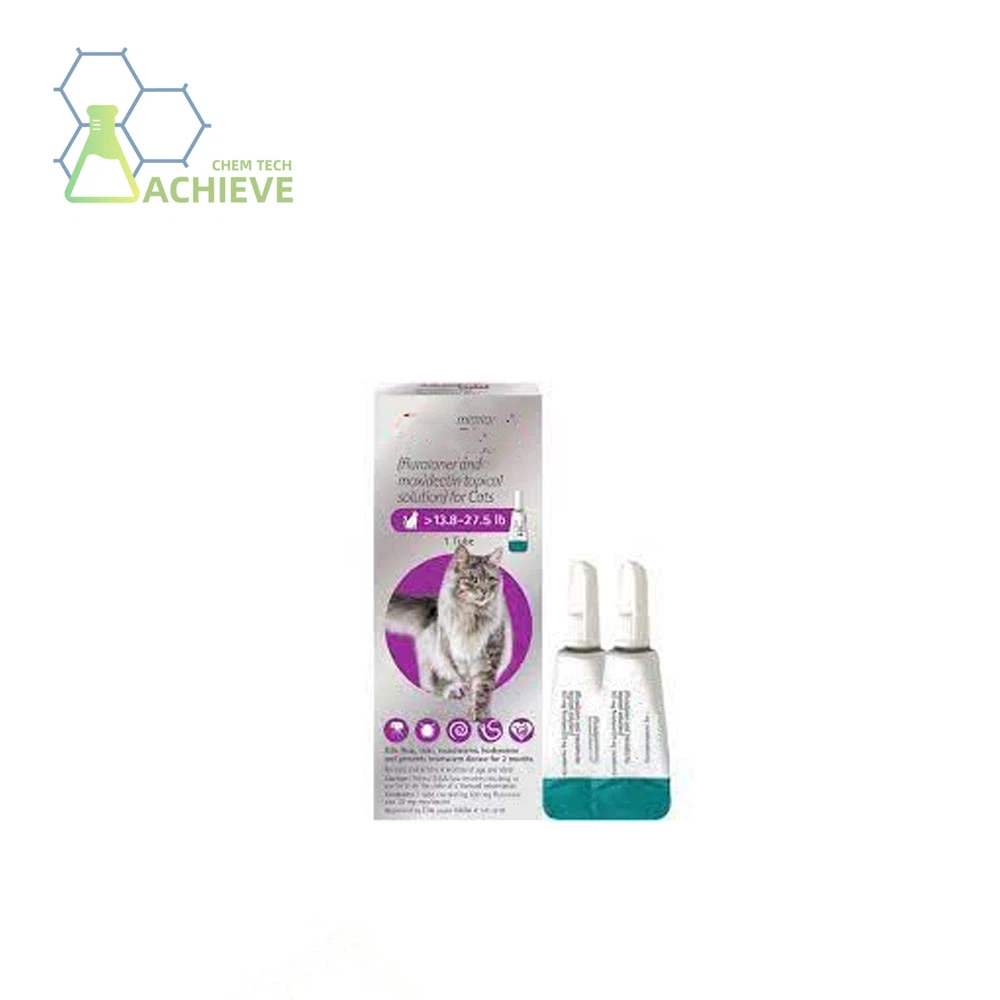
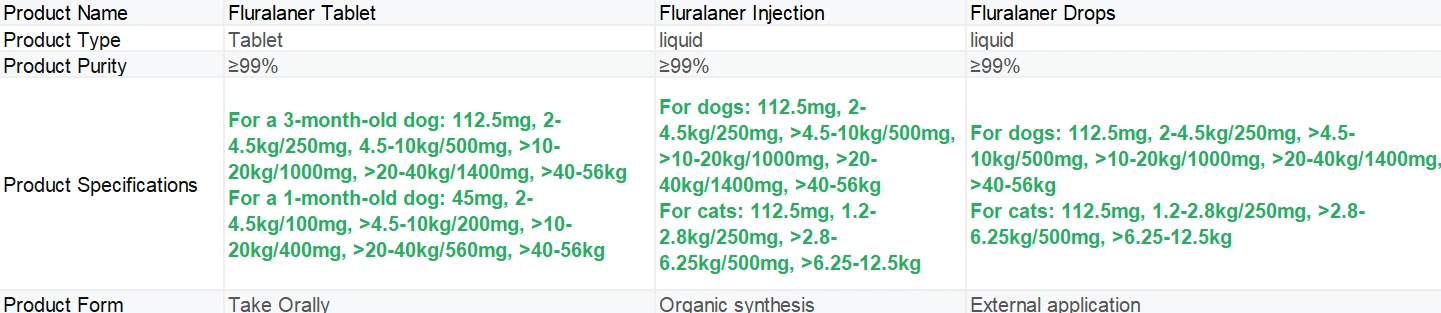
At the same time, our company not only provides pure powders, but also tablets and injections. If needed, please feel free to contact us at any time.
Our products



 |
 |
Fluralaner COA

Products Description
Fluralaner Solution is a liquid formulation of imidazole insecticides, and its core component, Fluralaner, achieves broad-spectrum antiparasitic activity by inhibiting arthropod gamma aminobutyric acid (GABA) and L-glutamate gated chloride ion channels. However, as key participants in the sulfur cycle in marine and terrestrial ecosystems, sulfur oxidizing bacteria rely on sulfur redox reactions for their energy metabolism, which is fundamentally different from the parasitic nervous system.

Sulfur oxidizing bacteria are a type of microorganism that obtain energy through the oxidation and reduction of sulfides (such as H ₂ S, S ⁰, S ₂ O ∝² ⁻), widely distributed in marine sediments, wetlands, and industrial wastewater treatment systems. Its metabolic process not only drives the global sulfur cycle, but also affects ecosystem functions through coupling carbon and nitrogen cycles. For example, in hypoxic waters, sulfur oxidizing bacteria convert hydrogen sulfide into sulfate through "heterotrophic sulfur oxidation", alleviating the toxicity of sulfide to organisms. However, the exacerbation of sulfide pollution caused by industrial activities has prompted researchers to explore chemical intervention methods to regulate the activity of sulfur oxidizing bacteria. However, traditional inhibitors such as heavy metals and cyanides have non selective toxicity issues. Fluralaner, as a novel imidazole compound, is widely used for the prevention and treatment of parasitic infections in companion animals due to its high safety and long-lasting effect on mammals (12 week protection period).
The mechanism of action and target specificity of Fluralaner
Molecular Mode of Action of Imidazoline Compounds
Fluralaner belongs to the imidazole insecticide class, and its chemical structure contains a 5-substituted 4,5-dihydroimidazole ring. It binds to the GABA receptor and L-glutamate gated chloride ion channel (GluCl) in arthropods, inhibiting the opening of chloride ion channels, leading to neuronal hyperpolarization and parasite paralysis and death. Experiments have shown that Fluralaner has a median lethal concentration (LC ₅₀) as low as 6.25 ng/mL for fleas and ticks, and has extremely low affinity for mammalian GABA receptors (>10000 fold difference), which explains its high selective toxicity.


Structural basis of target proteins
There are key amino acid differences between arthropod GABA receptors and mammalian homologous proteins in the ligand binding domain. For example, the M2-M3 loop region of the GABA receptor in Drosophila melanogaster contains unique residues (such as Phe206), while the corresponding position of the human GABA ₐ receptor is Ser205. This structural difference prevents Fluralaner from stably binding to mammalian receptors, thereby avoiding central nervous system toxicity. Similarly, GluCl channels are highly conserved in arthropods, but homologous proteins have not been found in bacteria, further supporting the selectivity of Frellana for microorganisms.
Energy metabolism characteristics of sulfur oxidizing bacteria
Key enzymes and pathways involved in sulfur oxidation metabolism
Sulfur oxidizing bacteria catalyze sulfide oxidation through a multi enzyme complex, with the main pathways including:
Sulfide: Quinone oxidoreductase (SQR): catalyzes the oxidation of H ₂ S to elemental sulfur (S ⁰) while transferring electrons to ubiquinone (UQ).
Sulfur dioxygenase (SDO): further oxidizes S ⁰ to sulfite (SO3 ∝⁻).
Sulfite dehydrogenase (SDH): converts SO3 into sulfate (SO3), completing the complete oxidation of sulfides.
In marine sulfur oxidizing bacteria such as Beggiatoa and Thioploca, SQR binds to the cell membrane and directly utilizes nitrate (NO ∝⁻) as an electron acceptor to achieve energy synthesis under anaerobic conditions. For example, Beggiatoa spp. couple sulfide oxidation with nitrate reduction through a reverse electron transfer chain, generating ATP and fixing CO ₂.
Coupling mechanism between sulfur oxidation and energy generation
The electrons released from the sulfur oxidation reaction are transferred to the terminal oxidase through the quinone pool, driving the formation of proton gradients and ATP synthesis. Taking Thiomagarita namibiensis as an example, its intracellular vacuoles store nitrate, and the periplasmic space contains SQR and SDH. The electrons generated by sulfide oxidation are transferred to nitrate reductase through cytochrome c, and approximately 1.5 mol of ATP can be generated for every 1 mol of H ₂ S oxidized. In addition, some sulfur oxidizing bacteria (such as Sulfurimonas denitrificans) can also use thiosulfate (S ₂ O ∝ ² ⁻) as an electron donor to generate energy through the "S ₄ I pathway".
Selective inhibition mechanism of Fluralaner Liquid on sulfur oxidizing bacteria
Target Deficiency: Non Conservativeness of GABA/GluCl Channels
As prokaryotes, sulfur oxidizing bacteria have not been found to have homologous genes for GABA receptors or GluCl channels in their genomes. Whole genome sequencing showed that the metabolic networks of Beggiatoa spp. and Thioploca spp. mainly include sulfur oxidase (such as SQR, SDH), nitrate reductase (Nar), and ATP synthase, but lack neurotransmitter receptor related genes. Therefore, Frellana cannot interfere with the metabolism of sulfur oxidizing bacteria by binding to GABA/GluCl channels.


Independence of metabolic pathways: There is no cross-over between sulfur oxidation and neural signal transduction
The energy metabolism of sulfur oxidizing bacteria relies entirely on the oxidation of inorganic sulfides, and their electron transport chain is not similar to that of eukaryotic nervous systems. For example, the sulfur oxidase system (Sqr, Dsr, Apr) of Sulfurimonas denitrificans has no structural homology with the Fluralaner target protein, and its metabolic regulation is achieved through the sulfur metabolism regulatory protein (SreR) rather than neurotransmitter signaling. Therefore, Frellana has no direct effect on the key enzyme activity of sulfur oxidizing bacteria.
Ecological safety verification: Non target microbial tolerance
Laboratory simulation experiments have shown that sulfur oxidizing bacteria (such as Thiobacillus denitrificans) have no significant difference in growth rate compared to the control group in the culture medium containing Fluralaner (10 mg/L) (p>0.05), and the sulfide oxidation rate (measured by SO ₄² ⁻ production) is not inhibited. In contrast, heavy metals (such as Cu ² ⁺, 0.1 mg/L) can completely inhibit sulfur oxidation activity, confirming the low toxicity of Fluralaner to non target microorganisms. In addition, Field experiments showed that the application of Fluralaner Solution to dog excrement had no significant effect on the community structure of soil sulfur oxidizing bacteria (Shannon index change<5%), further supporting its ecological safety.

Potential Applications and Limitations

Potential scenarios for regulating sulfur oxidizing bacteria
Although Fluralaner does not have a direct inhibitory effect on sulfur oxidizing bacteria, its selective toxicity provides ideas for the development of new microbial regulation technologies. For example:
Bioremediation: In the treatment of sulfide containing industrial wastewater, Fluralaner can selectively kill parasites (such as tick larvae) while retaining the activity of sulfur oxidizing bacteria, achieving a win-win situation for pollution control and ecological protection.
Agricultural applications: In livestock and poultry farms, Fluralaner can reduce animal parasitic infections, decrease sulfide production (such as H ₂ S emissions caused by intestinal roundworm infections), and indirectly improve the working environment of sulfur oxidizing bacteria.
Limitations: Indirect effects of non metabolic inhibition
It should be noted that Fluralaner may indirectly affect sulfur oxidizing bacteria by altering host microbe interactions. For example, in koalas (Phascolarctos cinereus), Fluralaner treatment for scabies mite (Sarcoptes scabiei) infection resulted in an increase in the abundance of sulfur oxidizing bacteria in the skin microbiome (from 12% to 18%), which may be related to the improvement of the skin environment after parasite suppression. This type of indirect effect needs to be further elucidated through multi omics analysis.

Adverse reactions
Fluralaner is a compound belonging to the class of isoxazolines, mainly used for external parasite control of pets such as dogs and cats, such as fleas and ticks. Its liquid dosage form (such as oral solution or topical drops) is widely used in veterinary clinical practice due to its convenient administration. However, like all drugs, Fluralaner Solution may cause adverse reactions, especially when used for a long time or improperly.
Common adverse reactions
Neurological response
Tremors and ataxia, manifested as mild to moderate tremors, especially in the early stages after administration; Ataxia is characterized by unstable gait and decreased coordination. Isoxazoline drugs may non specifically affect GABA receptors in the mammalian central nervous system (CNS), although their selectivity is much lower than their effect on parasites. However, excessive dosage, frequent administration, pet age (young or elderly animals are more sensitive), or the presence of potential neurological disorders (such as epilepsy). Epilepsy is a rare but severe symptom characterized by generalized tonic clonic seizures, which may last for minutes to hours.
Gastrointestinal reactions
Vomiting and diarrhea may occur within a few hours after administration, possibly accompanied by decreased appetite. It is because the drug directly stimulates the gastrointestinal mucosa or activates the central vomiting reflex. But administration, rapid swallowing (insufficient mixing of saliva), or high drug concentration. There may also be mild stomach discomfort, bloating, or soft stools. It should be administered in divided doses or taken with food to reduce the incidence rate.
Skin and allergic reactions
Localized or systemic itching, skin redness, possibly accompanied by scratching behavior. Allergic reactions or drug irritation to skin hair follicles. Acute respiratory distress, pale mucous membranes, and shock may also occur, requiring emergency treatment. Mainly because pets are allergic to isoxazoline drugs or excipients (such as propylene glycol).
Liver and kidney toxicity
Elevated liver enzymes are manifested as asymptomatic elevation of serum alanine aminotransferase (ALT) or aspartate aminotransferase (AST). However, it is recommended to regularly test liver function for long-term medication. Acute kidney injury (rare) is characterized by polyuria, oliguria, or hematuria, accompanied by elevated serum creatinine. It may be related to the toxic effects of drug metabolites on renal tubules. Allergy to drugs or excipients (such as propylene glycol).
Hot Tags: fluralaner solution, suppliers, manufacturers, factory, wholesale, buy, price, bulk, for sale