


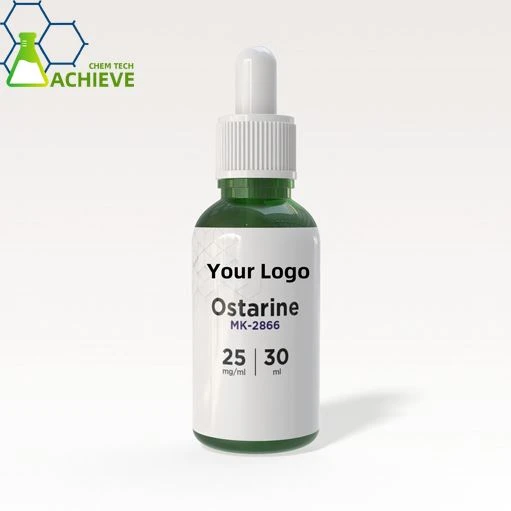


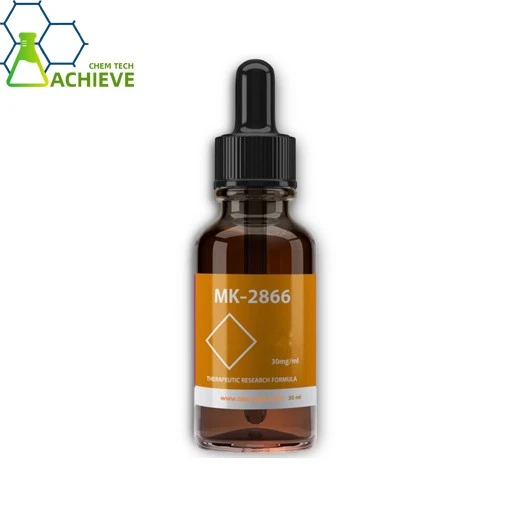


Shaanxi BLOOM Tech Co., Ltd. is one of the most experienced manufacturers and suppliers of ostarine liquid in China. Welcome to wholesale bulk high quality ostarine liquid for sale here from our factory. Good service and reasonable price are available.
Ostarine Liquid is an oral selective androgen receptor modulator (SARM) liquid formulation, with MK-2866 (Ostarine) as its main component. It selectively activates androgen receptors in muscles and bones, promoting muscle growth, enhancing strength, and accelerating recovery, while reducing side effects on tissues such as the prostate and hair. In liquid form, it is absorbed more quickly and dosage can be adjusted flexibly, making it suitable for users who need precise control over their intake.
Ostarine is commonly used for muscle building, fat reduction or recovery from injuries. Its anabolic effect is similar to that of steroids but is milder. The typical cycle lasts for 8 to 12 weeks, with a dosage range of 10 to 25 mg per day. Side effects may include mild testosterone suppression, but post-cycle therapy (PCT) is usually not necessary. It is important to note the illegality of its non-medical use and that it is classified as a banned substance in sports competitions. Before using it, it is recommended to consult a professional and avoid long-term high-dose use to reduce health risks.
|
|
|




Ostarine(MK-2866) Powder COA

Hepatotoxicity caused by incorrect dosage
Potential Association between Inaccurate Dose and Hepatotoxicity
Metabolic Characteristics of Ostarine and Liver Load
Ostarine, as a selective androgen receptor modulator (SARM), has its metabolism mainly dependent on the liver. It undergoes oxidative metabolism through the cytochrome P450 enzyme system (such as CYP3A4). Although current studies have not clearly confirmed its direct hepatotoxicity, high doses or long-term use may increase the risk of liver damage through the following mechanisms:
Oxidative Stress: Reactive oxygen species (ROS) generated during drug metabolism may damage the mitochondrial function of liver cells, leading to lipid peroxidation and DNA damage.
Cholestasis: At high doses, it may inhibit bile acid transporters (such as BSEP), causing cholestatic liver injury.
Individual Sensitivity: Genetic factors (such as CYP enzyme polymorphisms) may lead to low metabolic efficiency in some individuals, causing the drug to accumulate in the liver and intensifying toxicity.
The Amplification Effect of Inaccurate Dose
The difference in dropper markings may result in the actual intake dose deviating from the recommended value (usually 10-30 mg/d). For example:
Underestimating the dosage: If the scale of the dropper is too small, the user may compensate by increasing the number of doses or the volume, resulting in an excessive total daily dosage.
Overestimating the dosage: A scale that is too large may cause the user to take an excessive amount, directly increasing the burden on liver metabolism.
Animal experiments show that when Ostarine exceeds the therapeutic dose by 50 times, no obvious liver toxicity is observed, but there are limited long-term safety data for humans, and the cumulative effect of dosage deviation cannot be ignored.
Sources and Effects of Dropper Scale Differences

Design flaws in the scale
Unit confusion: Some droppers use "milliliters (mL)" as the unit, while users may mistakenly equate it with "milligrams (mg)", leading to incorrect dose calculation. For example, if the solution concentration is 10 mg/mL, mistakenly taking 1 mL actually means 10 mg; but if the concentration is 20 mg/mL, the same volume intake doubles.
Insufficient scale accuracy: Low-priced or non-standard products' droppers may have blurry scales and uneven spacing, making it difficult for users to accurately measure the target dose.
Operational errors in the usage scenario
Residual liquid: The residue on the dropper wall after dispensing may affect the accuracy of the dose. For example, if there is 0.1 mL of solution (concentration 20 mg/mL), then each dose actually takes 2 mg; but if the concentration is 20 mg/mL, the intake volume doubles.
Viewpoint deviation: When reading the scale, if the dropper is not kept vertical, the concave surface of the liquid may be misaligned with the scale line, causing a ±10% - 20% dose error.


Case analysis: Potential consequences of dosage deviation
Assume the target dosage for the user is 20 mg/d, and the solution concentration is 10 mg/mL:
Scale is too small: If the dropper actually dispenses 0.8 mL per milliliter, the user needs to take 2.5 mL (marked value) to reach 20 mg, but the actual intake is 25 mg (excessive by 25%).
Scale is blurry: The user mistakenly reads 1.5 mL as 1 mL, actually taking 15 mg (insufficient by 25%), possibly adding more dosage due to poor effect, ultimately resulting in an excessive total daily dosage.
Early Identification and Risk Management of Liver Toxicity
Monitoring of biomarkers for liver injury
Regular indicators: Regularly test serum ALT, AST, ALP, and total bilirubin (TBil). If ALT or AST > 3×ULN (normal upper limit) and TBil > 2×ULN, be alert to hepatocellular injury type DILI.
Emerging biomarkers: miR-122 (a liver-specific microRNA) and GLDH (glutamate dehydrogenase) can earlier reflect liver cell damage, but they have not been widely used in clinical practice.
Application and limitations of Hy's Law
Hy's Law states that if a patient with drug-induced liver injury (DILI) meets the following conditions, the mortality rate > 10%:
ALT or AST > 3×ULN;
TBil > 2×ULN;
ALP is normal or slightly elevated (R value = ALT/ALP > 5);
Excluding other liver diseases (such as viral hepatitis).
Limitation: This law is based on data from acute liver failure and has limited predictive value for chronic or subclinical liver damage, and it is necessary to combine liver biopsy or elasticity imaging (such as FibroScan) for comprehensive assessment.
Risk stratification management strategy
Low-risk users (no liver disease history, accurate dosage): Test liver function every 8 weeks.
Medium-risk users (dosage deviation ± 20% or using other hepatotoxic drugs): Test every 4 weeks, and supplement with B-ultrasound monitoring of liver morphology.
High-risk users (dosage deviation > 30% or with underlying liver disease): Avoid using Ostarine, or use it under the guidance of a liver disease expert.
Suggestions for consumer protection and industry regulation

Optimization of product labels and instructions
Dosage conversion table: Provide a "volume-dosage" comparison table (e.g., "1 mL = 10 mg") in the label and indicate the concentration of the solution.
Warning information: Boldface the statement "Excessive use may increase the risk of liver injury" and list symptoms of hepatotoxicity (e.g., jaundice, abdominal pain, fatigue).
Multi-language support: Provide instructions in at least three languages (e.g., English, Chinese, Spanish) for products sold internationally.
Standardized Improvements in Dropper Design
Uniform Units: Make droppers mandatory in "milliliters" and include a milligram conversion card (based on solution concentration) in the package.
Anti-residue design: Use of tapered tips or hydrophobic coatings to reduce liquid residue (target residue <0.05 mL).
Scale verification: third-party organizations (e.g., USP, EP) are introduced to certify the accuracy of the dropper, and the package is labeled as "compliant with ISO 8655".


Regulation and Recall Mechanism
Market Sampling: Ostarine Liquid products are sampled quarterly by the regulatory authority for dropper precision, and the failed products are forced to be removed from the shelves.
Recall Threshold: If the average dripper error of a batch of products is >15%, a recall and public apology are required.
Consumer Compensation: Users who have suffered health damages due to the dropper problem can claim "one refund and three compensations" and compensation for medical expenses in accordance with the Protection of Consumer Rights and Interests Act.
User Education and Self-Protection Measures
Dose Calibration Tips
Water Marking Method: Before the first use, use the dropper to measure 1 mL of water into the measuring cup to verify that the actual volume is consistent with the scale.
Marking method: Use a marker to mark the target dose on the eyedropper (e.g., draw a line at 2 mL) to minimize the error of each reading.
Alternative tool: If the accuracy of the dropper is in doubt, use a 1 mL syringe (to ensure sterility) to measure the dose.
Liver Health Monitoring Program
Baseline Assessment: test liver function, liver ultrasound and FibroScan prior to use to rule out underlying liver disease.
Cycle monitoring: test ALT, AST, TBil, and ALP every 4 weeks; if ALT is persistently >2 x ULN, suspend use and consult physician.
Symptom diary: Record whether symptoms such as abdominal pain, deepening of urine color, itching of skin, etc. occur after daily use of the drug, so as to facilitate timely medical consultation.
Legal rights defense channel
Evidence fixation: keep the proof of purchase, product packaging, photos of dropper and liver function test report.
Complaint channel: through the 12315 platform or the local market supervision bureau to complain, requesting the investigation of the problem products.
Class action lawsuit: If more than one user is damaged by the same batch of product dropper problem, you can jointly appoint a lawyer to file a class action lawsuit to reduce the cost of rights protection.
Technical breakthrough direction: Formulation innovation and safety verification
Innovation in Formulations: Overcoming the Blood-Brain Barrier and Long-acting Sustained-release Technology
As an selective androgen receptor modulator (SARM), Ostarine requires addressing the issue of low bioavailability (less than 3%) in traditional formulations. Drawing on the technology of eye drug delivery, an 80nm-level nanoparticle encapsulation system can be developed to increase the targeting efficiency by prolonging the drug's residence time in the vitreous humor (e.g., 72 hours). For instance, using platelet membrane camouflage technology combined with the release mechanism triggered by ROS/inflammatory microenvironment, the drug can be precisely enriched at the lesion site, reducing the risk of systemic exposure.
Drawing on the experience of long-acting sustained-release of peptide drugs, various dosage forms such as microspheres, PEG liposomes, or in situ gels can be developed. For example, combining Ostarine with degradable polymers (such as PLGA), the drug can be administered once every 3 months by controlling the degradation rate, reducing the risk of local irritation and infection caused by frequent injections. Such technologies have been successfully applied to leuprorelin microspheres (sales increased from 1 billion US dollars to 2.06 billion US dollars), verifying their commercial value.
Although peptide drugs have difficulty in oral absorption, their intestinal permeability can be enhanced by coating with enteric coatings or using penetration promoters (such as sodium deoxycholate). Combining with AI prediction models to screen the optimal ingredient combinations, it is expected to break through the first-pass effect limitation and develop oral liquid formulations with higher patient compliance.
Safety Verification: Full Chain Control from Laboratory to Clinic

Early Warning System for Liver Toxicity
Establish an AI-based biomarker prediction model, integrating indicators such as ALT/AST, miR-122, and GLDH, to achieve early identification of liver damage. For example, through deep learning analysis of millions of compound data, the potential toxicity of Ostarine metabolites (such as M1) can be identified in advance, guiding structural optimization to reduce risks.

Cross-species Safety Assessment
Using non-human primates (NHP) models to conduct toxicological studies, determine the NOAEL (No Observed Adverse Effect Level) and MTD (Maximum Tolerated Dose) of Ostarine. For instance, SOT109 (an ADC drug targeting CDH17) showed good tolerance at a dose of 25mg/kg in the NHP model, providing a reference for the design of the clinical dose of Ostarine.

Control of Formulation-related Impurities
For potential issues introduced by liquid formulations, such as solvent residues and degradation products, strict quality standards should be established. For example, the formulation of tizanidine requires an impurity total of ≤0.5% and uses EDTA disodium as a stabilizer to prevent oxidation degradation. Ostarine liquid should establish similar standards to ensure long-term storage stability.
Technological Breakthrough Paths and Industrial Collaboration
Collaboration Model between Academia, Industry, and Research Institutions
Jointly develop fixed-site coupling technology with university laboratories (such as Shenyang Pharmaceutical University) and CDMO enterprises (such as Wuxi Henglian), to improve the homogeneity of the binding between Ostarine and the carrier. For example, through enzymatic reactions and click chemistry coupling, optimize the process steps to reduce heterogeneity and improve drug safety and efficacy.
Differentiation of Indications Expansion
Focusing on unmet clinical needs, develop specialized formulations for specific populations. For instance, design an oral solution with a low concentration (1-2 mg/mL) for elderly patients with swallowing difficulties, or develop injection microspheres for athletes with rapid onset. Such strategies can avoid direct competition with traditional hormone drugs and form a differentiated advantage.
Global Regulatory Compliance Strategies
Adapt to the regulatory requirements of different markets, and formulate flexible registration paths. For example, in China, use the special approval channel of NMPA to accelerate the development of rare disease indications, and in Europe and the United States, utilize the "Research Chemical" policy of FDA to advance early research. At the same time, a complete chain quality traceability system from raw materials to finished products should be established to cope with the doping detection challenges posed by institutions such as WADA.
Hot Tags: ostarine liquid, suppliers, manufacturers, factory, wholesale, buy, price, bulk, for sale