


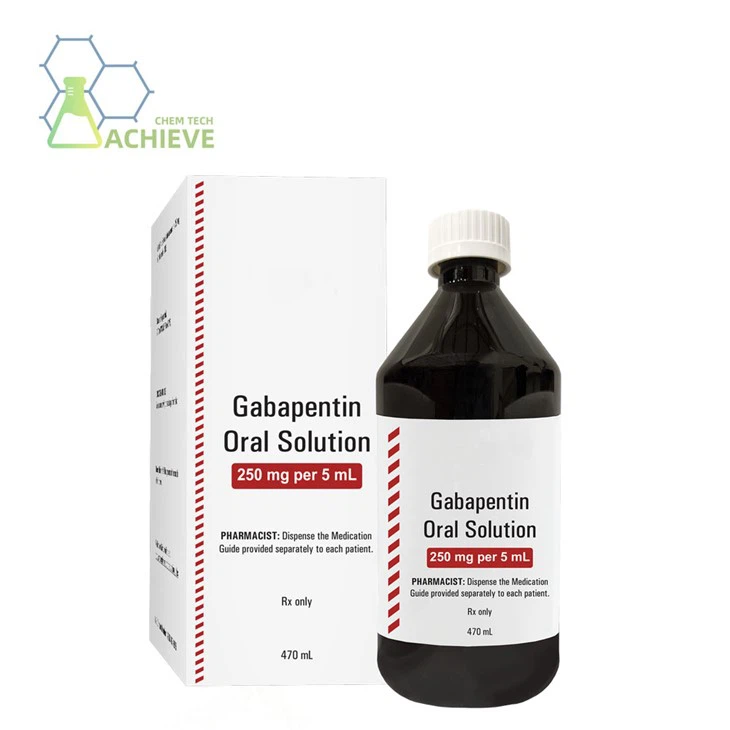

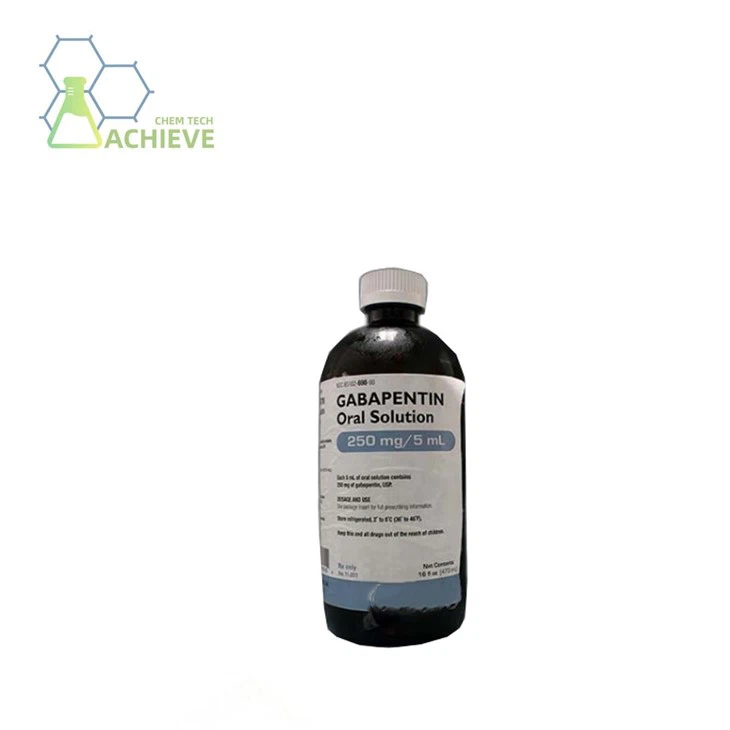


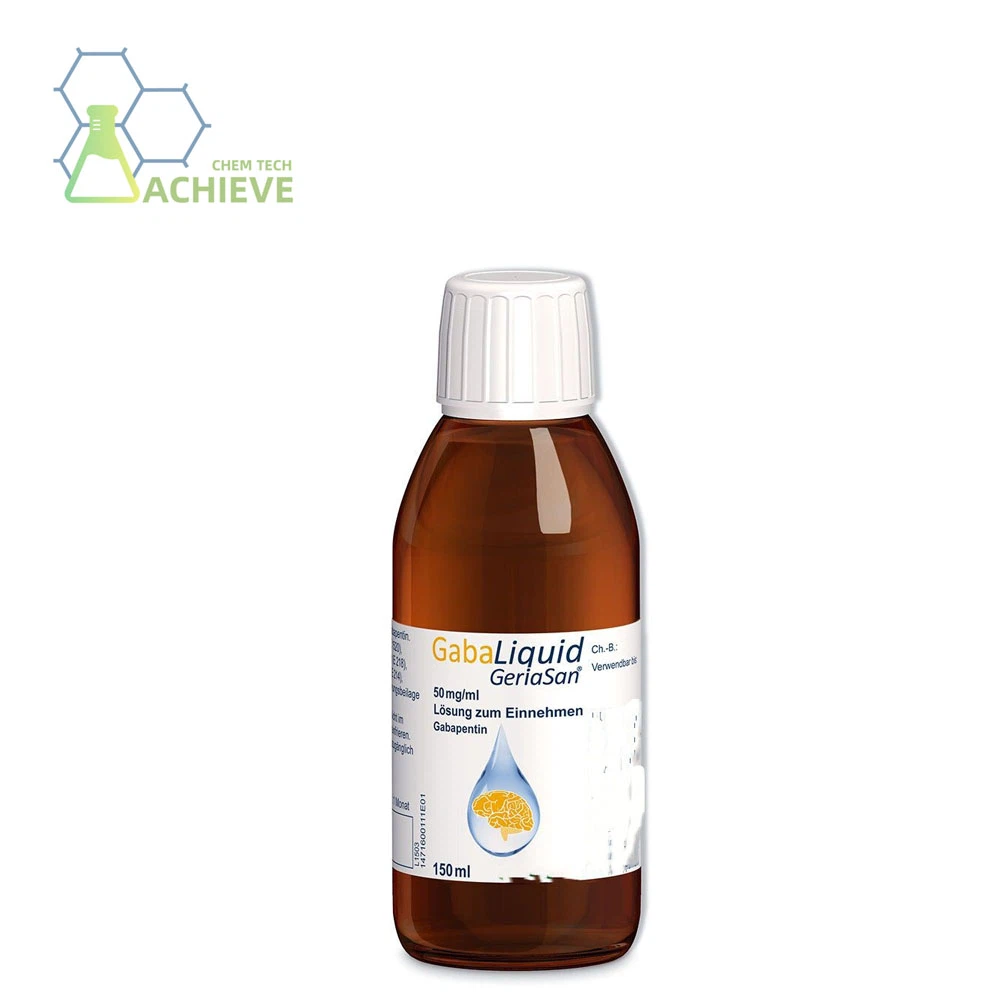
The chemical structure of Gabapentin Sirup is similar to gamma aminobutyric acid (GABA), but its mechanism of action is different from GABA. It does not bind to GABA receptors, metabolize into GABA or GABA agonists, inhibit GABA uptake, or be metabolized by GABA aminotransferase. It can also increase the conversion of GABA in brain tissue, increase its release and content, and reduce the release of certain monoamine excitatory neurotransmitters (such as NE and 5-HT) in mammalian brain tissue. However, there have been reports of hemorrhagic pancreatitis in patients treated with gabapentin capsules. There have been reports of allergic reactions (such as Stevens Johnson syndrome and erythema multiforme) in individual cases treated with gabapentin capsules. Therefore, it is known that people who are allergic to any component of the drug are prohibited from taking gabapentin, including patients with acute pancreatitis, renal dysfunction, elderly patients, etc. Meanwhile, antiepileptic drugs should not be abruptly discontinued as it may increase the frequency of epileptic seizures. The medication should be gradually stopped, with a minimum duration of one week.
Additional information of chemical compound:

|
|
|
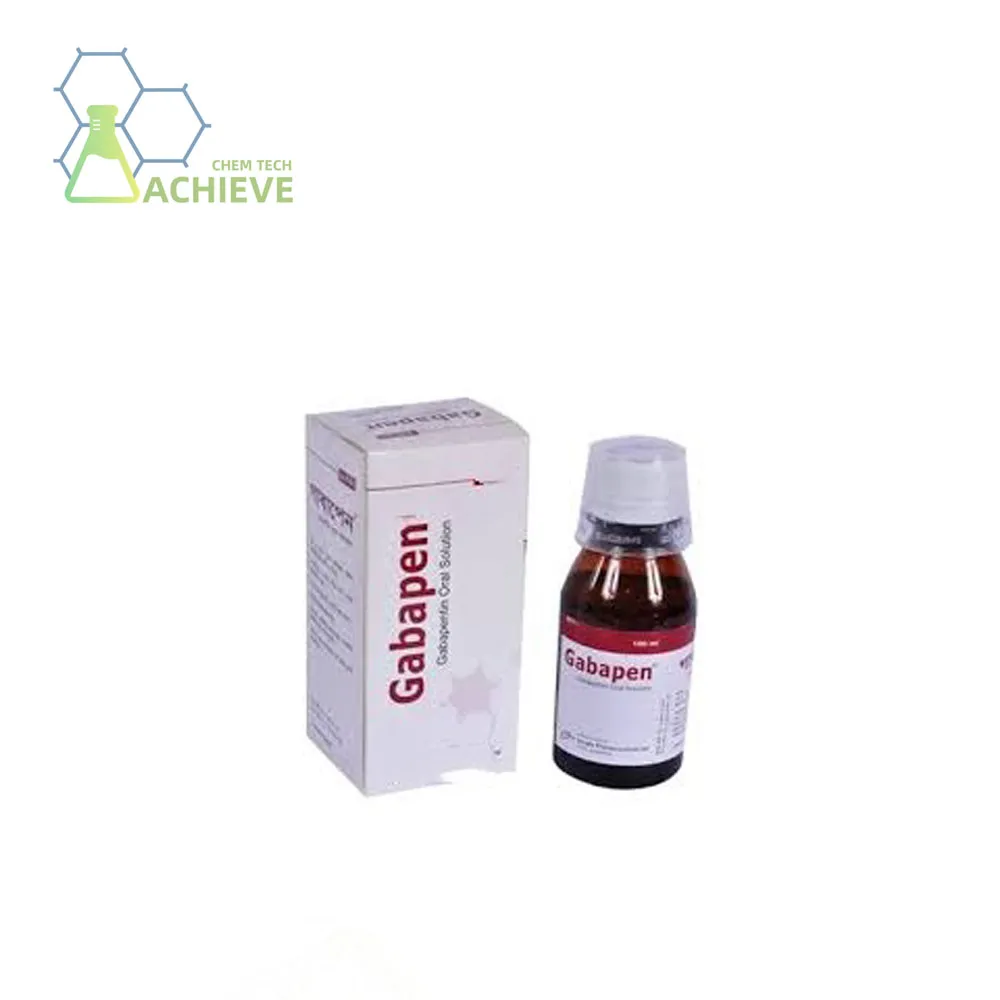
Gabapentin COA
 |
|
|
|
|

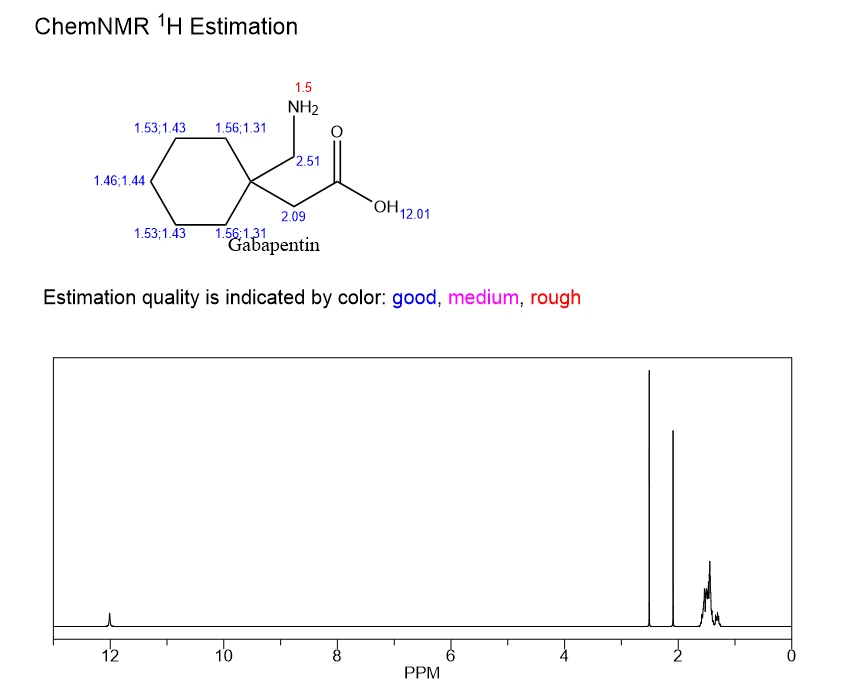
Rheological properties of gabapentin syrup
Gabapentin Sirup, as an antiepileptic and neuropathic drug, has a chemical structure similar to gamma aminobutyric acid (GABA), but its mechanism of action is unique. Although currently the common dosage forms of gabapentin are capsules, tablets, and oral solutions, if it is assumed to exist in a syrup dosage form, its rheological properties will be influenced by the physical and chemical properties of the drug itself, the syrup matrix, and multiple regulations on the interaction between the drug and excipients. The following is its detailed explanation:
Basic rheological properties of syrup formulations
Syrup formulations typically refer to drug solutions containing high concentrations of sucrose or other sugars, whose rheological properties have a significant impact on drug stability, taste, and patient compliance.
HIGH VISCOSITY
Syrup has a significantly higher viscosity than ordinary aqueous solutions due to its high sugar content (usually exceeding 60%). This high viscosity forms a three-dimensional structure through hydrogen bonding networks, which can mask the bitterness of gabapentin, improve taste, and slow down the emptying rate of the drug in the gastrointestinal tract, possibly prolonging absorption time. For example, in the treatment of patients with diabetes neuropathy, high viscosity syrup may achieve more lasting analgesic effect by delaying gastric emptying.

Thixotropy
Some syrup exhibits thixotropy, where viscosity decreases with increasing shear stress (such as stirring or oscillation) and recovers after standing. This characteristic helps to enhance the fluidity of syrup when poured out, making it easier to divide doses, while maintaining a stable structure to prevent drug settling when left to stand. For Gabapentin Sirup, the thixotropic design can optimize the medication experience for children or elderly patients.

Non Newtonian fluid behavior
Syrup typically behaves as a pseudoplastic fluid, with its viscosity decreasing with increasing shear rate. For example, in the paddle dissolution test, high shear forces can accelerate the dispersion of syrup, while low shear environments (such as the gastrointestinal tract) maintain slow drug release. This characteristic needs to be validated by measuring the viscosity curve using a rheometer to ensure the stability of the syrup under different conditions.
The Influence of Physical and Chemical Properties of Gabapentin on the Rheology of Syrup

Solubility and pH dependence
Gabapentin has a high solubility in water, but high sugar concentration may lower its solubility equilibrium through competitive hydration. Experiments have shown that in a 40% sucrose solution, the solubility of gabapentin decreases by about 15% compared to pure water. It is necessary to optimize the solubility by adjusting the sugar concentration or adding an appropriate amount of solubilizer (such as polysorbate 80). In addition, gabapentin is stable in acidic environments, while the pH of the syrup needs to be controlled between 3.0-6.0 to prevent the hydrolysis of sucrose into reducing sugars (such as glucose and fructose) and avoid drug degradation.
Stability and drug excipient interactions
The stability of gabapentin in syrup is affected by the type of sugar, preservatives, and pH value. For example, nipagin preservatives are prone to decomposition at pH>7, while gabapentin syrup typically has a pH below 6.0 and can synergistically inhibit microbial growth. At the same time, metal ions (such as calcium and magnesium) in syrup may increase viscosity through bridging, which needs to be controlled by adding chelating agents (such as EDTA).


Drug sedimentation risk
High viscosity syrup can delay the settling speed of gabapentin particles, but if the viscosity is insufficient, delamination may still occur. A uniform suspension system can be formed by adding suspension aids such as xanthan gum or sodium carboxymethyl cellulose. Rheological tests show that when the concentration of xanthan gum is 0.5%, the yield stress of the syrup significantly increases, which can effectively prevent drug settling.
Rheological testing method for gabapentin syrup
Use a rotational viscometer (such as a Brookfield viscometer) to measure viscosity at different shear rates and plot rheological curves. For example, scanning at a shear rate range of 0.1-100 s ⁻¹ at 25 ℃ can determine the fluid type of syrup (Newtonian or non Newtonian fluid). The viscosity of gabapentin syrup is usually between 100-1000 mPa · s and needs to be adjusted according to clinical needs.
Evaluate the thixotropic properties of syrup by continuously measuring the changes in viscosity over time. For example, after pre shearing at a shear rate of 10 s ⁻¹ for 1 minute, immediately reduce to 1 s ⁻¹ and record the viscosity recovery time. The thixotropic index can be calculated through viscosity recovery rate to guide formula optimization.
Monitor the viscosity, drug content, and pH changes of the syrup under accelerated stability testing (such as 40 ℃/75% RH conditions). For example, after being stored at 40 ℃ for 3 months, if the viscosity change of gabapentin is less than 10% and the drug content is greater than 95%, the formula is considered stable.
Use in vitro release assays (such as paddle or flow cytometry) to simulate the gastrointestinal environment and determine the release rate of gabapentin from syrup. Optimize the formula based on rheological data, for example, by adjusting the viscosity of the syrup to control the release of drugs within 0.5-2 hours to reach 50% -80%.
The influence of rheological properties of gabapentin syrup on clinical application
Dose accuracy
Appropriate viscosity can ensure the accuracy of each dosage distribution. For example, syrup with a viscosity of 500 mPa · s has moderate flowability when poured out, which can avoid drug overdose or insufficiency. Rheological tests show that when the viscosity is below 200 mPa · s, the dosage error may exceed 10%, which needs to be improved by adjusting the sugar concentration or thickening agent.
Absorption rate and bioavailability
High viscosity syrup may slow down the emptying rate of drugs in the gastrointestinal tract, thereby affecting absorption rate. Pharmacokinetic studies have shown that the peak time (Tmax) of gabapentin syrup is 0.5-1 hour longer than that of capsules, but there is no significant difference in bioavailability (AUC). This suggests that syrup formulations can achieve similar therapeutic effects by prolonging the duration of action.
Patient compliance
Good taste and ease of use can improve patient compliance. For example, by adding essence (such as strawberry or cherry flavor) and adjusting the sugar concentration (40% -60%), the sweetness of Gabapentin Sirup can be moderate and the bitterness of the drug can be masked. In addition, the thixotropic design can optimize the pouring experience of syrup, especially suitable for children or patients with swallowing difficulties.
Comparison of Gabapentin Syrup with Other Formulations

Comparison with capsules/tablets
Advantages: Syrup formulations are more suitable for children, elderly patients, or those with swallowing difficulties, and can improve compliance by adjusting taste.
Disadvantages: The syrup has a large volume and is inconvenient to carry; High sugar content may not be suitable for patients with diabetes; Viscosity may affect the drug release rate.
Comparison with Oral Solutions
Compared to oral solutions: Syrup has a higher sugar content and better taste, but may have a higher viscosity; Oral solutions usually have lower viscosity and are easier to divide into doses.
Comparison with suspensions: Drugs in syrup are usually completely dissolved, while drug particles in suspensions may settle; But the viscosity of the suspension can be controlled by adding a co suspension agent.

Optimization strategy for rheological properties of gabapentin syrup

Sugar concentration optimization
Determine the optimal sugar concentration (such as 40% -60%) through experiments, balancing viscosity, taste, and stability. For example, in a 40% sucrose solution, gabapentin has a high solubility and moderate syrup viscosity (about 300-500 mPa · s).
Thickener selection
Choose thickeners (such as xanthan gum, sodium carboxymethyl cellulose, or polyvinylpyrrolidone) according to your needs. Xanthan gum can significantly increase viscosity at concentrations of 0.1% -0.5% and has good thixotropy; Sodium carboxymethyl cellulose can form a stable gel network at the concentration of 0.2% -0.5%.


Preservatives and pH Adjustment
Add an appropriate amount of preservatives (such as nipagin methyl ester 0.1% -0.2%) to inhibit microbial growth, and control the pH at 3.0-6.0 through buffering agents (such as citric acid sodium citrate). For example, at pH 4.5, gabapentin has the best stability, and the anti-corrosion effect of methylparaben is significant.
Process optimization
Improve drug dispersion and reduce agglomeration through wet granulation or fluidized bed granulation processes. For example, mixing gabapentin with sucrose in a ratio of 1:5 before granulation can significantly improve the uniformity of the syrup.

Safety and Tolerability
Common Adverse Effects
CNS Effects: Dizziness (20–30%), somnolence (15–25%), and ataxia (10–15%) are most frequent, particularly during titration. These effects are dose-dependent and often resolve within 2–4 weeks.
Gastrointestinal: Nausea (10–15%), vomiting, and diarrhea may occur, mitigated by dividing doses or taking with food.
Metabolic: Weight gain (5–10% of patients) and peripheral edema (5%) are noted with long-term use.
Serious Risks
Suicidal Ideation: The FDA mandates a black box warning for all antiepileptics, including gabapentin, due to a 2-fold increased risk of suicidal thoughts/behavior.
Respiratory Depression: Rare but potentially fatal when combined with opioids or CNS depressants, necessitating careful monitoring in high-risk populations.
Misuse and Dependence: Though classified as a Schedule V controlled substance in some regions, gabapentin misuse (particularly at supratherapeutic doses) has been reported, often co-occurring with opioid or benzodiazepine abuse.
Contraindications and Precautions
Hypersensitivity: Avoid in patients with a history of angioedema or anaphylaxis to gabapentin.
Renal Impairment: Dose adjustments are critical in patients with creatinine clearance <60 mL/min, as gabapentin is primarily excreted unchanged via the kidneys.
Pregnancy and Lactation: Gabapentin crosses the placenta and is excreted in breast milk. While animal studies show no teratogenicity, human data are limited; use only if benefits outweigh risks.
Frequently Asked Questions
What to avoid while taking gabapentin?
+
-
When taking gabapentin, avoid alcohol, opioids, benzodiazepines, and other CNS depressants due to severe drowsiness, respiratory depression, and overdose risks; also be cautious with antacids (take 2+ hours apart) and certain antidepressants/antipsychotics, and never stop abruptly as it can trigger seizures. Always tell your doctor about all supplements and medications to prevent dangerous interactions.
What is the main thing gabapentin is used for?
+
-
Gabapentin is used to treat epilepsy. It's also taken for nerve pain, which can be caused by different conditions, including diabetes and shingles. Nerve pain can also happen after an injury.
Why is gabapentin bad for older people?
+
-
In some cases, Gabapentin can induce psychiatric symptoms, including mood swings, agitation, and depression. Elderly individuals may be more vulnerable to these effects due to age-related changes in brain chemistry and sensitivity to medications.
Hot Tags: gabapentin sirup, suppliers, manufacturers, factory, wholesale, buy, price, bulk, for sale