




Shaanxi BLOOM Tech Co., Ltd. is one of the most experienced manufacturers and suppliers of prilocaine gel in China. Welcome to wholesale bulk high quality prilocaine gel for sale here from our factory. Good service and reasonable price are available.
As a local anesthetic, prilocaine gel plays an important role in relieving superficial operation pain, skin pain and special scenes such as premature ejaculation treatment. It has a wide range of applications in the medical field, effectively relieving pain caused by superficial operations and providing patients with a comfortable medical experience. Its pharmacological effects are clear and widely used in clinical practice, but it is necessary to strictly follow medical advice during use, pay attention to the indications, contraindications, usage methods, adverse reactions, and interactions with other drugs. At the same time, patients should closely monitor their own physical reactions during use and seek medical attention promptly if any discomfort symptoms occur. The rational use of prilocane can provide patients with a safer and more effective medical experience.
Our product




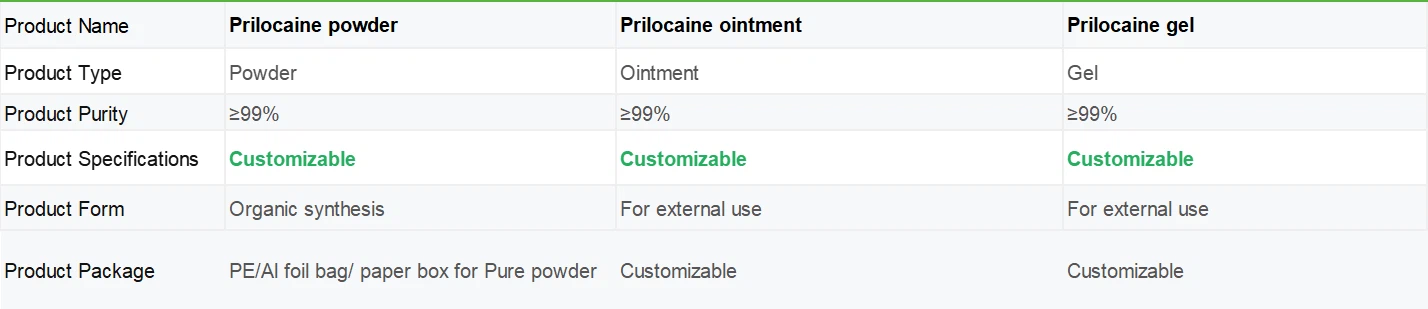
Additional information of chemical compound:
|
|
|

Propionacaine+. COA


Basic information
Appearance and dosage form
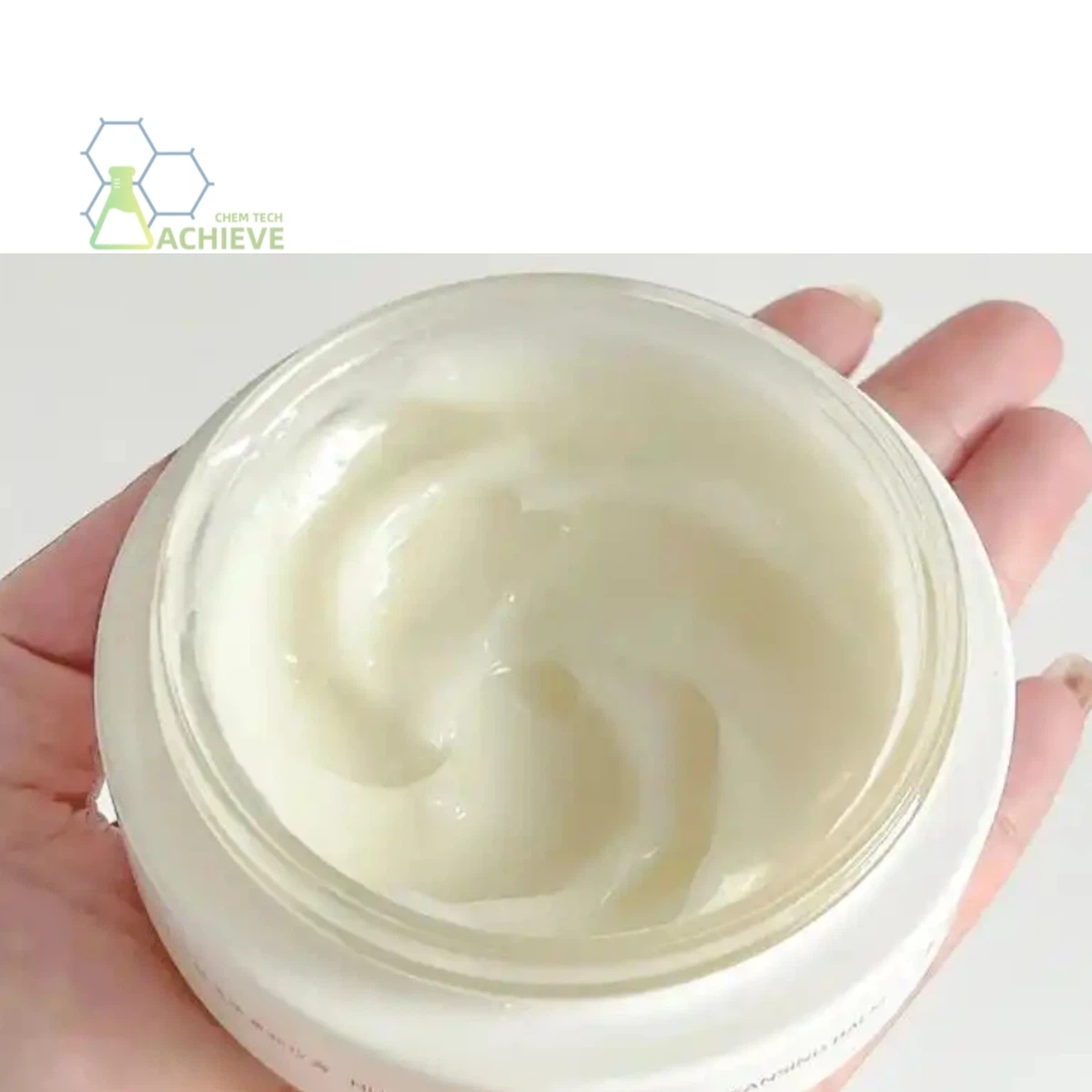
The gel of propavacaine is usually in a semi-solid state with a certain viscosity, and the color may vary depending on the preparation process and the added ingredients. The common color is white or off white. This gel formulation is easy to apply on the ski surface, can evenly cover the area requiring anesthesia, and has certain adhesiveness, is not easy to fall off, and is conducive to the local retention and absorption of dugs.
Specifications and packaging
The common specifications of the prilocaine gel have different content packages. For example, each piece may contain a certain amount of propavacaine to meet different clinical needs. The packaging form is generally aluminum or plastic tube packaging, which can effectively protect dugs from external environmental influences and ensure the quality and stability of dugs. At the same time, important information such as the name, specifications, manufacturer, production date, and expiration date of the dug will be indicated on the packaging for the convenience of medical staff and patients to use and identify.
Mill CNC Machine
Effective time and maintenance time
The onset time of the propionacain is about 5-10 minutes, but the specific time may vary due to individual differences, application site, application thickness and other factors. Generally speaking, in areas with thinner ski and abundant blood supply, the absorption and onset of medication may be faster; In areas with thicker ski and poor blood supply, the onset time may be relatively prolonged. The maintenance time of its anesthetic effect is about 1-2 hours, which is also affected by individual differences and usage. For example, in patients with high metabolic status, the metabolic rate of dugs may be accelerated, and the duration of anesthesia effects may be shortened.
Myocardial protection mechanism
Propavacaine can enhance the hypoxia tolerance of myocardial cells, reduce ischemia-reperfusion injury, and have a certain myocardial protective effect. In cases of cardiac surgery or myocardial ischemia, myocardial cells are damaged by hypoxia and reperfusion. Propavacaine can exert myocardial protective effects through various pathways, such as inhibiting calcium ion influx and reducing damage to myocardial cells caused by calcium overload; Regulating the metabolism of myocardial cells and increasing their tolerance to hypoxia.
Clinical application
In some cardiac surgeries, propavacaine can be used as an adjuvant dug to alleviate myocardial ischemia-reperfusion injury. For example, in coronary artery bypass surgery, the use of propavacaine for local or general anesthesia may have a certain protective effect on the myocardium, reducing the incidence of complications such as myocardial infarction and arrhythmia during and after the surgery. In addition, for some patients with myocardial ischemic diseases, propavacaine may also improve myocardial function through its cardioprotective effect during treatment.
Research progress
At present, research on the cardioprotective effects of propavacaine is still deepening. Researchers are exploring its specific mechanism of action and optimal dosage and method of use, in order to better apply it in clinical practice and provide more effective treatment options for heart disease patients.

clinical application

Skin pain relief
Mild burns and abrasions: For mild burns and abrasions, the propionacain can alleviate the itching, burning sensation and other uncomfortable symptoms caused by injuries. Its local anesthetic effect can reduce the sensitivity of skin nerve endings, thereby alleviating the pain of patients.
Ulcers: Some ski ulcers may cause pain and affect the patient's quality of life. The propionacain can alleviate the pain caused by ulcers to a certain extent and promote the healing of ulcers.
Medical examination preparation
Before conducting genital or mucosal examinations, patients may experience tension and pain that can affect the smooth progress of the examination. The propionacain can be used as an analgesic and applied to the examination site before the examination, so as to reduce the pain and discomfort of patients and enable the examination to be completed more smoothly.
Anticonvulsant principle
Prilocaine gel reversibly competitively inhibits voltage dependent Na ⁺ channels, reduces presynaptic membrane excitability, decreases neuronal overdischarging, and thus exerts anticonvulsant effects. The excessive discharge of neurons is one of the important mechanisms of convulsive seizures. Propionacaine inhibits sodium ion channels, prevents the excessive transmission of nerve impulses, reduces neuronal excitability, and achieves the goal of anticonvulsant treatment.
Clinical application scenarios
Although propavacaine is mainly used as a local anesthetic, it may also be used for anticonvulsant treatment in certain special circumstances. For example, in some cases of seizures caused by local anesthesia accidents, propavacaine can quickly control seizure symptoms through its anticonvulsant effect. In addition, for some patients who are intolerant or have poor efficacy with traditional anticonvulsant dugs, propavacaine may also be attempted as an adjuvant therapy.


Comparison with other anticonvulsant drugs
Compared with traditional anticonvulsant dugs such as phenytoin and carbamazepine, the anticonvulsant mechanism of propavacaine is different. Traditional anticonvulsant dugs mainly exert their anticonvulsant effects by regulating neurotransmitter levels and enhancing the inhibitory effects of neurotransmitters. Propionacaine directly acts on sodium ion channels, inhibiting neuronal overexcitement at the ion channel level. However, the anticonvulsant effect of propavacaine is relatively weak, and it is currently mainly used for local anesthesia related seizure management, and has not yet been widely used as a first-line anticonvulsant dug.
Vasoconstrictive effect
Propavacaine has a certain vasoconstrictive effect. During local anesthesia, vasoconstriction can reduce the absorption rate of dugs and prolong the duration of anesthesia. For example, during epidural anesthesia, the vasoconstrictive effect of propavacaine can allow the anesthetic to stay in the local tissue for a longer period of time, improving the anesthetic effect.
Inhibition of vasodilation effect
Compared with local anesthetics such as lidocaine, propavacaine has a weaker vasodilatory effect. This characteristic makes propavacaine more advantageous in certain surgeries or procedures that require avoiding vasodilation. For example, during ophthalmic surgery or microvascular surgery, the use of propavacaine can reduce bleeding and blurred surgical vision caused by vasodilation.


Usage
Take out an appropriate amount of propionacain and evenly smear it on the area to be anesthetized to ensure that the whole surface is covered. When applying, gently massage with your fingers to promote the absorption of the medication. Apply as many times as necessary, but wait for the gel to dry before each application. The thickness of the application should be moderate. If it is too thin, it may not achieve sufficient anesthesia effect, while if it is too thick, it may increase the absorption of the dug and cause adverse reactions.
After applying the gel, you need to wait about 15-30 minutes to allow the dug to fully penetrate into the skin and produce anesthetic effect. During the waiting process, avoid touching or rubbing the applied area to avoid affecting the absorption of the medication and the anesthetic effect.
After using the propionacain, the remaining dugs should be properly stored. If it is no longer needed, it should be disposed of according to the regulations for medical waste disposal. At the same time, it is important to keep the application area clean and dry to avoid infection.

Storage and usage environment requirements
The prilocaine gel should be stored in a cool place below 25 ℃ and sealed away from light. Factors such as high temperature and light exposure may affect the stability and effectiveness of drugs. At the same time, medication should be kept out of reach of children to prevent accidental ingestion.
Storage conditions
It should be stored at 20-25 ℃, and can be stored in an environment of 15-30 ℃ when carried for short distances. Avoid direct sunlight and high temperature environments to avoid affecting the stability and effectiveness of the drug.
Usage environment
When using, ensure that the operating environment is clean and hygienic. Avoid using in environments with severe pollution or risk of cross infection to prevent complications such as skin infections.
Future research directions
Optimize the administration method
At present, propavacaine is mainly administered through local application. In the future, more convenient and effective administration methods can be explored, such as developing new transdermal dug delivery systems to improve drug absorption efficiency and anesthesia effectiveness.
Expand application areas
Further investigate the potential applications of propavacaine in the treatment of other diseases, such as chronic pain management and skin disease treatment. Through clinical research, explore its therapeutic value and provide patients with more treatment options.
Improve safety and tolerability
Conduct relevant research on the possible adverse reactions caused by propavacaine, search for methods to reduce adverse reactions, and improve patient tolerance. For example, by optimizing dug formulations or using other drugs in combination, the incidence of allergies and toxic reactions can be reduced.
Hot Tags: prilocaine gel, suppliers, manufacturers, factory, wholesale, buy, price, bulk, for sale