


Our company shows the business integrity and social responsibility of the enterprise with the continuous improvement of naphtholbenzein indicator, 1 AMINO 2 NAPHTHOL 4 SULFONIC ACID, Phenol red powder quality and considerate pre-sale, in-sales and after-sales services. We will continue to follow the principles of sincerity and trust, mutual benefit, and common development to create more value for customers. We focus on technology research and development, looking for innovative technologies and application solutions in related fields, and building our own intellectual property library.
Epinephrine hydrochloride powder should be noted that the storehouse is ventilated, low temperature and dry and stored separately from food raw materials. Highly poisonous. Combustible. The combustion releases toxic nitrogen oxides and hydrogen chloride fumes. Epinephrine Hydrochloride is a white to slightly yellow crystalline powder. It has the chemical formula C9H13NO3 · HCl and a molecular weight of 219.67g/mol. The melting point is 214-215 ° C. The melting point refers to the transition temperature of a substance from a solid to a liquid. The determination of melting point can be used to determine the purity and structure of a substance. It is a solid without a boiling point. It can be analyzed and measured under certain conditions by heating and forming gaseous substances. The density is 1.01g/cm ³. Density refers to the ratio of the mass of a substance to its volume. The determination of density can be used to determine the purity and structure of a substance. It has been widely used in the fields of medicine, life science and sports. Its main role is to stimulate the sympathetic nervous system and adrenergic receptor, thereby changing physiological functions and metabolic reactions. This product is an experimental product and is prohibited from being used for other purposes.

The epinephrine hydrochloride powder is a white or off-white crystalline solid raw material formed by the combination of the adrenaline molecule with hydrochloric acid. Its essence is a stabilized synthetic version of the endogenous adrenaline in the human body (a catecholamine hormone and neurotransmitter). It is obtained with extremely high purity through chemical synthesis. In medical and scientific research, it is used as a key starting material or standard substance for precisely preparing emergency injection solutions (such as for anaphylactic shock and cardiac arrest), or as biochemical reagents for laboratory research. Its powder form ensures the chemical stability during long-term storage, avoiding the disadvantage of liquid formulations being prone to degradation. When used, it must be dissolved and diluted under strict aseptic conditions. Due to its potent α and β adrenergic receptor agonistic effects, it can rapidly constrict blood vessels, increase blood pressure, accelerate heart rate, and dilate bronchi, making it a cornerstone drug for reversing fatal acute physiological collapse. Even a slight deviation in dosage can lead to serious cardiovascular risks.
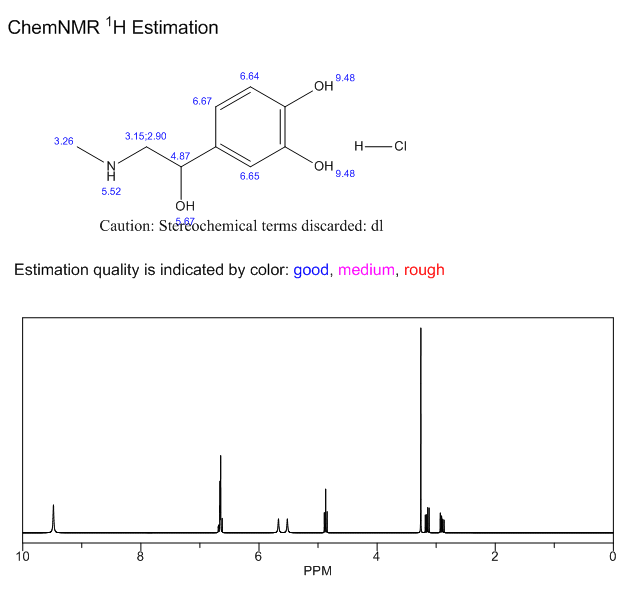
Please refer to our enterprise standard or COA. If you want to get more details, welcome to contact our sales. Additional information of chemical compound:
|
Chemical Formula |
C9H14ClNO3 |
|
Exact Mass |
219.07 |
|
Molecular Weight |
219.06 |
|
m/z |
219.07 (100.0%), 221.06 (32.0%), 220.07 (9.7%), 222.07 (3.1%), |
|
Elemental Analysis |
C, 49.21; H, 6.42; Cl, 16.14; N, 6.38; O, 21.85 |
|
Storage conditions |
2-8°C |
|
Boiling point |
157 ℃ |
|
Solubility H2O |
>50 mg/mL |




Core Raw Materials and Chemical Properties
The preparation of epinephrine hydrochloride powder is based on epinephrine (Epinephrine), which is synthesized by reacting with hydrochloric acid (HCl) to form the hydrochloride form. Epinephrine is a naturally occurring sympathomimetic amine with a chemical structure of C₉H₁₃NO₃, and its molecular weight is 219.67. The hydrochloride form (C₉H₁₄ClNO₃) is a white to off-white crystalline powder that is easily soluble in water (50 mg/mL), and its solubility is affected by temperature, with lower solubility at lower temperatures. This substance has potent vasoconstrictive, intraocular pressure-lowering, and bronchodilatory activities. It is clinically used for treating allergic reactions, cardiac arrest, and asthma.
Manufacturing Process Flow
Raw Material Preparation and Purification
The manufacturing process begins with the acquisition of high-purity adrenaline raw materials. These raw materials must meet the standards of the pharmacopoeia (such as USP grade), and their purity is typically no less than 99%. Some suppliers prepare adrenaline through synthetic routes, for example:
Friedel-Crafts acylation reaction: Using catechol and chloroacetyl chloride as raw materials, through steps such as condensation, substitution of chlorine atoms with methylamines, and catalytic reduction of carbon groups, adrenaline is produced. Then, it reacts with tartaric acid to separate the racemic form, and finally, the optically pure product is obtained.
Oxidation method: Using noradrenaline as the precursor, introducing a methyl group through oxidation reaction to generate adrenaline. Subsequent steps include acidification, crystallization, and drying.
Conversion of hydrochloride salt
The purified adrenaline is mixed with hydrochloric acid in a chemical ratio. Under controlled conditions of temperature (usually 20-60℃) and pH value (acidic conditions), the reaction generates hydrochloric acid adrenaline. After the reaction is completed, unreacted substances and impurities are removed through filtration and washing.
Crystallization and Drying
After the reaction solution is concentrated, it is mixed with organic solvents such as ethanol for recrystallization to enhance the purity and crystalline form of the product. During the crystallization process, the temperature gradient and stirring speed need to be strictly controlled to avoid overly large particles or agglomeration. After the crystallization is completed, the product is separated by centrifugation and dried at low temperature (2-8℃ in a light-protected environment) to obtain the final powder, with the moisture content typically being less than 5%.
Crushing and Packaging
The dried lumps are finely ground through airflow pulverization or mechanical grinding to the desired particle size (such as 100-200 mesh), ensuring the powder's fluidity and uniformity. Packaging is done using aluminum foil bags or glass bottles, which are vacuum-sealed to prevent moisture absorption and oxidation. Some products are filled with inert gases (such as nitrogen) to extend their shelf life.
Key Points of Quality Control
Purity testing
The content of the main component is determined by high-performance liquid chromatography (HPLC), with a purity requirement of ≥ 99%, and the total amount of impurities (such as adrenaline oxides, unreacted precursors) should be ≤ 1%.
Microbial limit
Bacterial endotoxins and microbial contamination are detected by membrane filtration, which should comply with pharmacopoeia standards (such as ≤ 100 CFU per gram).
Residual solvents
Gas chromatography (GC) is used to analyze the residual organic solvents such as ethanol, ensuring compliance with international norms (such as ICH guidelines).
Stability testing
Accelerated tests (40°C/75% RH) and long-term tests (25°C/60% RH) are conducted to verify the quality stability of the powder within the effective period.
|
|
|



Epinephrine hydrochloride powder is an active sympathomimetic hormone from the adrenal medulla. Epinephrine hcl stimulates the α- and β- adrenergic receptor systems, causing systemic vasoconstriction and gastrointestinal laxity.
1. Local anesthesia: DL Adrenaline Hydrochloride can enhance the local anesthesia effect, make the blood vessels in the anesthesia area contract, thereby extending the anesthesia time, reducing dosage and adverse reactions.
2. Improvement of sports performance: DL Adrenaline Hydrochloride is widely used in the field of sports due to its ability to increase physical strength, endurance, and reaction speed.
3. Scientific research: As an important chemical and physiological active substance, DL Adrenaline Hydrochloride is widely used in experimental research in fields such as life sciences, medicine, and pharmacology, thereby promoting the development and progress of related disciplines.
Overall, DL Adrenaline Hydrochloride is a very important neuroadrenergic drug with a wide range of applications. Of course, it is also necessary to pay attention to the appropriate dosage, medication methods, and precautions when using this drug to avoid adverse reactions and side effects.
FAQ
Adrenaline is the core of the stress response in mammals, but it does not exist in the majority of invertebrates. The artificial synthesis and crystallization of the pure salt form of the powder of adrenaline have become a key reference for studying the evolutionary origin of neurotransmitters - a "high-level" signaling molecule that is extremely unevenly distributed on the tree of life, yet is reversed back to its most basic chemical form in the laboratory.
In the first manned space mission of humanity, hydrochloric acid epinephrine powder was a regular item in the astronauts' emergency kits. Its stable, anhydrous, and highly pure powder form was regarded as the ultimate physical backup for the liquid epinephrine injection solution in extreme vacuum and vibration environments - a chemical barrier that is almost never thought of using but must exist to counter the total collapse of the life system.
Although the chemical structure is simple, the limits for trace impurities (such as adrenone) in the powdered hydrochloride of epinephrine varied among different pharmacopoeias. These minor stipulations actually reflect the implicit competition and technological path dependence among different industrial systems (such as Europe and the United States) in terms of synthesis processes, purification techniques, and even the understanding of chemical stability in the mid-20th century.
In the toxicological analysis of the corpse, the detection of adrenaline in the tissues could have indicated the stress state before death. However, if an abnormally stable high concentration was found, it might instead suggest that the corpse had come into contact with exogenous hydrochloric acid-adrenaline powder - it could have come from improper rescue medication, or be a clue from rare cases where it was used to disguise the cause of death or interfere with the decomposition process.
To study the physiological parameters of the stress response, researchers sometimes use precisely weighed powdered hydrochloric acid epinephrine and temporarily mix it into a solution for intraperitoneal injection into model animals (such as rats). This artificial and dose-controlled "chemical scare" is intended to strip away the complexity of psychological fear, creating a pure, repetitive, and quantifiable physiological stress model to observe the instantaneous collapse and recovery of the cardiovascular and metabolic systems.
We have invested a lot of money to introduce a number of international leading finishing equipment and technologies, and established a complete manufacturing process and quality management system to ensure the quality of the China GMP Factory Direct Supply 99% USP Grade Epinephrine Hydrochloride Raw Powder CAS: .... You may send us emails and contact us directly. Every part of the product strives for perfection.