




Shaanxi BLOOM Tech Co., Ltd. is one of the most experienced manufacturers and suppliers of pamoic acid cas 130-85-8 in China. Welcome to wholesale bulk high quality pamoic acid cas 130-85-8 for sale here from our factory. Good service and reasonable price are available.
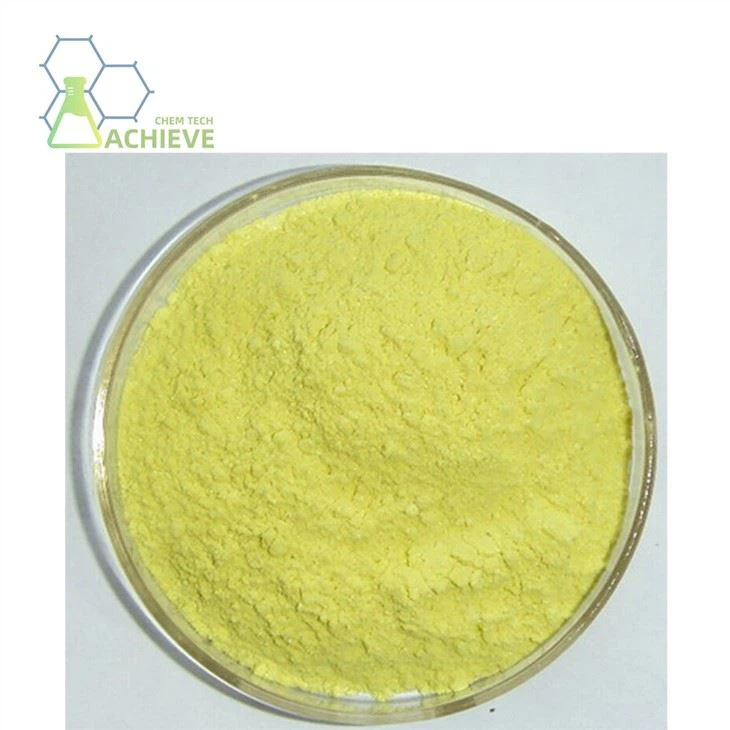
Pamoic acid is an organic compound, also known as acetylmorpholine acid or 4- (2-methoxyethyl) benzoic acid. The molecular formula is C19H18O4, which has a benzene ring and an acetyl group forming an ester bond with the hydroxyl group on the benzene ring. Usually yellow to orange colored crystalline solid. The solubility in water is relatively low, approximately 0.27 g/L. It can dissolve in some organic solvents, such as ethanol, methanol, and dichloromethane. The acid-base properties make it acidic and have a low pH value. Compounds with luminescent properties can emit orange to red fluorescence. When heated or in contact with an open flame, it may burn and release toxic gases.
It has multiple uses in metal extraction and separation, and can be used as a metal ion chelating agent, metal ion analysis reagent, metal ion catalyst, and metal ion carrier. These applications not only contribute to the effective utilization of metal resources and environmental protection, but also contribute to the optimization and enhancement of drug delivery and catalytic reactions. It can also be used as a raw material for electronic chemicals, such as in the production of battery electrolytes and electronic ceramics. For example, polymer electrolytes can be generated by reacting with other compounds, which can be used for manufacturing lithium-ion batteries and fuel cells. In addition, it can also react with other compounds to generate electronic ceramic materials, which have characteristics such as high insulation, high dielectric constant, and high mechanical strength, and can be used for manufacturing electronic components and sensors.

|
Chemical Formula |
C23H16O6 |
|
Exact Mass |
388.09 |
|
Molecular Weight |
388.38 |
|
m/z |
388.09 (100.0%), 389.10 (24.9%), 390.10 (2.7%), 390.10 (1.2%) |
|
Elemental Analysis |
C, 71.13; H, 4.15; O, 24.72 |
|
Melting point |
≥300 °C (Dec.) |
|
Boiling point |
434.1°C (rough estimate |
|
Density |
1.2472 (Rough estimate) |
Please refer to our enterprise standard or COA. If you want some details, welcome to contact our sales.
Additional information of chemical compound:
|
|
|


Pamoic acid is used for antimalarial, insect repellent, etc. It has good curative effect, pamoic acid solubility and long-term effect. Palmitic acid can be used in the process of laboratory research and development and chemical production, as well as in the process of laboratory research and development and chemical production. Palmitic acid and its salt are used for anti malaria, insect repellent, etc.,
with good curative effect and long-term effect.
Pamic acid has a wide range of applications in metal extraction and separation.
Metal ion chelating agent: Pamic acid has coordination groups such as carboxyl and benzene rings, which can form stable complexes with metal ions. By utilizing this property, Pamic acid can serve as a metal ion chelating agent to extract and separate metal ions from materials such as ores, waste, or industrial wastewater. For example, Pamic acid can form stable complexes with iron ions to extract and purify iron from solutions containing iron ions.

Metal ion analysis: The complexes formed by Pamic acid and metal ions have specific spectral characteristics, which can be used for analysis and detection of metal ions. For example, the complex formed by Pamic acid and copper ions has characteristic absorption peaks in the UV visible spectrum, which can be used for the analysis and detection of copper ions.

Metal ion catalysts: Pamic acid can form stable complexes with certain metal ions, which can be used as catalysts for organic synthesis and catalytic reactions. For example, the complex formed by Pamic acid and palladium ions can serve as a catalyst for the coupling reaction of carbon carbon bonds, generating polymer materials and organic compounds.
Metal ion carriers: Pamic acid can form stable complexes with certain metal ions, which can be used as drug carriers for drug delivery and release. For example, the complex formed by Pamic acid and iron ions can serve as a drug carrier to deliver drugs to tumor cells, achieving targeted delivery and release of drugs.
Adverse reactions
In clinical drug therapy, drugs often have varying degrees of adverse reactions while exerting therapeutic effects. Pamic acid, as a substance with certain pharmacological activity, may be applied in the treatment of related diseases. However, awareness and proper management of its adverse reactions are crucial for ensuring patient medication safety and improving treatment efficacy.
Digestive system response
Nausea and vomiting
Nausea and vomiting are one of the common adverse reactions of Pamic acid. This may be due to drug stimulation of the gastrointestinal mucosa, causing gastrointestinal nerve reflexes. After entering the gastrointestinal tract, the drug directly contacts the mucosa, stimulates chemoreceptors, and is transmitted to the vomiting center through nerve conduction, triggering nausea and vomiting reflex. In addition, drugs may also affect the normal peristaltic rhythm of the gastrointestinal tract, leading to delayed gastric emptying or accelerated intestinal peristalsis, further exacerbating symptoms of nausea and vomiting. The degree of nausea and vomiting varies from person to person, and mild cases may only feel discomfort in the stomach, with a slight feeling of nausea; Severe cases may experience frequent vomiting, which seriously affects the patient's eating and nutrient intake.
Diarrhea or constipation
The impact of Pamic acid on intestinal function may lead to the occurrence of diarrhea or constipation. On the one hand, drugs may interfere with the absorption and secretion of water and electrolytes in the intestine, causing an increase in intestinal water and leading to diarrhea. On the other hand, drugs may affect the normal function of intestinal nerves and muscles, leading to weakened intestinal peristalsis, prolonged retention of feces in the intestine, excessive absorption of water, and ultimately causing constipation. The occurrence of diarrhea and constipation not only brings physical discomfort to patients, but may also affect the effectiveness of drug treatment and the quality of life of patients.
Abdominal pain
Abdominal pain is also one of the common adverse reactions of the digestive system. Drug induced abdominal pain may be caused by gastrointestinal spasms, inflammation, or mucosal damage. During gastrointestinal spasms, the smooth muscles of the intestine contract strongly, causing paroxysmal abdominal pain; Inflammation or mucosal injury can stimulate the sensory nerve endings and cause persistent abdominal pain. The location and nature of abdominal pain can help determine the severity and possible causes of adverse reactions.

rash
Rash is a common skin adverse reaction caused by Pamoic acid, manifested as redness, papules, blisters, etc. on the skin. The occurrence of rash may be related to allergic reactions to drugs. Drugs act as antigens to stimulate the body's immune system, producing specific antibodies. When exposed to drugs again, it triggers an immune response, leading to vasodilation and increased permeability of skin blood vessels, infiltration of inflammatory cells, and ultimately the appearance of rash. The shape and distribution range of rash vary among individuals, with some patients experiencing only a small amount of rash locally, while others may have a widespread distribution throughout the body.
itch
Itching is another common manifestation of skin reactions. Medications may directly stimulate nerve endings in the skin, causing itching. In addition, skin inflammation caused by allergic reactions can also release some chemical mediators, such as histamine, which further stimulate nerve endings and worsen itching symptoms. Itching can cause great discomfort to patients, affecting their sleep and daily life.


passive cutaneous anaphylaxis reaction
Severe skin allergic reactions such as exfoliative dermatitis and bullous epidermal lysis, although relatively rare, can have serious consequences once they occur. These reactions are usually caused by the body's strong allergic reaction to drugs, resulting in extensive skin damage, peeling, blisters, erosion and other symptoms, which may be accompanied by systemic symptoms such as fever and lymph node enlargement.
Neurological response
Headache and dizziness are common neurological adverse reactions caused by Pamic acid. Medications may affect the blood circulation or neurotransmitter balance in the brain, leading to abnormal constriction or dilation of cerebral blood vessels, disruption of neurotransmitter release, and ultimately causing headaches and dizziness. The nature of headache may be bloating, stabbing or pulsating pain, while dizziness may manifest as dizziness, vertigo, etc. The degree and frequency of headaches and dizziness vary from person to person, and in severe cases, they may affect the patient's daily activities and work efficiency.


Insomnia or drowsiness
Some patients may experience insomnia or drowsiness after using Pamic acid. The impact of drugs on the central nervous system may lead to changes in neural excitability, thereby affecting the sleep wake cycle. Some patients may experience insomnia due to drug stimulation of the central nervous system, manifested as difficulty falling asleep, frequent dreaming, and easy awakening; However, other patients may experience drowsiness due to drug inhibition of the central nervous system, manifested as daytime sleepiness, fatigue, and lack of energy.
Hematological system reaction
Anaemia: Pamic acid may affect the hematopoietic function of the bone marrow, leading to the occurrence of anemia. Medications may inhibit the production of red blood cells in the bone marrow, or shorten the lifespan of red blood cells, leading to a decrease in the number of red blood cells and causing anemia. The manifestations of anemia include pale complexion, dizziness, fatigue, palpitations, etc. In severe cases, it can affect the patient's physical function and quality of life.
Leukopenia or granulocyte deficiency: Medications may also have inhibitory effects on white blood cells, leading to leukopenia or granulocyte deficiency. White blood cells are an important component of the human immune system. A decrease in white blood cells or a deficiency in granulocytes can weaken a patient's immune system and make them susceptible to various infections. Patients may experience symptoms of infection such as fever, cough, sore throat, etc., which can be life-threatening in severe cases.
Thrombocytopenia: Platelets play an important role in the process of blood coagulation, and Pamic acid may cause a decrease in platelets, affecting the coagulation function of the blood. The manifestations of thrombocytopenia include skin bruising, nosebleeds, gum bleeding, etc. In severe cases, visceral bleeding or intracranial bleeding can occur, endangering life.
Frequently Asked Questions
Is pamoate a salt?
+
-
Pamoic acid is a dicarboxylic acid derived from naphthoic acid. In pharmacology, the salt form of pamoic acid (pamoate ion) can be used as a drug compound counterion to affect the dissolution rate of the drug.
Is hydroxyzine pamoate like Xanax?
+
-
Hydroxyzine (Atarax, Vistaril) and alprazolam (Xanax) are two commonly prescribed anti-anxiety medications. Both medications kick in quickly and share some common side effects, such as drowsiness and dry mouth. Alprazolam - especially high doses - can be habit-forming, but hydroxyzine does not have this risk.
What is the use of Panacid tablet?
+
-
Pantocid Tablet is a medicine that reduces the amount of acid produced in your stomach. It is used for treating acid-related diseases of the stomach and intestine such as heartburn, acid reflux, peptic ulcer disease, and Zollinger-Ellison syndrome. It provides relief from the symptoms and promotes healing.
Hot Tags: pamoic acid cas 130-85-8, suppliers, manufacturers, factory, wholesale, buy, price, bulk, for sale, Sodium N cyclohexylsulfamate CAS 139 05 9, Pure Erythritol Powder CAS 149 32 6, D Melibiose, Sodium Salicylate Powder CAS 54 21 7, Sorbic Acid Powder CAS 110 44 1, s allyl l cysteine