


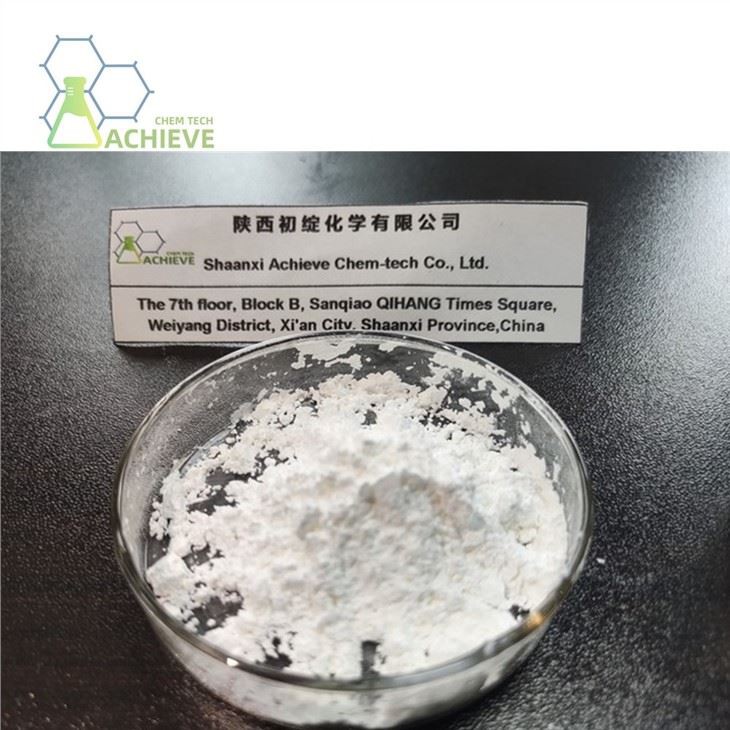


Shaanxi BLOOM Tech Co., Ltd. is one of the most experienced manufacturers and suppliers of 3-dimethylaminophenol cas 99-07-0 in China. Welcome to wholesale bulk high quality 3-dimethylaminophenol cas 99-07-0 for sale here from our factory. Good service and reasonable price are available.
3-Dimethylaminophenol,needle crystals, flash point 184 °C. Soluble in ethanol, ether, benzene, acetone, alkali and inorganic acid, almost insoluble in water. This product can be used as an intermediate of neostigmine bromide and anthrone dyes, as well as a dye intermediate of rose essence, acid peach red, alkaline stamen fragrant red. It appears in the form of white to light yellow crystalline powder. Easy to decompose, it does not have a clear boiling point at standard atmospheric pressure. When heated, it may decompose and release toxic gases. Has a certain solubility in water. At room temperature, it is soluble in water and forms a colorless or slightly yellow solution. In addition, it can also be dissolved in various organic solvents, such as ethanol, acetone, and cyclohexane.

 |
 |
|
Chemical Formula |
C8H11NO |
|
Exact Mass |
137.08 |
|
Molecular Weight |
137.18 |
|
m/z |
137.08 (100.0%), 138.09 (8.7%) |
|
Elemental Analysis |
C, 70.04; H, 8.08; N, 10.21; O, 11.66 |
|
Melting Point |
82 – 84 °C ( lit. ) |
|
Boiling Point |
265-268 ° C |
|
Density |
1.0976 ( rough estimate ) |
|
Refractive Index |
1.5895 (estimate) |
|
Flash Point |
148 °C |
|
Storage Conditions |
Keep in dark place,Inert atmosphere,Room temperature |
|
Solubility |
Soluble in DMSO (a little), methanol (a little) |
|
Acidity Coefficient (pKa) |
10.06±0.10(Predicted) |
|
PH Value |
7 (10g/l, H2O, 20℃)(slurry) |
|
Water Solubility |
SLIGHTLY SOLUBLE |
The refractive index depends on wavelength and temperature. Generally speaking, its refractive index increases with a decrease in wavelength. At common wavelengths (such as 589.3 nanometers), its refractive index is approximately 1.594. It is a weakly alkaline compound. When dissolved in water, it generates dimethylaminophenol ions and causes the solution to appear alkaline. Therefore, its pH value is usually higher than 7, depending on the solution concentration. Under the action of light, high temperature, and oxidants, it may be unstable and prone to chemical reactions or decomposition. Therefore, when storing and using, it is necessary to pay attention to avoiding light and exposure to adverse environmental conditions.

It can indeed be used to synthesize the drug Neostigmine Bromide, a drug with anticholinesterase activity that has important clinical applications. The following is a detailed explanation of neostigmine bromide and its synthetic raw material 3-dimethylaminophenol:
Neostigmine Bromide
Neostigmine bromide is a reversible acetylcholinesterase inhibitor and also a sympathomimetic drug. It exerts cholinomimetic effects by inhibiting cholinesterase activity so that acetylcholine cannot be hydrolyzed. This drug enhances the release of acetylcholine from the presynaptic membrane and promotes skeletal muscle contraction, thus improving the symptoms of muscle weakness. In clinical practice, Neostigmine Bromide is mainly used to treat myasthenia gravis, functional post-surgical intestinal flatulence and urinary retention. In addition, it has certain bronchodilator effect, which can reduce respiratory resistance and relieve dyspnea.


The role of it in the synthesis of neostigmine bromide
As an important intermediate in the synthesis of neostigmine bromide, This is involved in the synthesis process of the drug. During the synthesis process, it undergoes chemical reactions with other compounds to produce neostigmine bromide molecules with specific structures and properties. These chemical reactions may include substitution reactions, addition reactions or condensation reactions, etc., depending on the choice of the synthetic route.And clinical applications of neostigmine bromide.
Myasthenia gravis: Neostigmine bromide can improve the symptoms of myasthenia gravis and improve the quality of life of patients.
Post-surgical functional intestinal flatulence: By promoting the contraction of intestinal smooth muscle, neostigmine bromide can help relieve intestinal flatulence caused by poor recovery of intestinal function after surgery.
Urinary retention: Neostigmine Bromide can enhance the contraction force of bladder forced urinary muscle, which helps to relieve the symptoms of urinary retention.
● Precautions
Although Neostigmine Bromide has significant therapeutic effects in clinical practice, the following precautions should be taken in the course of use:
Monitoring of side effects:
When using Neostigmine Bromide, patients need to be monitored for side effects such as decreased pupils and increased sweating, and report to the doctor promptly.
Diagnostic implications:
Neostigmine Bromide may cause gastrointestinal bleeding or ulcers, so special attention should be paid to observing related symptoms while taking it.
Contraindications:
Neostigmine Bromide should be used with caution or contraindicated in certain conditions, such as complete obstruction of the intestines or valves of the stomac.
In summary, 3-dimethylaminophenol, as an important intermediate in the synthesis of neostigmine bromide, plays a key role in the synthesis and clinical application of the drug. As a drug with anticholinesterase activity, neostigmine bromide is widely used in the treatment of myasthenia gravis and other diseases, which brings good news to patients.

Synthesis method
Add 45g m-aminophenol, 93g methyl acrylate and 19g acetic acid into a 250ml four mouth flask with a mixer and thermometer, and add 0.8g hydroquinone and 2.2g zinc chloride as catalyst; Turn on the motor and stir for 15min, then slowly raise the temperature to 80 ~ 85, and the heating time is about 2 hours; After heating up, continue to keep the temperature at this temperature for reaction. After 9h of insulation, take samples and measure the reaction end point with high-pressure liquid chromatograph. When the purity of the product reaches more than 92%, the reaction end point will arrive. Otherwise, continue to keep the temperature until the purity is qualified; After the purity is qualified, reduce the temperature to 50 and start vacuum distillation. Wait for the temperature to rise to 80 ~ 85 until no distillates are produced as the end point; The finished 3-hydroxy-n, N-dimethylaniline is obtained at the end of distillation.

Synthesis of 2-Nitrophenol
Add nitrobenzene and concentrated sulfuric acid to the reaction flask, stir and mix.
01
Heat the reaction mixture to an appropriate temperature and react for a period of time.
02
Cool the reaction mixture and dilute with water.
03
Perform acid-base neutralization to generate 2-Nitrophenol.
04
Reduction of 2-Nitrophenol
Dissolve 2-Nitrophenol in an appropriate solvent.
01
Add an appropriate amount of reducing agent, such as zinc powder or ferrous salt.
02
Reducing reactions at appropriate temperatures usually require controlling the reaction rate.
03
Filter to obtain the reduction product.
04
Synthesis of 3-Dimethylaminophenol
Dissolve 2-Nitrophenol in an appropriate solvent.
01
Add excess Dimethylamine and heat the reaction mixture.
02
React at appropriate temperatures, such as using controlled reflux reactions.
03
After completing the reaction, cool the mixture and filter the precipitate.
04
Obtain product through crystallization or other purification methods.
05

Cosmetics:
It can also be used in the cosmetics manufacturing industry, typically as an active ingredient with antioxidant and anti-aging properties. It can be used to prepare facial skincare products, hair care products, and makeup.
Chemical intermediates:
It is an important intermediate in many organic synthesis reactions. It can be used as a precursor for dyes, fluorescent agents, and photosensitive compounds. By introducing different functional groups on product, various compounds with specific properties and applications can be synthesized.
Dyes and colorants:
It can be used as a raw material for dyes and colorants. Its structure and characteristics make it widely used in the dye industry. For example, it can be used to prepare products such as pigments, dye inks, and colorants.


Pharmaceutical field:
It also has some applications in the pharmaceutical field. Because of its antioxidant and anti-inflammatory properties, it can be used as a raw material for some drugs. In addition, it can also be used to synthesize some Analgesic and local Narcotic.
Electrochemical field:
Due to its excellent redox properties, It can be used in the field of electrochemistry. It can be used as an anode material or participate in electrochemical reactions in other ways. In addition, it can also be used to prepare conductive materials in electronic devices.
Photosensitizer:
It is a commonly used photosensitizer that can be used in the photography and printing industries. It can generate chemical reactions in photosensitive materials and is used to prepare products such as photographic film, printing film, and photosensitive paper.
Antioxidants:
It has strong antioxidant properties and can be used as an antioxidant in the rubber and plastic industries. It can delay the aging process and degradation of polymers, improve the stability and service life of materials.

Antioxidant Properties: it has been shown to possess antioxidant capabilities, which enable it to scavenge free radicals and protect cells from oxidative stress. This property is crucial in preventing cellular damage and aging processes.
Hair Dyeing Agent: The most significant application of 3-DMAP stems from its use as a key intermediate in the synthesis of oxidative hair dyes, particularly permanent hair dyes. It reacts with oxidizing agents like hydrogen peroxide to form colored intermediates that deposit onto hair fibers, providing long-lasting coloration.
Potential Antimicrobial Activity: While not extensively studied, some research suggests that 3-DMAP and its derivatives may exhibit antimicrobial properties against certain bacterial and fungal strains. This could potentially lead to new applications in disinfectants or preservatives.
Applications

Photography
It has a significant application in the field of photography as a developer. In black - and - white photographic processing, developers are chemicals that reduce the exposed silver halide crystals in the photographic film or paper to metallic silver, forming the visible image. This acts as a developing agent due to its ability to donate electrons and reduce the silver ions. It has certain advantages in photographic development, such as providing good image contrast and sharpness. It can be used alone or in combination with other developing agents to achieve specific photographic effects.
Pharmaceutical Industry
In the pharmaceutical industry,this and its derivatives are used as intermediates in the synthesis of various drugs. The presence of the phenol and dimethylamino functional groups makes it a versatile building block for the construction of more complex pharmaceutical molecules. For example, it can be used to introduce specific functional groups or modify the structure of existing drug candidates to improve their pharmacological properties, such as bioavailability, solubility, and activity. Some derivatives of it may have biological activities themselves, such as antimicrobial or anti - inflammatory properties, although further research is often required to fully explore and develop these potential therapeutic applications.


Dye Industry
This is also used in the synthesis of dyes. It can react with various chromophores and auxochromes to form colored compounds. The electron - donating and withdrawing properties of the dimethylamino and hydroxyl groups, respectively, can influence the absorption and emission spectra of the resulting dyes. These dyes find applications in textiles, paper, and other industries where coloration is required.
Analytical Chemistry
In analytical chemistry, it can be used as a reagent for the detection and determination of certain metal ions. It forms colored complexes with some metal ions, such as iron(III) and molybdenum(VI). The color of the complex can be measured using spectrophotometric techniques, allowing for the quantitative analysis of the metal ions in a sample.

From serving as an effective photographic developer to acting as a key organic intermediate in the pharmaceutical industry and a critical dye-forming agent in the dye sector, it demonstrates remarkable versatility and practical value. It participates in important chemical reactions such as coupling, oxidation, and condensation, supporting the production of fine chemicals, functional materials, and medical intermediates. However, due attention must be paid to its safety characteristics.
Improper operation, storage, or discharge may lead to skin irritation, respiratory discomfort, or potential environmental pollution. Strict compliance with handling specifications, protective measures, and waste disposal regulations is therefore essential.

By comprehensively mastering its physicochemical properties, application mechanisms, and safety protocols, researchers and industrial practitioners can maximize the functional advantages of 3-dimethylaminophenol, achieve standardized and controllable applications, and ensure its efficient, safe, and sustainable use in modern industrial production and scientific research. This is a compound with a unique combination of chemical and physical properties that make it highly valuable across a diverse range of industrial sectors. Its mature and controllable synthesis methods enable stable mass production, ensuring a reliable supply for large-scale commercial applications while maintaining consistent product quality. Its excellent reaction activity and structural stability also lay a solid foundation for its efficient performance in dyes, pharmaceuticals, and photographic materials, further enhancing its application potential and market competitiveness.
Hot Tags: 3-dimethylaminophenol cas 99-07-0, suppliers, manufacturers, factory, wholesale, buy, price, bulk, for sale, tetramisole hcl powder, L Sulforaphane CAS 142825 10 3, levamisole hydrochloride powder, Uracil Powder CAS 66 22 8, 3-Dimethylaminophenol, Procaine Hydrochloride