




Shaanxi BLOOM Tech Co., Ltd. is one of the most experienced manufacturers and suppliers of 5-fluorouracil api cas 51-21-8 in China. Welcome to wholesale bulk high quality 5-fluorouracil api cas 51-21-8 for sale here from our factory. Good service and reasonable price are available.
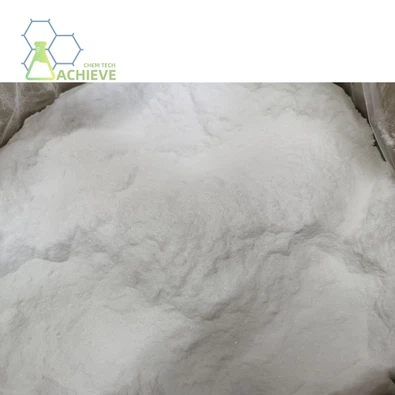
5-Fluorouracil API, molecular formula C4H3FN2O2, CAS NO. 51-21-8, molecular weight 128.06. It is a white to almost white crystalline or crystalline powder that plays an important role in pharmaceutical chemistry and clinical treatment. It has relatively good solubility in water. Specifically, at a temperature of 20 ° C, its solubility in water is approximately 12.2 g/L. This means that under appropriate conditions, it can form a homogeneous and stable solution with water. In addition, it is also soluble in dilute hydrochloric acid and sodium hydroxide solutions, which give it a certain degree of flexibility in drug formulations and clinical applications. Compared to water and some other solvents, its solubility in ethanol is poor. At a temperature of 20 ° C, its solubility in ethanol is only 2.9 g/L. In addition, it is almost insoluble in organic solvents such as chloroform and ether. These differences in solubility provide important reference for the design and selection of drug formulations. Its structure contains a pyrimidine ring substituted with a fluorine atom, which is the basis of its biological activity and pharmacological effects. By inhibiting thymidylate synthase and consuming intracellular dTTP, it affects pyrimidine synthesis and becomes an effective anti-tumor agent.
|
|
|

|
Chemical Formula |
C4H3FN2O2 |
|
Exact Mass |
130 |
|
Molecular Weight |
130 |
|
m/z |
130 (100.0%), 131 (4.3%) |
|
Elemental Analysis |
C, 36.93; H, 2.32; F, 14.61; N, 21.54; O, 24.60 |
Based on the above pharmacological effects, 5-Fluorouracil API has a wide range of clinical applications, mainly used for the treatment of various solid tumors, including:
1. Digestive tract tumors:
5-fluorouracil is one of the important drugs for the treatment of digestive tract tumors, and has good therapeutic effects on gastric cancer, colorectal cancer, liver cancer, pancreatic cancer, esophageal cancer, etc. It can be used alone or in combination with other chemotherapy drugs to improve treatment effectiveness.
2. Breast cancer:
Breast cancer is one of the most common malignant tumors in women, and 5-fluorouracil is also important in the treatment of breast cancer. It can be used in combination with other chemotherapy drugs such as paclitaxel and docetaxel to form an effective chemotherapy regimen.
3. Ovarian cancer:
Ovarian cancer is one of the common malignant tumors in the female reproductive system, and 5-fluorouracil also has certain applications in the treatment of ovarian cancer. It can achieve therapeutic goals by inhibiting the proliferation and growth of cancer cells.
4. Lung cancer:
Lung cancer is one of the most common malignant tumors worldwide, and 5-fluorouracil also has certain application value in the treatment of lung cancer. It can be used in combination with other chemotherapy drugs such as cisplatin and vincristine to improve treatment effectiveness.
5. Head and neck tumors:
Head and neck tumors include nasopharyngeal carcinoma, laryngeal carcinoma, oral cancer, etc. 5-fluorouracil is also widely used in the treatment of these tumors. It can be used in combination with other chemotherapy drugs or radiotherapy to improve treatment efficacy and patient survival rate.
6. Skin cancer:
Skin cancer is one of the common malignant tumors, and 5-fluorouracil is also used in the treatment of skin cancer. It can achieve therapeutic goals by inhibiting the proliferation and growth of cancer cells.

5-fluorouracil (5-FU), as a classic anti metabolic drug, exhibits unique advantages in the treatment of skin diseases by inhibiting thymidine nucleotide synthase and blocking DNA synthesis. Its mechanism of action not only targets tumor cells, but also achieves antiviral effects by interfering with viral nucleic acid metabolism. Its clinical applications cover three major types of diseases: infectious, proliferative, and precancerous lesions.
1. Precise treatment of viral skin diseases
Flat warts and common warts: benign epidermal hyperplasia caused by HPV virus, 5-FU promotes apoptosis of wart cells by inhibiting viral DNA replication. Clinical studies have shown that 5% ointment applied topically twice a day can achieve a 75% removal rate of warts after 4 weeks. It is particularly suitable for exposed areas such as the face and hands to avoid scars that may be caused by physical therapy.


Genital warts: As a sexually transmitted disease, 5-FU interferes with viral RNA synthesis and blocks wart angiogenesis. Combined treatment with imiquimod can reduce the recurrence rate from 40% to 15%, especially suitable for mucosal areas such as the anus and genitals.
3. Improvement effect of keratinized skin diseases
Follicle keratosis: Hereditary keratinization disorder, 5-FU reduces the formation of follicular corner plugs by regulating keratinocyte differentiation. Combined treatment with urea ointment can reduce skin roughness by 60% and relieve itching symptoms by 70%.
Palmoplantar keratosis: 5-Fluorouracil API can reduce skin thickness by 40% and pain score by 50% by inhibiting thickening of the stratum corneum and combining it with salicylic acid ointment.
2. Targeted intervention for skin tumorsSolar keratosis: a precancerous lesion caused by long-term exposure to ultraviolet radiation. 5-FU induces tumor cell apoptosis and reduces the risk of squamous cell carcinoma transformation. 5% ointment once a day for 4 consecutive weeks, with a lesion clearance rate of 82%, significantly better than cryotherapy (65%).
Bowen's disease: In situ squamous cell carcinoma, 5-FU inhibits tumor cell proliferation and combined with photodynamic therapy can increase the complete remission rate to 90%. For patients who are not suitable for surgery, treatment with 5-FU monotherapy for 12 weeks results in a 5-year survival rate of 95%.


Basal cell carcinoma and squamous cell carcinoma: 5-FU reduces lesion size by inhibiting tumor angiogenesis. For superficial tumors with a diameter of less than 2cm, 5% ointment twice a day for 6 consecutive weeks can achieve a cure rate of 85%, especially for elderly patients or those with surgical contraindications.
4. Symptomatic treatment of white lesions in the external genitalia
Patients with vulvar lichen sclerosus were treated with 5% 5-FU ointment once daily for 8 consecutive weeks. The itching score decreased from 7.2 to 2.1, and the skin elasticity recovery rate reached 65%. However, attention should be paid to the potential local irritation caused by long-term use, and it is recommended to combine glucocorticoids to reduce side effects.
The application of 5-FU in ophthalmology stems from its anti metabolic properties, which inhibit fibroblast proliferation and collagen synthesis, making it an important adjuvant drug for ocular surface diseases and glaucoma surgery.
1. Scar prevention in glaucoma filtration surgery
Scaring of the filtering bubble after surgery is the main reason for surgical failure in patients with refractory glaucoma. 5-FU was injected subconjunctival (5mg/0.1ml) to inhibit fibroblast migration and increase the maintenance rate of the filtration bubble from 40% to 75%. The specific plan is once a day in the first week after surgery and once every other day in the second week, with a total dose not exceeding 50mg. Studies have shown that the combination of mitomycin C (MMC) can further reduce the risk of scarring, but caution should be taken against corneal epithelial injury (incidence rate of 15%).


2. Intervention therapy for ocular fibrosis
Pterygium: 5-FU can reduce the recurrence rate from 30% to 10% by inhibiting angiogenesis and fibroblast proliferation, combined with autologous corneal limbal stem cell transplantation. Preoperative local application of 5% 5-FU eye ointment, 3 times a day for 1 week, can reduce the volume of pterygium by 30%.
Corneal Scar: For patients with corneal opacity after trauma or infection, the combination of 5-FU and heparin sodium eye drops can increase the recovery rate of corneal transparency by 40%, but strict monitoring of intraocular pressure is necessary to avoid secondary glaucoma.
3. Adjuvant therapy for intraocular tumors
In the chemotherapy regimen for patients with retinoblastoma, 5-Fluorouracil API is injected into the vitreous cavity (25 μ g/0.1ml) in combination with carboplatin and vincristine, which can reduce the tumor volume by 50% and increase the eye protection rate to 80%. However, caution should be taken against retinal toxicity, and it is recommended to inject once every 4 weeks with a total dose not exceeding 100 μ g.
4. Control of postoperative inflammation
After phacoemulsification for cataracts, the combination of 5-FU and dexamethasone eye drops can reduce the anterior chamber flicker score from 3+to 1+and shorten the inflammation resolution time by 3 days. The specific usage is 4 times a day after surgery for 2 consecutive weeks.

Application of RT-PCR in the treatment of infectious diseases: full chain coverage from diagnosis to efficacy monitoring

Reverse transcription polymerase chain reaction (RT-PCR) has become a core technology for early diagnosis, efficacy monitoring and epidemiological investigation of infectious diseases by detecting pathogen RNA, and has played an irreplaceable role in the COVID-19 epidemic.
1. Early and precise diagnosis of infectious diseases
Viral hepatitis: HBV DNA quantitative detection (sensitivity 20IU/ml) can distinguish carriers from active infections and guide antiviral treatment. HCV RNA detection (sensitivity 15IU/ml) can diagnose acute infection and avoid misdiagnosis as autoimmune hepatitis.
Respiratory infectious diseases: RT-PCR detection of influenza virus and SARS-CoV-2 can be diagnosed within 24 hours after symptoms appear, with a sensitivity of 98% and specificity of 99%. Research shows that when the CT value of nasopharyngeal swabs of patients with COVID-19 is less than 30, the infectivity is the strongest and they need to be isolated immediately.
Sexually transmitted diseases: HIV RNA testing (sensitivity 20 copies/ml) can be detected 10 days after infection, 2 weeks earlier than antibody testing. HPV typing testing can identify high-risk (16/18) infections and guide indications for cervical conization surgery.


2. Efficacy monitoring and drug resistance evaluation
Antiviral therapy: If the viral load of HIV patients decreases by less than 1 log10 copies/ml in the fourth week of treatment, it suggests the possibility of drug resistance and requires adjustment of the treatment plan. HBV patients who have not turned negative for HBV DNA after 12 weeks of treatment need to add or switch to potent antiviral drugs.
Antibiotic treatment: Mycobacterium tuberculosis RNA testing can distinguish between live and dead bacteria. If the test is still positive after 2 months of treatment, the course of treatment should be extended to 9 months.
3. Epidemiological investigation and epidemic control
Traceability of clustered epidemic situation: in the COVID-19 epidemic situation, the transmission chain can be identified by comparing the homology of virus sequences among cases. In a restaurant outbreak, the similarity of virus sequences among patients reached 99.8%, confirming aerosol transmission.
Asymptomatic carrier screening: RT-PCR can detect asymptomatic carriers with CT values greater than 35, accounting for 30% of all positive cases, and mandatory isolation is required to block transmission.


4. Rapid response to newly emerging infectious diseases
Monkeypox outbreak: In the global monkeypox outbreak of 2022, RT-PCR testing can confirm the diagnosis within 48 hours after the appearance of the rash, 7 days earlier than traditional cultivation methods.
Identification of unknown pathogens: The new virus can be identified within 72 hours through the combination of metagenome sequencing (mNGS) and RT-PCR. For example, in the 2019 unknown pneumonia epidemic in Wuhan, the COVID-19 can be identified in only 5 days.

5-Fluorouracil API is an important anti-tumor drug, and its synthesis method is mainly based on substitution and cyclization reactions in organic chemistry. Below, a typical synthesis method will be introduced in detail.
Synthesis steps
Firstly, it is necessary to prepare the necessary raw materials and reagents for synthesis, including uracil, ethyl fluoroacetate, sodium methoxide, methanol, ethyl formate, etc. The purity of these raw materials and reagents has a significant impact on the quality and yield of the synthesized products.
Dissolve uracil and sodium methoxide in methanol to form the sodium methoxide salt of uracil. This step needs to be carried out under nitrogen protection to prevent interference from oxygen and moisture. Then, add ethyl fluoroacetate for alkaline catalyzed substitution reaction. In this reaction, the fluorine atom of ethyl fluoroacetate will replace the hydrogen atom in uracil, forming the methanol sodium salt of 5-fluoro-4-hydroxyuracil.
C4H4N2O2+CH3NaO → Uracil methanol sodium salt
Uracil methanol sodium salt+C4H7FO2 → 5-fluoro-4-hydroxyuracil methanol sodium salt
Next, proceed with the condensation reaction. The 5-fluoro-4-hydroxyuracil methanol sodium salt obtained in the previous step is condensed with ethyl formate under appropriate temperature and catalyst conditions to form 5-fluoro-4-hydroxy-2-methoxyuridine. This step also needs to be carried out under nitrogen protection, and the reaction temperature and time must be strictly controlled.
5-Fluoro-4-hydroxyuracil methanol sodium salt+C3H6O2 → 5-Fluoro-4-hydroxy-2-methoxyuridine
Then, a cyclization reaction is carried out. Cyclization of 5-fluoro-4-hydroxy-2-methoxyuridine under acidic conditions to form 5-fluoro-4-hydroxypyrimidin-2-one. In this step, it is necessary to select appropriate acid catalysts and reaction conditions to ensure the smooth progress of the cyclization reaction.
5-Fluoro-4-hydroxy-2-methoxyuridine → 5-Fluoro-4-hydroxypyrimidin-2-one
Finally, a hydrolysis reaction is carried out. Hydrolyze 5-fluoro-4-hydroxypyrimidin-2-one under alkaline conditions to obtain the final product 5-fluorouracil. In this step, it is necessary to select appropriate alkaline catalysts and reaction conditions to ensure the complete progress of the hydrolysis reaction.
5-Fluoro-4-hydroxypyrimidin-2-one+H2O → C4H3FN2O2

5-Fluorouracil API is usually administered by intravenous infusion, and continuous intravenous infusion is more effective. However, due to its certain side effects and toxicity, it is necessary to strictly follow medical advice when using and pay attention to the following points:
1. Gastrointestinal reactions:
5-fluorouracil may cause gastrointestinal reactions such as loss of appetite, nausea, vomiting, stomatitis, gastritis, abdominal pain, and diarrhea. Severe cases may experience bloody diarrhea or bloody stools, and medication should be stopped immediately and symptomatic treatment should be given.
2. Bone marrow suppression:
5-fluorouracil may cause leukopenia and thrombocytopenia, and in severe cases, anemia and a decrease in whole blood cells may occur. Therefore, regular monitoring of blood routine is necessary during use.
3. Injection site reaction:
There may be irritation reactions at the local injection site, such as phlebitis, skin erythema, edema, and ulceration. At this time, the injection site should be promptly handled and replaced.
4. Other side effects:
Long term use of 5-fluorouracil may also cause side effects such as hair loss, skin or nail pigmentation. In addition, a small number of patients may experience neurological symptoms such as cerebellar degeneration and ataxia.
Hot Tags: 5-fluorouracil api cas 51-21-8, suppliers, manufacturers, factory, wholesale, buy, price, bulk, for sale, Scopolamine Butylbromide, sapropterin dihydrochloride powder, Zidovudine powder, tetramisole hydrochloride powder, Uracil Powder CAS 66 22 8, Pravadoline