




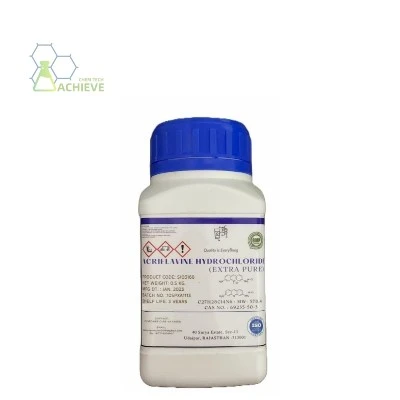
Acriflavine HCL, Azizihuang hydrochloride is a compound with multiple characteristics and uses. From a chemical perspective, it usually appears as a reddish brown or orange red crystalline powder, odorless, and has an acidic taste. The chemical formula of C27H25ClN6 · 3 (HCl) may vary depending on different studies or products, with molecular weights ranging from 500 to 580. It is easily soluble in water and ethanol, but difficult to dissolve in chloroform, ether, and oils. This solubility characteristic gives it certain characteristics in solution preparation and experimental applications. In the application field, it can be used for the research and development of anti-tumor, antibacterial, and antiparasitic medications in medicine; Can be used as a cell staining agent and signaling pathway research tool in scientific research; It may be used as an additive in the field of feed, but further research is needed on its mechanism of action and safety.
Our product




Additional information of chemical compound:
| Product Name | Acriflavine Cream | Acriflavine Powder | Acriflavine Tablets | Acriflavine Hcl |
| Product Type | Cream | Powder | Tablets | Powder |
| Product Purity | ≥99% | ≥99% | ≥99% | ≥99% |
| Product Specifications | Customizable | Customizable | Customizable | Customizable |
| Product Package | Customizable | Customizable | Customizable | Customizable |
Our Product


Acriflavine Hcl+. COA
 |
||
Certificate of Analysis |
||
|
Compound name |
Acriflavine Hcl | |
|
CAS No. |
8063-24-9 | |
|
Grade |
Pharmaceutical grade | |
|
Quantity |
Customized | |
|
Packaging standard |
Customized | |
| Manufacturer | Shaanxi BLOOM TECH Co., Ltd | |
|
Lot No. |
20250109001 |
|
|
MFG |
Jan 12th 2025 |
|
|
EXP |
Jan 8th 2029 |
|
|
Structure |
|
|
| TEST STANDARD | GB/T24768-2009 Industry. Stnndard | |
|
Item |
Enterprise standard |
Analysis result |
|
Appearance |
White or almost white powder |
Conformed |
|
Water content |
≤4.5% |
0.30% |
| Loss on drying |
≤1.0% |
0.15% |
|
Heavy Metals |
Pb≤0.5ppm |
N.D. |
|
As≤0.5ppm |
N.D. | |
|
Hg≤0.5ppm |
N.D. | |
|
Cd≤0.5ppm |
N.D. | |
|
Purity (HPLC) |
≥99.0% |
99.5% |
|
Single impurity |
<0.8% |
0.48% |
|
Residue on ignition |
<0.20% |
0.064% |
|
Total microbial count |
≤750cfu/g |
80 |
|
E. Coli |
≤2MPN/g |
N.D. |
|
Salmonella |
N.D. | N.D. |
|
Ethanol (by GC) |
≤5000ppm |
400ppm |
|
Storage |
Store in a sealed, dark and dry place at-20 degrees |
|
|
|
||


(1) Infectious diseases of skin
Bacterial infectious skin disease
Cause and symptoms: Bacterial infectious skin disases such as folliculitis, furuncle, pustule, etc. are mainly caused by bacteria such as Staphylococcus aureus and Streptococcus. Symptoms include redness, swelling, pain, and suppuration of the skin.
Mechanism of action and efficacy: Acrflavine inhibits bacterial growth and reproduction, reduces skin inflammation, and promotes wound healing through its antibacterial properties. It can interfere with bacterial DNA replication, protein synthsis, and matrix membrane function, thereby achieving bactericidal effects.
Fungal infectious skin disease
Cause and symptoms: Fungal infectious skin disases such as tinea corporis, tinea pedis, tinea pedis, etc. are mainly caused by fungi such as dermatophytes. Symptoms include itching, flaking, and redness of the skin.
Mechanism of action and therapeutic effect: Although there is relatively little direct research on the antifungal effect, based on its antibacterial mechanism, it is speculated that it may also have a certain inhibitory effect on fungi. It may inhibit the growth and reproduction of fungi by interfering with their cellular structure and function. However, further clinical studies are needed to verify its antifungal effect.


(3) Skin tumor related diseases
Skin precancerous lesions
Etiology and Symptoms: Pre cancerous skin lesions such as keratosis caused by sunlight are early stages of skin cancer, characterized by redness, scales, and wart like growths on the skin.
Mechanism of action and efficacy: The anti-tumr effect of Acrflavine may help inhibit the development of precancerous lesions in the skin. It can inhibit DNA replication and induce apoptosis of tumr matrixs, preventing the transformation of lesions into skin cancer.
Superficial skin cancer
Cause and symptoms: Superficial skin cancer such as basal matrix carcinoma, squamous matrix carcinoma, etc., early manifestations include nodules, ulcers, etc. on the skin.
Mechanism of action and efficacy: The photodynamic therapy potential of Acrflavine may provide a new option for the treatment of superficial skin cancer. Under specific wavelength light irradiation, it can generate reactive oxygen species such as singlet oxygen, which have selective killing effects on tumr matrixs and reduce damage to normal tissues.


(4) Other skin diseasesbility
Eczema
Causes and Symptoms: Eczema is a common skin disease with complex causes that may be related to genetic, environmental, immune, and other factors. Symptoms include itching, erythema, papules, blisters, etc.
Mechanism of action and efficacy: The anti-inflammatory and antibacterial effects of Acrflavine may help alleviate symptoms of eczema. It can inhibit the production and release of inflammatory factors, reduce skin inflammation, and inhibit bacterial growth to prevent secondary infections.
Psoriasis vulgaris
Etiology and Symptoms: Psoriasis is a chronic inflammatory skin disease with an unclear etiology, which may be related to genetic, immune, environmental, and other factors. Symptoms include the appearance of red patches on the skin covered with silver white scales.
Mechanism of action and efficacy: Acrflavine may have a certain therapeutic effect on psoriasis by regulating immune response and inhibiting the production of inflammatory factors. However, further clinical studies are needed to confirm its specific efficacy.


Research and development of anti-tumor drugs
Due to its potential as a HIF-1 α inhibitor, it has certain application prospects in the development of anti-tumr medications. Researchers can further explore that mechanism of action, optimize medication structure to improve its efficacy and safety, and develop more effective anti-tumr medications. For example, by structural modification, the pharmacokinetic properties of acridin hydrochloride can be improved, enhancing its stability and targeting in vivo.
Antibacterial and antiparasitic drugs
It can be used to prepare antibacterial and antiparasitic medications and treat related infectious disases. In clinical applications, it is necessary to select appropriate medication formulations and administration methods based on the specific type of infection and pathogen. For example, for skin and mucosal infections, topical preparations can be prepared; For animal parasitic infections, oral or injectable preparations can be prepared for animal use.
(2) Research field

Cell Biology Experiments
In matrix biology experiments, it can be used as a staining agent for matrix staining. Its reddish brown or orange red color characteristics enable it to clearly mark matrix structures, making it easy to observe and study. For example, when observing the morphology, distribution, and movement of matrixs under a microscope, acridin hydrochloride can make the matrixs more clearly visible.
Signal pathway research
As an inhibitor of HIF-1 α, it can be used to study the signaling pathway mediated by HIF-1 α. By interfering with the activity of HIF-1 α, changes in downstream gene expression can be observed, providing a deeper understanding of the regulatory mechanisms of signaling pathways and important experimental tools for the study of related disases.
It is mentioned that it can be used as a nutritional fortifier or feed additive powder. Adding acridin hydrochloride to feed may help improve animal health and prevent the occurrence of certain disases. However, its specific mechanism of action and safety still need further research and verification in feed applications. For example, it is necessary to determine the appropriate dosage of additives to ensure that they can have beneficial effects without causing adverse reactions to animals.

Biological activity and mechanism of action
(1) HIF-1 α inhibitors

Mechanism of Action
Azizihuang hydrochloride is an effective inhibitor of HIF-1 α (hypoxia inducible factor-1 α). It works by targeting the pathway mediated by HIF-1 α, reducing the levels of PGK1 (phosphoglycerate kinase 1), VEGF (vascular endothelial growth factor), and HIF-1 α in vitro and in vivo. HIF-1 α plays a crucial role in the occurrence, development, and metastasis of tumrs, as it can regulate the metabolism, angiogenesis, invasion, and metastasis of tumr matrixs. Azizihuang hydrochloride inhibits the activity of HIF-1 α, which can block its dimerization with the HIF-1 β subunit, thereby inhibiting the transcriptional activity of HIF-1, reducing the expression of downstream target genes, and inhibiting tumr angiogenesis and growth, inducing tumr matrix apoptosis.
Research significance and application prospects
This mechanism of action provides new ideas and targets for tumr treatment. By inhibiting the activity of HIF-1 α, it can interfere with the survival and proliferation environment of tumr matrixs, which is expected to develop more effective anti-tumr medications. At present, research on inhibitors of HIF-1 α is one of the hotspots in the field of tumr therapy, and aziridine hydrochloride, as one of them, has the potential for further research and development.
Mechanism of Action
It has antibacterial effects, and its antibacterial mechanism may be related to embedding in bacterial DNA double strands, disrupting the helical structure of DNA, and interfering with DNA replication and transcription processes. In the process of bacterial proliferation, DNA replication and transcription are key steps. The embedding effect of acridin hydrochloride prevents DNA polymerase and RNA polymerase from binding properly, leading to replication and transcription errors or termination, thereby inhibiting bacterial growth and reproduction. In addition, it may also bind to bacterial ribosomes, interfere with protein synthsis processes, and affect the normal metabolism and function of bacteria.
Application scope
It can be used to treat some skin and mucosal infections and other disases, but its application is limited due to its staining characteristics. For example, local tissue staining may occur during use, affecting aesthetics and patient acceptance.

(3) Antiparasitic effect

Mechanism and Effect of Action
It has an effect on pear shaped worms, red blood matrix bodies, horse Babesia, dwarf Babesia, bovine Babesia, bovine Babesia, sheep Babesia, etc., but it is ineffective on Taylor worms and plasma free bodies. Its mechanism of action may involve interfering with the metabolic pathways of parasites or disrupting their cellular structure. Parasites have unique metabolic pathways and cellular structures, and acridin hydrochloride may interact with biomolecules inside the parasite to affect its normal physiological functions, thereby achieving the goal of inhibiting parasite growth and reproduction.
Application in the field of veterinary medicine
In the field of veterinary medicine, acridin yellow hydrochloride can be used to treat parasitic infections in animals and ensure their health. However, due to the limitations of its spectrum of action, it is necessary to choose according to the specific parasite species when using it.

synthetic method
(1) Synthesis route using aniline as raw material
Technological process
Starting from aniline, it undergoes a condensation reaction with formaldehyde. In this reaction, the amino group of aniline undergoes nucleophilic addition reaction with the carbonyl group of formaldehyde, forming a methylene bridged intermediate. Subsequently, a nitration reaction is carried out, in which nitro groups are introduced onto the benzene ring under the action of a nitration agent. Next, a reduction reaction is carried out to reduce the nitro group to the amino group. Afterwards, a closed-loop reaction is carried out to form an acridin ring structure within the molecule. Finally, a salt precipitation reaction is carried out to form a salt with hydrochloric acid to obtain acridin yellow hydrochloride.
Advantages and disadvantages analysis
The advantage of this method is its high nitrification yield. However, there are also some drawbacks, such as difficulty in separating isomers, which increases the difficulty and cost of subsequent purification. In addition, the reduction reaction may not be complete, resulting in a lower overall yield and affecting production efficiency and economic benefits.
(2) Synthesis route using benzene as raw material
Technological process
Starting from benzene, nitrobenzene is obtained through nitration reaction. Nitrification reaction needs to be carried out under specific temperature and nitration agent conditions to ensure the selectivity and yield of the reaction. Then nitrobenzene is reduced to aniline, and the reduction reaction usually uses reducing agents such as iron powder. Next, the acylation reaction is carried out, and aniline reacts with the acylation reagent to generate acylation products. Further condensation reaction is carried out to cause the molecules to undergo condensation and form specific intermediates. Afterwards, a closed-loop reaction is carried out to construct an acridin ring structure. Finally, a salt precipitation reaction is carried out to form a salt with hydrochloric acid to obtain acridine Acriflavine HCL.
Advantages and disadvantages analysis
The nitration yield of this method is similar to that of the method using aniline as raw material, but the separation of para isomers is relatively easy, which makes the subsequent purification process relatively simple and improves the purity of the product. Therefore, this method is more practical in actual production. However, the entire synthsis process is still relatively complex, involving multiple steps and requiring strict control of reaction conditions to ensure the smooth progress of each step and the quality of the product.
Frequently Asked Questions
Is acriflavine safe to use?
+
-
Acriflavine (INN: acriflavinium chloride) is a topical antiseptic. It has the form of an orange or brown powder. It may be harmful in the eyes or if inhaled. It is a dye and it stains the skin and may irritate.
What heals an open wound quickly?
+
-
To heal open wounds faster, keep them clean, moist (with appropriate dressings), and protected from infection, focusing on good nutrition (protein, Vitamins A & C), managing underlying conditions, and using recommended ointments or honey; for serious wounds, always see a doctor.
How to apply acriflavine?
+
-
Refer to Protocol for Wound Management: Acriflavine in glycerin solution can be applied into the wound as an alternative if proper irrigation is not possible, because it promotes wound drainage qnd has a hygroscopic action which may reduce local swelling when applied with well-padded bandages.
What is the best antiseptic for open wounds?
+
-
The best first step for an open wound is gentle cleaning with saline or soap and water; for antiseptics, povidone-iodine (Betadine) and chlorhexidine are strong choices for infection prevention, but use sparingly as they can harm tissue, while BZK wipes are good alcohol-free options, and specialized sodium hypochlorite (like Dakin's) is excellent for deeper wounds, but always prioritize gentle cleaning and consult a doctor for deep or severe wounds.
Hot Tags: acriflavine hcl, suppliers, manufacturers, factory, wholesale, buy, price, bulk, for sale, tetracaine hcl, Medetomidine HCl, Pure Dexmedetomidine CAS 113775 47 6, Baclofen Powder CAS 1134 47 0, Tetrahydrobiopterin (BH4) Powder, Chlorpropham CAS 101 21 3