






Shaanxi BLOOM Tech Co., Ltd. is one of the most experienced manufacturers and suppliers of chlortetracycline powder in China. Welcome to wholesale bulk high quality chlortetracycline powder for sale here from our factory. Good service and reasonable price are available.
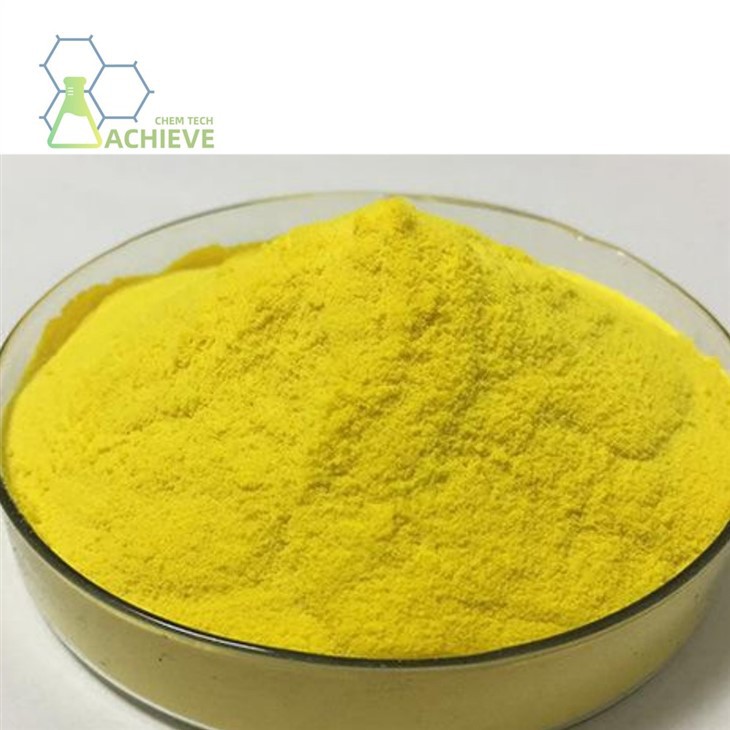
Chlortetracycline powder is a tetracycline antibiotic, which is a golden crystalline with no odor and a bitter taste. The molecular formula C22H23ClN2O8, CAS 57-62-5, has a stable crystal structure and can be stored in air for a long time. However, when exposed to light, its color gradually darkens from golden yellow to dark brown or black, which is related to its photosensitivity. In dry and low-temperature environments (such as 20 ℃), its biological activity can be stably maintained for 36-60 months without significant decline in potency. It has a certain degree of lipophilicity and can penetrate the cell membrane into the interior of bacteria, but this also makes it prone to form insoluble chelates with metal ions (such as Ca ² ⁺, Mg ² ⁺), reducing its bioavailability. In the blood, the binding rate of chlorotetracycline to plasma proteins is relatively low (about 20-30%), so it can be widely distributed in tissues and body fluids, especially in organs such as the liver and kidneys.


Additional information of chemical compound:

Our Product


Chlortetracycline +. COA


1. Solubility
The solubility of chlorotetracycline has significant characteristics:
Extremely soluble in water: The solubility in pure water is extremely low (0.86g/mL at 28 ℃), but soluble in salt solutions (such as sodium chloride solution).
Partially soluble in organic solvents: Chlortetracycline powder hydrochloride form is slightly soluble in methanol, water, and ethanol, but almost insoluble in non-polar organic solvents such as acetone, ether, chloroform, etc.
PH dependence: Differential isomerization is prone to occur under acidic conditions (pH 2-6), resulting in the formation of inactive differential streptomycin; Easy to dehydrate and form dehydrated streptomycin in strongly acidic environments (pH<2); In alkaline conditions (pH>7), it rapidly decays and degrades (such as a half-life of only 3.5 hours at pH 9.8).


2. Melting point and boiling point
Melting point: 168-169 ℃ (decomposition), indicating that it undergoes a decomposition rection when heated to this temperature, releasing carbon dioxide and water, and generating black degradation products.
Boiling point: The theoretical predicted value is 821.1 ℃, but in reality, it is difficult to reach this temperature due to decomposition rections.
3. Density and refractive index
Density: 1.7g/cm ³ (crystalline state), higher than most organic compounds, due to its complex molecular structure.
Refractive index: approximately 1.6000 (estimated value), reflecting its optical properties and can be used for purity testing.
4. Acid base properties
Chlorotetracycline is an amphoteric compound:
Alkaline group: The dimethylamino group (- N (CH3) ₂) in the molecule is alkaline and can accept protons to form cations.
Acidic groups: Tricarbonylmethane and phenolic ketone systems have acidity and can release protons to form anions.
Salt formation: By reacting with acids or bases, derivatives such as hydrochloride salts and calcium salts can be generated. For example:
Chlortetracycline hydrochloride: produced by reacting chlorotetracycline with hydrochloric acid, slightly soluble in water, and is a commonly used formulation form.
Chlortetracycline calcium: produced by reacting chlorotetracycline with calcium salts, used as a feed additive and can release active ingredients in stomach acid.


5. Thermal stability and photosensitivity
Thermal stability: In a dry environment, chlorotetracycline can tolerate higher temperatures (such as below melting point), but high temperatures will accelerate its decomposition. For example, if left at 37 ℃ for 5 hours, its potency will decrease by at least 5%.
Sensitivity to light: When exposed to light, the color darkens and the activity decreases. This is due to the photochemical rea=ction within the molecule triggered by light, which generates free radicals or oxidation products, leading to structural damage. Therefore, chlorotetracycline preparations need to be stored away from light (such as using brown bottles or aluminum foil packaging).
6. Molecular Structure and Spatial Configuration
The molecular formula of chlorotetracycline is C ₂₂ H ₂ ∝ ClN ₂ O ₈, with a molecular weight of 478.88. Its structure includes:
Tetracycline core skeleton: composed of four fused rings (A, B, C, D), it is a key structure for antibacterial activity.
Functional groups:
6-position methyl (enhances antibacterial activity).
7-position chlorine atom (enhances activity against Gram positive bacteria).
4-dimethylamino (a key binding site to ribosomes).
Polyhydroxyl and carbonyl groups (involved in hydrogen bonding formation, stabilizing molecular conformation).


The common synthesis methods of chlortetracycline powder (aureomycin) mainly include biological fermentation and chemical synthesis. Among them, biological fermentation is the main pathway for industrial production, while chemical synthesis is used for the preparation or structural modification of specific derivatives. The following is a detailed explanation of the specific method:
Biological fermentation method: the core technology of industrial production
The biological fermentation method uses Streptomyces aureofaciens as the production strain, and achieves efficient synthesis of chlorotetracycline through fermentation engineering. The process flow can be divided into the following key steps:
Breeding of bacterial strains and optimization of culture media
Strain selection: Screening high-yield strains through natural selection, mutagenesis breeding, or genetic engineering methods. For example, using PCR targeting technology to knock out non essential gene clusters in Streptomyces coelicolor can simplify metabolic pathways and increase the yield of target products.
Culture medium design: The fermentation medium should contain carbon sources (such as glucose and starch), nitrogen sources (such as yeast extract and peptone), inorganic salts (such as phosphate and magnesium salts), and precursor substances (such as malonic acid). Among them, the addition of chloride ions is a key step in the synthesis of chlorotetracycline, which can be promoted by adding sodium chloride or ammonium chloride.
Fermentation process control
Fermentation conditions: Temperature controlled at 28-30 ℃, pH maintained at 6.5-7.5, dissolved oxygen level adjusted by stirring and aeration rate. During the initial stage of fermentation, Streptomyces coelicolor mainly grows as bacterial cells, and later enters the stage of product synthesis.
Metabolic regulation: By adding inhibitors such as sodium chloride or thiol benzothiazole (M-promoter), metabolic flow can be regulated and the proportion of chlorotetracycline can be increased. For example, adding sodium bromide as a competitive inhibitor to the culture medium can inhibit the addition of chlorine, thereby directing the fermentation to produce tetracycline.
Product extraction and purification
Precipitation method:
After acidification (pH 4.5-5.0) of the fermentation broth, chlorotetracycline precipitates as a free acid and is separated by filtration.
01
Solvent extraction method:
Utilizing the difference in solubility of chlorotetracycline in different pH and solvents, organic solvents such as pentanol and pentyl acetate are used for extraction.
02
Ion exchange method:
Chlortetracycline is adsorbed by anion exchange resin and further purified by washing with methanol or ethanol.
03
Crystallization process:
After the crude product is dissolved and salted (such as hydrochloride), it is crystallized by controlling temperature and concentration to obtain high-purity chlorotetracycline.
04
Chemical synthesis method: structural modification and derivative preparation
The chemical synthesis method is mainly used to prepare chlorotetracycline derivatives or optimize their properties through structural modification. Here are two typical methods:
Palladium catalyzed hydrogenation reaction
Reaction principle: Using chlorotetracycline as the raw material, specific functional groups or modified side chains are introduced through hydrogenation rection under the action of palladium catalyst. For example, chlorotetracycline can be converted into tetracycline through palladium catalyzed hydrogenation, but this method is more commonly used for laboratory research rather than industrial production.
Application scenario: Chemical synthesis method has important value in the preparation of semi synthetic tetracycline antibiotics (such as minocycline and doxycycline), but the chemical synthesis of chlorotetracycline itself is relatively limited due to its complex steps and high cost.
precautions for product use
请替换当前内容 Do not mount the Smart Cube Lights to the ceiling without a Smart Cube Light Mounting Kit to prevent falling. Double-sided adhesive is not sufficient to fix the light panel to the ceiling;.
Do not use double sided tape to attach light panels to dusty, damp, wallpapered or uneven surfaces such as brick, unfinished wood or rough concrete walls;.
Do not use double sided tape to attach light panels to dusty, damp, wallpapered or uneven surfaces such as brick, unfinished wood or rough concrete walls;.
The product is not waterproof, please do not wash or contact with water;
Do not allow children without adult supervision to use this product alone, children should not be left alone with product accessories, risk of choking.
Regularly check for loose screws, damaged parts or broken seams and replace damaged parts if necessary. When disassembling or assembling, please follow the instruction manual carefully to avoid unnecessary damage.
Exploration of Total Synthesis Pathway
Research progress: Although chlorotetracycline can be efficiently synthesized through biological fermentation, scientists are still committed to developing fully synthetic routes to overcome the limitations of biosynthesis. For example, by designing multi-step organic synthesis rections, the core skeleton of chlorotetracycline can be constructed from simple starting materials such as 1,4-butanediol.
Challenge and significance: The total synthesis route faces problems such as multiple rection steps and low yield, but its success will help to deepen the understanding of the structure-activity relationship of chlorotetracycline and provide theoretical basis for the design of new antibiotics.
Technological development trends
Metabolic Engineering and Synthetic Biology:
By using gene editing techniques such as CRISPR-Cas9 to modify Streptomyces coelicolor and enhance the expression of key enzymes in the chlorotetracycline synthesis pathway, such as the halogenated enzyme CtcP, yield can be significantly increased. For example, overexpression of three copies of the ctcP gene can increase the production of chlortetracycline from 15 g/L to 25.9 g/L.
Green synthesis process:
Develop low-energy and low pollution fermentation processes, such as using a semi continuous fermentation mode to achieve efficient production through batch feeding and product separation. In addition, using biocatalysts instead of chemical reagents can reduce waste emissions.
Joint production strategy:
By regulating the metabolic network of Streptomyces coelicolor, the co production of chlorotetracycline and other tetracycline antibiotics (such as tetracycline and oxytetacycline) can be achieved, improving resource utilization efficiency. For example, when chlorine suppressants are added to the culture medium, Streptomyces coelicolor can switch to synthesizing tetracycline.

Drug analysis methods and quality control
Application: Determination of Chlortetracycline Hydrochloride Content in Compound Chlortetracycline Glycerol.
Condition:
Chromatographic column: Autima C18 column (4.6mm × 250mm, 5 μ m).
Mobile phase: Methanol -0.01mol/L NaH ₂ PO ₄ solution (36:64).
Detection wavelength: 355nm.
Linear range: 85.56-513.36 μ g/mL (r=0.9997).
Recovery rate: 100.23%, RSD=1.34%.
Principle: Based on the chemiluminescence rection between tris (2,2 '- bipyridine) ruthenium (II) (Ru (bpy) ∝⁺) and potassium permanganate, tetracycline antibiotics can enhance the luminescence intensity.
Sensitivity:
Tetracycline: 1.0 × 10 ⁻⁷ -1.0 × 10 ⁻⁵ g/mL.
Chlorotetracycline: 4.0 × 10 ⁻⁸ -1.0 × 10 ⁻⁵ g/mL.
Oxytetacycline: 1.0 × 10 ⁻⁷ -1.0 × 10 ⁻⁵ g/mL.
Detection limit: Chlortetracycline is 1.0 × 10 ⁻⁸ g/mL (S/N=3).
Content determination: The content determined by HPLC method should be between 90% and 110% of the labeled amount.
Impurity control: It is necessary to detect impurities such as tetracycline and isomers, with a total impurity not exceeding 2%.
Dissolution rate: The dissolution rate of tablets should meet the pharmacopoeia standards (such as a 30 minute dissolution rate of ≥ 75%).
Dry environment: Chlortetracycline powder can remain stable for a long time in a dry crystalline state (such as storing at 20 ℃ for 3 years without any decay in potency).
Humidity effect: After moisture absorption, hydrolysis rection is prone to occur, generating inactive degradation products, so it needs to be sealed and stored.
Temperature control: It is recommended to store at a temperature of 2-8 ℃ to avoid high temperatures and freezing (freezing may cause damage to the crystal structure).
Light avoidance requirements: Use opaque containers to prevent photochemical rections caused by light exposure.
Hot Tags: chlortetracycline powder, suppliers, manufacturers, factory, wholesale, buy, price, bulk, for sale, 99 9 pure lidocaine powder, articaine hydrochloride powder, cholesterol powder, Medetomidine hydrochloride, raloxifene powder, tetramisole hydrochloride powder