


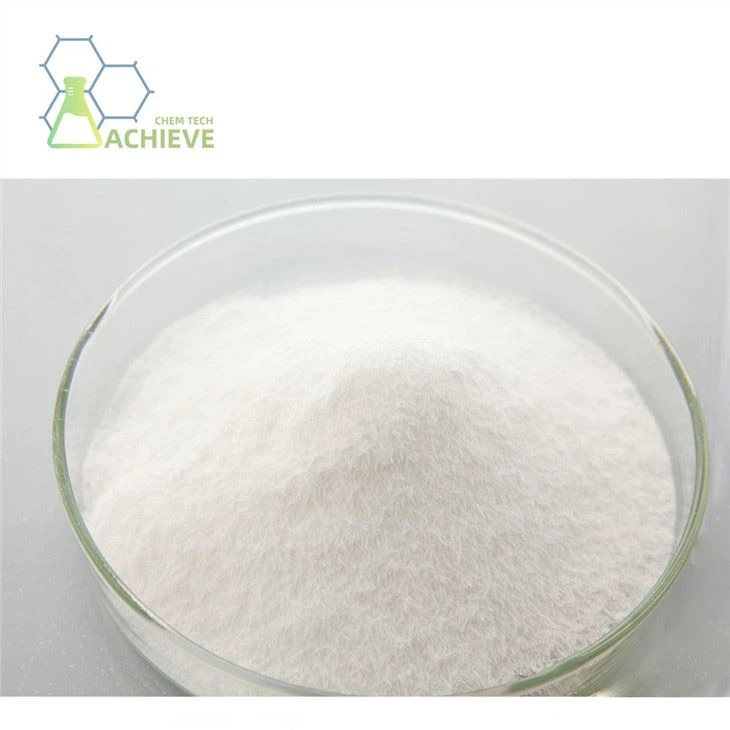


IPTG reagent we focus on the technology of organic synthesis since 2008, We can develop high-quality products, completely dependent on our exquisite R & D team. IPTG, CAS 367-93-1, chemical structure composed of isopropyl β- It is composed of D-thiogalactoside and phosphate groups. Among them, β- D-thiogalactoside is an analogue of galactose, in which the sulfur atom replaces the oxygen atom. This special glycoside structure allows IPTG to bind to DNA and induce gene expression. IPTG has a low solubility in water, but can dissolve well in physiological saline and phosphate buffer. It is acidic with a pKa value of 4.5, which is related to the phosphate group in its molecular structure. It is not easy to crystallize in pure water, but it can form crystals in high concentration solutions or when other compounds are added. Due to its ability to induce bacterial protein expression, IPTG is sensitive to certain microorganisms.

|
Chemical Formula |
C9H18O5S |
|
Exact Mass |
238.09 |
|
Molecular Weight |
238.30 |
|
m/z |
238.09 (100.0%), 239.09 (9.7%), 240.08 (4.5%), 240.09 (1.0%) |
|
Elemental Analysis |
C, 45.36; H, 7.61; O, 33.57; S, 13.45 |
We don't do anything shame on Great Chemistry! Don't trust the unreasonable price, please compare the price in the same level quality.
|
|
|


The biosynthesis method of IPTG reagent usually utilizes the catalytic action of microorganisms or enzymes to convert galactose into isopropyl group- β- D-thiogalactoside.
Firstly, it is necessary to use galactose as the raw material. Galactose is a five carbon sugar that is widely present in nature and can be obtained in the form of syrup or crystals. In biosynthesis, galactose is converted to isopropyl through a series of enzymatic reactions- β- D-thiogalactoside.
Next, it is necessary to select appropriate microorganisms as catalysts, which typically include bacteria, yeast, and molds. Cultivate these microorganisms in a culture medium to allow them to grow and reproduce under suitable conditions. Meanwhile, galactose, as a nutrient, is consumed by microorganisms and metabolized into the desired intermediate through a series of enzymatic reactions. The specific reaction mechanism and chemical equation in this step vary depending on the types of microorganisms and cultivation conditions.


Under the action of enzymes produced by microorganisms, intermediate products undergo isomerization reaction, generating isopropyl groups- β- D-thiogalactoside-5 '- phosphate ester. The reaction mechanism of this step is to transfer the hydroxyl group of galactose to uridine triphosphate, generating isopropyl group- β- D-thiogalactoside-5 '- phosphate and uridine diphosphate. The specific chemical equation is as follows:
(CH2OH) 2CHOH-OH + C3H7ClN2O2S + UDP → (CH2OH)2CHOH-O-P(U) + C10H15N5O10P2 + C3H7N
The final step is to remove the protective group from the isopropyl group- β- Conversion of D-thiogalactosyl-5 '- phosphate ester to target product isopropyl- β- D-thiogalactoside. This step usually requires the use of an acid or alkali solution as a catalyst to promote the reaction. The specific chemical equation is as follows:
(CH2OH)2CHOH-O-P(U) + H2O → (CH2OH)2CHOH-OH + P (i)
By using separation and purification techniques such as extraction, adsorption, chromatography, etc., the target product isopropyl is purified- β- D-thiogalactoside was extracted from the reaction mixture. The purpose of this step is to remove impurities and improve the purity of the product to meet the needs of practical applications

IPTG reagent Isopropyl-β-D-thiogalactoside, English name IPTG. As a placebo inducer, X-gal is a chromogenic substrate, both of which are used for blue-white screening. IPTG could induce the DNA segment of lac operon of Chemicalbook vector to synthesize the amino-terminal fragment of β-galactosidase, which could achieve intragenic complementation ( α complementation ) with the defective β-galactosidase encoded by host cells.
IPTG can be used to prepare certain biomaterials, such as polysaccharides, liposomes, etc. By binding to specific cell membranes or proteins, IPTG can promote specific physiological functions of cells or tissues, providing new research tools and therapeutic strategies for the field of biomedical engineering. For example, by using IPTG as an inducer, it can promote the expression and secretion of target proteins in engineering bacteria or yeast cells, which can be used to produce biomaterials with specific functions.
These biomaterials may include polysaccharides, liposomes, protein complexes, etc.
In the process of preparing biomaterials, the use of IPTG can simplify the production process, improve production efficiency, and reduce production costs. At the same time, precise regulation of target protein expression levels and biomaterial properties can be achieved by controlling the amount and duration of IPTG addition.

2. Drug screening:

IPTG is mainly used in drug screening to induce the expression of target genes and screen the expression products of target genes. Specifically, IPTG can serve as an inducer of lactose operons by binding to lac | products, causing conformational changes of lac | products away from lacO, thereby activating transcription and achieving high expression of the target gene. During the blue white screening process, transformants without recombinant plasmids are induced by IPTG to form blue colonies in the presence of chromogenic substrate X-gal.
When foreign fragments are inserted, the resulting peptide fragments are lost α Complementary ability: Transformed recombinants containing recombinant plasmids can only form white Escherichia coli on chromogenic induction medium. This method of drug screening based on color changes plays an important role in studying proteins related to specific diseases and searching for new drug targets.
IPTG is often used as a molecular tool in genetic research. By binding to a specific gene sequence, IPTG can regulate the expression level of that gene, thereby studying its relationship with specific phenotypes or diseases.
In genetic research, IPTG is mainly used as an inducer and can simulate the induction effect of lactose on lactase. It is usually used to induce the expression of exogenous genes, especially in molecular biology and genetic engineering research.
When using IPTG, it binds to target genes in expression hosts such as Escherichia coli. By constructing the target gene with appropriate promoters and regulatory elements into the expression vector, it can produce proteins in Escherichia coli cells. This induced effect is of great significance for studying gene function, protein interactions, and developing new drugs and biomaterials.


In addition, IPTG can also be used as an inducer in protein crystallization experiments to promote protein crystallization. Its mechanism of action is to change the conformation of proteins by binding to hydrophobic regions in proteins, thereby promoting aggregation and crystallization between protein molecules.
This aggregation and crystallization process is reversible, so protein crystallization can be induced by adding IPTG, or protein crystals can be dissolved by removing IPTG.
In agricultural applications, IPTG reagent as a new type of biopesticide, has herbicide specific effects. It can interfere with the normal metabolism of galactose in plants, thereby affecting their normal growth. This interference method is more sensitive to some weeds, so using IPTG can effectively remove weeds without harming crops.Meanwhile, as IPTG is a new type of biopesticide, it has better environmental friendliness and higher safety for humans and animals compared to traditional chemical pesticides. Therefore, IPTG has broad application prospects in agricultural applications.

Potential interference with gene expression regulation
Non specific induction
IPTG, as an inducer, has a certain specificity in its action, but non-specific induction may occur in some cases. IPTG not only induces the expression of target genes, but may also affect the expression of other genes within cells. This may be due to the fact that after IPTG binds to the repressor protein, it changes the conformation and function of the repressor protein, causing it to have certain effects on other operons, thereby relieving the inhibition of non target gene expression.


Non specific induction can lead to changes in intracellular protein expression profiles, producing unexpected proteins that not only interfere with the analysis and judgment of experimental results, but may also have adverse effects on the normal physiological functions of cells. For example, in some protein expression experiments, after induction with IPTG, in addition to detecting an increase in the expression of the target protein, upregulation of the expression of some other unknown proteins was also found. These non-specific expressed proteins may interfere with the purification and functional studies of the target protein.
Irreversibility of Induced Expression
Under normal circumstances, after removing the inducer, gene expression should return to its pre induction level. However, studies have shown that IPTG induced gene expression may have a certain degree of irreversibility. Once IPTG is used to induce gene expression, even if IPTG is removed, the gene expression level may still remain at a high level and cannot be restored to the baseline level before induction.


This irreversibility may be due to long-term intracellular changes induced by IPTG, such as changes in chromatin structure and modifications of transcription factors, which maintain a high level of gene transcriptional activity. The irreversibility of induced expression can cause great difficulties in experiments, especially in experiments that require precise regulation of gene expression levels, which may lead to inaccurate and non reproducible experimental results.


Based on its stable molecular structure and reliable inducing activity, IPTG has become an indispensable reagent in molecular biology laboratories worldwide. It is widely used in recombinant protein expression, gene function research, and microbial engineering experiments, providing stable induction effects for scientific research and industrial production. Our long-term focus on organic synthesis technology and strict quality control ensures that our IPTG products maintain high purity, stability, and consistency, effectively meeting the demanding requirements of scientific experiments and industrial applications.
Supported by a professional R&D team, we continue to optimize synthesis processes and improve product performance to better serve global researchers and manufacturers. With its clear mechanism of action, stable properties, and broad applicability, IPTG will remain a core reagent in life science research, and we will continue to provide high-quality products and professional technical support for the advancement of biotechnology.
Hot Tags: iptg reagent cas 367-93-1, suppliers, manufacturers, factory, wholesale, buy, price, bulk, for sale, L Sulforaphane CAS 142825 10 3, pure Sevoflurane, tetracaine hcl, 4 BROMO 1 BUTYNE CAS 38771 21 0, Pure Dexmedetomidine CAS 113775 47 6, Procaine Hydrochloride