




Shaanxi BLOOM Tech Co., Ltd. is one of the most experienced manufacturers and suppliers of pure procaine powder cas 59-46-1 in China. Welcome to wholesale bulk high quality pure procaine powder cas 59-46-1 for sale here from our factory. Good service and reasonable price are available.
Pure procaine powder, is 99%+ pure substance. It is a short-acting ester local anesthetic, low lipophilic, weak penetration of mucous membrane. Procaine is an anesthetic drug, also known as procaine. The molecular formula is C13H20N2O2, with a relative molecular weight of 236.31g/mol. It is a white powder with some special physical properties that are crucial for its use and stability. The density is 1.11 g/mL. This means that it is heavier in the solid state than in the liquid state. Procaine lidocaine is often used in combination.
|
|
|

|
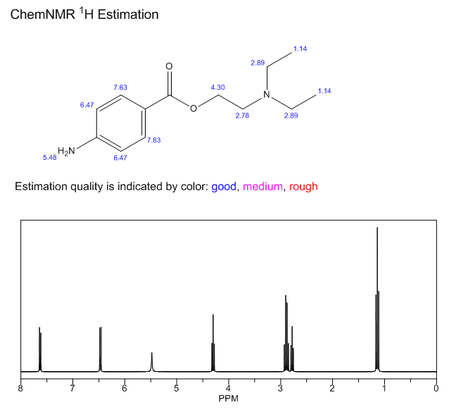
Chemical Formula |
C13H20N2O2 |
|
Exact Mass |
236.15 |
|
Molecular Weight |
236.32 |
|
m/z |
236.15 (100.0%), 237.16 (14.1%) |
|
Elemental Analysis |
C, 66.07; H, 8.53; N, 11.85; O, 13.54 |

Procaine is a stimulant for cells of the limbic system. In conscious cats, 15 mg/kg Procaine increased cellular activity in the ventral hippocampus of the amygdala, the nucleus ambiguus, the neocortex of the temporal lobe, and the ventral medial hypothalamus.Procaine facilitated the conduction of evoked stimulus activity from the amygdala to the ventral medial hypothalamus.Procaine affects the frequency and amplitude of rhythmic decelerating activity of the hippocampus that is presented as a reticulately primed area.Procaine ( 0.5 microliters, 20% w/v) injected into the ascending system prior to the supramarginal nucleus, near the medial forebrain bundle, or in the medial septal area decreased the amplitude of reticulately elicited hippocampal rhythmic slowing activity (RSA), with no effect on the frequency.Procaine injected into the ascending system prior to the site of reticular stimulation, up to, and including, the supramarginal nucleus decreased both the frequency and the amplitude of reticulately elicited RSA. frequency and amplitude of RSA.
The laboratory synthesis method of Pure procaine powder can be divided into the following steps:
1. Nitrification and reduction of PABA
Firstly, nitrification and reduction reactions are carried out on aminobenzoic acid (PABA). This reaction usually produces p-nitroaminobenzoic acid (PONBA), which can be reduced to obtain p-aminoaminobenzoic acid (PAMA).
The reaction equation is as follows:
PABA + HNO3 → PONBA + H2O
PONBA + H2 → PAMA + H2O
2. Esterification reaction of PAMA with ethyl chloroacetate
Add PAMA and ethyl chloroacetate together to the reaction flask for esterification reaction under the action of sulfuric acid. This will result in the formation of organic compound O-acetic acid chloroacetyl p-aminobenzoate ethyl ester.
The reaction equation is as follows:
PAMA + ClCH2CH2OCOCH2CH3 → ClCH2CH2OCO-Para-Amino-benzoic Acid Ethyl Ester
3. Generation of p-aminobenzoic acid hydrochloride
The O-acetic acid chloroacetyl ethyl p-aminobenzoate synthesized in the previous step is hydrolyzed by hydrochloric acid and reduced by water to obtain p-aminobenzoic acid hydrochloride.
The reaction equation is as follows:
ClCH2CH2OCO-PABA-OCOCH2CH3 + HCl + H2O → Procaine hydrochloride + Ethanol
The entire process of synthesis reaction is summarized as follows:
PABA + HNO3 → PONBA + H2O
PONBA + H2 → PAMA + H2O
PAMA + ClCH2CH2OCOCH2CH3 → ClCH2CH2OCO-PABA-OCOCH2CH3
ClCH2CH2OCO-PABA-OCOCH2CH3 + HCl + H2O → Procaine hydrochloride + Ethanol

Pure procaine powder is one of the commonly used local anesthetics with less toxicity. The effect can be sustained for 30-45 minutes after injection 1-3 minutes after administration, and the maintenance time can be prolonged by 20% with the addition of epinephrine. It can be hydrolyzed by esterase in plasma and converted into p-aminobenzoic acid (PABA) and diethylaminoethanol. The former can resist the antibacterial action of sulfonamides, so it should be avoided to be used together with sulfonamides. Procaine can also be used for local closure of the site of injury. Excessive use can cause central nervous system and cardiovascular reactions. Sometimes can cause allergic reaction, reason should do skin allergy test before medication, but skin test negative person still can produce allergic reaction. Those who are allergic to this drug can use cloprocaine and lidocaine instead.

Local Anesthesia
Surgical Procedures: Procaine is commonly employed in various surgical procedures to provide local anesthesia, effectively numbing the surgical site and reducing patient discomfort. It can be administered through infiltration anesthesia, nerve block anesthesia, spinal anesthesia (epidural or subarachnoid), and other regional anesthesia techniques.
Dental Procedures: In dentistry, procaine is used for local anesthesia during tooth extractions, fillings, and other dental surgeries, allowing for pain-free treatment.
Eye Surgery: It also finds application in ophthalmology, where it can anesthetize the eye tissues during surgical procedures.
Pain Management
Nerve Blocks: Procaine can be used in nerve blocks to manage chronic pain conditions, such as those associated with cancer, neuralgia, and other neuropathic pain syndromes.
Postoperative Pain Relief: It may also be administered postoperatively to provide pain relief at the surgical site.


Therapeutic Uses Beyond Anesthesia
Treatment of Certain Medical Conditions: Procaine has been used in the treatment of various medical conditions, including but not limited to pancreatitis, hemoptysis (coughing up blood), and renal colic (kidney stone pain). However, these applications are less common and may require specific indications and medical supervision.
Neuropsychiatric Disorders: In some cases, low doses of procaine have been explored for their potential therapeutic effects in neuropsychiatric disorders, though this use is not widespread and requires further research.
Combined Formulations
Procaine Penicillin: Procaine is combined with penicillin to form Procaine Penicillin, which is administered intramuscularly for the treatment of bacterial infections caused by penicillin-sensitive organisms. This formulation allows for a prolonged release of penicillin, reducing the frequency of dosing.
Compound Formulations: Procaine may also be combined with other drugs, such as in the case of Bromide and Procaine Injection (e.g., Bromopride and Procaine Hydrochloride Injection), which is used for the treatment of nausea and vomiting caused by various conditions.

Crystal structure
Procaine belongs to monoclinic crystal system crystal, the space group is P21, the cell parameter is a=9.64 ∨, b=10.14 ∨, c=8.15 ∨, β = 107.5°. Procaine molecules appear as a twisted semi elliptical shape and form an irregular molecular stacking pattern. The crystal structure is composed of Procaine molecules and surrounding water molecules, and the entire crystal structure is a three-dimensional network structure composed of infinite Procaine molecules and infinite water molecules.
Crystallography characteristics
The appearance of crystalline Pure procaine powder appears as a white or almost white powder with a density of 1.07 g/cm ³, The melting point is 61 ℃, with moderate thermal stability. In a humid environment, the relative humidity of Procaine will increase, leading to an enhanced hydration effect of Procaine, which belongs to hydrophobic drugs and therefore has poor stability.
Crystal topology
Procaine's crystal structure is an example of a discrete chemical nanoparticle (DCN) crystal structure. The main hydrogen bonding interactions in the Procaine structure form double row chains perpendicular to the a-axis, with each chain connected to four individual chains. Other hydrogen bonding interactions occur between chains and at the end of the chain, with some molecules connecting to the chain of another molecule by forming hydrogen bonds between the two chains. The prominent feature of Procaine's crystal structure is the composition of a set of prototype chemical nanoparticles, which are three-dimensional grids formed by molecules and small clusters.
Lattice constant
The lattice constant of Procaine is a=9.64 Å, b=10.14 Å, and c=8.15 Å, β = 107.5 °. The presence of hydrogen bonds in the lattice of Procaine molecules results in unique properties of the lattice. The density of the electron cloud in the hydrogen bond affects the atomic position and lattice constant, leading to the change of Procaine lattice constant.

In the long picture of medical history, the conquest of pain by humans is an eternal and arduous battle. On the journey from barbarism to civilization in surgery, the invention of anesthetics is undoubtedly one of the most glorious milestones. In the starry sky of local anesthesia, procaine - that pure white powder - is like a brilliant star. Its discovery not only opened up a new era of anesthesia, but also completely changed the practice mode of surgical surgery, dental treatment, and countless medical operations.
In 1884, Austrian ophthalmologist Carl Koller's discovery was like a bolt of lightning piercing through the dark night. He confirmed for the first time the local anesthetic properties of cocaine (alkaloids extracted from coca leaves). This discovery quickly swept the global medical community, triggering unprecedented excitement. Surgeons and dentists finally have a magical substance that can accurately block local pain without causing patients to fall asleep. Kohler thus became famous in history, and cocaine quickly became the gold standard for local anesthesia.
German chemist Alfred Einhorn became the ultimate winner. He is not fighting alone, behind it lies the powerful Department of Chemistry at the University of Munich, as well as his close collaboration with pharmacologist Heinrich Braun. Braun himself was a surgeon dedicated to improving local anesthesia, and he had a deep understanding of the drawbacks of cocaine.
The turning point occurred in 1905. After nearly a decade of relentless exploration, Eindhoven's team synthesized a new compound. According to its synthetic sequence, it may initially be simply labeled as a certain number. The structure of this compound is extremely simple and beautiful: it is formed by esterification of p-aminobenzoic acid and diethylaminoethanol.
Its full chemical name is 4-aminobenzoic acid-2- (diethylamino) ethyl ester. Later, it was given the world-renowned name - procaine. Eindhoven initially registered the trademark name "Novocain", derived from the Latin words "nov -" (new) and "- can" (cocaine derived), meaning "new cocaine", clearly declaring its ambition to replace cocaine.
Hot Tags: pure procaine powder cas 59-46-1, suppliers, manufacturers, factory, wholesale, buy, price, bulk, for sale, Cyclosporin A, Tetrahydrobiopterin BH4 Powder, 3 Dimethylaminophenol, raloxifene powder, tetravisc, Primidone powder