




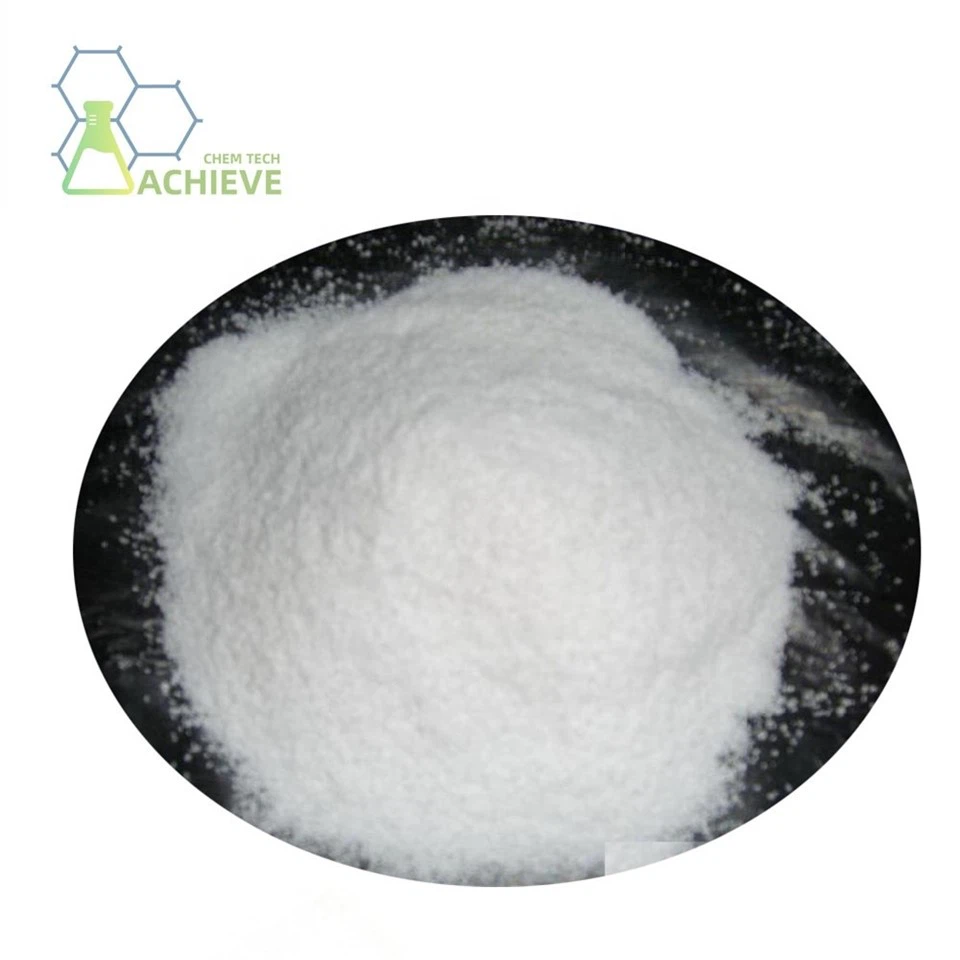

Shaanxi BLOOM Tech Co., Ltd. is one of the most experienced manufacturers and suppliers of sulfadiazine powder cas 68-35-9 in China. Welcome to wholesale bulk high quality sulfadiazine powder cas 68-35-9 for sale here from our factory. Good service and reasonable price are available.
Sulfadiazine powder is a white or off-white crystalline powder, renowned for its extensive application in the medical field. As a synthetic pyrimidine-based sulfonamide derivative, this powder exhibits broad-spectrum antibacterial activity. By competitively inhibiting the dihydrofolate synthase in bacteria, it effectively interferes with the folate metabolism, thereby demonstrating its antibacterial effect. This powder has no odor or taste and can remain stable in the air. It is an important raw material in the pharmaceutical industry. It usually exists in a high-purity form and plays a crucial role in clinical applications, especially as one of the options for treating and preventing infections caused by sensitive bacteria. At the same time, it is often used as a component of compound preparations, combined with trimethoprim, etc., to enhance efficacy. Moreover, under appropriate storage conditions, this powder has good stability. It can maintain its physical and chemical properties constant by being stored in sealed and light-proof containers.

Additional information of chemical compound:
|
Chemical Formula |
C10H10N4O2S |
|
Exact Mass |
250.05 |
|
Molecular Weight |
250.28 |
|
m/z |
250.05(100.0%),251.06(10.8%),252.05(4.5%),251.05(1.5%) |
|
Elemental Analysis |
C, 47.99; H, 4.03; N, 22.39; O, 12.79; S, 12.81 |
|
Melting point |
253℃(dec.) (lit.) |
|
Boiling point |
512.6±52.0℃(Predicted) |
|
Density |
1.3780 (rough estimate) |
|
Storage conditions |
2-8℃ |
|
|
|


Sulfadiazine powder, as one of the representative drugs of sulfonamide antibiotics, has a wide range of uses and important clinical value. The following is a detailed explanation of its use:
The antibacterial mechanism of sulfamethoxazole is mainly achieved by inhibiting bacterial dihydrofolate synthase, thereby interfering with bacterial folate metabolism and inhibiting bacterial growth and reproduction. Folic acid is an essential substance for bacterial synthesis of nucleic acids, and sulfamethoxazole can competitively bind to dihydrofolate synthase, thereby blocking the pathway of folate synthesis. Due to its inhibitory effect on most Gram positive bacteria and many Gram negative bacteria, sulfamethoxazole is widely used in clinical anti infective treatment.

Treatment of epidemic cerebrospinal meningitis

Sulfonamide pyrimidine is the preferred drug for treating epidemic cerebrospinal meningitis. Epidemic cerebrospinal meningitis is an acute suppurative inflammation caused by Neisseria meningitidis, mainly transmitted through droplets. Sulfonamide can penetrate the blood-brain barrier and its concentration in cerebrospinal fluid can reach up to 70% of serum concentration, thus having significant therapeutic effects. During treatment, intravenous injection is usually used for administration. The initial dose for adults is 50mg/kg, followed by 100mg/kg daily, divided into 3-4 intravenous drops or slow intravenous injections. The dosage for children should be calculated based on body weight, and during cerebral infarction, it should be applied at a rate of 100-150mg per kilogram of body weight per day.
In addition to epidemic encephalomyelitis, sulfamethoxazole can also be used to treat other infections caused by sensitive bacteria, such as Streptococcus pneumoniae, Neisseria gonorrhoeae, hemolytic streptococcus, etc. These infections may involve multiple sites, such as the respiratory tract, urinary tract, skin, and soft tissues. During treatment, it is necessary to choose the appropriate dosage and method of medication based on the specific condition and bacterial species. Take 1g orally twice a day, and the initial dosage can be doubled. The various dosage forms of sulfamethoxazole, such as tablets, injections, ointments, and eye ointments, also provide convenience for the treatment of infections in different parts of the body.

External treatment for burns and scalds

Zinc sulfamethoxazole is a derivative of sulfamethoxazole, which has antibacterial properties similar to sulfamethoxazole, but also promotes epidermal growth. Therefore, sulfamethoxazole zinc is widely used in the treatment of burns and scalds. When applied topically, suitable powders or ointments can be selected based on the burn area and severity for application. Zinc sulfamethoxazole can inhibit bacterial growth in wounds, reduce the risk of infection, and promote wound healing.
What are the side effects of this compound?
Sulfadiazine Powder, as a widely used sulfonamide antibiotic, plays an important role in the treatment of various bacterial infections. However, like other drugs, it may also produce a series of side effects during use. The following is a detailed explanation of its side effects:


Allergic reactions
Allergic reactions are one of the most common side effects of sulfamethoxazole, which may manifest as symptoms such as rash, itching, urticaria, and angioedema. In rare cases, allergic reactions may develop into severe anaphylactic shock, characterized by life-threatening symptoms such as difficulty breathing, laryngeal edema, and decreased blood pressure. Therefore, before using sulfamethoxazole, patients should inform their doctors in detail of their allergy history, especially to sulfonamide drugs, to avoid allergic reactions.
Hematological system reaction
Sulfonamide pyrimidine may also cause side effects in the blood system, such as leukopenia, granulocytopenia, thrombocytopenia, etc. These side effects may lead to a weakened immune system, increased susceptibility to infection, or a tendency towards bleeding in patients. Therefore, during the use of sulfamethoxazole, patients should undergo regular blood routine tests to promptly detect and manage any abnormal changes in the blood system.
Digestive system response
Digestive system reactions are also one of the common side effects of sulfamethoxazole, which may manifest as symptoms such as nausea, vomiting, diarrhea, and abdominal pain. These symptoms are usually mild, but may also affect the patient's appetite and nutrient intake. To alleviate digestive system reactions, patients can take sulfamethoxazole after meals or follow the doctor's advice to adjust the dosage and frequency of medication.
Urinary system reaction
Sulfonamide pyrimidine may cause urinary system reactions such as crystal urine, hematuria, proteinuria, etc. These reactions may be related to the low solubility of sulfamethoxazole in urine, leading to drug precipitation in urine and irritation of the urinary tract mucosa. To prevent urinary system reactions, patients should maintain sufficient water intake to promote drug excretion and reduce drug concentration in urine.
Neurological response
Some patients may experience neurological reactions such as headaches, dizziness, insomnia, and multiple dreams after using sulfamethoxazole. These symptoms may be related to the direct effects of sulfamethoxazole on the nervous system, or to discomfort indirectly caused by other side effects of the drug, such as allergic reactions, digestive system reactions, etc. For patients with neurological reactions, doctors may consider adjusting medication plans or providing targeted treatment.
Liver damage
Sulfonamide pyrimidine may also cause liver damage, manifested as elevated transaminase levels, hepatitis, jaundice, and other symptoms. The occurrence of liver damage may be related to the metabolism and excretion of sulfamethoxazole in the liver, as well as individual differences and genetic factors in patients. Therefore, during the use of sulfamethoxazole, patients should undergo regular liver function tests to promptly detect and address liver damage.
Renal damage
Although sulfamethoxazole is mainly excreted through the kidneys, long-term or excessive use may lead to kidney damage, manifested as decreased kidney function, hematuria, proteinuria, and other symptoms. The occurrence of kidney damage may be related to the accumulation and toxic effects of sulfamethoxazole in the kidneys. Therefore, when using sulfamethoxazole, patients should follow the doctor's advice and avoid excessive or long-term continuous use to reduce the risk of kidney damage.
Other side effects
In addition to the common side effects mentioned above, sulfamethoxazole may also cause other side effects, such as photosensitivity (i.e. skin redness, itching, and other symptoms under sunlight exposure), hypothyroidism, and so on. The occurrence of these side effects may be related to the effects of sulfamethoxazole on specific tissues or organs. For patients experiencing these side effects, doctors may consider discontinuing medication or providing symptomatic treatment.
Precautions and preventive measures
In order to reduce the occurrence of side effects of Sulfadiazine Powder, patients should pay attention to the following points:
- Notify the doctor of their allergy history in detail: Before using sulfamethoxazole, patients should inform the doctor of their allergy history, especially to sulfonamide drugs, to avoid allergic reactions.
- Regular related examinations: During the use of sulfamethoxazole, patients should undergo regular blood routine, urine routine, liver function, kidney function and other related examinations to timely detect and deal with possible side effects.
- Maintain adequate water intake: To prevent urinary system reactions, patients should maintain sufficient water intake to promote drug excretion and reduce drug concentration in urine.
- Following the doctor's advice: Patients should strictly follow the doctor's advice, take medication on time and in the appropriate amount, and avoid increasing or decreasing the dosage or changing the medication method on their own.
- Pay attention to drug interactions: Sulfonamide may interact with other drugs, affecting their efficacy or increasing the risk of side effects. Therefore, when using sulfamethoxazole powder, patients should inform their doctors of any other medications they are currently taking so that they can adjust their medication plan.
- Avoid photosensitive reactions: During the use of sulfamethoxazole, patients should try to avoid prolonged exposure to sunlight to reduce the occurrence of photosensitive reactions.

Properties and physical properties check
Appearance and color
This powder should be white or off-white crystalline powder, odorless and tasteless.
The color may gradually darken when exposed to light, and should be kept away from light.
Solubility test
Water solubility: almost insoluble in water, but sodium sulfadiazine (its sodium salt form) is soluble in water.
Organic solvents: slightly soluble in ethanol or acetone, soluble in sodium hydroxide test solution or ammonia test solution, soluble in dilute hydrochloric acid.
Test Method: Take 2.0g of sample, add 100ml of water, heat in water bath with shaking for 10 minutes, observe the dissolution.
pH value determination
Prepare a certain concentration of solution (e.g., 1% aqueous solution) and determine its acidity and alkalinity with a pH meter to ensure compliance with the standard range (e.g., pH 5.5-7.0).
Identification test
Chemical identification reaction
Aromatic first amine reaction: Sulfadiazine belongs to aromatic first amine compounds, which can be diazotized with sodium nitrite under acidic condition to produce diazonium salt, which is further coupled with β-naphthol to show color (orange-red).
Copper salt reaction: take about 0.1g of the sample, add water and 0.4% sodium hydroxide solution 3ml shaking to dissolve the filtrate with 1 drop of copper sulfate solution, resulting in a yellowish-green precipitate, and after placing it becomes purple.
Spectral identification
Infrared spectroscopy (IR): compare with the control spectrum (e.g. Spectrum set 570 chart) to confirm the characteristic absorption peaks.
Ultraviolet spectroscopy (UV): Determine the maximum absorption value at a specific wavelength (e.g. 359nm) (applicable to certain derivatives or preparations).
Purity and impurity check
Take 2.0g of sample, dissolve it with 100ml of water, and add 2 drops of phenolphthalein indicator solution and 0.20ml of sodium hydroxide titrant (0.1 mol/L) to the filtrate, which should be pink to ensure that the acidic impurities do not exceed the standard.
Take a sample of 2.0g, check according to the law (e.g., silver nitrate titration), and compare with the standard sodium chloride solution to ensure that the chloride content ≤ 0.010%.
Take sample 1.0g, check according to the law (e.g. thioacetamide method), the content of heavy metals shall not be more than 10 ppm.
Take 1.0g of sample, dry at 105℃ to constant weight, the weight loss shall not exceed 1.0%, to ensure that the moisture content meets the requirements.
Take 1.0g of sample, scorch to constant weight, the residue shall not be more than 0.1%, to exclude the interference of inorganic impurities.
Content Determination

Sodium nitrite titration (permanent stop titration)
Principle: Sulfadiazine reacts with sodium nitrite under acidic conditions to produce diazonium salt, and the end point is determined by permanent stop titrator.
Operation: Take about 0.5g of the sample, weigh it precisely, add 15ml of hydrochloric acid solution (1→2) and 2g of potassium bromide to dissolve it, and titrate with sodium nitrite titrant (0.1mol/L) according to the method of permanent stop titration. Each 1 ml of sodium nitrite titrant is equivalent to 25.03 mg of C₁₀H₁₀N₄O₂S.
High Performance Liquid Chromatography (HPLC, for preparations or complex samples)
Chromatographic conditions:
Mobile phase: methanol-water (or buffered salt solution) mixed in a certain proportion.
Detection wavelength: 254nm (the maximum absorption wavelength of sulfadiazine).
Column temperature: 30-40℃.
System suitability: theoretical plate number ≥2000, separation degree ≥1.5.
Quantification method: external standard method or internal standard method, calculate the content according to the peak area.

Analysis of special preparations (such as silver sulfadiazine)
Silver content determination
Using ammonium thiocyanate titration: take about 0.5g of the sample, add 8ml of nitric acid to dissolve, add 50ml of water with 2ml of ferric ammonium sulfate indicator solution, titrate with ammonium thiocyanate titrant (0.1mol/L). Each 1ml is equivalent to 35.71mg of C₁₀H₉AgN₄O₂S.
Microbial Limit Checks
Applicable to topical preparations (e.g., ointment, eye ointment), which need to comply with the requirements for microbial contamination of the Chinese Pharmacopoeia or the relevant standards.
Validation of analytical methods
Accuracy: validated by spiking recovery test, the recovery should be between 98%-102%.
Precision: Repeat the determination 6 times, RSD≤2.0%.
Exclusivity: through the forced degradation test (such as acid, alkali, oxidation, light damage) to confirm that the method can exclude the degradation product interference.
Linear range: Prepare a series of concentration solutions (e.g. 50%-150% of the labeled concentration), determine the peak area or titration volume, and the correlation coefficient of the regression equation r≥0.999.
This powder is a valuable antibiotic with a wide range of applications in both human and veterinary medicine. Its chemical properties, mechanism of action, and broad - spectrum antibacterial activity make it an effective treatment option for various infections. However, like all medications, it is associated with potential side effects and requires careful consideration in terms of drug interactions, dosage, and use in special populations such as pregnant and lactating women. By understanding these aspects of the powder, healthcare providers and veterinarians can make informed decisions regarding its use, ensuring the best possible outcomes for patients and animals alike.
FAQ
1. What are the main uses of Sulfadiazine Powder?
It is mainly used to treat infections caused by sensitive bacteria, and can also be used as a compound preparation to enhance the antibacterial effect.
2. How to store this powder correctly?
It is generally recommended to store it in a sealed, light-proof container and keep it in a cool, dry place to maintain its stability.
3. What are its advantages in the field of pharmaceuticals?
As a highly pure synthetic antibacterial raw material, it is stable in the air and easy to combine with other components to prepare various formulations.
Hot Tags: sulfadiazine powder cas 68-35-9, suppliers, manufacturers, factory, wholesale, buy, price, bulk, for sale, tetrahydrobiopterin synthesis, procaine powder, paracetamol powder, 1 Naphthaleneacetic Acid CAS 86 87 3, Norepinephrine Powder CAS 51 41 2, TUBERCIDIN CAS 69 33 0