




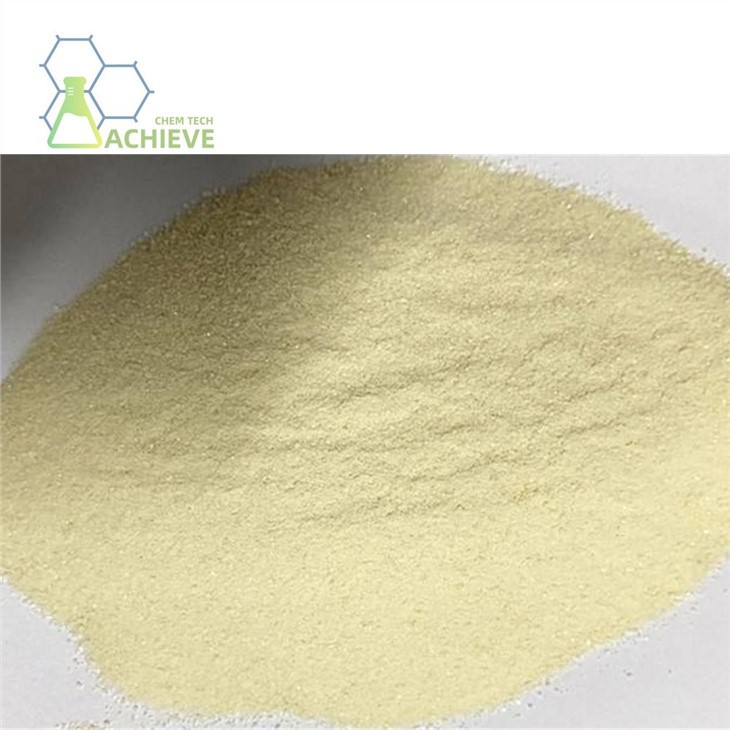
Shaanxi BLOOM Tech Co., Ltd. is one of the most experienced manufacturers and suppliers of 5-cyanoindole cas 15861-24-2 in China. Welcome to wholesale bulk high quality 5-cyanoindole cas 15861-24-2 for sale here from our factory. Good service and reasonable price are available.
5-Cyanoindole, also known as 5-indolecarbonitrile or 1H-indole-5-carbonitrile, is an organic compound belonging to the indole family of heterocyclic aromatic compounds. It features a distinctive indole ring structure, which is characterized by a pyrrole ring fused to a benzene ring, with a cyano (-CN) group attached at the 5-position of the indole nucleus.
In the realm of synthetic chemistry, it serves as an important intermediate for the preparation of more complex heterocyclic compounds, pharmaceuticals, and bioactive molecules. Its incorporation into molecular scaffolds can significantly alter the biological activities and pharmacological profiles of target compounds.
Moreover, due to its aromatic nature and electron-withdrawing cyano group, it exhibits specific intermolecular interactions, making it a candidate for use in materials science, particularly in the design of novel functional materials with unique optical, electronic, or magnetic properties.

|
|
|


|
Chemical Formula |
C9H6N2 |
|
Exact Mass |
142 |
|
Molecular Weight |
142 |
|
m/z |
142 (100.0%), 143 (9.7%) |
|
Elemental Analysis |
C, 76.04; H, 4.25; N, 19.71 |

5-Cyanoindole is an organic molecular structure widely used in the fields of chemistry, medicine and materials science. The use of product will be introduced in detail below.

Reagents for chemical reactions
In olefin binary reactions, it can serve as a masking reagent. Masking reagents are used to temporarily alter the reactivity of a functional group, allowing for the selective reaction of another functional group in a molecule. In the case, the cyano group can act as a protecting group for the indole ring, enabling the olefinic portion of the molecule to undergo specific reactions without interference from the indole ring. This can be particularly useful in complex synthetic pathways where the order of reactions is crucial.
Drug synthesis
It is commonly used in the synthesis of anticancer drugs as well as other bioactive molecules. Its molecular structure helps to change the spatial conformation of the target molecule, which plays an important role in the development of drugs. For example, it and other reagents can introduce an indolyl group on a purine nucleotide, resulting in compounds that have the effect of inhibiting the growth of tumor cells in vivo.


Photosensitizer
It can also be used as a highly effective photosensitizer. It can undergo photochemical reactions under the action of ultraviolet or visible light, such as ring-opening reactions or Laplace reactions, to produce biologically active compounds, such as amines or cyclopropanes. In addition, other applications include photopolymerization reactions, materials for photoelectric conversion devices, and the like.
Materials science
It is a useful organic semiconductor material that can be used to prepare electronic devices such as organic thin-film field-effect transistors (OFETs). Its main function in the device is to form an efficient charge transport channel between the semiconductor layer and the dielectric layer, and improve the mobility and electron mobility of charge carriers.


Thermal activation delayed fluorescence is the core of the current third-generation OLED display technology, and the performance of the host material directly determines the luminous efficiency and service life of the device. Traditional carbazole based host materials often suffer from the pain point of bipolar transport imbalance, which leads to the easy quenching of excitons in the luminescent layer at the interface, thereby significantly shortening the device lifetime.
Introducing 5-cyanoindole as an electron transport unit into the design of the host molecule, utilizing the strong electron withdrawing properties of the cyanide group, can accurately enhance the electron affinity of the molecule, increase the electron mobility of the material by two orders of magnitude, and achieve a perfect balance between hole and electron transport.

Non fullerene receptor modified units for organic photovoltaic cells

In the field of organic photovoltaic cells, 5-cyanoindole is a key electron deficient end group unit for constructing high-performance non fullerene acceptor materials. The energy level regulation window of traditional cyanoindenone receptor end groups is narrow, making it difficult to further broaden the spectral absorption range of the material. By modifying the active site of 5-cyanoindole, a novel indole based electron deficient end group is constructed,
which significantly enhances the electron withdrawing ability of the molecule. This can shift the absorption spectrum of the receptor material to the near-infrared region above 950nm, greatly improving the light capture capability of photovoltaic devices.

in drug development

Role in Drug Synthesis
It can be a key intermediate in the synthesis of various bioactive compounds, including anticancer drugs. The indole ring is a common structural feature in many naturally occurring and synthetic bioactive molecules. It is known to interact with various biological targets, such as receptors, enzymes, and ion channels, making it a valuable scaffold for drug discovery.
The cyano group, on the other hand, adds an additional layer of functionality to the molecule. It can be used as a handle for further derivatization, allowing for the introduction of other functional groups that can enhance the biological activity of the resulting compound.
Spatial Conformation and Drug Development
The ability to change the spatial conformation of the target molecule is crucial in drug development. The spatial arrangement of atoms in a molecule can significantly affect its binding affinity and selectivity for a particular biological target. By introducing an indolyl group on a purine nucleotide, as you mentioned, it can help create compounds that have specific interactions with biological macromolecules, such as proteins and nucleic acids.


These interactions can lead to the inhibition of tumor cell growth, making such compounds potential candidates for anticancer therapy. The indolyl group may interact with the binding site of a particular enzyme or receptor involved in cell proliferation, thereby disrupting the signaling pathways that promote tumor growth.
Anticancer Activity
Several studies have demonstrated the anticancer activity of compounds derived from 5-cyanoindole. These compounds have been shown to inhibit the growth of various types of cancer cells, including those derived from breast, lung, and colon tissues. The exact mechanism of action may vary depending on the specific compound and its target, but it often involves inhibiting key signaling pathways or enzymes that are crucial for cancer cell survival and proliferation.

About ring-opening reactions
Ring-opening reactions are a class of organic chemical reactions wherein a cyclic compound undergoes a transformation leading to the cleavage of one or more rings present in its molecular structure. These reactions are pivotal in synthetic chemistry, playing a crucial role in the preparation of a wide variety of compounds with diverse applications, ranging from pharmaceuticals to polymers.
The fundamental principle behind ring-opening reactions often involves the disruption of the ring's π-electron system, which is typically more stable than acyclic systems due to the aromaticity or strain energy present in the ring. This disruption can be achieved through various mechanisms, including nucleophilic attack, electrophilic attack, radical initiation, and thermal cleavage.
One of the most common types of ring-opening reactions is nucleophilic ring-opening, where a nucleophile attacks an electrophilic center within the ring, leading to the formation of a new bond and the cleavage of the ring. This type of reaction is prevalent in epoxides, lactones, lactams, and cyclic ethers. For instance, the ring-opening of an epoxide with a nucleophile such as an alcohol under basic conditions can yield a β-hydroxy alcohol, a key intermediate in many synthetic pathways.
Electrophilic ring-opening reactions, on the other hand, involve the attack of an electrophile on a nucleophilic site within the ring. These reactions are common in cyclic ethers and aromatic compounds, where the ring can be opened by the addition of an electrophile across a π-bond.
Radical ring-opening reactions occur through the generation of radicals, often initiated by heat, light, or chemical reagents. These radicals can then attack the ring, causing its cleavage and leading to the formation of new acyclic radicals.
Thermal ring-opening reactions typically involve the cleavage of strained rings, such as those in cyclopropanes, which are thermodynamically unstable and readily undergo ring-opening under mild conditions.
In synthetic chemistry, ring-opening reactions offer a versatile platform for the construction of complex molecules with specific stereochemical and functional group requirements. They are also essential in the preparation of polymers, such as polyesters, polyamides, and polyurethanes, where the ring-opening polymerization of cyclic monomers provides polymers with well-defined structures and properties.

5-Cyanoindole, one notable research case involves the electrochemical polymerization.
In this study, high-quality P5CI films were electrosynthesized through direct anodic oxidation on a stainless steel sheet. The electrolytes used were a mixture of boron trifluoride diethyl etherate (BFEE) and diethyl ether (EE) in a 1:1 volume ratio, with the addition of 0.05 mol/L of tetrabutylammonium tetrafluoroborate (Bu4NBF4). The resulting P5CI films exhibited excellent electrochemical behavior, with a conductivity of 10^(-2) S/cm.


Another research case highlights the electrochemical fabrication of three-dimensional Pd nanospheres on P5CI nanofibrils modified indium tin oxide (ITO) electrodes. In this study, Pd nanospheres were deposited onto an ITO substrate modified with a nanofibril film of PCI. The size of the Pd nanospheres could be controlled by adjusting the electro-deposition time. The modified electrode showed improved electrocatalytic activity toward formic acid oxidation compared to two-dimensional Pd nanoparticles directly deposited on ITO.
It was first synthesized in the late 20th century as part of research into heterocyclic compounds with potential biological activity. Since then, it has found applications in organic electronics, particularly in the development of organic light-emitting diodes (OLEDs) and other optoelectronic devices. Additionally, it serves as a building block in the synthesis of pharmaceutical intermediates and chemical probes for biological research.

In conclusion, 5-cyanoindole has been extensively studied for its unique properties and potential applications. Research cases such as electrochemical polymerization and the fabrication of three-dimensional Pd nanospheres on modified electrodes demonstrate the versatility of this compound. With continued research, it may find even more applications in various fields.
Frequently Asked Questions
1. What is 5-cyanoindole and what is it used for?
+
-
5-Cyanoindole (CAS No. 15861-24-2) is an indole derivative with a cyano group (-CN) attached at the 5-position of the indole ring. It is primarily used as a pharmaceutical intermediate in the synthesis of bioactive molecules, including antidepressants (e.g., vilazodone) and compounds with anti-inflammatory or anticancer properties. Additionally, it serves as a biochemical reagent in life science research, particularly in studies involving neurotransmitter pathways or indole metabolism.
2. What are the key physical and chemical properties of 5-cyanoindole?
+
-
Molecular Formula: C₉H₆N₂
Molecular Weight: 142.16 g/mol
Melting Point: 106–108°C.
Solubility: Insoluble in water but soluble in organic solvents like methanol, chloroform, and dichloromethane.
Stability: Stable under normal conditions but sensitive to light and air. It should be stored in a cool, dark, and inert atmosphere (e.g., under nitrogen) to prevent degradation.
3. What safety precautions should be taken when handling 5-cyanoindole?
+
-
5-Cyanoindole is classified as irritant (GHS Category 2 for skin and eye irritation) and may be harmful if inhaled, ingested, or absorbed through the skin. Key safety measures include:
Personal Protective Equipment (PPE): Wear gloves, goggles, and a lab coat to avoid direct contact.
Ventilation: Use in a well-ventilated area or fume hood to minimize inhalation of dust or vapors.
Storage: Keep in a tightly sealed container away from light, moisture, and incompatible substances (e.g., oxidizing agents).
Disposal: Follow local regulations for hazardous waste disposal. Do not pour down the drain.
For further details, consult the material safety data sheet (MSDS) or product specifications from the supplier.
Hot Tags: 5-cyanoindole cas 15861-24-2, suppliers, manufacturers, factory, wholesale, buy, price, bulk, for sale, 4 Methoxyphenylacetone CAS 122 84 9, (Z)-3-Methylpent-2-en-4-yn-1-ol, GS 441524 Powder, 2 Chlorobenzaldehyde CAS 89 98 5, Aminoantipyrine, Synthetic Chemical