




Shaanxi BLOOM Tech Co., Ltd. is one of the most experienced manufacturers and suppliers of n-methyl-4-piperidinol cas 106-52-5 in China. Welcome to wholesale bulk high quality n-methyl-4-piperidinol cas 106-52-5 for sale here from our factory. Good service and reasonable price are available.
Announcement
We don't supply all kinds of chemicals of piperidine series, even which is able to get piperidine or piperidone chemcials!
No matter it is banned or not! We Don't supply!
If it is in our webiste, it is only for check the information of chemical compound.
Mar. 25th 2025
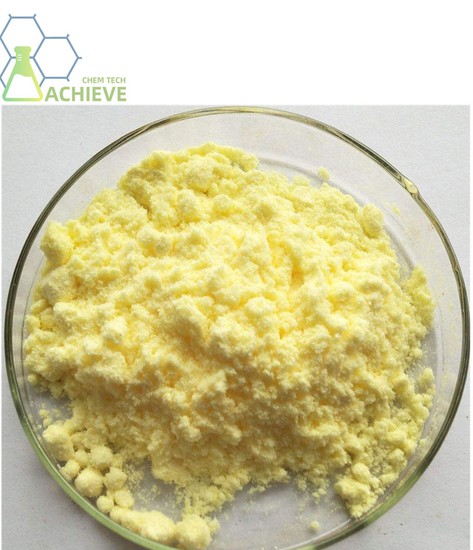
N-Methyl-4-piperidinol, also known as 4-hydroxy-N-methylpyridine, N-methyl-4-hydroxypiperidinol, is an organic compound that is a light yellow solid at room temperature and pressure. It has a low melting point and melts into a transparent, colorless to brown liquid that is miscible with water The chemical stability is relatively poor, and it usually needs to be stored in a low-temperature environment to prolong its stability. At room temperature, it may be affected by oxidation, acid-base catalysis, or other reactions, leading to decomposition or the production of by-products. As an important intermediate in chemical synthesis, it can also be used as a medicinal chemical intermediate for the treatment of allergic reactions such as urticaria, eczema, allergic and contact dermatitis, skin itching, rhinitis, etc.

Additional information of chemical compound:
|
Chemical Formula |
C6H13NO |
|
Exact Mass |
115.10 |
|
Molecular Weight |
115.18 |
|
m/z |
115.10 (100.0%), 116.10 (6.5%) |
|
Elemental Analysis |
C, 62.57; H, 11.38; N, 12.16; O, 13.89 |
|
Melting point |
29-31℃(lit.) |
|
Boiling point |
200℃(lit.) |
|
Density |
0.98 g/mL at 20℃(lit.) |
|
Flash point |
190 °F |
|
Vapor density |
0.98 g/mL at 20℃(lit.) |
|
Storage conditions |
2-8℃ |
|
|
|



Pharmaceutical intermediates
In the field of medicinal chemistry, N-Methyl-4-piperidinol is a key intermediate for the synthesis of certain drugs. For example, it is an important raw material for the synthesis of cyproheptadine hydrochloride. Cyproheptadine hydrochloride is an anticoagulant and anti allergic drug mainly used to treat allergic reactions such as urticaria, eczema, allergic and contact dermatitis, skin itching, rhinitis, migraine, bronchial asthma, etc.
Organic synthesis
As an important raw material for organic synthesis, this compound can participate in various chemical reactions to generate organic compounds with specific functions. These compounds have a wide range of applications in fine chemicals, polymer materials, and other fields.


Dyes and pigments manufacturing
In the dye and pigment industry, this substance can be used as a synthetic raw material for certain dyes or pigments to improve or enhance the color performance of products.
Other areas
In addition to the above-mentioned fields, this compound can also be used to synthesize other fine chemicals, such as surfactants, catalysts, etc. In addition, it can also serve as a solvent or additive for certain specific chemical reactions, improving reaction efficiency and product quality.

What are the sales channels?
1. Biomedical and chemical reagent platform
- ChemicalBook (Booker Chemical Network): Provides information on the compound product from multiple suppliers, including purity, packaging, price, etc.
- Gaide Chemical Network: Provides quotes and supplier information for multiple chemical companies.
- Standard Material Resource Platform: Provides sales information for the substance, including specifications, CAS number, etc.
2. Other channels
- Directly contact the manufacturer: You can obtain manufacturer information by searching or consulting industry insiders, and directly contact for purchase.
- E-commerce platforms: Some e-commerce platforms may also offer the sale of this compound, but attention should be paid to the reputation of the platform and the authenticity of the product.
When making a purchase, it is recommended to pay attention to the following points:
- Purity: Ensure that the purity of the purchased substance meets your requirements.
- Packaging: Choose appropriate packaging specifications for storage and use.
- Price: Compare prices from different suppliers and choose products with high cost-effectiveness.
- After sales service: Understand the supplier's after-sales service policy to ensure timely resolution of any issues encountered during the procurement process.
How to determine the purity of this substance?
The purity of N-methyl-4-piperidinol can be determined by the following methods:
1.Physical property testing
Appearance and Form
The pure substance usually has a specific appearance and form, such as white or slightly yellow crystals. By observing its appearance, its purity can be preliminarily determined.
Melting point and boiling point
Compounds with higher purity usually have clear melting and boiling points. By measuring these physical constants and comparing them with standard values, their purity can be determined.
Solubility
It should be miscible with specific solvents such as alcohols, ethers, ketones, and other organic solvents, as well as water. By observing its dissolution in these solvents, its purity can be preliminarily determined.
2.Chemical analysis
Chromatography
Chromatography is a commonly used purity analysis method, including liquid chromatography (LC) and gas chromatography (GC). Through chromatography, it is possible to separate and determine the content of it and its impurities, thereby determining its purity.
Mass spectrometry
Mass spectrometry (MS) can provide molecular weight and structural information of compounds, and can also be used for purity analysis. By mass spectrometry, the molecular weight of the compound can be determined and whether it contains impurities can be detected.
Titration
For certain specific impurities, titration can be used for determination. By titration reaction, the content of impurities can be calculated, thereby indirectly determining their purity.
3.Other methods
Determination of specific rotation
For compounds with optical activity, purity can be determined by measuring their specific rotation. Specific rotation is a measure of the optical activity of a compound, which is related to its purity and structure.
Nuclear Magnetic Resonance (NMR)
NMR can provide detailed structural information of compounds, including atomic connectivity and chemical environment. Although NMR is usually not directly used for purity analysis, it can be determined whether a sample contains impurities by comparing its NMR spectrum with that of a standard.
4.Precautions
- When conducting purity analysis, it is necessary to ensure that the instruments and reagents used comply with relevant standards and strictly follow the operating procedures.
- The purity analysis results should be mutually validated with the results of other analysis methods to ensure the accuracy and reliability of the results.
- For different batches of products, purity analysis should be conducted separately to evaluate their quality stability and consistency.
after-sale service
The after-sales service for this compound usually depends on the specific supplier or manufacturer who purchased the chemical reagent. Different suppliers may provide different after-sales service policies, including but not limited to product quality assurance, return and exchange policies, technical support, customer inquiries, etc.
Generally speaking, high-quality suppliers will provide the following after-sales services:
Product Quality Assurance:
The supplier will ensure that the compound they provide meets certain quality standards, such as purity, appearance, packaging, etc. If there are quality issues with the product, the supplier usually assumes corresponding responsibility and provides return and exchange services.
Technical support:
For customers who require specific technical support, suppliers can provide relevant technical documentation, usage guides, or experimental recommendations. In addition, some suppliers may also provide customized solutions to meet the special needs of customers.
Customer consultation:
Suppliers usually set up customer service hotlines or online customer service for customers to consult and provide feedback before and after purchasing. These consultation channels can help customers understand detailed information about the product, usage methods, and potential issues they may encounter.
Return and exchange policy:
If customers discover quality issues or differences in the product after purchase, suppliers usually provide return and exchange services. The specific return and exchange policy may vary depending on the supplier, but usually includes the return period, return conditions, and return process.
Does this substance have an impact on fish reproduction?

Endocrine Disruption Effect
Endocrine disruptors (EDCs) in the environment have been shown to have chronic toxic effects on the reproduction and development of fish. They may interfere with the hypothalamic pituitary gonadal (HPG) axis of fish, affect hormone levels, and thus affect the reproductive ability of fish.
Effects on reproductive behavior
Environmental hormones such as organotin compounds can affect the reproductive behavior of fish. Although their specific effects have not been mentioned, this category of substances provides a reference on how chemicals may affect fish reproductive behavior.


The general effects of environmental hormones
The accumulation of environmental hormones such as progesterone in aquatic environments has negative impacts on fish reproduction, development, and behavior, including reduced egg production, masculinization, feminization, and changes in sex ratio. Although the substance is not a progestogen, this research suggests that chemicals in our environment may have a wide-ranging impact on fish reproduction.
Neuropharmacological perspective: N-Methyll-4-piperidinol as a potential acetylcholinesterase modulator
Acetylcholinesterase (AChE) is a key enzyme involved in the hydrolysis of the neurotransmitter acetylcholine (ACh), and its abnormal activity is closely related to neurodegenerative diseases such as Alzheimer's disease (AD) and Parkinson's disease. The degeneration of cholinergic neurons in the brain of AD patients leads to a significant decrease in ACh levels, causing cognitive dysfunction. At present, AChE inhibitors (such as donepezil and rivastigmine) have become first-line treatments for mild to moderate Alzheimer's disease by inhibiting AChE activity and increasing synaptic cleft ACh concentration. N-Methyl-4-piperidinol (CAS number 106-52-5), as a nitrogen-containing heterocyclic compound, has a pyridine ring and hydroxyl functional group in its structure that are highly similar to natural 4-hydroxypyridine alkaloids. In recent years, studies have found that N - (alkyl) -4-arylpyridine compounds (such as compound 4b) exhibit significant anti neuroinflammatory activity by regulating the NF - κ B pathway, suggesting the potential therapeutic value of pyridine structures in central nervous system (CNS) diseases.
Chemical properties and structural advantages of N-Methyll-4-piperidinol
Molecular Structure and Physical and Chemical Properties
The molecular formula of N-Methyll-4-piperidinol is C ₆ H ₁ ∝ NO, with a molecular weight of 115.17 g/mol. It appears as a light yellow solid and is miscible with water. Its core structure is an N-methyl-substituted pyridine ring, with a hydroxyl group (- OH) connected to the 4-carbon position, forming a specific configuration of 1-methyl-4-hydroxypyridine. This structure has the following characteristics:
Hydrophobicity and polarity balance: A LogP value of 0.01 indicates that it has both lipid solubility and water solubility, which is beneficial for penetrating the blood-brain barrier (BBB);
Reactivity: Hydroxyl groups can participate in esterification, etherification, and oxidation reactions, while methyl groups provide steric hindrance and regulate molecular stereoselectivity;
Chiral center: The chair like conformation of the pyridine ring allows for dynamic transitions between axial and equatorial substituents, which may affect its binding mode with the target.
Correlation between Structure and Natural Products
Natural 4-hydroxypyridine alkaloids (such as Ilicicolin H and Tenelin) are widely distributed in plants, endophytic fungi, and marine organisms. Their structural characteristics are that the pyridine ring is connected to a hydroxyl group at position 4, and the N atom can be replaced by hydrogen, methyl, or hydroxyl. For example:
Ilicicolin H: isolated from endophytic fungi of withered leaves of oak trees, with a structure consisting of 4-hydroxy-2-pyridone ring and octahydronaphthalene ring connected by acyl groups. In vitro experiments showed that its inhibitory concentration against Bacillus anthracis was 6 mg/mL;
Tenelin: isolated from holly mycotoxin, its 4-hydroxy-2-pyridone structure with 3-acyl substitution exhibits activity against ubiquinone sites in yeast mitochondrial respiratory chain.
The 4-hydroxypyridine skeleton of N-Methyl-4-piperidinol is highly similar to the aforementioned natural products, and its N-methyl substituent may optimize the binding affinity with AChE by regulating molecular hydrophobicity or electron distribution.
Potential mechanism of N-methyl-4-piperidinol as an AChE modulator
Direct inhibitory effect
The hydroxyl group of N-Methyll-4-piperidinol may bind to AChE catalytic trimesters (such as Ser203) or PAS (such as Trp286) through hydrogen bonding, forming reversible inhibition. Its N-methyl substituent can enhance molecular hydrophobicity, promote BBB penetration, and reduce peripheral cholinergic side effects (such as gastrointestinal reactions).
Variable Structure Regulation Effect
Recent studies have found that certain pyridine compounds, such as galantamine, not only inhibit AChE activity but also act as positive allosteric modulators (PAMs) of nicotinic acetylcholine receptors (nAChRs), enhancing ACh signaling. N-Methyl-4-piperidinol may regulate both AChE and nAChR through a similar mechanism, forming a "dual action" therapeutic mode.
Synergistic effect on anti neuroinflammation
Neuroinflammation is an important pathological feature of Alzheimer's disease, and inflammatory factors such as IL-6 and TNF - α released by activated microglia can accelerate AChE expression, forming a vicious cycle. N - (alkyl) -4-arylpyridine compounds (such as compound 4b) have been shown to significantly reduce levels of inflammatory mediators by inhibiting the NF - κ B pathway. N-Methyl-4-piperidinol may reduce inflammation induced expression of AChE and enhance its regulatory effect through a similar anti-inflammatory mechanism.
Hot Tags: n-methyl-4-piperidinol cas 106-52-5, suppliers, manufacturers, factory, wholesale, buy, price, bulk, for sale, benzoyl peroxide powder, CAS 329210 71 1, N 6 bromo 1 1 biphenyl 3 yl 1 1 biphenyl 2 amine, CAS 1628073 12 0, 3 6 dibromophenanthrene, Pamoic acid