





Shaanxi BLOOM Tech Co., Ltd. is one of the most experienced manufacturers and suppliers of quinaldine cas 91-63-4 in China. Welcome to wholesale bulk high quality quinaldine cas 91-63-4 for sale here from our factory. Good service and reasonable price are available.
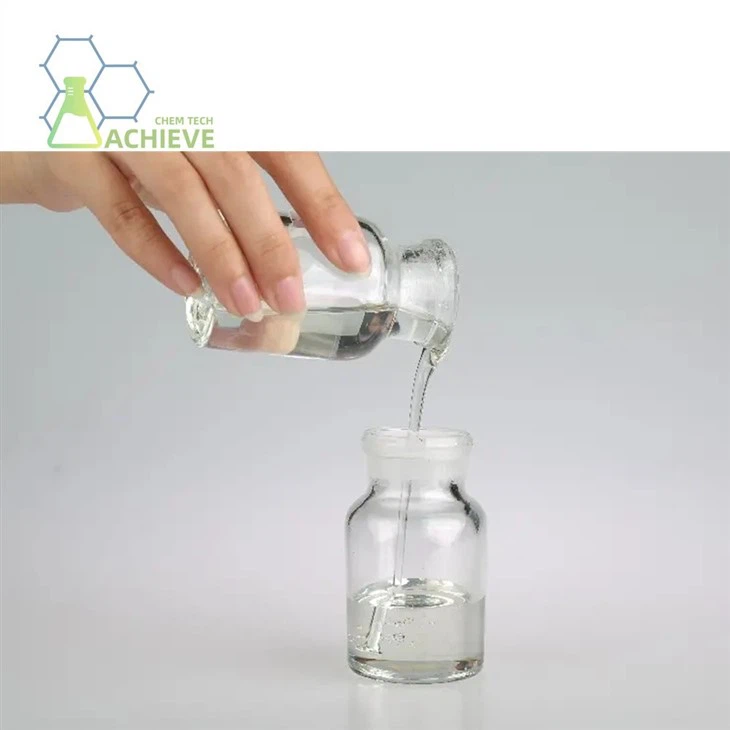
Quinaldine, also known as 2-methylquinoline, it is a compound with a specific chemical structure, a colorless oily liquid that turns reddish brown when exposed to light. Has a quinoline odor, soluble in ethanol, ether, and chloroform, almost insoluble in water. It can be used as an intermediate in dyes and pharmaceuticals, as well as in the production of film alkalizers, photographic sensitizers, rubber vulcanization accelerators, lubricant antioxidants, insecticides, fungicides, and fuels. It is an important fine chemical product with wide applications in chemical synthesis and manufacturing.

Additional information of chemical compound:
|
Chemical Formula |
C10H9N |
|
Exact Mass |
143.07 |
|
Molecular Weight |
143.19 |
|
m/z |
143.07 (100.0%), 144.08 (10.8%) |
|
Elemental Analysis |
C, 83.88; H, 6.34; N, 9.78 |
|
Melting point |
-2℃ |
|
Boiling point |
248℃ |
|
Density |
1.058 g/mL at 25℃(lit.) |
|
Storage conditions |
Store below +30°C. |
|
|
|


Quinaldine (Chinese name: 2-methylquinoline, CAS number: 91-63-4) is an important nitrogen-containing heterocyclic organic compound with the chemical formula C10 H9 N. It is a colorless to slightly yellow oily liquid with a special odor, slightly soluble in water, and easily soluble in organic solvents such as ethanol, ether, and acetone. The unique configuration of the quinoline ring connected to a methyl group at the 2-position in its molecular structure endows it with excellent chemical and biological activity, making it an indispensable intermediate and functional material in various fields such as organic synthesis, medicine, dyes, pesticides, and materials, with a wide range of applications.
Applications in the field of medicine
This substance is a key starting material for the synthesis of quinoline based antimalarial drugs and occupies a core position in the research and production of antimalarial drugs. Malaria is a major global infectious disease caused by malaria parasites, and quinoline drugs are the first-line drugs for treating malaria. The quinoline nucleus in their molecular structure is a key group for exerting anti malaria activity. As a 2-methyl substituted quinoline, it provides necessary spatial configuration and electronic effects for drug molecules through the synergistic effect of methyl and quinoline rings, ensuring anti malaria activity.

Synthesis of Chloroquine and Hydroxychloroquine

Chloroquine and hydroxychloroquine are the most classic quinoline antimalarial drugs, widely used for the treatment and prevention of malignant malaria and Plasmodium vivax malaria. Hydroxychloroquine is also used for the treatment of autoimmune diseases such as rheumatoid arthritis and lupus erythematosus. 2-methylquinoline constructs the 4-aminoquinoline core structure in chloroquine molecules through a series of reactions such as side chain modification, halogenation, and amination.
Specifically, 2-methylquinoline is first oxidized and halogenated to form 2-methyl-4-chloroquinoline, which then undergoes a condensation reaction with N, N-diethylpentanediamine to ultimately form chloroquine; Hydroxychloroquine is obtained by hydroxylating the side chain amino group on the basis of chloroquine synthesis. Clinical studies have confirmed that this type of drug inhibits DNA replication and transcription by embedding into the double stranded DNA of malaria parasites, while interfering with the heme metabolism pathway of malaria parasites, leading to the accumulation of heme toxicity and thus killing the malaria parasites.

Research and development of new antimalarial derivatives

In addition to traditional antimalarial drugs, structural modification based on 2-methylquinoline has become an important direction for the development of new antimalarial drugs. Researchers synthesized a series of styrene based quinoline derivatives by reacting 2-methylquinoline with aromatic aldehydes through Perkin condensation reaction.
In vitro anti malarial activity tests have shown that some derivatives have inhibitory activity against Plasmodium falciparum comparable to chloroquine, and exhibit significant activity against chloroquine resistant strains. For example, compounds such as (E) -2-ethoxy-4- (2- (8-hydroxyquinolin-2-yl) vinyl) phenyl acetate have a half maximal inhibitory concentration (IC ₅₀) against malaria parasites as low as 0.2 μ g/mL and low cytotoxicity to human cells, indicating good potential for drug development.

Research and development of anti-tumor and anti-inflammatory drugs

The heterocyclic structure of 2-methylquinoline endows its derivatives with excellent anti-tumor and anti-inflammatory biological activities, making them important intermediates for the development of related therapeutic drugs.
2-methylquinoline based squaraine dyes are a novel class of anti-tumor photosensitizers widely used in photodynamic therapy (PDT). This type of dye is made from 2-methylquinoline as the core raw material and undergoes a condensation reaction with oxalic acid.
Its absorption spectrum can cover the "photodynamic therapy window" of 650-800nm and can penetrate deep tissues, producing a large amount of reactive oxygen species (ROS) under specific wavelength light, inducing tumor cell apoptosis.At the same time, this type of dye has near-infrared fluorescence emission characteristics and can be used as a fluorescent probe for tumor diagnosis, achieving precise diagnosis and treatment integration of tumors. In addition, the N - substituted -2- methylquinoline derivatives produced by Quinaldine through structural modification can inhibit the tyrosine kinase activity related to tumor cell proliferation, and have a significant inhibitory effect on lung cancer and breast cancer cell lines.

Application of anti-inflammatory drugs

2-methylquinoline derivatives exert anti-inflammatory effects by inhibiting the release of inflammatory factors such as TNF - α and IL-6, as well as the activity of cyclooxygenase (COX). Research has shown that the amide derivatives formed by the condensation of 2-methylquinoline with carboxylic acid compounds have an inhibition rate of over 70% on rat foot swelling inflammation models, and have no significant gastrointestinal side effects. Meanwhile, the quaternary ammonium salt derivatives of 2-methylquinoline can serve as excipients for anti-inflammatory drugs, enhancing their water solubility and bioavailability.
The halogenated derivatives of antibacterial and antifungal drug 2-methylquinoline (such as 2-methyl-4-iodoquinol) have broad-spectrum antibacterial activity and have inhibitory effects on pathogenic bacteria such as Staphylococcus aureus and Escherichia coli, as well as fungi such as Candida albicans. Its mechanism of action is to disrupt the integrity of microbial cell membranes, inhibit the synthesis of nucleic acids and proteins, and can be used to prepare topical antibacterial ointments, oral disinfectants, etc.


2-methylquinoline, a drug excipient and analytical reagent, can be used as a co solvent and stabilizer in drug formulations to improve the solubility of poorly soluble drugs. Meanwhile, 2-methylquinoline, as an important derivative of 2-methylquinoline, is a commonly used pH indicator and fluorescent probe in pharmaceutical analysis. It is used to detect α - acidic glycoproteins, enzyme activity, and disease-related amyloid protein accumulation. Its pH color change range is 1.4 (colorless) to 3.2 (red), which can accurately monitor changes in acidity and alkalinity during drug synthesis and formulation processes.
Reference information source:
Gerd Collin; Hartmut Höke. "Quinoline and Isoquinoline". Ullmann's Encyclopedia of Industrial Chemistry. Weinheim: Wiley-VCH. 2012.
Alibaba.com. Industrial Applications of 2-methylquinoline. 2025.
PubChem. 2-methylquinoline based semisquaraines and squaraine dyes, process for preparation thereof and use thereof - Patent WO-2007077531-A3. 2025.
ResearchGate. Síntesis y Actividad Antimalárica de Estirilquinolinas sobre Plasmodium falciparum. 2016.
Sigma-Aldrich. 2-methylquinoline Red. 2026.

Quinaldine (2-methylquinoline) as a rubber vulcanization accelerator has the following effects on improving the aging resistance of rubber products:
During the vulcanization process, this compound can act as a promoter to increase the cross-linking density of rubber, thereby improving its aging resistance. High cross-linking density helps to improve the physical and mechanical properties as well as aging resistance of rubber.

Improve dynamic performance

The use of this substance as a promoter in the vulcanization system can improve the dynamic properties of rubber, including its resistance to thermal oxidative aging. The content of single sulfur bonds and disulfide bonds in the vulcanized rubber network accounts for over 90%, which helps to improve the aging resistance of rubber.
In the effective vulcanization system (EV), by increasing the amount of accelerator and reducing the amount of sulfur, the content of polysulfide crosslinking bonds (- Sx -) can be reduced, thereby improving the heat and oxygen aging resistance of the vulcanized rubber.

Enhance heat resistance and electrical insulation

As a vulcanization accelerator, it can improve the heat resistance and electrical insulation of rubber, which is particularly important for rubber products that require long-term use at higher temperatures.
Some vulcanization systems containing this compound can reduce the phenomenon of vulcanization reversion, which is very important for improving the aging resistance and stability of rubber products.

Improve adhesion with metals

It and its derivatives can improve the adhesion between rubber and metal, which is very advantageous for manufacturing rubber products that require bonding with metal, such as tire vulcanization capsules.
Efficiency of crossing the blood-brain barrier in mammals
Strategies for improving the efficiency of 2-methylquinoline across the blood-brain barrier
By modifying the molecular structure of 2-methylquinoline, such as introducing lipophilic groups and altering its charge properties, its efficiency across the blood-brain barrier can be improved. For example, introducing long-chain alkyl and other lipophilic groups onto 2-methylquinoline molecules can increase their lipophilicity, making it easier to pass through the blood-brain barrier.


Prodrug refers to the combination of drug molecules with a carrier or functional group to form a compound that can be converted into the original drug in the body. By designing the prodrug of 2-methylquinoline, its physicochemical properties can be improved and its efficiency across the blood-brain barrier can be enhanced. For example, combining 2-methylquinoline with some brain targeted carriers to form prodrugs, after entering the body, the prodrug releases 2-methylquinoline in the brain, thereby increasing its concentration in the brain.
By utilizing receptors on the membrane of brain microvascular endothelial cells, such as transferrin receptors and insulin receptors, specific ligands are designed to bind to 2-methylquinoline and transport it into the brain through receptor-mediated endocytosis.


For example, combining 2-methylquinoline with transferrin and utilizing the transferrin receptor-mediated transport mechanism can improve the blood-brain barrier efficiency of 2-methylquinoline. Some carrier proteins, such as glucose transporters, amino acid transporters, etc., are expressed on the blood-brain barrier. It is possible to competitively bind to these carrier proteins by designing analogs or inhibitors, thereby promoting the cross blood-brain barrier transport of 2-methylquinoline.
Encapsulating 2-methylquinoline in nanoparticles such as liposomes, polymer nanoparticles, etc. can improve its stability and efficiency across the blood-brain barrier. Nanoparticles can accumulate in brain tumors or inflammatory sites through enhanced permeability and retention effect (EPR effect), thereby achieving targeted delivery of 2-methylquinoline.


Modifying the surface of nanoparticles, such as connecting targeted ligands and changing surface charges, can further improve their efficiency and targeting across the blood-brain barrier. For example, attaching ligands on the surface of nanoparticles that can specifically bind to receptors on the blood-brain barrier can enable nanoparticles to more effectively cross the blood-brain barrier.
Frequently Asked Questions
What is 2-methylquinoline red indicator solution?
+
-
Quinaldine red (pronounced /ˈkwɪnəldiːn/, abbreviated QR) is a dark green–red or black solid that does not dissolve easily in water (it is partly miscible). In addition to being used as colored indicator, quinaldine red is also used as a fluorescence probe and an agent in bleaching.
What is 2-methylquinoline sulfate for fish?
+
-
Quinaldine is defined as a substance used for fish anesthesia, commonly employed for collecting fish in tide pools and coral reefs, which can induce rapid sedation but may not fully stop muscle movement and can be an irritant to gills.
Why would a doctor prescribe quinine?
+
-
Description. Quinine is used to treat malaria caused by Plasmodium falciparum. Plasmodium falciparum is a parasite that gets into the red blood cells in the body and causes malaria. Quinine works by killing the parasite or preventing it from growing.
What is quinine sulphate also known as?
+
-
Quinine sulfate is a pharmacological intervention used to treat malaria, and is considered to be the antimalarial drug with the best evidence for efficacy. It is also known as Chininum sulfuricum in homeopathic medicine.From: Handbook of Sleep Disorders [2019], Individual Paediatrics [2019]
Hot Tags: quinaldine cas 91-63-4, suppliers, manufacturers, factory, wholesale, buy, price, bulk, for sale, 2 BROMO 1 PHENYL PENTAN 1 ONE CAS 49851 31 2, 2 Furoic Acid CAS 88 14 2, 5 Methyl 2 pyrazinecarboxylic Acid CAS 5521 55 1, 4 tert Octylphenol CAS 140 66 9, 7 Nitroindole CAS 6960 42 5, 2-Chloro-4-pyridinecarboxylic acid