




Shaanxi BLOOM Tech Co., Ltd. is one of the most experienced manufacturers and suppliers of triisobutylaluminum cas 100-99-2 in China. Welcome to wholesale bulk high quality triisobutylaluminum cas 100-99-2 for sale here from our factory. Good service and reasonable price are available.
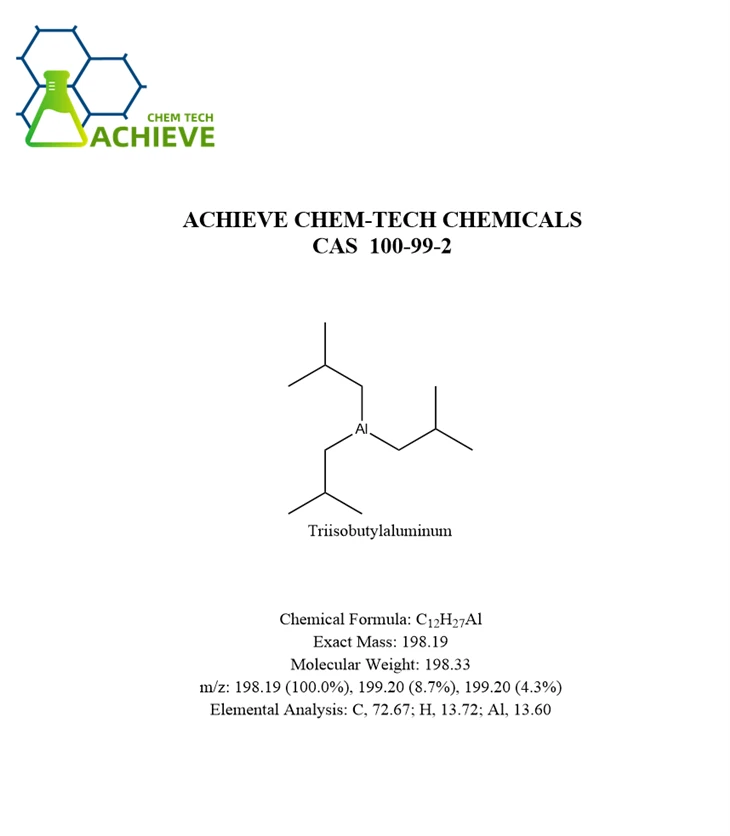
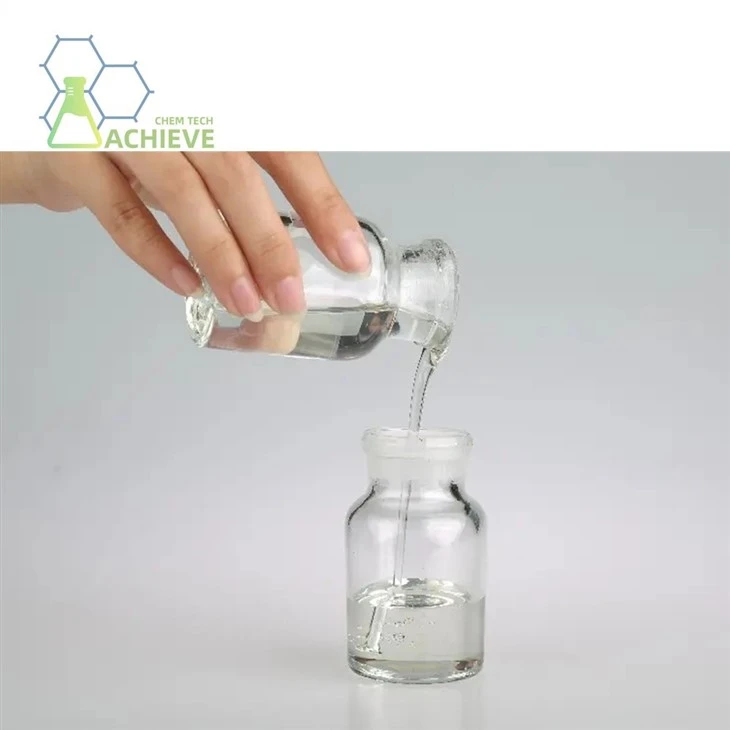
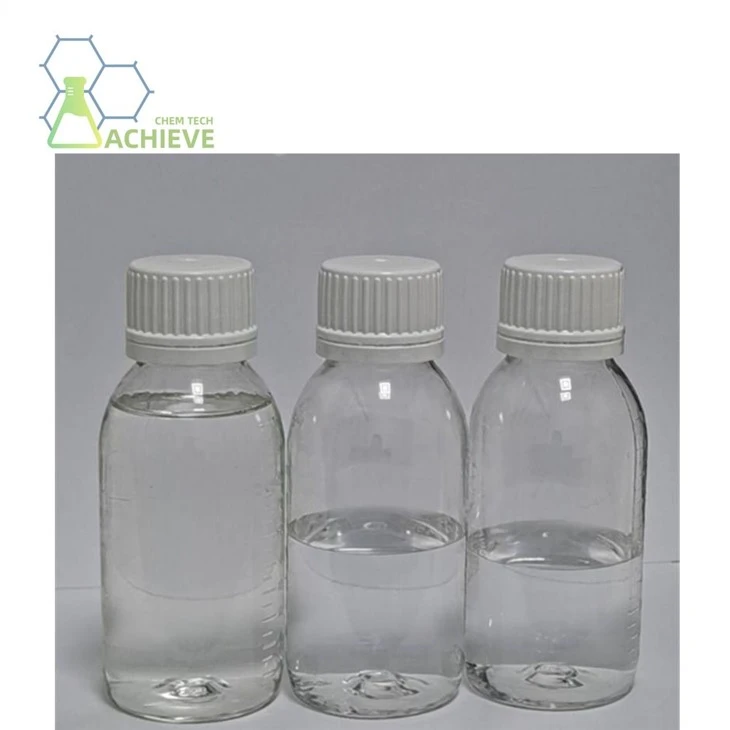
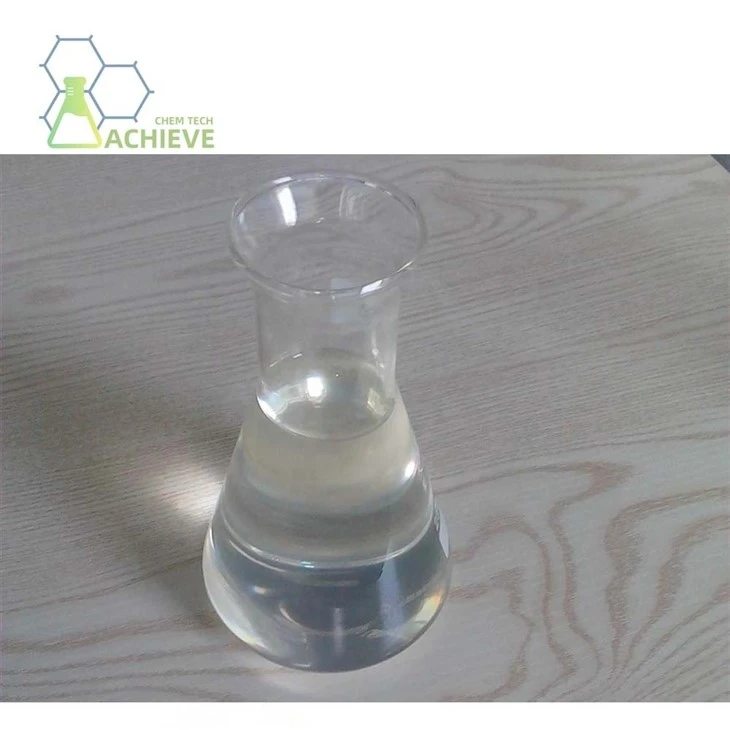
Triisobutylaluminum is an organic compound that appears as a colorless liquid and may have a strong moldy or irritating odor. It is soluble in benzene and has active chemical properties with high reactivity. It is sensitive to air and moisture and can smoke and self ignite upon contact with air. When it comes into contact with water, acid, alcohol, ammonia, etc., it undergoes hydrolysis, alcoholysis, acid hydrolysis, and releases a large amount of heat and isobutane. When the reaction is severe, it may explode. It can be used as a polymerization catalyst for butadiene rubber, synthetic resins, synthetic fibers, and olefin polymers, as well as an intermediate for organic metal compounds. It is also used as a high-energy raw material and reducing agent for jet engine ignition systems. It is generally synthesized by reacting activated aluminum powder with isobutene and hydrogen at high temperature and high pressure (such as 110, 120 ℃, and 56MPa).
Additional information of chemical compound:
|
Chemical Formula |
C12H27Al |
|
Exact Mass |
198.19 |
|
Molecular Weight |
198.33 |
|
m/z |
198.19 (100.0%), 199.20 (8.7%), 199.20 (4.3%) |
|
Elemental Analysis |
C, 72.67; H, 13.72; Al, 13.60 |
|
Melting point |
4-6℃ |
|
Boiling point |
68-69℃ |
|
Density |
0.848 g/mL at 25℃ |
|
Storage conditions |
0-6℃ |
|
|
|


Triisobutylaluminum (TIBA) is an important organic metal compound with the chemical formula C₁₂H₂₇Al. It is a colorless transparent liquid at room temperature and has self-ignition and strong reactivity properties. Its core applications revolve around polymer catalysis, organic synthesis, and high-energy materials. The following elaborates on its specific uses from different perspectives.
Polymerization Catalysis: The Core Catalyst for Olefin Polymerization
The most widespread application of TIBA is as a co-catalyst in Ziegler-Natta polymerization reactions, playing a crucial role especially in the polymerization of olefins (such as ethylene and propylene). The Ziegler-Natta catalyst system consists of transition metal compounds (such as chlorides of titanium and zirconium) and organic metal auxiliaries (such as TIBA). The former provides the active center, while the latter removes impurities (such as water and oxygen) and regulates the distribution of the active center, significantly enhancing the catalytic efficiency.

Polyethylene production
In high-pressure or low-pressure polyethylene processes, TIBA acts as a catalyst assistant to optimize catalyst activity and control the molecular weight distribution of the polymer, thereby producing polyethylene products of different densities (such as high-density polyethylene (HDPE), linear low-density polyethylene (LLDPE)). For example, in the gas-phase polyethylene process, the addition of TIBA can reduce catalyst poisoning, improve reaction stability, and increase production efficiency by 10%-15%.
Polypropylene and other olefin polymers
TIBA is also used in the synthesis of polypropylene, by adjusting the stereoselectivity of the catalyst, controlling the isotacticity of polypropylene (i.e., the regular arrangement of molecular chains), thereby producing polypropylene materials with high melt strength and high transparency, which are widely used in packaging, fibers, and automotive parts. Additionally, TIBA can also be used to synthesize other α-olefin copolymers, such as ethylene-propylene copolymer (EPDM), which has excellent weather resistance and elasticity and is often used in sealing materials and automotive tires.


Synthetic rubber industry
TIBA is a key catalyst in the production of synthetic rubbers such as styrene-butadiene rubber (BR) and isoprene rubber (IR). Taking styrene-butadiene rubber as an example, when combined with nickel-based catalysts, TIBA can achieve efficient directional polymerization of butadiene, producing styrene-butadiene rubber with a cis-1,4 structure content of over 96%, which has better wear resistance and tear resistance than natural rubber and is widely used in tire manufacturing.
Organic synthesis: Multifunctional intermediates and reductants
The strong reducing property and high reactivity of TIBA make it an important tool in organic synthesis, especially in the formation of carbon-carbon bonds and functional group conversion reactions.
Chemical intermediates
TIBA can serve as a precursor for synthesizing other organic metal compounds. For instance, by reacting with transition metal halides, it can be used to prepare highly active metal-organic catalysts, which are employed in reactions such as olefin disproportionation and cross-coupling. Moreover, TIBA can also be utilized to synthesize specific structures of aluminum compounds, such as diisobutyl hydridaluminum (DIBAL-H), which is an important selective reducing agent capable of reducing esters to aldehydes without further reduction to alcohols.
Reduction reactions
TIBA itself is a strong reducing agent that can reduce ketones, aldehydes, and other carbonyl compounds to the corresponding alcohols. Especially in asymmetric reduction reactions, by combining with chiral ligands, it can achieve high enantioselective synthesis, providing key technologies for the preparation of chiral drugs and fragrances. For example, in the synthesis of the antiparkinsonian drug levodopa, the asymmetric reduction reaction catalyzed by TIBA can efficiently convert the precursor ketone into the target chiral alcohol with a yield of over 90%, and the enantiomeric excess (ee) value reaches over 95%.
High-energy materials: The core component of the ignition system of jet engines
Due to its high energy density and flammability, TIBA is used as a high-energy raw material for the ignition system of jet engines. In the aviation field, the ignition system needs to ignite fuel under extreme conditions (such as low temperature, high altitude), and when mixed with a specific oxidizer, it can form a stable high-energy mixture. Its combustion temperature exceeds 2000°C, and it can ignite aviation kerosene within milliseconds, ensuring the reliable startup of the engine. Additionally, TIBA can also be used as an additive in rocket propellants, by adjusting the combustion rate, to optimize the performance of the propellant.
Other Applications: Material Modification and Environmental Protection Field

Material Surface Modification
TIBA can be used for metal surface treatment. By reacting with metal oxides, it forms a dense aluminum oxide protective layer, significantly enhancing the corrosion resistance and wear resistance of the material. For example, in the surface treatment of aluminum alloys, TIBA treatment can extend the corrosion resistance time of the material in salt spray environments to over 2000 hours, meeting the high standards of aerospace and marine engineering.
Environmental Protection Field
TIBA's strong reducing property makes it applicable for wastewater treatment. By reducing heavy metal ions (such as chromium, mercury) to less toxic or non-toxic forms, it reduces the toxicity of wastewater. For instance, in electroplating wastewater treatment, TIBA can reduce hexavalent chromium to trivalent chromium, which is easily precipitated as hydroxide and removed, with a treatment efficiency of over 99%, meeting environmental discharge standards.


Triisobutylaluminum (TIBA) is an important organic metal compound with the chemical formula C₁₂H₂₇Al. It is a colorless transparent liquid at room temperature and has a strong rotten odor. Its chemical properties are highly reactive and it is highly sensitive to air, moisture, and various chemical substances. It needs to be stored and used under strictly controlled conditions.
|
|
|
|
|


Physical Properties Basis
The melting point of TIBA is 4-6℃, the boiling point is 68-69℃, the density is 0.848 g/mL at 25℃, and the vapor pressure is 75 Pa at 25℃. Its colorless transparent to pale yellow appearance may slightly vary due to storage conditions or impurities, but it usually remains in a liquid state. TIBA is highly soluble in non-polar organic solvents such as benzene and toluene, forming a uniform solution, which is convenient for application in polymerization reactions or organic synthesis.
Extreme Sensitivity to Air and Moisture
One of the core chemical characteristics of TIBA is its extreme reactivity to air and moisture. When exposed to air, TIBA will quickly ignite and generate a large amount of heat and aluminum oxide smoke. This process is accompanied by intense heat release, which may cause fires or explosions. When reacting with water, TIBA undergoes intense hydrolysis, generating isobutane gas and aluminum hydroxide. The reaction equation is as follows: TIBA + 3H₂O → 3(CH₃)₂CH + Al(OH)₃
The heat released by this reaction may cause the isobutane gas to expand, leading to container rupture or explosion. Therefore, the storage and operation of TIBA must be carried out under the protection of an inert gas (such as nitrogen or argon) to avoid contact with a humid environment.
Reactivity with Acids, Alcohols, Ammonia, etc.
TIBA not only reacts vigorously with water, but also can undergo reactions such as alcoholysis and acidolysis with acids, alcohols, ammonia and other substances containing active hydrogen. For example, when reacting with ethanol, TIBA generates the ethoxy derivative of tri-isobutylaluminum and isobutane: TIBA + 3C₂H₅OH → (C₄H₉)₂Al(OC₂H₅) + (CH₃)₂CH
Such reactions also involve a significant amount of heat release, and strict control of reaction conditions is necessary to prevent danger. Moreover, when TIBA comes into contact with oxidants (such as hydrogen peroxide, potassium permanganate), a violent redox reaction may occur, further increasing its danger.
Thermal Stability and Decomposition Characteristics
TIBA is prone to decomposition at high temperatures, generating aluminum compounds and hydrocarbons. The decomposition process may be accelerated by temperature, pressure, or the presence of a catalyst, releasing flammable gases and increasing the risk of fire. Therefore, the storage temperature of TIBA is typically controlled within 0-6℃ to slow down the decomposition rate and maintain stability.
Catalytic Role in Polymerization Reactions
Although TIBA itself has high reactivity, one of its core applications is as a cocatalyst for Ziegler-Natta catalysts in the polymerization of olefins (such as ethylene, propylene). TIBA significantly enhances the polymerization efficiency and the control over the molecular weight distribution of the products by removing impurities (such as water, oxygen) from the reaction system and regulating the distribution of active sites on the catalyst. For example, in the production of polyethylene, when TIBA is combined with a titanium-based catalyst, it can optimize the catalyst's activity, resulting in a 10%-15% increase in production efficiency.
Safety Operation and Storage Requirements
Given the extreme reactivity and danger of TIBA, its operation must adhere to strict safety guidelines:
Storage conditions: TIBA should be stored in a sealed container, protected by inert gas (such as nitrogen), and kept away from air, moisture or oxidants. The storage temperature should be controlled within 0-6℃ to slow down the decomposition rate.
Operational protection: Operators must wear chemical protective suits, gas masks and chemical-resistant gloves, and operate in a fume hood or a sealed system to prevent direct contact or inhalation of TIBA vapor.
Leakage handling: In case of leakage, immediately isolate the leakage area, cover the leaked substance with dry sand or dry powder fire extinguishing agents, and avoid using water or foam to extinguish the fire to prevent violent reactions and potential explosions.
Waste disposal: TIBA waste should be treated by incineration to ensure complete decomposition and avoid environmental pollution.
FAQ
1. What is the use of Triisobutylaluminum?
Triisobutylaluminum (TIBA, CAS 100-99-2) is an organometallic compound with formula Al(C₄H₉)₃ widely used as a co-catalyst in olefin polymerization, a scavenger for impurities, and a reagent in various chemical syntheses requiring powerful reducing agents.
2. What should be noted during use and storage?
Due to its extremely strong air sensitivity and explosive nature upon contact with water, it must be operated, stored and transferred under the protection of an inert gas (such as nitrogen or argon) that strictly isolates air and moisture, and corresponding safety protection facilities should be equipped.
3. What should be noted during operation?
Due to its extremely strong air sensitivity and the flammable and explosive nature when exposed to water, it must be operated and stored under strict airtight and oxygen-free conditions in an inert gas (such as nitrogen or argon) environment, using special techniques (such as Schlenk lines or glove boxes).
Hot Tags: triisobutylaluminum cas 100-99-2, suppliers, manufacturers, factory, wholesale, buy, price, bulk, for sale, 6 Nitro 1 diazo 2 naphthol 4 sulfonic Acid, 1 4 Phenylenebisboronic Acid CAS 4612 26 4, Magnesium Ethoxide, 3 1 Naphthoyl indole CAS 109555 87 5, Benzimidazole Powder CAS 51 17 2, 1 1 2 2 Tetrabromoethane CAS 79 27 6