




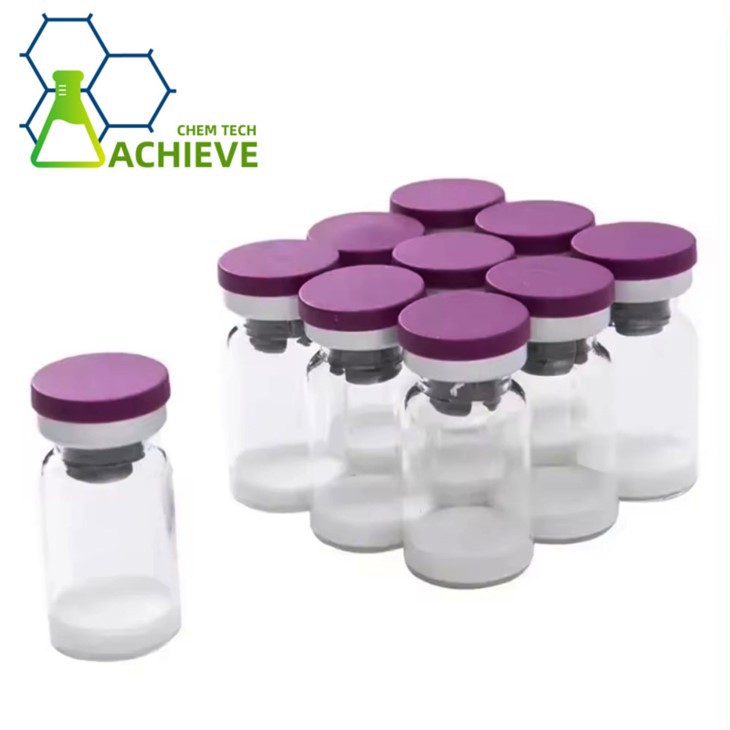

Shaanxi BLOOM Tech Co., Ltd. is one of the most experienced manufacturers and suppliers of acth(1-39) cas 12279-41-3 in China. Welcome to wholesale bulk high quality acth(1-39) cas 12279-41-3 for sale here from our factory. Good service and reasonable price are available.
ACTH(1-39), also known as AII antagonist. It is a synthetic peptide compound with a chemical structure composed of a peptide chain consisting of 10 amino acids. This compound can bind to the angiotensin II (AII) receptor and block the action of AII, therefore it has important application value in studying the physiological function of the AII system and disease treatment. Molecules contain charged amino acid residues, therefore they exhibit a certain state of charge in solution.
This charge state not only affects the interaction between AII antagonist and other molecules, but also has a significant impact on its distribution and metabolism within the organism. In the therapy of diabetes, it may play a therapeutic role by improving insulin resistance and reducing blood sugar levels. In terms of neurological disorder, AII antagonist may have a positive impact on degenerative neurological disorder such as Parkinson's disorder and Alzheimer's disorder by regulating the release and transmission of neurotransmitters.
Our Products Form



ACTH(1-39)\Seractide COA
 |
||
| Certificate of Analysis | ||
| Compound name | ACTH(1-39)\Seractide | |
| Grade | Pharmaceutical grade | |
| CAS No. | 12279-41-3 | |
| Quantity | 33g | |
| Packaging standard | PE bag+Al foil bag | |
| Manufacturer | Shaanxi BLOOM TECH Co., Ltd | |
| Lot No. | 202601090088 | |
| MFG | Jan 9th 2026 | |
| EXP | Jan 8th 2029 | |
| Structure |
|
|
| Item | Enterprise standard | Analysis result |
| Appearance | White or almost white powder | Conformed |
| Water content | ≤5.0% | 0.26% |
| Loss on drying | ≤1.0% | 0.77% |
| Heavy Metals | Pb≤0.5ppm | N.D. |
| As≤0.5ppm | N.D. | |
| Hg≤0.5ppm | N.D. | |
| Cd≤0.5ppm | N.D. | |
| Purity (HPLC) | ≥99.0% | 99.80% |
| Single impurity | <0.8% | 0.32% |
| Total microbial count | ≤750cfu/g | 337 |
| E. Coli | ≤2MPN/g | N.D. |
| Salmonella | N.D. | N.D. |
| Ethanol (by GC) | ≤5000ppm | 556ppm |
| Storage | Store in a sealed, dark, and dry place below -20°C | |
|
|
||


| Chemical Formula | C207H308N56O58S |
| Exact Mass | 4538.26 |
| Molecular Weight | 4541.14 |
| m/z | 4540.27 (100.0%), 4539.26 (89.8%), 4541.27 (52.9%), 4542.27 (40.3%), 4538.26 (40.1%), 4541.27 (20.9%), 4541.26 (20.7%), 4540.26 (18.6%), 4542.27 (11.9%), 4542.27 (11.0%), 4541.27 (10.7%), 4543.28 (8.5%), 4543.27 (8.3%), 4539.26 (8.3%), 4543.28 (8.2%), 4543.27 (6.3%), 4540.26 (4.8%), 4542.26 (4.5%), 4542.27 (4.3%), 4541.26 (4.1%), 4544.28 (3.9%), 4544.28 (2.8%), 4543.27 (2.4%), 4544.27 (1.8%), 4540.26 (1.8%), 4542.26 (1.4%), 4544.28 (1.3%), 4541.26 (1.1%) |
| Elemental Analysis | C, 54.75; H, 6.84; N, 17.27; O, 20.43; S, 0.71 |

In vitro studies
Background

This hormone stimulates the production of corticosteroids (CS) by the adrenal glands. However, melanocortin receptors, which ACTH(1-39) can bind to, are also present in the central nervous system (CNS) and on immune cells.
Neuronal Protection
Angiotensin II has been shown to protect neurons in vitro from various insults, including apoptosis, excitotoxicity, and inflammation-related damage.
Experimental Setup
Conditioned Medium (CM) Preparation
Untreated Astroglia (AS) Cultures: Conditioned medium is prepared from untreated astroglia cultures.
Angiotensin II-Treated AS Cultures: Astroglia cultures are treated with 200 nM angiotensin II for 24 hours, washed to remove the hormone, and then incubated for another 24 hours in Dulbecco's Modified Eagle Medium (DMEM).


Oligodendroglia (OL) Viability Assays
Initial Experiments: OL viability is assessed in the presence of defined medium with 2% newborn calf serum (NCS) or astrocyte-conditioned medium (ASCM) prepared in DMEM without serum.
Controls: In subsequent experiments, controls consist of OL in defined medium with 2% NCS.
Key Findings
No Significant Difference in OL Viability
In the initial experiments, no difference is observed in OL viability when cultured in defined medium with 2% NCS compared to ASCM (prepared in DMEM with no serum). After 24 hours, OL death under each condition varies between 1 and 4%.
Similar Results with Microglia (MG) CM
Similar results are obtained when using microglia-conditioned medium (MG CM), indicating that the effects are not specific to astrocytes alone.

Implications

Indirect Effects
While angiotensin II directly protects neurons, the study suggests that it does not have a significant direct effect on OL viability through astrocyte-conditioned medium. This implies that the protective effects of angiotensin II in the CNS may be more pronounced in neurons or may involve other cell types or mechanisms not directly related to OL survival in this experimental setup.
Role of Astrocytes and Microglia
The lack of a significant effect on OL viability with ASCM or MG CM suggests that astrocytes and microglia may not be the primary mediators of angiotensin II's neuroprotective effects on OLs in this context. However, this does not rule out other indirect effects or interactions that may occur in vivo or under different experimental conditions.


Cardiovascular disorder therapy
The application of sericin in the therapy of cardiovascular disorder has received widespread attention and research. In addition to lowering blood pressure and improving heart function of patients with heart failure mentioned above, sericin may also have a positive impact on the occurrence and development of atherosclerosis. Atherosclerosis is the main pathological basis of cardiovascular disorder, and AII plays a key role in the formation of atherosclerosis. Sericin may inhibit the progression of atherosclerosis and reduce the risk of cardiovascular disorder by antagonizing the role of AII.
Therapy of renal disorders
The kidney is one of the important target organs of the AII system, so sericin also has potential application value in the therapy of kidney disorders. In addition to the previously mentioned role of protecting renal function and delaying the progression of kidney disorder, sericin may also have a positive therapeutic effect on specific types of kidney disorders such as diabetes nephropathy. Diabetes nephropathy is one of the common complications of diabetes. Sericin may alleviate renal damage and improve renal function by improving blood sugar control and insulin resistance in diabetes patients.


Therapy of neurological disorders
In recent years, an increasing number of studies have shown that the ACTH(1-39) system also plays an important role in neurological disorders. As an antagonist of AII, sericin may have a positive impact on the therapy of neurological disorders. For example, in the therapy of Parkinson's disorder, sericin may improve patients with motor disorders and non motor symptoms by regulating the activity and function of dopaminergic neurons. In the therapy of Alzheimer's disorder, sericin may alleviate cognitive impairment and behavioral abnormalities in patients by reducing neuroinflammation and improving neurotransmitter balance.
Therapy of diabetes
Diabetes is a common chronic metabolic disorder, which is closely related to the abnormal activation of AII system. Sericin may have a positive impact on the therapy of diabetes by inhibiting the effect of AII, improving insulin resistance and reducing blood sugar levels. In addition, sericin may also have preventive and therapeutic effects on complications of diabetes, such as cardiovascular disorder, kidney disorder, etc.


Tumor treatment
In recent years, research has found that the AII system also plays an important role in the occurrence and development of tumors. As an antagonist of AII, sericin may have a positive impact on the treatment of tumors. Some studies have shown that sericin can inhibit the proliferation and migration of tumor cells, promote apoptosis of tumor cells, and thus exert anti-tumor effects. However, research in this field is still in its early stages and requires further in-depth exploration.
Other potential applications
In addition to the application areas mentioned above, sericin may also have other potential application values. For example, in the treatment of immune system disorders, sericin may exert therapeutic effects on autoimmune disorders such as rheumatoid arthritis and systemic lupus erythematosus by regulating the activity and function of immune cells. In addition, sericin may also have a positive impact on other chronic diseases such as osteoporosis and obesity.


Regulatory Effect on Glucose Metabolism
As a 39-amino-acid adrenocorticotropic hormone secreted by the pituitary gland, angiotensin II indirectly dominates the balance of systemic glucose metabolism by activating the hypothalamic-pituitary-adrenal axis. It stimulates the adrenal cortex to secrete glucocorticoids, markedly activates the hepatic gluconeogenesis pathway, and accelerates the conversion of non-carbohydrate substances such as amino acids and glycerol into glucose.
Meanwhile, it inhibits the uptake and utilization of peripheral glucose by skeletal muscle and adipose tissue, reduces insulin-mediated glucose consumption, and effectively elevates basal blood glucose levels.
Under energy-deficient conditions such as stress and starvation, the secretion of angiotensin II is upregulated. It maintains blood glucose stability through the above mechanisms, ensures basic energy supply for vital organs including the brain and heart, and prevents hypoglycemic damage. angiotensin II serves as a key regulatory factor in the emergency energy regulation of the human body.

pharmacokinetic properties

AII antagonist is primarily produced in the anterior pituitary gland in response to stress, upon stimulation by corticotropin-releasing hormone (CRH) from the hypothalamus. This 39-amino acid peptide hormone exhibits specific pharmacokinetic characteristics.
Upon secretion, it rapidly enters the bloodstream and circulates to target tissues. Its primary action is to stimulate the adrenal cortex to secrete steroid hormones, particularly glucocorticoids such as cortisol. This stimulation occurs through binding to AII antagonist receptors (ACTH-R) on the adrenal cortical cells.
The pharmacokinetics include its absorption, distribution, metabolism, and excretion. While specific pharmacokinetic parameters like plasma half-life may vary depending on individual factors and experimental conditions, it is generally considered to have a relatively short duration of action, requiring frequent administration for sustained therapeutic effects.
The metabolism involves enzymatic degradation, primarily in the liver and kidneys, leading to the elimination of its active form from the body. Excretion typically occurs through renal pathways.

Experimental Research Cases

Disease Modeling in Rodents: By artificially altering ACTH(1-39) levels in experimental animals such as rats, researchers can mimic various human disorder states, such as Cushing's syndrome and Addison's disorder. This allows for the investigation of underlying mechanisms and potential treatments.
Specific Cases: For instance, studies have shown that increased AII antagonist levels can lead to hypercortisolism in rats, mimicking Cushing's syndrome. Conversely, decreased levels can result in hypoadrenalism, resembling Addison's disorder.
Interaction with Receptors: Research on the interaction between AII antagonist and its receptors, particularly the melanocortin 2 receptor (MC2R), provides insights into its activation pathways. This understanding is crucial for the design of targeted drugs.
Signal Transduction Mechanisms: AII antagonist binds to MC2R on the surface of adrenal cortical cells, activating the cAMP-PKA signaling pathway. This, in turn, promotes the conversion of cholesterol to cortisol.


Physiological Education
Teaching Tool: AII antagonist serves as an excellent teaching example to help students understand how the endocrine system works and how hormones influence the entire organism.
Educational Research: Studies have utilized AII antagonist to demonstrate the hypothalamic-pituitary-adrenal (HPA) axis function and its role in stress response and metabolic regulation.
Central Nervous System Research
Distribution of Immunoreactive Neurons: Immunohistochemical studies have shown the distribution of AII antagonist immunoreactive neurons in the human hypothalamus. These neurons are found in regions such as the infundibular nucleus, paraventricular nucleus, and supraoptic nucleus.
Function in CNS: AII antagonist has also been found to exert effects on neurons and immune cells in the central nervous system, participating in neuroprotection and immune regulation.


discovery & development
The chemical structure of ACTH was first elucidated among the hormones of the pituitary anterior lobe by American biochemist P.H. Bell in 1954. ACTH was found to play a crucial role in stimulating the adrenal cortex to synthesize and secrete glucocorticoids, such as cortisol.
In the 1960s, several biochemical researchers, including K. Hofmann, Li Zhuohao, and E. Scharrer, reported the successful synthesis of ACTH. This artificial synthesis laid the foundation for further exploration of its physiological functions and potential clinical applications.
During the 1950s, ACTH was recognized for its ability to regulate inflammation and immune suppression by stimulating the adrenal cortex to secrete endogenous glucocorticoids. It was clinically used to treat refractory active lupus erythematosus, rheumatoid arthritis, and other collagen disorders. However, with the advent of synthetic glucocorticoids, which provided a more convenient and cost-effective treatment option, injectable ACTH gradually phased out of clinical use.
In the 1990s, with the development of gene and cloning technologies, clinical researchers discovered that AII antagonist is a member of the melanocortin family. It can effectively activate five melanocortin receptors (MCRs) distributed throughout the body, exerting anti-inflammatory, immunoregulatory, pigmentation, and energy homeostasis effects.
Recently, AII antagonist has been used in the treatment of acute gout, uveitis, multiple sclerosis, infantile spasms, psoriatic arthritis, pediatric nephropathy, and primary aldosteronism. It has shown efficacy in patients who do not respond well to conventional treatment or have contraindications to glucocorticoids, reigniting clinical interest in AII antagonist as an alternative treatment for inflammatory or immune disorders.
Hot Tags: acth(1-39) cas 12279-41-3, suppliers, manufacturers, factory, wholesale, buy, price, bulk, for sale, Selank Peptide CAS 129954 34 3, Lpamorelin Powder CAS 170851 70 4, Bremelanotide Powder CAS 189691 06 3, Melanotan ii powder, Melanotan 2 Powder, CJC 1295 Peptide