


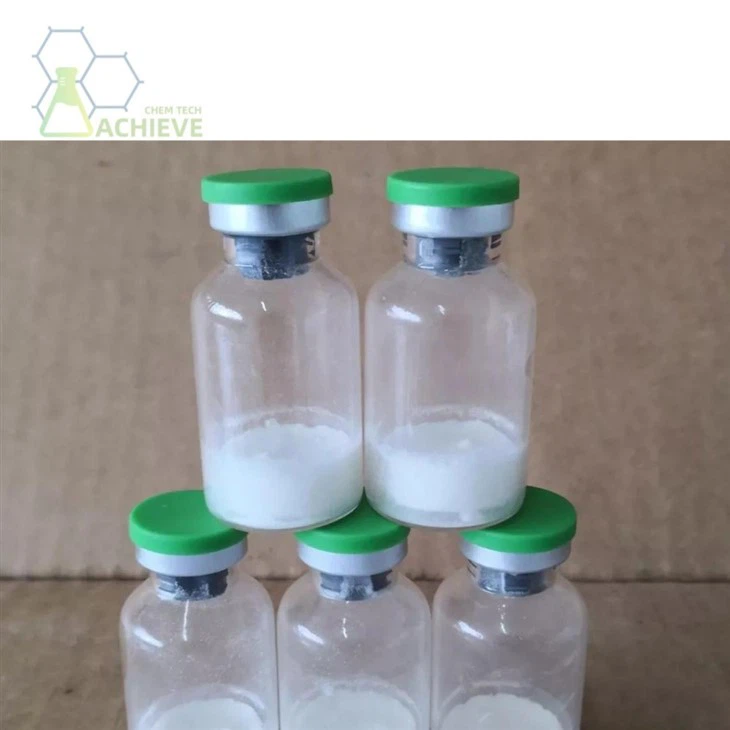

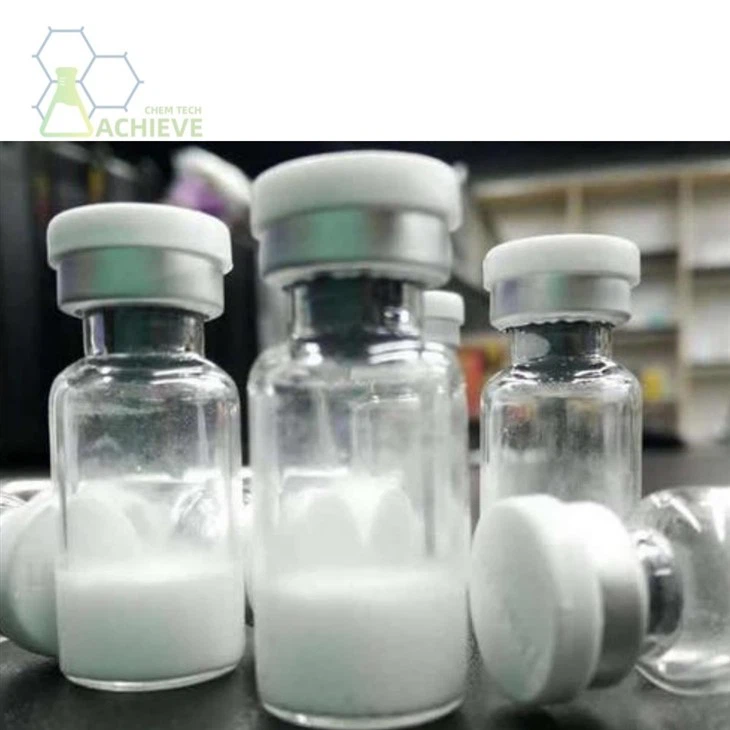


Shaanxi BLOOM Tech Co., Ltd. is one of the most experienced manufacturers and suppliers of thymalfasin cas 69440-99-9 in China. Welcome to wholesale bulk high quality thymalfasin cas 69440-99-9 for sale here from our factory. Good service and reasonable price are available.
Thymalfasin, molecular formula C129H215N33O55, CAS 69440-99-9. It is a white or almost white powdery solid. This color and appearance are a direct reflection of its purity and crystalline state, as well as its high chemical purity.
Its chemical name is N-acetyl-L sericyl-L- α- Aspartyl-L-alanyl-L-alanyl-L-alanyl-L-valionyl-L- α- Aspartyl L-threoniyl L-serine L-serine L-serine L-serine- α- Glutanyl-L-Isoleucoyl-L-threacyl-L-threacyl-L-threacyl-L-lysine-L- α- Aspartyl-L-l-leucyl-L-lysinyl-L- α- Glutanyl-L-lysine-L-lysine-L-lysine-L- α- Glutanyl-L-Valkyl-L-Valkyl-L- α- Glutanyl-L- α- Glutanyl-L-alanyl-L- α- Glutamyl-L-asparagine is an organic compound.
It is a peptide composed of 28 amino acids and has strong immunological enhancing activity. It is mainly used as an adjuvant therapy for chronic hepatitis B and malignant tumors in clinical practice.
|
Customized Bottle Caps And Corks:
|
|


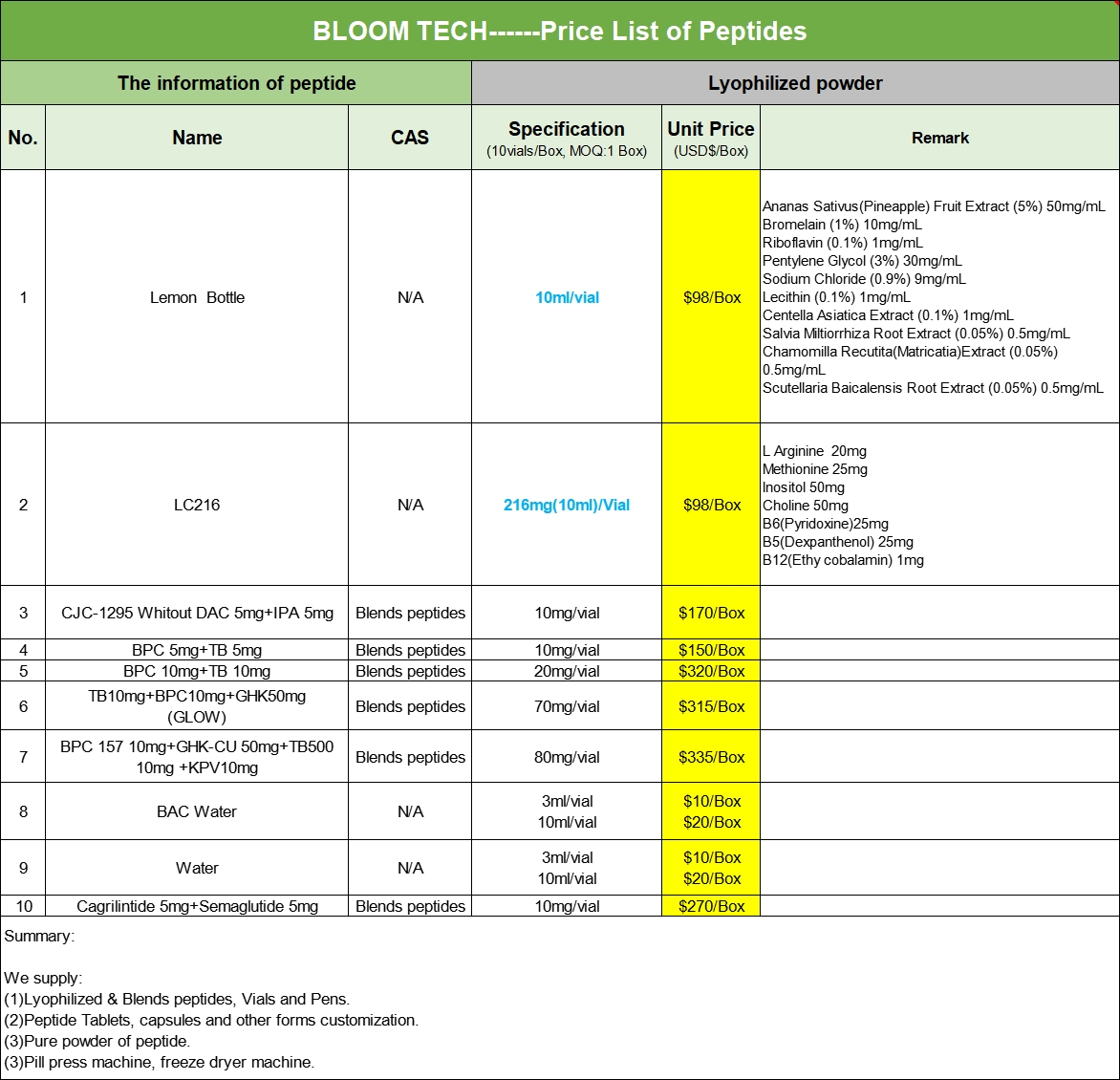

Thymalfasin COA
 |
||
| Certificate of Analysis | ||
| Compound name | Thymalfasin | |
| Grade | Pharmaceutical grade | |
| CAS No. | 69440-99-9 | |
| Quantity | 38g | |
| Packaging standard | PE bag+Al foil bag | |
| Manufacturer | Shaanxi BLOOM TECH Co., Ltd | |
| Lot No. | 202501090088 | |
| MFG | Jan 9th 2026 | |
| EXP | Jan 8th 2029 | |
| Structure |
|
|
| Item | Enterprise standard | Analysis result |
| Appearance | White or almost white powder | Conformed |
| Water content | ≤5.0% | 0.54% |
| Loss on drying | ≤1.0% | 0.42% |
| Heavy Metals | Pb≤0.5ppm | N.D. |
| As≤0.5ppm | N.D. | |
| Hg≤0.5ppm | N.D. | |
| Cd≤0.5ppm | N.D. | |
| Purity (HPLC) | ≥99.0% | 99.98% |
| Single impurity | <0.8% | 0.52% |
| Total microbial count | ≤750cfu/g | 95 |
| E. Coli | ≤2MPN/g | N.D. |
| Salmonella | N.D. | N.D. |
| Ethanol (by GC) | ≤5000ppm | 500ppm |
| Storage | Store in a sealed, dark, and dry place below -20°C | |
|
|
||
|
|
||


| Chemical Formula | C129H213N32O543 | |
| Exact Mass | 3074.49 | |
| Molecular Weight | 3076.29 | |
| m/z | 3075.49 (100.0%), 3074.49 (71.7%), 3076.50 (38.6%), 3076.50 (30.6%), 3077.50 (23.5%), 3077.50 (11.1%), 3078.50 (9.6%), 3077.50 (8.2%), 3076.49 (8.0%), 3076.49 (7.4%), 3077.49 (6.5%), 3075.49 (5.3%), 3076.49 (4.4%), 3078.50 (4.3%), 3078.50 (3.4%), 3078.50 (3.4%), 3075.49 (3.2%), 3079.51 (2.8%), 3079.50 (2.6%), 3076.50 (2.4%), 3076.50 (2.1%), 3075.50 (1.8%), 3077.49 (1.7%), 3075.49 (1.5%), 3078.50 (1.2%), 3080.51 (1.1%) | |
| Elemental Analysis | C, 50.37; H, 6.98; N, 14.57; O, 28.08 | |
As a peptide substance, its primary physical properties are reflected in its molecular structure. The thymic gland is composed of a series of amino acids connected by peptide bonds, forming a complex but ordered three-dimensional structure. This structure determines its biological activity and stability, enabling it to perform specific functions within the organism.

Thymalfasin, as an immunological modulator, has a wide range of applications in the medical field. Its core function is to enhance the immunological function of the body, promote the activity of immunological cells by stimulating the maturation and differentiation of T lymphocytes, and thus achieve adjuvant therapy for various diseases.
1. Treatment of chronic hepatitis B
Thymic therapy plays a crucial role in the treatment of chronic hepatitis B. The continuous replication of hepatitis B virus and the lack of host defense are the main reasons for the deterioration of the disease. By stimulating the proliferation and differentiation of T lymphocytes, thymic method can promote the body to produce specific antibodies, thereby enhancing the ability to eliminate hepatitis B virus.


In practical applications, thymic therapy is often used in combination with antiviral drugs to achieve better therapeutic effects. Through comparative study, it was found that the patients who used the new thymic method had faster decline of hepatitis B virus load, better recovery of liver function, and stable long-term efficacy. In addition, thymic therapy can effectively alleviate liver inflammation, improve liver fibrosis, and reduce the incidence of cirrhosis and liver cancer.
Malignant tumor patients often suffer from immunological dysfunction, which allows tumor cells to evade immunological surveillance and accelerate disease progression. As an immunological enhancer, thymic assay can significantly enhance the immunological system of tumor patients and enhance the body's ability to recognize and clear tumor cells.


2. Adjuvant therapy for malignant tumors
In the adjuvant therapy of malignant tumors, thymic method is often used in combination with chemotherapy, radiotherapy, and other methods. Through research, it has been found that cancer patients who use the thymus method have better tolerance to chemotherapy and radiation therapy, lower incidence of adverse reactions, and significantly longer survival time. In addition, thymic therapy can activate the body's anti-tumor immunological response, inhibit the growth and spread of tumor cells, and thus improve the therapeutic effect.
3. Treatment of immunodeficiency diseases
Patients with immunodeficiency diseases are prone to invasion by various pathogens due to their weakened immunological system function, and it is difficult for them to recover after infection. The thymic method stimulates the proliferation and differentiation of immunological cells, enhances the body's immunological system, and helps patients resist infection.


In practical applications, thymic therapy has certain therapeutic effects on both primary and secondary immunodeficiency diseases. Through research, it has been found that patients who use the thymus method have a significantly lower incidence of infection and faster recovery after infection. In addition, thymic therapy can improve the immunological function of patients, reduce the incidence of complications, and improve their quality of life.
Thymofaxine also plays an important role in the prevention and treatment of infectious diseases.
By enhancing the body's ability to resist infections, thymosin can reduce the incidence of infections and alleviate the severity of infections.


4. Prevention and treatment of infectious diseases
In terms of prevention, thymic vaccination can be used for high-risk populations, such as the elderly, children, chronic disease patients, etc., to improve their immunity and reduce the risk of infection. In terms of treatment, thymus method can be used for auxiliary treatment of various infectious diseases, such as respiratory tract infection, digestive tract infection, etc., to promote the recovery of diseases by enhancing the anti infection ability of the body.
5. Other uses
In addition to the above-mentioned diseases, thymic therapy has also shown potential application value in the treatment of some other diseases. For example, in the treatment of immunological diseases, thymic therapy may alleviate the damage of autoimmune reactions to the body by regulating immunological balance. In addition, thymic therapy may also play an important role in fields.


The new synthesis of thymus method usually adopts solid-phase synthesis, which is a method of gradually synthesizing peptides on a solid-phase carrier. The basic principle is to connect amino acids one by one to the solid-phase carrier to form peptide chains with specific sequences. During the synthesis process, it is necessary to protect the side chain groups of amino acids to prevent unnecessary side reactions. After all amino acid connections are completed, the target peptide is obtained by removing the protective group through appropriate processing.
Detailed synthesis steps.
Select appropriate solid-phase carriers (such as resins) and raw amino acids, as well as necessary protective group reagents.
Connect the first amino acid (usually an N-terminally protected amino acid) to a solid-phase carrier. This step usually involves a condensation reaction between the carboxyl group of the amino acid and the active group (such as the amino group) on the carrier.
Example of chemical equation (in simplified form):
R-COOH+H2N Resin → R-CO-NH Resin+H2O
(Where R represents the side chain group of amino acids, Resin represents the solid-phase carrier)
After the first amino acid connection is completed, gradually add subsequent amino acids. Each newly added amino acid requires side chain protection and activation at the N-terminus (such as using Fmoc or Boc protective groups). These activated amino acids undergo condensation reactions with the C-terminus of the peptide chains already connected to the carrier.
Example of chemical equation (in simplified form, using Fmoc protection as an example):
R1-CO-NH-Resin+Fmoc-R2-OH → Fmoc-R2-CO-NH-R1 Resin+H2O
(R1 and R2 represent side chain groups of different amino acids)
After all amino acids are connected, it is necessary to remove the protective groups to expose the active sites of the peptide. This step usually involves using specific chemical reagents for deprotection reactions.
Example of chemical equation (using Fmoc protective group as an example):
Fmoc R-CO-NH Resin+Protection Agent → R-CO-NH Resin+Fmoc group+byproducts
(Where R represents polypeptide chain)
Finally, the peptides are cut off from the solid-phase carrier using appropriate cutting reagents to obtain free peptides.
Example of chemical equation:
R-CO-NH Resin+Cleanage Agent → R-CO-NH2+Resin byproducts
Thymus therapy: an indispensable "booster" for host defense
Enhance cellular host defense and build a healthy defense line
Thymus plays a crucial role in enhancing the human immunological system as a highly effective immunomodulatory agent. It precisely promotes the proliferation and differentiation of T lymphocytes, not only increasing the number of immunological forces, but also optimizing the combat capability of this defense force. This means that when our bodies face the invasion of external pathogens,we can quickly mobilize immunological resources.


Assisting tumor treatment and enhancing rehabilitation hope
In the treatment process of tumors, a complex and stubborn disease, the patient's immunological system often suffers severe damage due to the disease itself and the side effects of treatment. The intervention of this substance is like a clear stream, which can not only help patients revive their immunological system and restore it to a state sufficient to fight against tumors, thereby improving treatment effectiveness, but also effectively redu. and distant metastasis.
Promote tissue repair and accelerate wound healing
Even more astonishing is the potential demonstrated in the field of organizational repair. Whether it is trauma caused by accidental injury or severe burns, it can promote cell proliferation and differentiation, accelerate the regeneration process of damaged tissues, shorten wound healing time, and significantly reduce the risk of infection caused by wound exposure.


In the 1960s, scientists discovered that the thymus plays a central role in T cell development and immunological regulation. In 1966, Allan Goldstein and Abraham White extracted a bioactive peptide from calf thymus and named it thymosin, demonstrating its ability to restore immunological responses in immunocompromised animals. In the 1970s, Goldstein's team further separated thymosin into multiple components using chromatographic techniques, among which thymosin fraction 5 (TF5) showed the strongest immunomodulatory activity.
In 1977, they purified thymosin alpha 1 (T alpha 1) from TF5 and determined its sequence consisting of 28 amino acids:Ac-Ser-Asp-Ala-Ala-Val-Asp-Thr-Ser-Ser-Glu-Ile-Thr-Thr-Lys-Asp-Leu-Lys-Glu-Lys-Lys-Glu-Val-Val-Glu-Glu-Ala-Glu-Asn-OH;Although T α 1 has significant immunomodulatory effects, its natural extraction faces the following issues:Limited source: Dependent on animal thymus tissue, low production and may carry pathogens;Batch differences: The purity and activity of different extracts are inconsistent.

FAQ
What is this used for?
T-cells are a type of white blood cell crucial for adaptive host defense. By promoting the maturation and differentiation of these cells, it aids the body in mounting a more effective immunological response against pathogens and malignant cells.
How to inject it?
This is typically given as a subcutaneous injection, which means it's injected just under the skin. The dosage and frequency can vary depending on the condition being treated, but some common regimens include: 1.6 mg twice weekly.
Hot Tags: thymalfasin cas 69440-99-9, suppliers, manufacturers, factory, wholesale, buy, price, bulk, for sale, Melanotan ii powder, GLP 1 Peptide CAS 87805 34 3, Kisspeptin powder, sermorelin powder, CJC 1295 Peptide, DecaPeptide 12 CAS 137665 91 9