




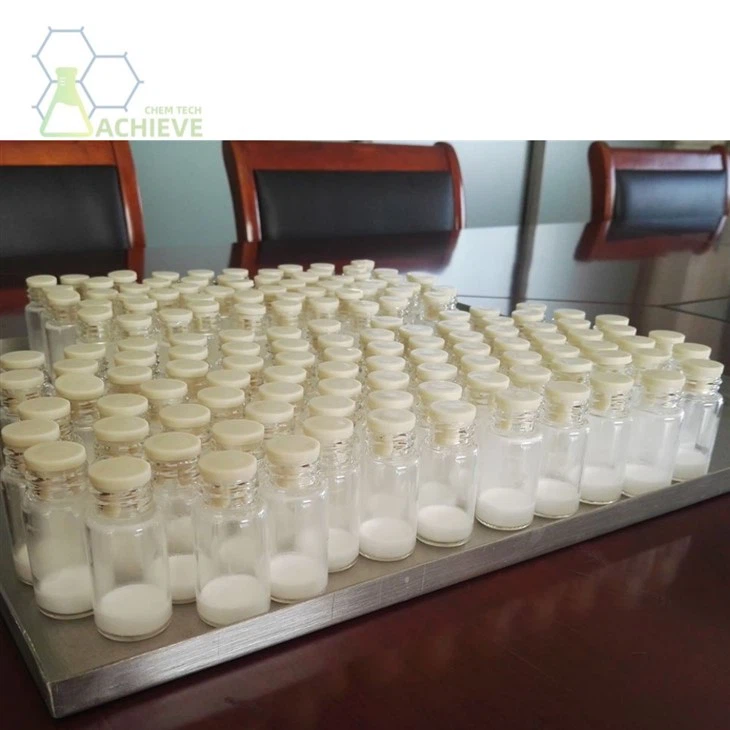


Shaanxi BLOOM Tech Co., Ltd. is one of the most experienced manufacturers and suppliers of degarelix cas 214766-78-6 in China. Welcome to wholesale bulk high quality degarelix cas 214766-78-6 for sale here from our factory. Good service and reasonable price are available.
Degarelix is a chemical substance, a white or almost white solid. Molecular formula C82H103ClN18O16, CAS 214766-78-6, molecular weight 1632.45 g/mol. It is a peptide compound composed of multiple amino acid residues. It contains a core leucine residue chain, as well as additional amino acid residues and other chemical groups. It is a GnRH receptor antagonist that reduces testosterone levels by inhibiting the secretion of gonadotropins in anterior pituitary cells, thereby inhibiting the growth of prostate tumors. The absorption rate in the body is fast, and drugs are widely distributed in tissues. It is metabolized by the liver and excreted through the kidneys in both metabolized and unmetabolized forms.
|
Customized Bottle Caps And Corks:
|
|



Degarelix COA
 |
||
| Certificate of Analysis | ||
| Compound name | Degarelix | |
| Grade | Pharmaceutical grade | |
| CAS No. | 214766-78-6 | |
| Quantity | 15g | |
| Packaging standard | PE bag+Al foil bag | |
| Manufacturer | Shaanxi BLOOM TECH Co., Ltd | |
| Lot No. | 202512090051 | |
| MFG | Dec 9th 2025 | |
| EXP | Dec 8th 2028 | |
| Structure |
|
|

| Item | Enterprise standard | Analysis result |
| Appearance | White or almost white powder | Conformed |
| Water content | ≤5.0% | 0.43% |
| Loss on drying | ≤1.0% | 0.54% |
| Heavy Metals | Pb≤0.5ppm | N.D. |
| As≤0.5ppm | N.D. | |
| Hg≤0.5ppm | N.D. | |
| Cd≤0.5ppm | N.D. | |
| Purity (HPLC) | ≥99.0% | 99.9% |
| Single impurity | <0.8% | 0.52% |
| Total microbial count | ≤750cfu/g | 90 |
| E. Coli | ≤2MPN/g | N.D. |
| Salmonella | N.D. | N.D. |
| Ethanol (by GC) | ≤5000ppm | 500ppm |
| Storage | Store in a sealed, dark, and dry place below -20°C | |
|
|
||
|
|


|
Chemical Formula |
C82H103ClN18O16 |
|
Exact Mass |
1631 |
|
Molecular Weight |
1632 |
|
m/z |
1631 (100.0%), 1632 (88.7%), 1633 (38.8%), 1633 (32.0%), 1634 (28.3%), 1635 (12.4%), 1634 (10.4%), 1632 (6.6%), 1633 (5.9%), 1636 (3.6%), 1633 (3.3%), 1634 (2.9%), 1634 (2.6%), 1634 (2.1%), 1635 (2.0%), 1635 (1.9%), 1635 (1.3%), 1632 (1.1%), 1635 (1.1%), 1633 (1.0%) |
|
Elemental Analysis |
C, 60.34; H, 6.36; Cl, 2.17; N, 15.45; O, 15.68 |

Degarelix is a synthetic gonadotropin-releasing hormone (GnRH) receptor antagonist, belonging to the third generation of anti androgen therapeutic drugs. Since its first clinical approval in 2008, its application in the treatment of prostate cancer has gradually expanded and demonstrated unique pharmacological advantages. Here are its detailed uses:
The mechanism of action of Degarelix: direct blockade and rapid reduction of testosterone

Physiological basis of GnRH signaling pathway
GnRH is secreted by the hypothalamus and acts on the GnRH receptor in the anterior pituitary gland through pulsatile release, stimulating the synthesis and secretion of follicle stimulating hormone (FSH) and luteinizing hormone (LH). In males, LH acts on testicular interstitial cells, promoting the synthesis of testosterone (T); FSH works synergistically with testosterone to maintain sperm production. Testosterone is the main "fuel" for the growth of prostate cancer cells, and its elevated levels accelerate tumor progression.
Limitations of traditional GnRH agonists
The first generation of anti androgen drugs (such as leuprorelin and goserelin) are GnRH agonists, and their effects need to go through the "initial stimulation period": at the beginning of drug use, GnRH receptors will be activated briefly, leading to a transient increase in FSH/LH and testosterone levels ("flare phenomenon"), which may induce bone pain, spinal cord compression or urinary retention and other tumor progression symptoms, especially in patients with advanced prostate cancer.
Direct antagonistic effect of Degarelix
Degarelix competitively binds to pituitary GnRH receptors, directly blocking GnRH signaling without the need for initial stimulation. Its characteristics include:
Rapid testosterone reduction: After a single injection, testosterone levels significantly decrease within 24 hours and can reach castration levels (<0.5 ng/mL) within 72 hours, which is more rapid than GnRH agonists (which take 2-4 weeks).

Continuous inhibition: Maintaining receptor occupancy through long-acting preparations (such as subcutaneous injection once a month) to inhibit testosterone secretion for a long time.
No flare phenomenon: Avoid exacerbating acute symptoms caused by hormonal fluctuations, especially suitable for patients in advanced stages or with obvious symptoms.
Degarelix's core indication: full cycle management of prostate cancer

Initial treatment of locally advanced prostate cancer
Applicable scenarios: High risk locally advanced prostate cancer (such as T3-T4 stage, Gleason score ≥ 8, PSA>20 ng/mL) requires rapid reduction of testosterone levels to control tumor growth. Plan to undergo radical prostatectomy or neoadjuvant therapy before radiotherapy to reduce tumor volume and lower pathological staging.
Clinical evidence: A randomized controlled trial (RCT) showed that the Degarelix group had a better postoperative pathological complete response rate (pCR) and positive margin rate than the GnRH agonist group, indicating a stronger early anti-tumor effect.
Long term follow-up has found that Degarelix can significantly reduce the risk of biochemical recurrence (BCR), especially for young, high burden cancer patients.
Combination therapy for metastatic castration resistant prostate cancer (mCRPC)
Function positioning: In the mCRPC stage, although testosterone has reached castration levels, tumors continue to progress through the androgen receptor (AR) signaling pathway. Degarelix enhances anti-tumor efficacy by deeply inhibiting the synthesis of residual testosterone and adrenal androgens (such as dehydroepiandrosterone, DHEA).
Combination therapy: Used in combination with AR antagonists such as enzalutamide, aparamide, etc., to prolong progression free survival (PFS) by double blocking AR signaling.

Combined with chemotherapy: Docetaxel+Megarelix can synergistically inhibit tumor growth and improve quality of life (QoL).
Combined with PARP inhibitors: Degarelix enhances DNA damage repair inhibition by reducing androgen levels in BRCA mutant mCRPC.

Intermittent androgen deprivation therapy (IADT) for prostate cancer
Treatment concept: IADT allows for a brief recovery of testosterone levels by periodically discontinuing anti androgen drugs to reduce side effects such as osteoporosis and metabolic syndrome caused by long-term castration, while maintaining anti-tumor effects.
Advantages of Degarelix:
Rapid recovery of testosterone: After discontinuation, testosterone levels can return to normal within 1-2 weeks, which is more beneficial for controlling the cycle of IADT than GnRH agonists (which take several months).
Reduce the risk of treatment interruption: avoid tumor progression caused by delayed recovery after GnRH agonist discontinuation.

Application of Degarelix in the Establishment of Hormone-related Disease Models
As a highly selective gonadotropin-releasing hormone (GnRH) receptor antagonist, Degarelix can rapidly and continuously inhibit the secretion of luteinizing hormone (LH) and follicle-stimulating hormone (FSH) by blocking pituitary GnRH receptors, thereby efficiently reducing the level of testosterone in the body. It has become a core tool drug for establishing animal models of androgen-related diseases and is widely applied in basic medical research, with the specific applications as follows:
Establishment of Animal Models of Androgen-dependent Prostate Cancer
This is the primary scientific research application scenario of Degarelix. Researchers can subcutaneously inoculate prostate cancer cell lines (e.g., LNCaP, VCaP) into model animals such as mice and rats, followed by intraperitoneal or subcutaneous injection of Degarelix to rapidly reduce the testosterone level in the animals to the castration level.

This model can simulate the hormone-dependent state of clinical advanced prostate cancer, which is used to explore the effects of androgen deprivation on tumor growth and metastasis, as well as the mechanism underlying the development of tumor cell drug resistance. Compared with traditional surgical castration, Degarelix-induced chemical castration has the advantages of simple operation, minimal trauma, and precise regulation of testosterone levels. Moreover, it avoids the testosterone flare phenomenon associated with GnRH agonists, resulting in higher model stability.

Establishment of Animal Models of Male Climacteric Syndrome
Male climacteric syndrome is closely related to the decline in testosterone levels caused by aging. Sustained administration of Degarelix to middle-aged male rats or mice can artificially reduce their testosterone concentrations, thereby establishing a pathological model similar to male climacteric syndrome.
This model can be used to study the pathological mechanisms of a series of symptoms caused by testosterone deficiency, including reproductive system atrophy, decreased bone mineral density, cognitive impairment, and mood changes. Meanwhile, it provides a efficacy evaluation platform for the research and development of drugs aimed at improving male climacteric symptoms, enabling the comparison of therapeutic effects between candidate drugs and traditional testosterone replacement therapy.
Establishment of Animal Models of Androgen-related Metabolic Diseases
Androgens play an important regulatory role in the body's glucose and lipid metabolism as well as bone metabolism. The establishment of androgen-deficient animal models using Degarelix allows the exploration of the correlation mechanisms between reduced testosterone levels and metabolic diseases such as obesity, insulin resistance, and osteoporosis.

For example, in osteoporosis research, this model can intuitively demonstrate the phenomenon of decreased osteoblast activity and hyperactive osteoclast function induced by androgen deficiency. It provides experimental support for the development of drugs targeting bone metabolism and can also be used to evaluate the improvement effects of exercise and nutritional interventions on androgen-deficient osteoporosis.

Establishment Of Animal Models Of Androgen-Related Reproductive System Diseases
Androgens are essential for the development, maturation and normal function of the male reproductive system. Abnormal reduction of testosterone levels can lead to a variety of reproductive system disorders, such as spermatogenesis disorder, testicular atrophy, epididymal dysfunction and sexual dysfunction. Degarelix, as an effective tool to regulate testosterone levels, is widely used in the establishment of animal models of such diseases.
In specific operation, researchers can give Degarelix of appropriate dose and course to young or adult male model animals (such as mice, rats and rabbits) to stably reduce their serum testosterone level to a pathological state. This model can accurately simulate the pathological characteristics of male reproductive system diseases caused by androgen deficiency, and is used to explore the regulatory mechanism of androgens on spermatogenesis, testicular and epididymal cell proliferation and differentiation.
In addition, this model also provides a reliable experimental platform for the research and development of therapeutic drugs for androgen-deficient reproductive system diseases, such as spermatogenesis-promoting drugs and androgen replacement therapy preparations, which can effectively evaluate the therapeutic effect of candidate drugs on reproductive function recovery.

Pharmacokinetic Properties
Absorption: A drug depot is formed for sustained release following subcutaneous injection, with high bioavailability. A steady state is rapidly achieved after administration of a 240 mg loading dose.Distribution: The volume of distribution is >1 L/kg for intravenous administration and >1000 L for subcutaneous injection. The plasma protein binding rate is approximately 90%, with widespread distribution in body fluids throughout the body.Metabolism: Metabolized via peptide hydrolysis in the hepatobiliary system, with no significant plasma metabolites. It is not a substrate/inhibitor/inducer of CYP450 or P-glycoprotein, resulting in a low risk of drug-drug interactions.Elimination: Undergoes biphasic elimination with a terminal half-life of 43–53 days (approximately 28 days at a maintenance dose of 80 mg). 20–30% of the drug is excreted unchanged in urine, and the remainder is eliminated in feces as peptide fragments.
Toxicological Characteristics
Genotoxicity: No mutagenicity was observed in the Ames test, and no clastogenic effects were detected in in vitro and in vivo chromosomal assays.Reproductive toxicity: Animal studies have demonstrated reversible inhibition of fertility in male and female rats. Male infertility caused by testosterone suppression is reversible. Contraindicated in pregnant women (FDA Pregnancy Category X).Carcinogenicity: Cases of malignant lymphoma and squamous cell carcinoma have been reported post-marketing; no special carcinogenic risk was observed in non-clinical studies.

Storage and Formulation Characteristics
The formulation is a lyophilized powder for injection, accompanied by a colorless and clear solvent. The lyophilized block has a shelf life of 2 years at 25℃.The reconstituted solution is stable for 4 hours at 25℃ and must be used immediately; it is not to be mixed with other drugs.Temperature-controlled transportation is required, with avoidance of violent shaking and freeze-thaw cycles to prevent loss of biological activity.

Drug-Drug Interactions
No effect on the CYP450 enzyme system, with no metabolic interactions with most drugs.May prolong the QTc interval; electrocardiographic monitoring is required when co-administered with Class IA/III antiarrhythmics, methadone, and other such drugs.Concomitant use with electrolyte-altering drugs may increase the risk of arrhythmias, requiring monitoring of serum potassium and magnesium levels.

Degarelix was developed by researchers from Shaanxi BLOOM Tech Co., Ltd. using amino resin as the starting resin carrier and sequentially connecting the corresponding Fmoc amino acids in the Digarec sequence through solid-phase synthesis. The last amino acid used is Ac-D-2Nal-OH. After condensation reaction and deprotection reaction, fully protected digarek peptide resin was obtained. Further acid cleavage and ether precipitation were performed to obtain the crude digarec peptide. After chromatographic purification, acetic acid salt conversion, and freeze-drying, the final product was digaric acetate. The detailed steps are as follows:
1. Preparation of starting resin carrier
(1) Under stirring conditions, dissolve the amino resin in an appropriate amount of solvent, such as dimethyl sulfoxide (DMSO). Ensure that the amino resin is completely dissolved.
(2) Slowly add formaldehyde solution and maintain the temperature at around room temperature. It was observed that the amino resin gradually became viscous.
(3) Continue stirring for a period of time, then pour the amino resin into an appropriate amount of methanol to precipitate the amino resin carrier.
(4) Filter and collect sediment, wash several times with methanol, and then dry in a vacuum drying oven. Obtain amino resin carrier.

2. Coupling of amino acids
(1) Load the amino resin carrier into the reactor and add an appropriate amount of solvent, such as dimethylformamide (DMF), to completely dissolve the amino resin.
(2) Slowly add an appropriate amount of Fmoc amino acids and coupling reagents, such as Oxyma, under stirring conditions.
(3) Observing the amino resin becoming viscous, continue stirring for a period of time, then pour it into an appropriate amount of solvent, such as methanol or ether, for precipitation.
(4) Filter and collect sediment, wash several times with solvent, and then dry in a vacuum drying oven. Obtain amino resin coupled with amino acids.
3. The condensation and deprotection of peptide chains
(1) Load the amino resin carrier coupled with amino acids into the reactor, add an appropriate amount of solvent and condensation agent, such as Diisopropylcarbodiimide (DIC) and 1-hydroxybenzotriazole (HOBt).
(2) Under stirring conditions, peptide chains were observed to gradually form and stirred continuously for a period of time.
(3) Add an appropriate amount of deprotection reagent, such as trifluoroacetic acid (TFA), to the reaction solution to remove the protective groups from the peptide chain.
(4) After a period of reaction, cut the peptide chain off the amino resin. Wash with solvents such as ether or acetone, and then dry in a vacuum drying oven. Fully protected digarek peptide resin.
4. Acid hydrolysis cutting and ether precipitation
(1) Fill the fully protected digarec peptide resin into the reactor and add an appropriate amount of acid hydrolysis reagent, such as hydrochloric acid.
(2) Under stirring conditions, after a period of reaction, it was observed that peptide chains were cut off from the amino resin.
(3) Add an appropriate amount of ether to the reaction solution to allow the peptide chain to settle in ether.
(4) Filter and collect sediment, wash several times with ether, and then dry in a vacuum drying oven. Obtain crude digaric peptide.
5. Chromatographic purification, acetic acid salt conversion, and freeze-drying
Module title
(1) Dissolve the crude digaric peptide in an appropriate amount of solvent, such as a mixture of methanol and water (the ratio may be adjusted according to the actual situation). Then, the solution is separated by chromatography using a silica gel column or a reverse phase C18 column. The mobile phase is a mixture of methanol and water (the ratio is adjusted according to the actual situation), and the eluent is collected when it flows out. The collected liquid is concentrated and then subjected to acetic acid salt conversion operation. The specific method is to add the collected liquid to the acetic acid solution, stir for a period of time, filter and separate the solid, wash it with organic solvents several times, and then dry it in a vacuum drying oven to obtain the acetic acid digaric product.
(2) Further purify the product of digaric acetate through chromatographic purification technology. Purification operations can be performed using chromatographic separation methods such as silica gel column and reverse phase C18 column. By adjusting the ratio of the mobile phase and the volume of the eluent, the product of digaric acetate can be further separated and purified.
(3) Perform acetic acid salt conversion on the purified digaric acetate product to improve its solubility and stability. The specific method is to dissolve the product of digaric acetate in an appropriate amount of acetic acid solution, stir for a period of time, filter and separate the solid, wash with organic solvent several times, and then dry in a vacuum drying oven. Obtain the final acetic acid digaric product.
(4) Finally, perform freeze-drying on the acetic acid digaric product. Freeze drying can remove excess water and solvents, improving the purity and stability of the product. The specific method is to put the acetic acid digaric product into a freeze-drying machine and dry it under low temperature conditions. The acetic acid digaric Degarelix processed by freeze-drying can be stored and used for a long time.
FAQ
What is the drug degarelix used for?
Degarelix is a hormonal therapy drug. It is also called Firmagon. It is used to treat prostate cancer. It may sometimes be used to treat other cancers.
Is degarelix the same as Lupron?
Degarelix (Firmagon) is as effective as leuprolide (Lupron Depot) in reducing and sustaining castrate levels of testosterone, but during the first year of treatment, patients receiving degarelix have a significantly lower risk of PSA progression or death than those receiving leuprolide, according to a study presented ...
What are common side effects of degarelix?
The most common adverse reactions reported in ≥10% of the patients were injection site reactions (eg, pain, erythema, swelling, induration, or inflammation), pyrexia, hot flush, weight loss or gain, fatigue, and increases in serum levels of hepatic transaminases and gamma-glutamyltransferase (GGT).
Is degarelix the same as Zoladex?
Zoladex (goserelin) and Firmagon (degarelix) are both used to treat advanced prostate cancer, but they work in different ways. Zoladex is a gonadotropin-releasing hormone (GnRH) agonist, which means it mimics a natural hormone to lower testosterone and estrogen levels.
Hot Tags: degarelix cas 214766-78-6, suppliers, manufacturers, factory, wholesale, buy, price, bulk, for sale, Melanotan ii powder, sermorelin powder, Lpamorelin Powder CAS 170851 70 4, Epitalon Powder CAS 307297 39 8, DecaPeptide 12 CAS 137665 91 9, Selank Peptide CAS 129954 34 3