




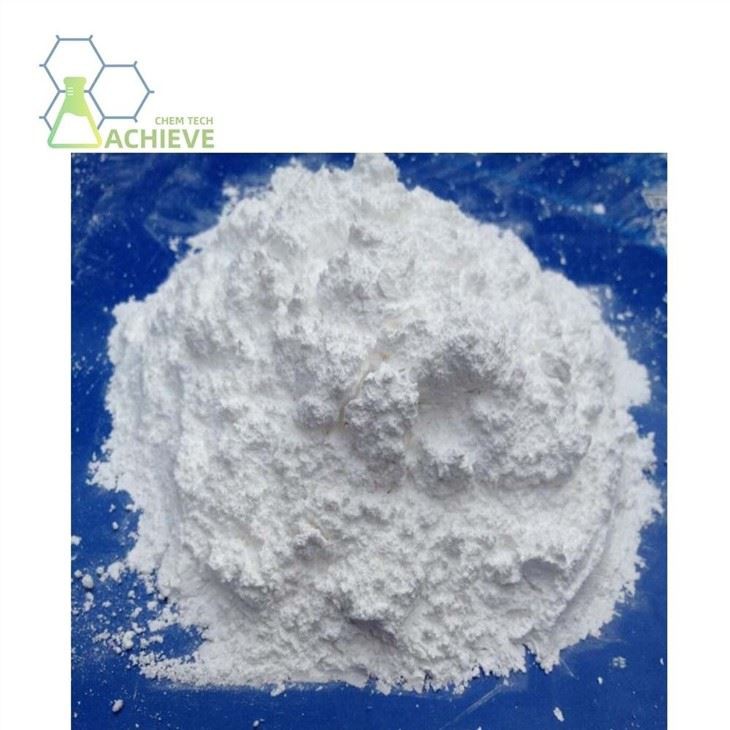
Shaanxi BLOOM Tech Co., Ltd. is one of the most experienced manufacturers and suppliers of 1,3,5-trioxane cas 110-88-3 in China. Welcome to wholesale bulk high quality 1,3,5-trioxane cas 110-88-3 for sale here from our factory. Good service and reasonable price are available.
1,3,5-Trioxane, also known as trimeric formaldehyde or 1,3,5-trimeric formaldehyde, is an organic compound, CAS 110-88-3, The chemical formula is C3H6O3, which is a white crystalline powder. It is soluble in water, alcohols, ketones, ethers, carbon disulfide, carbon tetrachloride, benzene, aliphatic and aromatic chlorinated hydrocarbons, and organic acids, but insoluble in aliphatic hydrocarbons such as pentane and petroleum ether. It is mainly used as an intermediate for engineering plastics, polyformaldehyde and other chemicals, and can also be used as a disinfectant and colorless flameless fuel. An important raw material for manufacturing polyoxymethylene (POM), POM is an important engineering plastic that can be widely used in fields such as electronics, home appliances, automobiles, machinery, healthcare, and construction. The common ingredients in furniture manufacturing are mainly used to bond wood, boards, and artificial boards, such as cabinets, wardrobes, beds, tables, and chairs. In addition, it is also used to manufacture building decoration materials such as plywood, thin wood decorative panels, partitions, decorative panels, etc., which are often used in building structures such as walls and ceilings.

|
Chemical Formula |
C3H6O3 |
|
Exact Mass |
202 |
|
Molecular Weight |
202 |
|
m/z |
90 (100.0%), 91 (3.2%) |
|
Elemental Analysis |
C, 40.00; H, 6.71; O, 53.28 |
|
|
|


Triformaldehyde, also known as trioxane, trimeric formaldehyde, or 1,3,5-Trioxane, is an organic compound with the chemical formula C3H6O3. It is a widely used chemical substance, especially in the fields of furniture and building materials. The application of formaldehyde is very common, and its diverse functions make it an indispensable component in the manufacturing process. The following is a detailed introduction to all the uses of formaldehyde in the field of furniture and building materials.
Application in Furniture Manufacturing

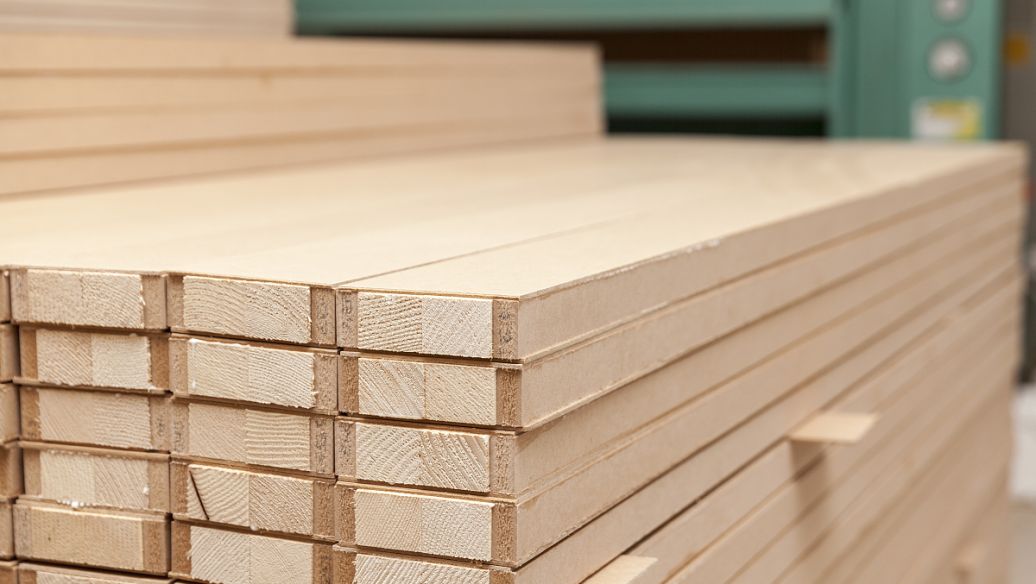
(1) Wood bonding
Usage: Triformaldehyde is a common ingredient in furniture manufacturing, mainly used for bonding wood, board, and artificial board. These boards include the main components of furniture such as cabinets, wardrobes, beds, tables, and chairs.
Function: As the main component of the adhesive, formaldehyde can provide strong bonding strength and ensure the stability of furniture structure. At the same time, it can also resist the erosion of moisture and dampness to a certain extent, extending the service life of furniture.
(2) Manufacturing of artificial boards
Usage: Triformaldehyde also plays an important role in the manufacturing of artificial boards such as particleboard and density board.
Function: Artificial boards are usually made by pressing wood fragments, sawdust, etc. with adhesive. As a part of the adhesive, formaldehyde helps to tightly bond these fragments to form a sturdy and flat board.

(3) Furniture surface treatment
Usage: In the surface treatment process of certain furniture, such as veneers, coatings, etc., resins or adhesives containing formaldehyde may also be used.
Function: These resins or adhesives can enhance the hardness and wear resistance of furniture surfaces, while also providing a certain aesthetic effect.
Application in Building Materials Manufacturing
(1) Composite flooring and artificial flooring
Usage: Many composite flooring and artificial flooring use formaldehyde as a binder.
Function: Triformaldehyde can ensure a tight bond between floor panels, improving the overall stability and durability of the floor. At the same time, it can also resist the erosion of moisture and dampness to a certain extent, preventing the floor from deforming or expanding.
(2) Building Decoration Materials
Usage: Triformaldehyde is used to manufacture many building decoration materials, such as plywood, veneer panels, partitions, decorative panels, etc.
Function: These decorative materials are usually used for building structures such as walls, ceilings, and floors. As a part of the adhesive or resin, formaldehyde can ensure the stability and durability of these materials. At the same time, it can also provide a certain aesthetic effect and enhance the overall decorative effect of the building.


(3) Building adhesive
Usage: Triformaldehyde is widely used as a building adhesive, such as tile adhesive, gypsum board adhesive, etc.
Function: These adhesives can ensure a tight bond between building materials and improve the overall structural stability of the building. At the same time, they can also resist certain moisture and moisture erosion, preventing building materials from being damaged by moisture.
(4) Architectural Coatings and Waterproof Materials
Usage: Resins or adhesives containing formaldehyde may also be used in the manufacturing process of certain building coatings and waterproofing materials.
Function: These coatings and waterproof materials can enhance the waterproof performance and durability of buildings. At the same time, they can also provide a certain aesthetic effect and enhance the overall appearance of the building.
Application of polyoxymethylene resin in furniture and building materials
Polyoxymethylene resin (POM) is a thermoplastic synthesized from raw materials such as formaldehyde trimer, which has excellent physical, mechanical, and chemical properties. In the field of furniture and building materials, the application of polyoxymethylene resin is also very extensive.
(1) Furniture manufacturing
Alternative metal components: Due to its high strength, wear resistance, and impact resistance, polyoxymethylene resin is often used to replace non-ferrous metal components in furniture, such as drawer slides, hinges, handles, etc. These components not only have the strength and durability of metal parts, but are also lighter in weight and easier to process and install.
Structural components: Polyoxymethylene resin can also be used to manufacture structural components of furniture, such as legs and frames of tables and chairs. These components can withstand large loads while maintaining stable shape and size.
Decorative components: In addition, polyoxymethylene resin can also be used to manufacture decorative components for furniture, such as inlay strips, lines, etc. These components are not only aesthetically pleasing, but also enhance the overall texture and grade of furniture.


(2) Building materials manufacturing
Door and window hardware: Polyoxymethylene resin is often used to manufacture door and window hardware, such as locks, handles, hinges, etc., due to its high strength and wear resistance. These hardware components not only have excellent durability, but are also easy to clean and maintain.
Pipeline system: Polyoxymethylene resin can also be used to manufacture pipeline systems in buildings, such as plumbing pipes, drainage pipes, etc. These pipeline systems have excellent chemical corrosion resistance and high temperature resistance, ensuring the normal use and safety of buildings.
Flooring and wall panels: Due to its excellent wear resistance and weather resistance, polyoxymethylene resin is also commonly used in the manufacturing of building materials such as flooring and wall panels. These materials are not only aesthetically pleasing, but also easy to clean and maintain, which can improve the overall decorative effect and service life of buildings.
Application of formaldehyde trimer in other related fields and its indirect impact on furniture and building materials
(1) Engineering plastic manufacturing
Usage: 1,3,5-Trioxane is one of the main raw materials for manufacturing engineering plastic polyoxymethylene (POM).
Function: Polyoxymethylene has excellent properties such as high strength, high rigidity, high wear resistance, impact resistance, and self-lubricating properties, and is widely used in fields such as automobiles, electronics, machinery, and instruments. In the field of furniture and building materials, polyoxymethylene can be used to manufacture various high-performance components and structural parts, such as sliding parts and connectors in furniture.


(2) Chemical synthesis
Usage: Triformaldehyde can also be used to prepare various chemicals such as anhydrous formaldehyde, stabilizers, smoke suppressants, insecticides, molding materials, binders, disinfectants, antibacterial drugs, etc.
Indirect impact: These chemicals are also widely used in the fields of furniture and building materials. For example, anhydrous formaldehyde can be used to manufacture various adhesives and coatings; Stabilizers can be used to improve the weather resistance and stability of building materials; Disinfectants can be used to clean and disinfect surfaces of furniture and building materials. Therefore, formaldehyde plays an important role in the synthesis of these chemicals, indirectly promoting the development of furniture and building materials.
(3) Environmental Protection and Sustainable Development
Environmental significance: With the continuous improvement of environmental awareness, people are paying more attention to the environmental performance and sustainability of furniture and building materials. As a renewable chemical raw material, the production and application process of formaldehyde meets the requirements of environmental protection and sustainable development. By adopting reasonable production and usage methods, pollution and damage to the environment can be reduced.
Indirect impact: In the field of furniture and building materials, the use of environmentally friendly materials and products containing formaldehyde can not only improve product quality and performance, but also reduce the impact on the environment. This helps promote the green and sustainable development of the furniture and building materials industry.


At present, in our country, trimeric formaldehyde is generally used as the main monomer, or 1,3,5-Trioxane is polymerized with a small amount of comonomer such as dioxane. There are two kinds of preparation methods: homopolymerization and copolymerization, and copolymerization is the main method in China. The preparation of trimeric formaldehyde is to concentrate 37% ~ 40% of Industrial formaldehyde to 60% ~ 70%. In the presence of catalyst (such as concentrated sulfuric acid), trimeric formaldehyde is synthesized at 100 ℃, and then crystallized and azeotropically fractionated to obtain anhydrous trimeric formaldehyde monomer.
Homopolymerization method:
Using boron trifluoride ether complex as catalyst, polymerize trimethyl formaldehyde at 55-60 ℃ to obtain solid powder polyformaldehyde, and then conduct esterification reaction with acetic anhydride vapor at 150-170 ℃ in the esterification kettle after boiling, washing and drying. Replace the hydroxyl groups at both ends of the polymer molecular chain with ester groups to improve its thermal stability, and then add antioxidants, ultraviolet absorbers and other additives to obtain the finished product through extrusion granulation.

Copolymerization method:
It can be divided into solvent method and bulk method.
① Solvent method:
Take gasoline, petroleum ether or cyclohexane as solvent, put trimethyl formaldehyde and dioxane (the amount is 2% ~ 5% of trimethyl formaldehyde) in the reaction kettle, raise the temperature to about 65 ℃, add catalyst, control the reaction to be stable at about 60 ℃ for 1 ~ 2H, and then use ammonia method, high alcohol method or melting method to destroy the residual catalyst and unstable polymer end groups, to obtain white powder product;
② Bulk method:
The solid polymer is obtained by polymerizing trimer formaldehyde, dioxane (2% ~ 5% of trimer formaldehyde) and catalyst in plate frame reactor or twin-screw reactor at 55 ~ 60 ℃. The products of bulk polymerization still need post-treatment, but do not need a large amount of solvent. The production process is simple and the operation is convenient. In particular, the use of twin-screw reactor is the future development direction.
The preparation method of glass fiber reinforced polyoxymethylene is basically the same as that of glass fiber reinforced polycarbonate.
FAQ
What is 1,3,5-trioxane used for?
As such it is used as a binder in textiles, wood products, etc. Trioxane is combined with hexamine and compressed into solid bars to make hexamine fuel tablets, used by the military and outdoorsmen as a cooking fuel. In the laboratory, trioxane is used as an anhydrous source of formaldehyde.
What is trioxane used for?
Trioxane is a crucial intermediate in the production of Polyoxymethylene (POM), a high-performance engineering plastic. POM is used in precision parts that require high stiffness, low friction, and excellent dimensional stability, such as gears, bearings, and fasteners.
What are trioxane tablets used for?
Answer: Trioxane Solid Fuel Tablets are designed for cooking and heating in outdoor settings. Their high energy output makes them suitable for use in camping stoves, emergency preparedness kits, and during power outages. The tablets ignite easily and burn steadily, providing an efficient fuel source.
Hot Tags: 1,3,5-trioxane cas 110-88-3, suppliers, manufacturers, factory, wholesale, buy, price, bulk, for sale, 5 Bromo m xylene CAS 556 96 7, Acetamide Powder, benzoyl peroxide powder, 4 Hydroxyacetophenone CAS 99 93 4, Pyrophosphoric Acid Powder CAS 2466 09 3, Sodium Cyanoborohydride Solution CAS 25895 60 7