



Shaanxi BLOOM Tech Co., Ltd. is one of the most experienced manufacturers and suppliers of trimellitic acid cas 528-44-9 in China. Welcome to wholesale bulk high quality trimellitic acid cas 528-44-9 for sale here from our factory. Good service and reasonable price are available.
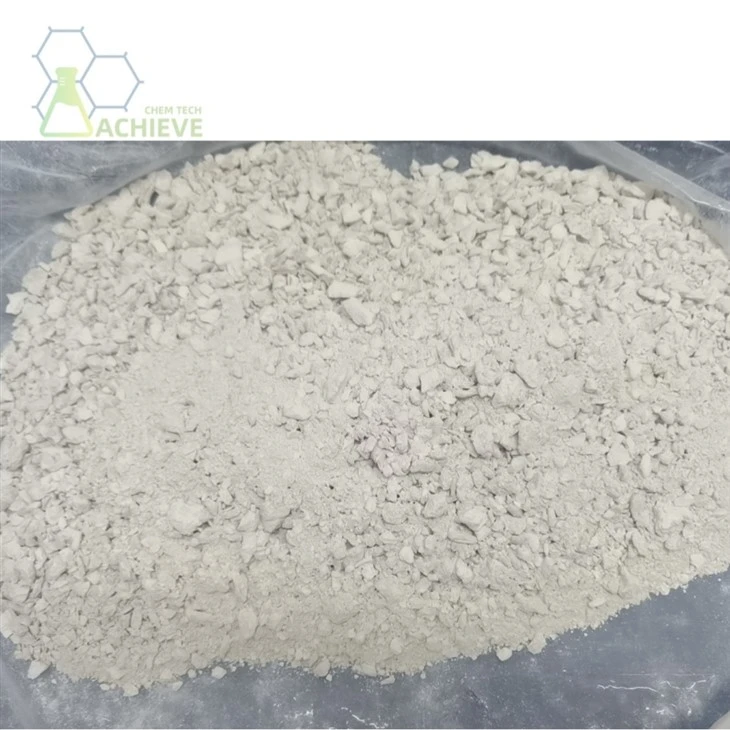
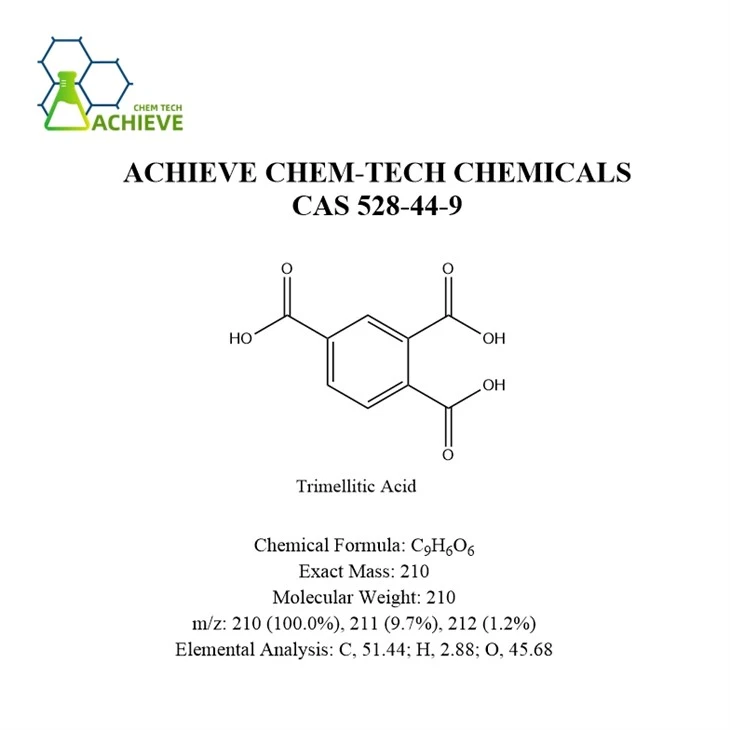
1,2,4-Benzoic acid, also known as trimellitic acid (rimelliticaci), 1,2,4-Benzenetricarboxylic acid, with the molecular formula C9H6O6, CAS 528-44-9, It is an important organic chemical, usually in the form of white crystals or white powders/large blocks. It is a substance that is difficult to dissolve in water, but its solubility is limited at a certain temperature. Specifically, at 25 ℃, the solubility of rimelliticaci in water is approximately 2.1g/100mL. This indicates that at room temperature, the solubility in water is relatively low, but under certain specific conditions (such as heating or adding cosolvents), its solubility may increase.
Compared to its solubility in water, it has better solubility in certain organic solvents. For example, rimelliticaci is easily soluble in ethanol and dimethylformamide, soluble in acetone, slightly soluble in ethyl acetate, but almost insoluble in benzene, chloroform, and carbon disulfide. This difference in solubility allows for effective dissolution and separation in chemical reactions and purification processes by selecting appropriate solvents.

|
Chemical Formula |
C9H6O6 |
|
Exact Mass |
210 |
|
Molecular Weight |
210 |
|
m/z |
210 (100.0%), 211 (9.7%), 212 (1.2%) |
|
Elemental Analysis |
C, 51.44; H, 2.88; O, 45.68 |
|
|
|


TMA, also known as trimellitic acid, is an important organic chemical. Its main applications are extensive, covering multiple industrial fields.

Rimelliticaci features three symmetric, highly reactive carboxyl groups within its molecular structure, coupled with a stable aromatic ring backbone. It can undergo diverse chemical reactions including esterification, dehydration polycondensation, coordination polymerization and modification crosslinking. As a core fundamental intermediate, rimelliticaci serves the sectors of fine chemicals, polymer materials, high-end coatings, electronics and electrical engineering, composite materials and cutting-edge advanced materials. Its derived chemical compounds exhibit outstanding heat resistance, electrical insulation, anti-migration performance, weather resistance and mechanical stability, which compensate for performance deficiencies of products made from conventional chemical feedstocks.
Compatible with multiple high-standard industries such as premium industrial manufacturing, eco-friendly new materials and precision electronics, rimelliticaci has become an indispensable key raw material in the modern fine chemical industrial chain by virtue of its unique structural advantages and versatile modification capacity. Its market application scenarios keep expanding, with steadily rising industrial value.


The preparation of high-temperature resistant premium plasticizers represents rimelliticaci's core and largest-volume application. Rimelliticaci reacts with polyols including octanol, isooctanol and butanol via esterification to synthesize a series of high-end plasticizers such as trioctyl trimellitate, triisooctyl trimellitate and tributyl trimellitate. Compared with conventional general-purpose phthalate plasticizers, trimellitate plasticizers possess a three-dimensional stereoscopic molecular structure with stronger crosslinking capacity, delivering prominent resistance to high temperature, volatilization, migration and extraction.
Meanwhile, they are non-toxic, odorless and environmentally compliant, fully meeting domestic and international environmental standards for high-end materials. Such plasticizers can raise the long-term service temperature of plastic products above 105 °C, far exceeding the temperature tolerance limit of ordinary plasticizers. They rarely volatilize, precipitate or leach under high-temperature, high-pressure and humid conditions, and sustain the flexibility and mechanical properties of plastic materials over long service cycles.


At present, they are widely adopted in high-temperature insulating sheaths for wires and cables, heat-resistant interior plastics for automobiles, plastic accessories surrounding engines, sterile medical plastic products, food-grade packaging films and plastic housings of premium home appliances.Within the wire and cable industry, they are dedicated plasticizers for high-temperature flame-retardant cables, aerospace wiring and high-voltage cables of new energy vehicles, effectively extending cable service life and improving operational safety. In civil plastic applications, they replace traditional toxic plasticizers and greatly elevate products' environmental grade and service stability.
For high-performance resins and industrial coatings, trimellitic acid acts as a core functional monomer for modified polyester resins, alkyd resins, powder coating resins and unsaturated polyester resins. Conventional resins suffer drawbacks including low crosslink density, weak adhesion, poor weather resistance and susceptibility to corrosion and aging. After introducing the tricarboxyl structure of rimelliticaci, the crosslink density of resin molecules is drastically increased, forming a compact and stable three-dimensional network upon curing. This significantly enhances the resins' mechanical strength, adhesion, corrosion resistance, UV resistance and thermal stability.


Alkyd resins modified with rimelliticaci yield paint films with high hardness, superior gloss and strong resistance to acid and alkali erosion. They function as key raw materials for heavy-duty industrial anti-corrosion coatings, steel bridge coatings, weather-resistant exterior architectural paints and topcoats for construction machinery. The resultant coatings can withstand long-term erosion from wind, rain, ultraviolet rays and chemical media, substantially prolonging the service life of equipment and buildings.Saturated polyester resins synthesized from rimelliticaci are suitable for manufacturing electrostatic spraying powder coatings.
They are solvent-free with zero volatile emissions and eco-friendly, featuring fast curing rates, uniform and full paint films free of pinhole defects. They are extensively used in coating processes for hardware furniture, home appliance housings, auto parts and precision machinery.Meanwhile, modified unsaturated polyester resins strike an excellent balance between rigidity and toughness with strong heat and wear resistance. They are applied to fabricating fiberglass anti-corrosion equipment, wind turbine blades, industrial molds and lightweight aerospace components, satisfying performance requirements for high-end equipment manufacturing.


In the industry of premium adhesives and sealing materials, rimelliticaci can be modified through polycondensation to produce high-performance hot-melt adhesives, epoxy structural adhesives, polyurethane sealants and high-temperature resistant anaerobic adhesives. Traditional general adhesives commonly suffer disadvantages such as easy debonding at high temperatures, poor weather resistance, insufficient bonding strength and vulnerability to aging and cracking.
Adhesives modified with rimelliticaci gain drastically improved molecular structural stability, endowed with powerful interfacial bonding force, high-temperature stability and resistance to medium corrosion. They maintain stable bonding performance across a wide temperature range from -40 °C to 180 °C, alongside excellent resistance to acids, alkalis, oil stains and humidity. Such premium adhesives are widely deployed in high-end scenarios including encapsulation of precision electronic components, bonding of new energy battery assemblies, lamination of automobile bodies and parts, splicing of high-grade building materials and sealing of aerospace components.


Furthermore, sealants prepared from rimelliticaci boast outstanding elasticity and sealing performance, applicable to waterproof sealing of industrial pipelines, pressure vessels and home appliances. They resolve the industry-wide challenges of high-temperature failure and aging leakage seen in conventional sealing materials, making rimelliticaci an important modification raw material for premium sealing products.
In the fields of cutting-edge new materials and fine chemicals, the application value of trimellitic acid is continuously explored and upgraded. As a typical multidentate aromatic organic ligand, rimelliticaci can coordinate with metal ions such as zirconium, hafnium, copper and zinc to construct metal-organic framework (MOF) materials characterized by stable structures, large specific surface areas and uniform pores. These novel functional materials exhibit excellent performance in gas adsorption, separation, catalysis and energy storage, holding broad application prospects in frontier sectors including carbon dioxide capture, industrial waste gas treatment, high-purity gas separation, organic synthesis catalysis, sustained drug release and energy storage materials.


They have become popular raw materials for current new material research and development. In fine chemical engineering, rimelliticaci serves as an intermediate to modify dyes, inks, water treatment additives and other products. By optimizing molecular structures, rimelliticaci improves dyes' color fastness, washing resistance and light fastness, enabling textile printing and dyeing products to retain stable color without fading easily.
Modified water treatment additives possess powerful chelating, dispersing and flocculating capacities, enabling efficient industrial wastewater treatment via adsorption of heavy metal ions and organic pollutants. In addition, rimelliticaci can synthesize insulating impregnating varnishes and high-temperature resistant insulating materials, widely applied in insulation protection for power transformers and high-voltage electrical equipment, further expanding its scope of industrial applications.


TMA, also known as rimelliticaci, is an important organic substance with unique chemical properties and a wide range of applications.
Rimelliticaci contains three carboxyl groups (- COOH) in its molecule, which gives rimelliticaci strong acidity. Carboxyl group is a typical functional group that can participate in various chemical reactions, such as esterification, acylation, and decarboxylation. These reactions provide broad application prospects for their synthesis of other organic substances and preparation of functional materials.
Due to the high reactivity of carboxyl groups in its molecular structure, rimelliticaci can undergo chemical reactions with various substances. For example, it can undergo esterification reaction with alcohol substances to generate corresponding ester substances; It can also undergo acylation reaction with amine substances to generate amide substances. These reactions not only enrich the chemical properties, but also provide more possibilities for their applications in organic synthesis and material preparation.
Has a certain degree of thermal stability under heating conditions. However, at high temperatures, rimelliticacimay undergo decomposition or decarboxylationreactions, producing corresponding acid anhydrides or carbon dioxide products. This thermal stability characteristic is of great significance for understanding its behavior under high temperature conditions and its application in the preparation of high-temperature materials.

Trimellitic acid is an important aromatic tricarboxylic acid. Its core industrial feedstock is pseudocumene (1,2,4-trimethylbenzene), and rimelliticaci is produced via controlled oxidation of the three methyl groups on the benzene ring. At present, mainstream synthetic processes fall into two categories: hydrogen nitrate oxidation and liquid-phase air catalytic oxidation, supplemented by laboratory-scale potassium permanganate oxidation.
All processes are based on the core reaction principle of stepwise oxidation of methyl groups into carboxyl groups. Among them, liquid-phase air catalytic oxidation has become the dominant industrial production process thanks to its environmental friendliness, high efficiency and low production costs.
Hydrogen nitrate oxidation is a traditional industrial process with mature technology and highly controllable reactions. This method adopts dilute nitric acid as the oxidant without additional catalysts, and the reaction proceeds in two stages.
In the first stage, the temperature is controlled at 180 °C under a pressure of 1.5–3.0 MPa; low-concentration hydrogen nitrate partially oxidizes the methyl groups of pseudocumene to generate intermediate products. In the second stage, the temperature is raised to 200 °C and the pressure is boosted to approximately 3.9 MPa to strengthen oxidation and fully convert the remaining methyl groups into carboxyl groups.
This process delivers high raw material conversion rates and stable product purity, yet it bears obvious drawbacks: the reaction generates massive nitrogen-containing wastewater and waste gas, causes severe equipment corrosion and incurs high environmental treatment costs. Currently, only a small number of outdated production lines still adopt this method, which is being gradually phased out and replaced by newer processes.
Liquid-phase air catalytic oxidation represents the prevailing green synthetic process today. Rimelliticaci uses air as the oxidant, a composite cobalt-manganese salt system as the catalyst, and acetic acid as the solvent to complete oxidation under mild operating conditions of 150–160 °C and 3.0–3.5 MPa.
Benefiting from the synergistic effect of composite catalysts, this process precisely regulates the oxidation rate of methyl groups to avoid overoxidation or incomplete oxidation, thereby drastically boosting raw material utilization.
Compared with hydrogen nitrateoxidation, it produces no nitrogen-containing pollutants, triggers milder equipment corrosion, imposes lower pressure on three-waste treatment, and features lower reaction energy consumption and controllable manufacturing costs. After the reaction, high-purity rimelliticaci with purity exceeding 99% can be obtained through cooling crystallization, filtration and recrystallization purification.
The laboratory potassium permanganate oxidation method operates under mild conditions with simple operation, yet rimelliticaci suffers from extremely high oxidant costs and low product yields. Rimelliticaci is only suitable for small-batch laboratory preparation and cannot be scaled up for industrial mass production. Overall, the optimization and upgrading of catalytic oxidation processes constitute the core guarantee for efficient and eco-friendly production of rimelliticaci.
FAQ
What is TMA used for?
TMA is an acid anhydride widely utilized in factories to produce paints, varnishes, and plastics.
What is TMA?
TMA, also known as benzene-1,3,5-tricarboxylic acid, is an organic compound with the formula C6H3(CO2H)3. It is one of three isomers of benzenetricarboxylic acid. A colorless solid, trimesic acid has some commercial value as a precursor to some plasticizers.
What is the structure of trimellitic acid?
Trimellitic acid (benzene-1,2,4-tricarboxylic acid) is a chemical compound with the molecular formula C6H3(СООН)3. Like the other isomers of benzenetricarboxylic acid, trimellitic acid is a colorless solid. It is prepared by oxidation of 1,2,4-trimethylbenzene.
What are the applications of TMA?
In particular, TMA is used in the production of polyester resins for coatings, composites, and films. These materials offer high strength, excellent heat resistance, and chemical stability, making them ideal for demanding applications in automotive, aerospace, and electronics industries.
Hot Tags: trimellitic acid cas 528-44-9, suppliers, manufacturers, factory, wholesale, buy, price, bulk, for sale, 1 3 Dibromopropane, 4 4 Methylenedianiline, 2 ETHYLHEXYL STEARATE, terephthalic acid powder, cmit isothiazolinone, Hydroxylamine hydrochloride powder