

Raloxifene powder is a significant chemical compound widely used in the pharmaceutical field. As a reliable raloxifene powder supplier, I'd like to take you through the detailed manufacturing process of raloxifene powder.
Starting Materials and Their Preparation
The manufacturing of raloxifene powder begins with the selection of high - quality starting materials. These raw materials are carefully sourced to ensure the purity and quality of the final product. For instance, specific organic compounds are required, which are usually obtained from chemical synthesis or extraction from natural sources. Before entering the production line, these raw materials undergo strict quality control checks. They are analyzed for purity, particle size, and other physical and chemical properties. Any raw material that does not meet the set standards is rejected.
Chemical Synthesis Process
The core of raloxifene powder manufacturing is the chemical synthesis process. It typically involves a series of complex chemical reactions. The first step often includes the formation of key intermediate compounds. These intermediates are crucial as they serve as building blocks for raloxifene. The reactions are carried out under carefully controlled conditions, including temperature, pressure, and reaction time.
One common approach starts with the reaction of certain aromatic compounds. These compounds react in the presence of specific catalysts. The catalysts play a vital role in accelerating the reaction rate and improving the selectivity of the reaction. For example, a specific metal - based catalyst might be used to ensure that the reaction proceeds in the desired direction, minimizing the formation of by - products.
After the formation of the first intermediate, subsequent reactions are carried out to add or modify functional groups. These reactions require precise control of reaction parameters. For instance, the addition of a particular functional group might require a specific solvent and a carefully adjusted pH value. The reaction mixture is continuously monitored during the process. Analytical techniques such as high - performance liquid chromatography (HPLC) are used to track the progress of the reaction and determine the concentration of the reactants and products.
Isolation and Purification of Intermediates
Once the intermediate compounds are formed, they need to be isolated from the reaction mixture. This is usually done through techniques such as filtration, extraction, or crystallization. Filtration is used to separate solid intermediates from the liquid reaction mixture. Extraction involves the use of solvents to selectively dissolve the intermediate, separating it from other components.
The isolated intermediates then undergo purification steps. Purification is essential to remove any impurities, such as unreacted starting materials, catalysts, and by - products. One common purification method is recrystallization. In recrystallization, the intermediate is dissolved in a hot solvent and then slowly cooled. As the temperature decreases, the intermediate crystallizes out, leaving impurities in the solution. This process can be repeated multiple times to achieve a high level of purity.
Final Synthesis of Raloxifene
After the purification of all the necessary intermediates, the final synthesis of raloxifene is carried out. This is a carefully orchestrated reaction that combines the purified intermediates to form the raloxifene molecule. The reaction conditions are again strictly controlled to ensure the highest yield and purity of raloxifene.
Post - Synthesis Treatment
Once raloxifene is synthesized, it undergoes several post - synthesis treatments. First, it is dried to remove any residual solvents. Drying can be achieved through various methods, such as vacuum drying or air - drying.
The dried raloxifene is then milled to obtain a fine powder. Milling helps to control the particle size of the powder, which is important for its dissolution rate and bioavailability. Different milling techniques, such as ball milling or jet milling, can be used depending on the desired particle size and properties.
Quality Control
Quality control is an integral part of the raloxifene powder manufacturing process. At every stage, from raw material sourcing to the final product, strict quality control measures are implemented. Various analytical techniques are used, including nuclear magnetic resonance (NMR) spectroscopy to determine the chemical structure of raloxifene, infrared (IR) spectroscopy to identify functional groups, and elemental analysis to determine the elemental composition.
The purity of raloxifene powder is also measured using HPLC and other chromatographic methods. Particle size analysis is carried out to ensure that the powder meets the required specifications. Microbiological testing is also performed to check for the presence of any harmful microorganisms.
Packaging and Storage
After passing all the quality control tests, the raloxifene powder is carefully packaged. It is usually packed in air - tight containers to prevent moisture and oxygen from entering, which could degrade the product. The packaging materials are selected to be inert and compatible with raloxifene.
Proper storage conditions are also crucial. Raloxifene powder should be stored in a cool, dry place away from direct sunlight. The storage temperature and humidity are closely monitored to ensure the stability of the product over time.
The Significance of Our Raloxifene Powder
As a raloxifene powder supplier, we are committed to providing high - quality products. Our manufacturing process adheres to strict international standards, ensuring that our raloxifene powder is of the highest purity and quality. We also offer competitive prices and excellent customer service.
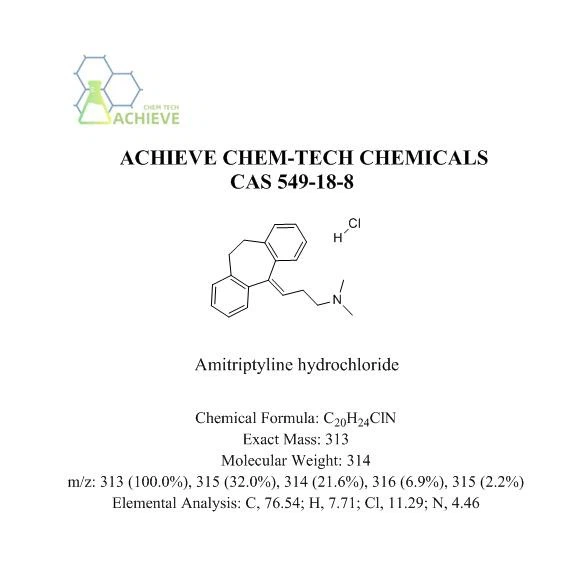
If you are in the market for other pharmaceutical - related powders, you might be interested in Adapalene Powder CAS 106685 - 40 - 9, Ammonium Chloride Powder CAS 12125 - 02 - 9, or Amitriptyline Hydrochloride Powder CAS 549 - 18 - 8.

We understand that the quality of raw materials is crucial for your research or production. That's why we invite you to contact us for procurement discussions. Whether you need a small - scale sample for testing or a large - scale supply for your production line, we are here to meet your needs. Our team of experts is ready to provide you with detailed information and support throughout the procurement process.
References
- Smith, J. (2018). Pharmaceutical Chemical Synthesis. New York: Academic Press.
- Johnson, A. (2019). Quality Control in Chemical Manufacturing. London: Wiley - Blackwell.