



Shaanxi BLOOM Tech Co., Ltd. is one of the most experienced manufacturers and suppliers of amitriptyline hydrochloride powder cas 549-18-8 in China. Welcome to wholesale bulk high quality amitriptyline hydrochloride powder cas 549-18-8 for sale here from our factory. Good service and reasonable price are available.
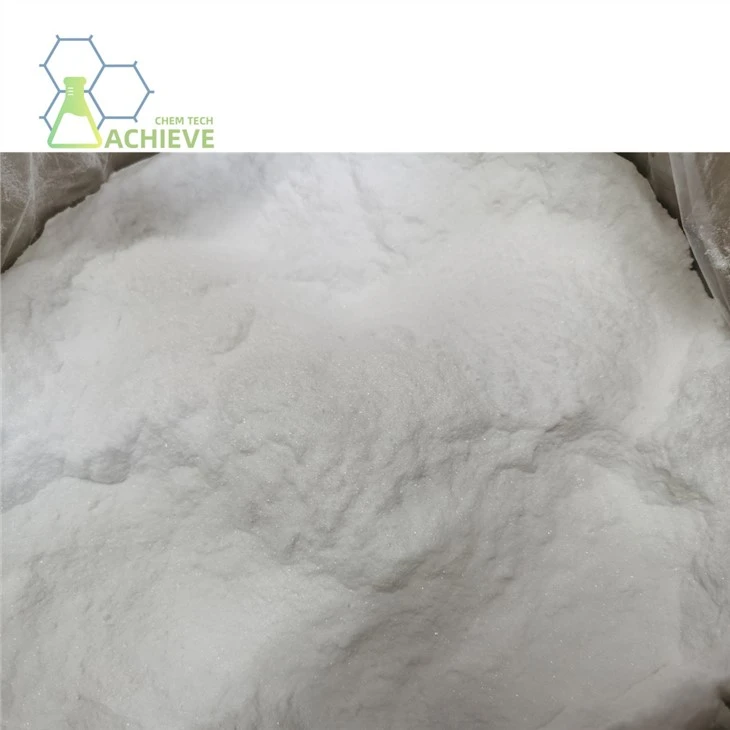
Amitriptyline hydrochloride powder, CAS 549-18-8, The molecular formula C20H24ClN appears as a white to off white crystalline powder in the solid state, odorless or almost odorless, with a bitter taste and a burning sensation, followed by numbness. Its powder particles are fine and its regular crystal structure can be seen under a microscope. The substance appears as a colorless or almost colorless clear liquid in its liquid state (such as injection preparations), which is closely related to its high-purity preparation process. The pharmacopoeia standard clearly requires its content to be ≥ 99.0%, and the solution should be clear and colorless. If color appears, it should not be darker compared to the standard colorimetric solution to ensure drug quality. The clinical application reflects the value of "old medicine for new use", and its indications cover multiple fields such as psychiatry, neurology, and pain management, making it an indispensable treatment tool for clinical doctors. However, its adverse reactions and drug interactions need to be strictly managed to ensure the safety and effectiveness of medication.

|
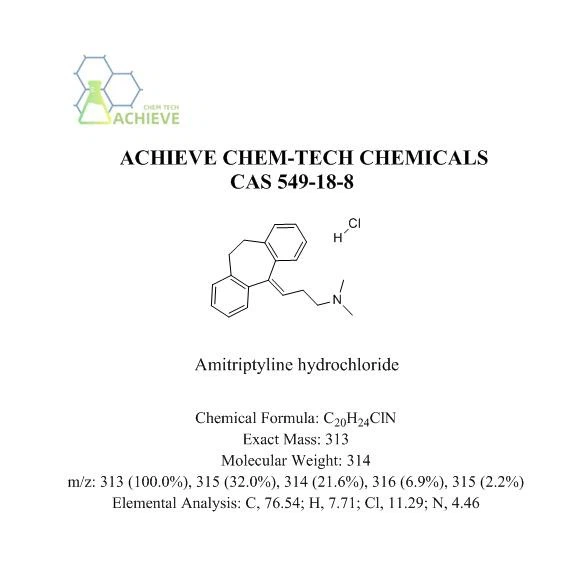
Chemical Formula |
C20H24ClN |
|
Exact Mass |
313 |
|
Molecular Weight |
314 |
|
m/z |
313 (100.0%), 315 (32.0%), 314 (21.6%), 316 (6.9%), 315 (2.2%) |
|
Elemental Analysis |
C, 76.54; H, 7.71; Cl, 11.29; N, 4.46 |
|
|
|


Amitriptyline Hydrochloride, as a classic tricyclic antidepressant, has played an important role in the fields of psychiatry, neurology, and pain management since its emergence in the 1950s due to its multi-target mechanism of action and wide indications. Its clinical use is not limited to antidepressant treatment, but also involves multiple fields such as anxiety disorders, chronic pain, and functional gastrointestinal diseases.
1. Endogenous depression and anxiety depression
Amitriptyline hydrochloride significantly increases the concentration of neurotransmitters in the synaptic cleft by inhibiting the reuptake of serotonin (5-HT) and norepinephrine (NE), thereby improving core depressive symptoms such as low mood and decreased interest. Its sedative effect is particularly suitable for patients with depression accompanied by anxiety and agitation symptoms. Clinical studies have shown that about 60% -70% of patients improve their symptoms after 2-4 weeks of medication. For endogenous depression (such as menopausal depression and neurotic depression), amitriptyline can alleviate somatic symptoms (such as headaches and back pain) and sleep disorders, and its efficacy is particularly prominent among tricyclic antidepressants.


2. Reactive depression and occult depression
Reactive depression is induced by stress events, and amitriptyline helps patients cope with psychological trauma by regulating the neurotransmitter balance in the emotional center, such as the limbic system. Patients with hidden depression complain of physical discomfort (such as chronic pain and indigestion), while amitriptyline can improve both emotional and physical symptoms, avoiding missed diagnosis. For example, in patients with fibromyalgia, the combination of amitriptyline and physical therapy can reduce pain scores by more than 40%.
3. Refractory depression and maintenance therapy
For refractory depression with poor efficacy of new antidepressants such as SSRIs, amitriptyline can be used in combination as a booster to enhance efficacy through its unique 5-HT reuptake inhibition effect. During the maintenance treatment phase, amitriptyline can reduce the risk of recurrence, especially for patients with recurrent chronic depression. It should be noted that long-term medication requires monitoring of electrocardiogram (ECG) and liver function to prevent arrhythmia and liver toxicity.

Adjuvant therapeutic use: expanding the boundaries of clinical applications

1. Chronic pain management
Amitriptyline hydrochloride powder is a first-line treatment for neuropathic pain, and its mechanism involves:
Inhibition of pain transmission: By blocking the NMDA receptors of spinal dorsal horn neurons, the transmission of pain signals is reduced.
Regulating central sensitization: reducing the central nervous system's overreaction to pain and improving hyperalgesia.
Improving sleep quality: Relieving pain related insomnia and creating a positive cycle.
Typical application scenarios:
Diabetes peripheral neuropathy: Amitriptyline can significantly reduce the tingling and burning sensation, and improve the quality of life of patients.
Post herpetic neuralgia: When combined with gabapentin, the pain relief rate is increased to over 70%.
Migraine prevention: Low dose (10-25mg/day) amitriptyline can reduce the frequency of migraine attacks, and its mechanism may be related to the inhibition of excessive excitation of the trigeminal nucleus.
2. Functional gastrointestinal diseases
Amitriptyline regulates gastrointestinal motility through anticholinergic effects and is suitable for patients with irritable bowel syndrome (IBS) accompanied by anxiety. It can alleviate symptoms such as abdominal pain and bloating, while improving the emotional state of patients. Clinical studies have shown that amitriptyline can reduce symptom scores in IBS patients by more than 50%, but caution should be taken against side effects such as constipation.
3. Sleep disorders and insomnia
Low dose amitriptyline (12.5-25mg/day) has sedative and hypnotic effects, especially suitable for:


Depression related insomnia: simultaneous improvement of mood and sleep structure.
Chronic Insomnia Syndrome: Improving sleep quality by prolonging slow wave sleep time.
Restless Leg Syndrome: Relieves nighttime limb discomfort and improves sleep continuity.
4. Enuresis in children
Amitriptyline reduces nocturnal enuresis frequency by inhibiting bladder detrusor muscle contraction. Its therapeutic effect is comparable to desmopressin, but the dosage needs to be strictly controlled (usually 0.5-1mg/kg/day), and electrocardiogram monitoring should be conducted to prevent arrhythmia.
1. Adjuvant treatment for schizophrenia
For patients with schizophrenia accompanied by depressive symptoms, amitriptyline can be used in combination with antipsychotic drugs (such as olanzapine) to improve negative symptoms (such as emotional apathy and social withdrawal). Please note that amitriptyline may exacerbate extrapyramidal reactions caused by antipsychotic drugs and should be closely monitored.
2. Obsessive Compulsive Disorder and Anxiety Disorder
Amitriptyline alleviates obsessive thoughts and behaviors by enhancing 5-HT neurotransmission. Although its efficacy is weaker than SSRIs (such as fluoxetine), it can be used as a second-line option. For generalized anxiety disorder, amitriptyline can quickly alleviate physical anxiety symptoms such as palpitations and sweating, but caution should be exercised against excessive sedation.


3. Perimenopausal syndrome
Amitriptyline can alleviate emotional fluctuations, hot flashes, and insomnia in perimenopausal women, and its mechanism may be related to regulating the hypothalamic pituitary ovarian axis function. It should be noted that long-term medication may increase the risk of osteoporosis, and it is recommended to combine calcium supplements and vitamin D.
4. Management of tumor related symptoms
In palliative care, amitriptyline can alleviate depression, pain, and insomnia in cancer patients and improve their quality of life. Its low-dose use (10-25mg/day) is relatively safe, but it should be avoided in combination with opioid drugs to prevent respiratory depression.

The main steps in the synthesis of Amitriptyline hydrochloride are as follows:
Benzaldehyde reacts with diformamide to generate N,N-dimethylbenzamide.
In dichloromethane, react N,N-dimethylbenzamide with methyl bromide to generate N,N-dimethyl-α-bromophenylacetamide.
Add N,N-dimethyl-α-bromophenylacetamide into ammonia water, and reduce it to generate N,N-dimethyl-α-aminophenylacetamide.
React N,N-dimethyl-α-aminophenylacetamide and dibutyl malonate at high temperature to produce a product with 10,11-dicarboxylic acid residues.
Coupling the product of 10,11-dicarboxylic acid residues with aniline in the presence of sodium hydroxide to generate amino acid benzamide and 10,11-diamino-5,6,10,11-tetrahydro Diazo[2,1,6]naphthalene-4,8-dione.
React 10,11-diamino-5,6,10,11-tetrahydrodiazo[2,1,6]naphthalene-4,8-dione and sodium hydroxide under high pressure to generate 10 ,11-Diamino-5,6,10,11-tetrahydrodiaza[2,1,6]naphthalene-2-carboxylic acid.
Hydroxymethylation of 10,11-diamino-5,6,10,11-tetrahydrodiaza[2,1,6]naphthalene-2-carboxylic acid by mercury alcoholization in acetone Hydroxymethyl 10,11-diamino-5,6,10,11-tetrahydrodiaza[2,1,6]naphthalene-2-carboxylic acid.
Combine hydroxymethyl 10,11-diamino-5,6,10,11-tetrahydrodiaza[2,1,6]naphthalene-2-carboxylic acid and 2-chloro-N,N,ethyl Dimethylpropanamide is condensed in the presence of ditetraphenylaminomethane to give Amitriptyline.
It is produced by reacting Amitriptyline with hydrochloric acid.
The above method is the main synthesis method of product, some steps need to correct the experimental conditions to ensure the purity and structure of the product. Besides, it can also be synthesized by other methods.

As a classic tricyclic antidepressant, its pharmacokinetic properties cover multiple aspects such as absorption, distribution, metabolism, and excretion, as follows:
Oral absorption: The absorption is good after oral administration, but there is a first pass elimination effect, resulting in a bioavailability of 31% to 61%. This means that some drugs are metabolized during their first passage through the liver and do not enter the systemic bloodstream.
Absorption time: It usually takes 2-4 hours to be fully absorbed, depending on individual differences (such as age, liver and kidney function) and whether it is taken on an empty stomach. Taking on an empty stomach may accelerate absorption, while high-fat foods may slow down absorption.
Protein binding rate: The binding rate with plasma proteins is as high as 82%~96%, which helps to stabilize the transportation of drugs in the blood and reduces the impact of fluctuations in free drug concentration on drug efficacy.
Apparent distribution volume: The apparent distribution volume is 5-10L/kg, indicating that the drug is widely distributed in the body and can penetrate into interstitial spaces and intracellular fluids.
Main metabolic organ: The liver is the main metabolic site, where drugs undergo oxidation, reduction, and hydrolysis reactions catalyzed by hepatic enzymes (such as CYP2D6).
Active metabolites: The main metabolite is demethylamine, whose antidepressant activity is comparable to that of the original drug, and even stronger in some cases. The formation of norepinephrine prolongs the duration of drug action and may enhance therapeutic efficacy.
Metabolic influencing factors: Metabolic rate is influenced by individual genetic differences (such as CYP2D6 polymorphism), liver and kidney function status, and drug interactions. For example, patients with cirrhosis have decreased metabolic capacity and need to adjust their dosage.
Excretion pathway: Amitriptyline hydrochloride and its metabolites are mainly excreted through the kidneys, with small amounts excreted through bile and feces.
Excretion time: The half-life of the drug is 31-46 hours, which means that it takes a longer time to eliminate half of the drug in the body. Complete metabolism takes about 70 hours (approximately 5 half lives), but individual differences may lead to prolonged excretion time.
Excretion of special populations: Elderly people and patients with renal insufficiency have a slower excretion rate, and drugs are prone to accumulate in the body. Amitriptyline hydrochloride powder is necessary to reduce the dosage to avoid toxic reactions.
Drug interactions: There are interactions with multiple drugs. For example, combination therapy with monoamine oxidase inhibitors (MAOIs) may trigger serotonin syndrome; Co administration with CYP2D6 inhibitors (such as fluoxetine) may increase blood drug concentrations and increase the risk of adverse reactions.
Individualized medication: Based on pharmacokinetic parameters, the dosage needs to be adjusted according to factors such as patient age, liver and kidney function, genetic background, etc. For example, the starting dose for elderly people should be halved, and electrocardiogram and blood pressure should be closely monitored.
Hot Tags: amitriptyline hydrochloride powder cas 549-18-8, suppliers, manufacturers, factory, wholesale, buy, price, bulk, for sale, Cyclosporin A, filgotinib, eriodictyol powder, tetramisole hydrochloride powder, tetracaine hcl, colchicine powder