




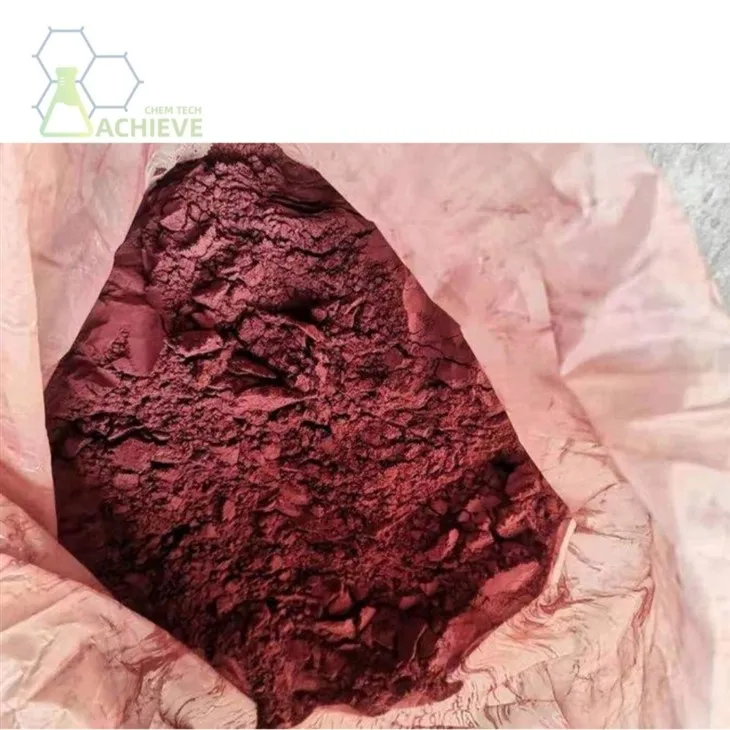

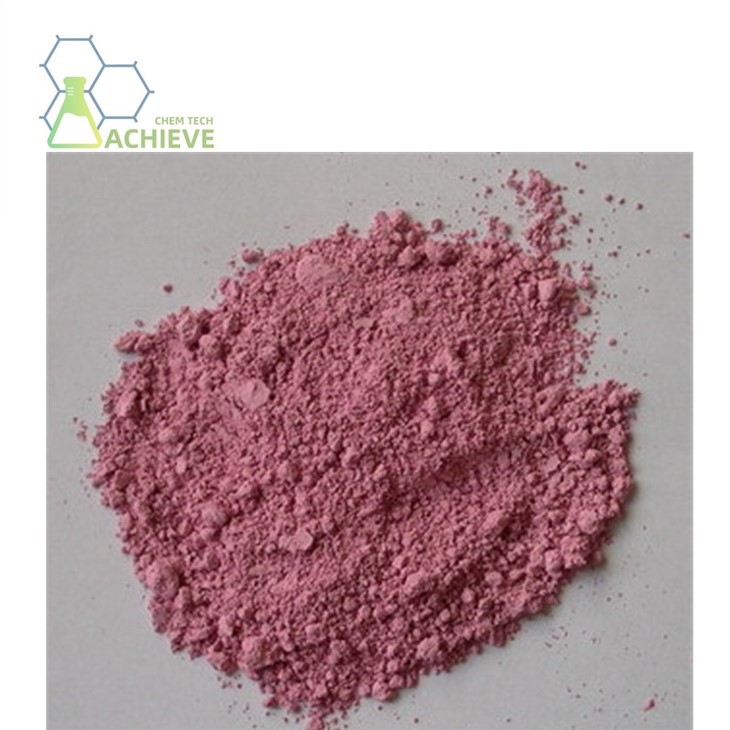
Shaanxi BLOOM Tech Co., Ltd. is one of the most experienced manufacturers and suppliers of acid red 51 cas 568-63-8 in China. Welcome to wholesale bulk high quality acid red 51 cas 568-63-8 for sale here from our factory. Good service and reasonable price are available.
Acid Red 51, molecular formula C20H6I4Na2O5, CAS 568-63-8, is a type of artificially synthesized pigment. It is a red or reddish brown particle or powder with bright color and good coloring power. Good stability, low cost, commonly used in food processing products and beverages to enhance their sensory properties. According to Chinese GB 17512.1-2010, the usage limit is less than 0.05 g/Kg. A large number of manufacturers misuse synthetic pigments in order to change the appearance of their products and attract consumers to purchase, which poses a threat to consumers. Red moss red is a reddish brown particle or powder substance, odorless, easily soluble in water. The aqueous solution is red, with good resistance to oxygen, heat, and redox agents, strong dyeing force, but poor acid and light resistance, poor moisture absorption. Under pH<4.5, insoluble yellow brown precipitates are formed, and red precipitates are produced when alkaline. It is not easily absorbed in the digestive tract and does not participate in metabolism even if absorbed, so it is considered a safe synthetic pigment. Mainly used for beverages, preparing alcohol and candies, baked goods, etc. This product can be used alone or in combination with other food pigments for pastries; Agricultural and aquatic products (cherry, fish cake, needle brocade Babao Pickled vegetables) and other foods. The hygiene standard for the use of food additives in China (GB2760-86) stipulates that the maximum amount of crimson used in food is 0.05g/kg. In addition, the product is also used as a pigment in drugs and cosmetics. The oral LD50 of rats is 1900mg/kg, and according to the regulations of the Food and Agriculture Organization of the United Nations and the World Health Organization, the daily allowable intake (ADI) for humans is 0-1.25mg/kg.

|
|
|


|
Chemical Formula |
C20H18BrN3 |
|
Exact Mass |
379 |
|
Molecular Weight |
380 |
|
m/z |
379 (100.0%), 381 (97.3%), 382 (21.0%), 380 (16.2%), 380 (5.4%), 383 (1.2%), 380 (1.1%), 382 (1.1%), 381 (1.1%), 381 (1.0%) |
|
Elemental Analysis |
C, 63.17; H, 4.77; Br, 21.01; N, 11.05 |

Content determination:
The determination methods for the content of Acid Red 51 include gravimetric method, spectrophotometry, high-performance liquid chromatography, oscillopolarography, and surface enhanced Raman spectroscopy.
Weight method (arbitration method)
After the sample is dissolved, it is diluted, acidified, boiled, and filtered by constant weight before being weighed and calculated.
Hydrochloric acid solution: 1+49; 1+199; Instrument and equipment: G4 glass sand crucible shaped filter.
Weigh approximately 2.5g of the sample (accurate to 0.0001g), place it in a beaker, dissolve it in water, transfer it to a 250mL volumetric flask, dilute to the mark, and shake well. Take 50mL of the solution and place it in a 250mL beaker. Heat it to boiling, then add 20 mL of hydrochloric acid solution (1+49) and boil it again. Rinse the inner wall of the beaker with 5 mL of water, cover the surface dish, heat it on a boiling water bath for about 5 hours, cool it to room temperature, bake it to a constant amount at 135 ℃± 2 ℃, and cool the weighed G4 glass sand core crucible. Filter the precipitate. Rinse with 15mL hydrochloric acid solution (1+199) each time, wash twice, then rinse again with 15mL water. Bake the precipitate and G4 glass sand core crucible in a constant temperature drying oven at 135 ℃± 2 ℃ to a constant amount, cool in the dryer for 30 minutes, and weigh.
Spectrophotometric colorimetric method
Dissolve the sample and the standard sample with known content in water, measure their absorbance at the maximum absorption wavelength, and then calculate the content of the sample.
Ammonium acetate solution; Red moss red standard sample (content ≥ 85.0%); Spectrophotometer; Color comparison dish: 10mm.
Preparation of Red Moss Red Standard Sample Solution: Weigh approximately 0.25g (accurate to 0.0001g) of Red Moss Red Standard Sample, dissolve it in an appropriate amount of water, transfer it to a 1000mL brown volumetric flask, dilute with water to the mark, and shake well. Accurately aspirate 10 mL and transfer it into a 500 mL brown volumetric flask. Dilute with ammonium acetate solution to the mark and shake well.
Preparation of Red Moss Red Sample Solution: Weighing and operating methods are the same as the preparation of standard sample solution.
Place the Acid Red 51 standard solution and the red moss red sample solution in 10mm colorimetric dishes respectively, and measure their absorbance values using a spectrophotometer at the maximum absorption wavelength. Use ammonium acetate solution as the reference solution.
High performance liquid chromatography
The synthetic colorants in food are extracted by polyamide adsorption method or liquid-liquid distribution method, and then made into aqueous solutions. They are injected into a high-performance liquid chromatograph and separated by reverse phase chromatography. Qualitative analysis is carried out based on retention time and quantitative analysis is compared with peak area.
The minimum detection amount of synthetic colorants in food using high-performance liquid chromatography is 18ng. When the sample injection amount is 0.025g, the minimum detection concentration is 0.20.72mg/kg.
Put the prepared sample solution into a separating funnel, add 2 mL of hydrochloric acid and 10~20mL of tri-n-octylamine n-butanol solution (5%), shake and extract thoroughly, let it stand and separate the organic phase. Repeat the extraction 2-3 times, 10mL each time, until the organic phase is colorless. Combine the organic phases, wash twice with saturated sodium sulfate solution, 10mL each time, separate the organic phase, and place it in an evaporating dish. Heat and concentrate it in a water bath to 10mL, transfer it to the separating funnel, add 60mL of n-hexane, mix well, and extract 2-3 times with ammonia solution, 5mL each time. Combine the layers of ammonia solution (water-soluble acidic pigment), wash with n-hexane for 2 times. Three times, divide the ammonia water layer and add acetic acid to make it neutral. Heat and evaporate in a water bath until almost dry, and add water to make up to 5mL. Filter through a filter membrane (0.45 μ m) and take 10 μ L to enter the high-performance liquid chromatograph.
Reference conditions for high-performance liquid chromatography analysis
① Chromatographic column: YWG-Cl8, 10 μ m stainless steel column, 4.6mm x 250mm.
② Mobile phase: Methanol ammonium acetate solution (0.02 mol/L) (pH 4).
③ Gradient elution: elute with methanol at a concentration of 20% to 35% for 5 minutes; Use methanol with a concentration of 35% to 98% for 5 minutes; Wash with methanol at a concentration of 98% for another 6 minutes.
④ Flow rate: 1mL/min.
⑤ UV detector with a wavelength of 254nm.
Take the same volume of sample solution and synthetic colorant standard solution and inject them into the high-performance liquid chromatograph separately. Qualitative analysis is performed based on retention time, and quantitative analysis is performed using the external standard peak area method.
Oscillographic Polarography
JP-303 Oscillographic Polarograph Chengdu Instrument Factory; Three electrode system with dropwise mercury electrode, saturated calomel telegraphy, platinum electrode; Bottom solution: 0.25 tool/L sodium acetate -140 mol/L hexanoic acid (pH 3.6) buffer solution; Hydrochloric acid, tri-n-octylamine, n-butanol, n-hexane, hexanoic acid; Saturated sodium sulfate solution; Ammonia solution (2+98); Red moss red standard solution (1 n~nlL).
Polarographic conditions: Take an appropriate amount of 0.10 1.00mL of the above sample extraction solution and transfer it to a 10 mL colorimetric tube with a stopper. Add the base solution to 100 mL, mix well, and pour it into an electrolytic cell for measurement. Three electrode system, cathode second derivative scanning. The initial potential is 350 mv, and the height of the polarographic derivative wave is recorded at 570] TIr~r.
Standard curve preparation: Take red moss standard solutions of 0.00, 0.50, 1.0o, 250, 5.0o, 10.0, 20.0, and 500 μ g into a 10 mL colorimetric tube for measurement.
Surface enhanced Raman spectroscopy
Method Summary
Theoretical Raman calculations were performed using density functional theory (DFT) to optimize the configuration of erythrin molecules at the B3LYP/6-31G (d) level. The experimental Raman spectra of erythrin showed good correspondence with theoretical Raman calculations. Using gold nanoparticles as a surface enhanced Raman substrate, the detection conditions were optimized based on the volume ratio of erythrin to gold gel, solution pH, and mixing time. When the mixing volume ratio was 1:1, pH was 5, and mixing time was 10 minutes, the detection limit of erythrin solution could reach 1 μ g/mL. The research results have shown that surface enhanced Raman spectroscopy with gold gel as the enhancing substrate can quickly and accurately identify erythrin, providing a basis for the future detection of erythrin in conventional food samples.

Inspection rules:
1. Food additive erythrin should be inspected by the Acid Red 51 quality inspection department of the production unit. The production unit should ensure that the quality of all food additives erythrin produced from the factory meets the requirements of this standard and has a quality certificate in a certain format.
2. The using unit may inspect the quality of the received food additive erythrin according to the inspection rules and test methods specified in this standard, and check whether its quality indicators meet the requirements of this standard.
3. The food additive erythrin is produced in batches of one batch.
4. Sampling should be taken from 10% of the total number of packaging boxes (10 x 0.5kg per box) in each batch of products, and then 10% of bottles should be selected from the selected boxes. From the selected bottles, at the center of each bottle, no less than 50g of the sample should be taken. When sampling, care should be taken not to let external impurities fall into the product. After quickly mixing the sampled products, about 100g should be taken from them, and placed in two clean and dry ground glass bottles, sealed with paraffin, indicating the name of the manufacturer, product name, batch number, and production date. One bottle for inspection and one bottle for storage.
5. If one indicator in the inspection does not meet the requirements of this standard, a sample should be selected from twice the quantity of packaging for retesting. If there is still one indicator that does not meet the requirements of this standard in the retest result, the entire batch of products cannot be accepted.
Hot Tags: acid red 51 cas 568-63-8, suppliers, manufacturers, factory, wholesale, buy, price, bulk, for sale, Sodium Thiosulfate Pentahydrate CAS 10102 17 7, praseodymium powder, Cyclohexylboronic acid, Atropic acid, 3 5 Dichlorophenylboronic acid, Iridium III chloride