


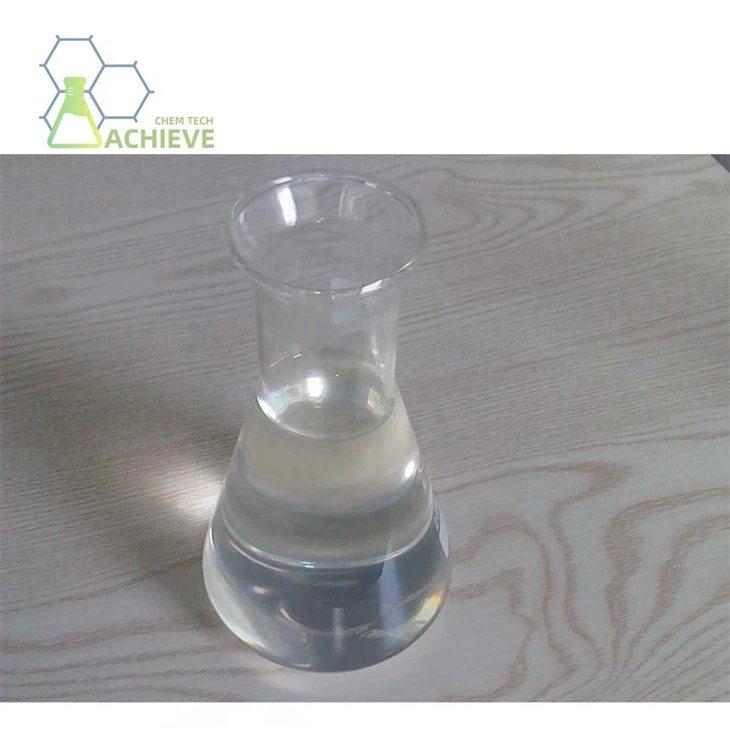
Shaanxi BLOOM Tech Co., Ltd. is one of the most experienced manufacturers and suppliers of chloromethyl chlorosulfate cas 49715-04-0 in China. Welcome to wholesale bulk high quality chloromethyl chlorosulfate cas 49715-04-0 for sale here from our factory. Good service and reasonable price are available.
Chloromethyl chlorosulfate is an organic compound with the molecular formula CH2CL2O3S, which combines the properties of chloromethyl and chlorosulfonate esters with unique chemical properties and applications. Which belongs to the class of chlorosulfonate esters, which is a class of organic synthetic intermediates with a wide range of uses. It has a sulfur atom attached to two oxygen atoms, one of which has a chlorine atom attached to it, and the other oxygen atom is attached to an organic group.
Because of its unique structure, it is used as a reagent for chloromethylation or sulfonate esterification in organic synthesis. It can be used to introduce chloromethyl groups into organic molecules, thereby altering the chemical properties and reactivity of the molecule. It is also commonly used in the preparation of other important organic compounds or as protecting groups in organic synthesis. Specific areas of application include organic synthesis processes in the pharmaceutical, pesticide, dye and flavor industries.

|
|
|


| Chemical Formula | CH2Cl2O3S |
| Molecular Weight | 165 |
| Exact Mass | 150.96 |
| m/z | 149.89 (100.0%), 151.89 (63.9%), 153.89 (10.2%), 151.89 (4.5%), 153.89 (2.9%) |
| Elemental Analysis | Cl, 46.97; O, 31.80; S, 21.24 |
| Boiling point | 45-50 °C/10 mmHg |
| Density | 1.631 g/mL at 25 °C |
| Refractive index | n 20/D 1.448 |
| flash point | 176 °F |
| Storage conditions | 2-8°C |
| Solubility | soluble in Chloroform, Ethyl Acetate |
| Form | Liquid |
| Color | Clear colorless to yellow |
| water solubility | reacts |
| stability | Moisture Sensitive |

Application in Lithium Battery Electrolyte Field

Additive for Lithium / Thionyl Chloride (Li/SOCl₂) Batteries
As a voltage delay inhibitor, chloromethyl chlorosulfate is widely applied in the electrolytes of primary lithium/thionyl chloride (Li/SOCl₂) and lithium/sulfuryl chloride (Li/SO₂Cl₂) batteries, solving the problems of voltage delay and low-voltage discharge of lithium batteries after long-term storage.
Li/SOCl₂ batteries feature high energy density, long shelf life and a wide operating temperature range, and are extensively used in military equipment, aerospace, medical devices and other fields.
However, the lithium anode tends to form a dense passivation film in the electrolyte, causing voltage delay and low discharge voltage during battery activation, which impairs service performance.
After adding 0.1%–1% CMCS to the electrolyte, CMCS preferentially adsorbs on the surface of the lithium anode, inhibits side reactions between the lithium anode and electrolyte, reduces the formation rate and thickness of the passivation film, lowers passivation film impedance, and significantly shortens the voltage delay time from several seconds to the millisecond level, improving discharge voltage stability.


Meanwhile, CMCS suppresses the corrosion of the lithium anode caused by impurities in the electrolyte and extends the battery shelf life from 10 years to more than 15 years. It is especially suitable for high-rate discharge scenarios such as pulse discharge, enhancing battery reliability and service life.
Novel Lithium Battery Electrolyte Solvent and Additive
As a new high-efficiency and safe lithium battery electrolyte solvent, CMCS can be compounded with traditional solvents such as dimethyl carbonate (DMC) and ethylene carbonate (EC) to improve the ionic conductivity, thermal stability and electrochemical stability of electrolytes.
CMCS possesses a high dielectric constant, which can effectively dissolve lithium salts such as LiPF₆ and LiBF₄ and enhance the ion conduction capacity of electrolytes. It exhibits excellent thermal stability and is not prone to decomposition at high temperature of 80 ℃, which can restrain thermal runaway of electrolytes and improve the safety of lithium batteries.
In addition, CMCS acts as an SEI film-forming additive. During the initial charge-discharge cycle of lithium batteries, it decomposes preferentially on the surface of the graphite anode to form a compact and stable SEI film. This inhibits electrolyte decomposition and graphite anode exfoliation, and improves the cycle stability and rate performance of lithium batteries.

Applications in Fine Chemicals and Other Fields

Synthesis of Pesticide Intermediates
CMCS is used to synthesize pesticide intermediates including herbicides, insecticides and fungicides. It modifies the molecular structure of pesticides through chloromethylation reactions to enhance their biological activity, selectivity and environmental compatibility.
For instance, CMCS reacts with ethyl cyanoacetate to produce diethyl 2,4-dicyanoglutarate, which is further cyclized into 1,2-dicyanocyclopropane-1,2-dicarboxylate.
Such cyclopropane derivatives are core intermediates for synthesizing high-efficiency and low-toxicity herbicides, which can inhibit photosynthesis of weeds while maintaining high safety to crops.
Synthesis of Surfactants and Water Treatment Agents
CMCS can be used to synthesize chloromethyl-containing surfactants. Hydrophilic groups such as sulfonic acid groups and carboxyl groups are introduced via nucleophilic substitution reactions to prepare anionic surfactants with excellent emulsifying, dispersing and wetting properties, which are applied in detergents, cosmetics, textile printing and dyeing and other industries.


Furthermore, CMCS reacts with polyamines to generate chloromethyl-containing amine derivatives, which can be used as water treatment agents for flocculation, sterilization and corrosion inhibition in industrial wastewater. They effectively remove heavy metal ions, organic matter and microorganisms in water and improve water treatment efficiency.
Bioconjugate Chemistry and Chemical Biology
In bioconjugate chemistry, CMCS is applied to the labeling and modification of biomolecules including proteins, peptides and nucleic acids. Detectable groups such as fluorescent groups and biotin are introduced through chloromethylation reactions, enabling research on the localization, quantification and interaction of biomolecules.
For example, CMCS reacts with the carboxyl group of biotin to form biotin chloromethyl ester, which further reacts with amino groups of proteins to achieve biotin labeling of proteins. This is widely used in experiments such as Western blotting, immunofluorescence and affinity chromatography, providing strong support for research in chemical biology and molecular biology.

Pharmaceutical Synthesis Field: Safe and Efficient Chloromethylation Reagent

Synthesis of Amino Acid and Polypeptide Derivatives
In the synthesis of pharmaceutical intermediates, the core application of CMCS lies in the chloromethylation of Fmoc/Boc-protected amino acids, providing a crucial route for the preparation of polypeptide drugs and amino acid bioactive molecules. Traditional chloromethylation reagents, such as formaldehyde-hydrochloric acid system, tend to produce highly carcinogenic bis(chloromethyl) ether.
Under phase transfer catalysis conditions using a dichloromethane/water two-phase system with tetrabutylammonium bisulfate as the catalyst, CMCS can efficiently react with Fmoc or Boc-protected L-amino acids such as alanine and phenylalanine to form chloromethyl ester derivatives.The reaction yield exceeds 90% without generating carcinogenic by-products, showing remarkably better safety and selectivity than traditional processes.
Prodrug Synthesis
CMCS serves as a core reagent for the preparation of phosphonooxymethyl prodrugs and carboxylate ester prodrugs.


It solves the delivery challenges of clinical drugs by improving physicochemical properties including lipophilicity and water solubility, enhancing bioavailability and prolonging half-life. It reacts with dialkyl phosphates to form chloromethyl phosphates, which are further used to synthesize enzyme-sensitive phosphonooxymethyl prodrugs. Such prodrugs release the parent drug through esterase hydrolysis in vivo, target tumor tissues or inflammatory sites, and reduce systemic toxic and side effects.

Method 1: Direct esterification based on chlorosulfate and alcohols
Starting material
Chlorosulfonic acid (HSO₃Cl).
Methanol or corresponding alcohol (e.g. chloromethanol CH₂ClOH).
Reaction Steps
Mix chlorosulfonic acid with methanol or chloromethanol at appropriate temperature and pressure.
The addition of a catalyst (e.g., sulfuric acid, boron trifluoride, etc.) may help accelerate the reaction.
Hydrogen sulfate intermediates may be formed during the reaction, followed by the formation by transfer of chlorine atoms.
Method II: Subsequent reaction based on chloromethylated reagents
Starting material
Compounds containing appropriate functional groups (e.g., phenols, alcohols, etc.).
Chloromethylation reagents (e.g. chloromethyl methyl ether, formaldehyde, etc.).
Chlorosulfonic acid or other sulfonating reagent.
Reaction steps
First, the starting material is chloromethylated using a chloromethylation reagent to form an intermediate containing chloromethyl groups.
Then, the intermediate is reacted with chlorosulfonic acid or other sulfonating reagent to form chloromethyl chlorosulfate by an esterification process.

The product, or Chloromethyl chlorosulfonate, exhibits distinct bioactive characteristics that render it useful in various biochemical applications. Here's an overview of its key bioactive features:
Selective Reactivity: It serves as a highly selective reagent for chloromethylation reactions, particularly in the synthesis of biologically active molecules. This selectivity allows for the precise modification of amino acids and other biomolecules without generating unwanted byproducts, such as carcinogenic bis(chloromethyl)ether.
Amino Acid Modification: Employed in the Fmoc-protected amino acid chloromethylation process. This modification is crucial for the synthesis of peptide conjugates and other amino acid-derived bioactive compounds.
Versatile Intermediate: Due to its reactive chloromethyl group, it serves as a versatile intermediate in the preparation of a wide range of bioactive compounds. These compounds may exhibit antibacterial, antifungal, antitumor, or other biological activities, depending on their structure and target.
Potential in Drug Discovery: Given its role in the synthesis of amino acid-based bioactive molecules, it holds potential in drug discovery and development. It may enable the creation of novel pharmaceuticals with improved efficacy and reduced side effects.
Future Prospects
Green Chemistry Initiatives
Researchers are exploring sustainable alternatives to traditional solvents like DCM. Ionic liquids (ILs), such as 1-butyl-3-methylimidazolium hexafluorophosphate ([BMIM][PF₆]), offer advantages like low volatility and high thermal stability. CMS dissolved in [BMIM][PF₆] has been shown to maintain reactivity while reducing environmental impact. Additionally, mechanochemistry-solid-state reactions induced by grinding-is emerging as a solvent-free method for CMS-mediated reactions, though scalability remains a challenge.


Advanced Catalysis
The integration of CMS with transition metal catalysts is opening new avenues in asymmetric synthesis. For example, combining CMS with chiral phosphine ligands and palladium enables enantioselective chloromethylation, producing chiral molecules with high optical purity (>99% ee). Such methodologies are invaluable in synthesizing enantiomerically pure drugs, reducing waste from racemic mixtures.
Nanotechnology Applications
CMS's role in graphene modification is just the beginning. Researchers are investigating its use in functionalizing carbon nanotubes (CNTs) and quantum dots (QDs). By grafting chloromethyl groups onto CNT surfaces, scientists can improve their dispersion in polymers, enhancing the mechanical properties of nanocomposites. Similarly, CMS-mediated reactions could tailor the surface chemistry of QDs, optimizing their photoluminescence for bioimaging or solar cell applications.


The product is a testament to the power of electrophilic reagents in organic synthesis and industrial chemistry. From its role in synthesizing life-saving drugs to its applications in advanced materials, CMS continues to push the boundaries of what is possible. However, its reactivity demands rigorous safety protocols to mitigate risks. As the chemical industry pivots toward sustainability and precision, CMS will remain a cornerstone, evolving through green chemistry initiatives and cutting-edge catalysis to address tomorrow's challenges. Whether in the hands of a novice chemist or a seasoned researcher, the product is a reagent that embodies the spirit of innovation-where creativity and caution converge to forge the future.
FAQ
What is chloromethyl?
+
-
In organic chemistry, the chloromethyl group is a functional group that has the chemical formula −CH 2−Cl. The naming of this group is derived from the methyl group (which has the formula −CH 3), by replacing one hydrogen atom by a chlorine atom. Compounds with this group are a subclass of the organochlorines.
What is the CAS number of Chloromethyl Chlorosulfate?
+
-
Chloromethyl chlorosulfate (CAS 49715-04-0)
Hot Tags: chloromethyl chlorosulfate cas 49715-04-0, suppliers, manufacturers, factory, wholesale, buy, price, bulk, for sale, Thioacetic acid powder, 2 Bromo 4 trifluoromethyl pyridine, 1 AMINO 2 NAPHTHOL 4 SULFONIC ACID, hydrogen bromide solution, Alanine CAS 107 95 9, 3 Acetylphenylboronic acid