


Knowing the science behind parasite infection treatment is crucial for pets with lethargy, weight loss, or digestive issues. Veterinarians worldwide prevent internal parasites with milbemycin oxime pills. Parasite control is transformed by this macrolide antibiotic derivative that attacks hazardous organisms' nervous systems while safeguarding pets. Veterinarians and pet owners desire safe, effective antiparasitics. Milbemycin oxime tablets' molecular interaction with parasite physiology explains their high selectivity. By inhibiting parasite activity, this chemical does not harm mammals like broad-spectrum drugs. Understanding how these tablets kill parasites helps vets choose treatments and gives pet owners confidence in preventive care.Modern veterinary medicine needs evidence-based treatments. Research has shown milbemycin oxime's molecular effects on parasite survival. Targeting invertebrate neural tissue-specific channels works for heartworm larvae and intestinal worms. Due to its accuracy, milbemycin oxime is vital for parasite control.
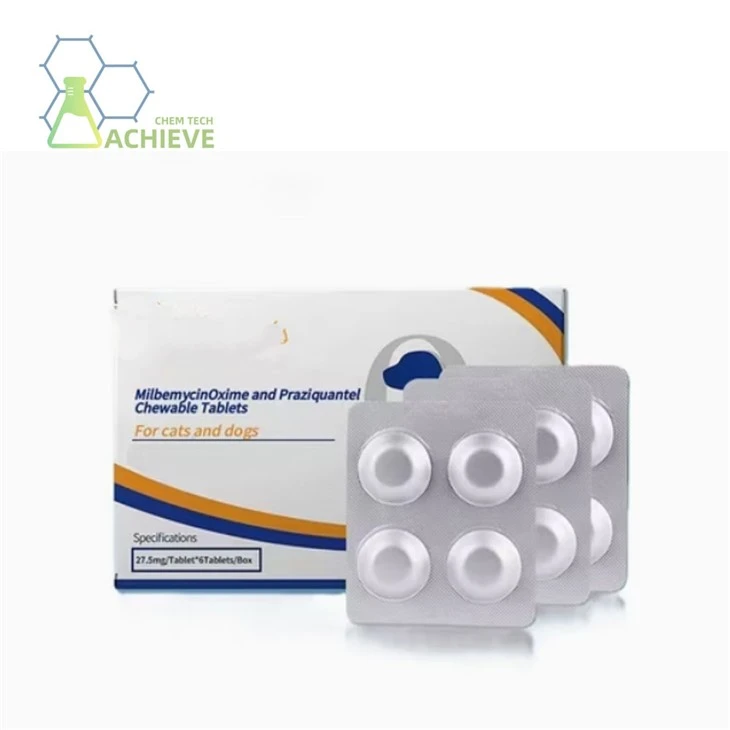
Milbemycin Oxime Tablets
1.General Specification(in stock)
(1)API(Pure powder)
(2)Tablets
For dogs:2.3mg/5.75mg/11.5mg/23.0mg
For cats: 5.75mg/11.5mg/23.0mg
2.Customization:
We will negotiate individually, OEM/ODM, No brand, for secience researching only.
Internal Code: BM-2-067
Milbemycin oxime CAS 129496-10-2
Main market: USA, Australia, Brazil, Japan, Germany, Indonesia, UK, New Zealand , Canada etc.
How Do Milbemycin Oxime Tablets Affect Parasite Nervous System Activity?
The nervous system governs parasites' movement, feeding, and reproduction. Because parasites and humans have distinct brains, milbemycin oxime pills perform effectively. Parasites' peripheral nervous systems depend on brain and nerve neurotransmitters. Our bodies get chemical impulses to work together, feel, and tense muscles. These are what parasites need to survive in their hosts.
Pests quickly absorb milbemycin oxime into their nerve systems through food or skin. Chemicals bind to nerve cell receptors. This fundamentally alters impulse transmission. Being bound initiates a cascade of events that makes fundamental parasitic body functions tougher. Sick parasites cease feeding and paralyse within hours after exposure.
Parasite neurones send and receive carefully controlled chemical and electrical messages to talk to each other. There are chemicals in the brain called neurotransmitters that talk to receptors and open channels that let chloride ions enter nerve cells properly. Nerve cells can send signals more quickly or more slowly depending on how this surge changes the electrical charge inside them. This balance is thrown off by milbemycin oxime, which permanently opens up some chloride channels.


A lot of chloride ions flow through nerve cells when these channels are open for a long time. This makes neurones too charged, so they can't send any more electrical signals. Parasites can't move their muscles, think about what's going on around them, or respond to things that happen. The parasites die because they can't stay inside the host, defend themselves, or keep making babies when the nerve system is shut down.
Milbemycin oxime tablets are safe because they have the blood-brain barrier, which parasites lack. Mammals' nervous systems are safe because this selective membrane keeps milbemycin oxime at levels that are safe for humans from getting to the brain and spinal cord. Pests in the heart, lungs, and stomach are reached by the chemical as it goes through the bloodstream. It doesn't get too deep into the brain.


Pests don't have this defence, so the drug can fully affect their nerve systems. The drug milbemycin oxime works on glutamate-gated chloride channels, which are mostly found in the nerves of animals and not humans. Because of this difference in evolution, vets can give doses that kill all parasites while doing little to no harm to the animal being treated.
Milbemycin Oxime Tablets Mechanism of Action: Targeting Parasite Ion Channels
Charged particles can move across cell walls with the help of ion channels. By being molecular guards, they do this. These protein structures open and close in response to messages. They keep the electrical flows that nerves need to work. This medicine, milbemycin oxime, really likes the ligand-gated chloride channel. This is an ion channel type that is found in large amounts in parasite nerve tissue.
These channels stay closed until a neurotransmitter molecule binds to the protein's receptor part. The channel changes shape to make a hole in the cell membrane when it binds. It is common for chloride ions to move from the outside of the cell to the inside as their concentration changes. This process happens quickly and can be undone when the body is working normally. This allows precise control of nerve signals.
When milbemycin oxime is broken down chemically, it has special parts that attach perfectly to spots on parasite ion channels. It's an allosteric modulator, which means it binds to a different place in neurons than the usual place on neurons. The channel is much more sensitive to glutamate and GABA because of this attachment. This means that channels open more often and stay open longer than usual.


Electrophysiology studies have shown that milbemycin oxime makes the flow of chloride much better by many orders of magnitude. The drug can keep the channels open all the way, so the parasite can't get back to its normal membrane potential. Once the right drug amounts are reached, parasites can't get better because this binding is irreversible at those levels.
The amount of milbemycin oxime that is present at the place of action determines how well it kills parasites. It stays open longer and is more sensitive when the amounts are lower. When the concentrations go up, it makes an electrical "short circuit" in parasite neurones because almost all of the sensitive channels are always open. Because of this dose-response connection, treatment plans can be made to fit the type of parasite and the amount of infection very accurately.


A pharmacokinetic study shows that four to six hours after taking milbemycin oxime by mouth, its levels in the blood are at their greatest. The chemical then goes to the tissues where the parasites are living and stays there for a long time, where it stays in therapeutic amounts. Heartworm eggs don't grow into dangerous adult worms because the drug stays in the body for a long time. This is why giving a dose once a month is such a good way to keep heartworms away.
How Milbemycin Oxime Tablets Disrupt Parasite Function Through Neurotransmitter Regulation
Neurotransmitters control every parasite's body and behaviour with timely chemical messages. Parasite nerve systems use GABA and glutamate. While glutamate controls neurones that speed up messages, GABA slows them down. Milbemycin oxime blocks both ways, making chloride channels respond strongly to neurotransmitters.
Parasites release modest quantities of substances at nerve cell synapses. These chemicals pass the neuronal gap, link to receptors on the receiving neurone, and initiate the proper cascade of actions. They are then quickly removed or destroyed. Fast switching allows parasites to survive by executing complicated behaviour and bodily reactions.
Milbemycin oxime makes target channels very sensitive, which makes neurotransmitters work much better. All channels are fully active in parasites that have been introduced to drugs, even when neurotransmitter levels are low, which is not normally enough to make a difference. In a state of uncontrollable neural activity where all signals are too strong to handle, this makes signals stronger.


It's really bad that parasites can't stop the release of neurotransmitters fast enough to make up for the increased effect, milbemycin oxime tablets. When channels are permanently made sensitive, normal feedback systems that would lower the production of neurotransmitters can't stop the extra chloride that comes in. The brain would say that parasites have "sensory overload," which means they can't do anything.
To move muscles in a coordinated way, the brain needs to send the right mix of messages to muscles to excite and stop them. Parasites like hookworms and others attach to the walls of the intestines with their strong mouth parts. What about heartworm adults? They need to stay put in the pulmonary airways, even though blood is always going through them. Milbemycin's effect on oxime-induced channels makes it impossible for muscles to work in a controlled way.


Lorem ipsum dolor, sit amet consectetur adipisicing elit. Repellendus aperiam, quam praesAfter this, the parasites can't hold on to the host tissues anymore and are swept away by the blood flow or the intestines moving. Normally, these paralysed organisms are killed by the host because they can't fight being thrown out. This is a great way to get rid of infections because it doesn't use drugs to kill the bugs directly. Instead, it uses the host's own natural defences.
Milbemycin Oxime Tablets and Parasite Control: Exploring Glutamate-Gated Chloride Channel Activity
In the nervous systems of invertebrates, glutamate-gated chloride channels are unique but not found in the nervous systems of mammals. These channels only respond to glutamate, an amino acid that doesn't work the same way in parasite nerves as it does in the brains of mammals. In mammals, glutamate is a neurotransmitter that makes neurons fire faster. Parasites have glutamate-gated chloride channels, but people don't. Drugs that only kill parasites can attack these channels and kill them.
In parasites, these special channels are grouped together in thick spots where muscle fibres and motor neurones meet. They help keep muscle strain and movement habits in check when they are used. When milbemycin oxime binds to these control points, chloride can enter without being stopped, which ends all controlled movement.
Glutamate-gated chloride channels are made up of many protein pieces arranged around a central hole. There are places on each subunit where glutamate can bind and places where drugs might bind as well. Different parasite species have these parts with different structures and amino acid sequences. This is the reason why not all worms and arthropods are sensitive to the same medicines.


The compound milbemycin oxime binds to parasite glutamate-gated chloride channels through structural properties that are shared by many of them. It does not bind as strongly to human channel types, though. Invertebrates and vertebrates have different nerve systems because they have evolved in different ways over millions of years. To help people with brain issues, the drug uses changes in the way neurones are made that have been around for millions of years.
Milbemycin oxime affects different types of parasites in different ways, depending on how their glutamate-gated chloride channels are produced. Heartworm larvae, hookworms, and roundworms are all nematodes that have a lot of sensitive channels. This means they are very likely to get sick from the drug. In clinical practice, this is why the broad-spectrum effect has been seen.


Some cestodes (tapeworms) and trematodes (flukes) are not as sensitive because they have different kinds of channels or not as many channels in key organs. When veterinarians know about these changes that happen with certain species, they can choose the best mix of treatments to get rid of more bugs. Milbemycin oxime can kill bugs with different types of nervous systems when mixed with other drugs that work in the same way.
When taken once a month, milbemycin oxime tablets offer long-term protection from parasite infections. Any larvae that try to get in will find amounts of the drug that will kill them before they can grow up because the drug is stored in the tissues. This method works especially well for heartworms because it targets the early stages of the larvae when glutamate-gated chloride channels are most likely to become blocked.


Because there are steady amounts in the tissues, they also protect against intestinal bugs that come from being outside. Parasites protect pets that live in places with a lot of them from getting infections that could cause serious health problems if they did. As long as doses are taken regularly, therapeutic amounts stay high. This makes the host environment unpleasant for parasite growth.
The Scientific Mechanism Behind Milbemycin Oxime Tablets for Internal Parasite Management
They live in safe places inside the host body, which makes them hard to get rid of. Illness-causing nematodes live in the gut and stick to the walls or dig into the lining of the gut. Heartworms live in the heart and blood vessels. To get rid of these bugs, you need medicines that can reach all of your cells and keep working in a range of bodies.
There are molecular hurdles that milbemycin oxime can get through. It can build up in tissues where parasites eat and grow because it dissolves in fat. When you eat or drink the substance, your body absorbs it. It then links to plasma proteins and moves through your bloodstream. This systemic distribution makes sure that parasites all over the body get the right amount of drug.
Milbemycin oxime has a long half-life in animal tissues (a few days to a few weeks, depending on the species), which helps it kill parasites that live inside the animal. Some drugs are broken down quickly and need to be re-dosed often, but milbemycin oxime stays in the body for a long time. This means that it can affect all stages of parasite growth.
Heartworms need to stay away, so this biochemical makeup is very important. Mosquitoes carry infectious larvae along with them. They go through different tissues before they get to the blood vessels in the heart and lungs. If the amount of drugs stays high during this time, they kill larvae before they grow up and become adults, which is bad for your heart. The monthly doses are timed to match the growth spurt of a pre-adult. This makes sure that safety is always maintained.
Milbemycin oxime builds up in fat, the liver, and other parts of the body. After that, it slowly gets back into the system. This action builds up a place to store drugs, which keeps blood levels fixed between doses. Pests that eat blood, tissue fluids, or gut contents will always eat the medicine. Milbemycin oxime can get into parasites through their skin, which is the outer layer they live on. Only parasites that don't eat host cells directly can do this.
The substance works much better than meds that depend on bugs eating them because it can get through their walls. Nematodes don't need to eat for long periods of time or have digestive systems that don't work well, which may help them stay away from drugs. The treatment works best when the skin takes in all of it, no matter what the animal eats.
It's important to know how milbemycin oxime affects glutamate-gated chloride channels in order to understand how resistance grows. For parasites to stop drugs from sticking, they would have to make big changes to the structure of their channels, which are generally bad for how well channels work. Because of this trade-off, resistance is less likely to form than with drugs that target more adaptable biological processes.
New tracking data shows that parasites in animals treated with milbemycin oxime rarely become immune as long as the drug is used exactly as it says on the label. When you do the right amount of drug based on your body weight, the levels stay above the level needed to kill bugs that are even slightly less sensitive. If you follow the treatment plans given, this helpful tool for getting rid of parasites will keep working for a long time.
Conclusion
Milbemycin oxime tablets' advanced parasite-killing mechanism shows medication customisation. These pills safely treat parasites because of parasite and mammalian neurobiological differences. Glutamate-gated chloride channel enhancement does not harm pet nervous systems; however, parasites suffer permanent neurological dysfunction.
Understanding milbemycin oxime's antiparasitic mechanism helps veterinarians use it. Ion channel interactions that modulate neurotransmitters give the compound broad-spectrum efficacy and safety. Milbemycin oxime pills treat the most common and deadly pet parasites, from heartworms to intestinal nematodes.
Research on parasite neurobiology and drug resistance will keep milbemycin oxime effective. Responsible use according to vet advice protects pets and decreases selection pressure that might cause resistance. Decades of research have supported these medicines, which enhance animal health worldwide.
FAQ
Q1: How quickly do milbemycin oxime tablets begin affecting parasites after administration?
+
-
There are four to six hours for milbemycin oxime tablets that the most of them are in the blood. When the amount of the drug in the body goes up, parasites start to have brain problems. The changes in how they move and eat will show up in eight to twelve hours. Intestinal bugs generally lose all of their strength and die within 24 to 48 hours. During the same time period, changes can be seen in heartworm eggs.
Q2: Can parasites develop resistance to the glutamate-gated chloride channel mechanism?
+
-
Genetic changes that change the shape of channels could, in theory, be used to make something resistant. These changes, on the other hand, usually make parasites less useful because they mess up normal brain function. It looks like resistance is still very rare when milbemycin oxime is used at the right times and in the right amounts. Products that have more than one active ingredient lower the risk of resistance even more because they work in different ways. Bugs that live on other living things have to change more than one thing at the same time.
Q3: Why does milbemycin oxime require monthly administration rather than single-dose treatment?
+
-
Important parasites, like heartworms, need about 30 days to grow from infective stages to young adults. This is why the monthly amount works. This medicine stays in the body for a long time after being given once a month. It stops parasites in their most vulnerable stages of growth. This way of keeping them from coming back works better and is safer than trying to get rid of adult parasites that are already there, because when they die, they can cause a lot of problems.
Partner with BLOOM TECH: Your Trusted Milbemycin Oxime Tablets Supplier
When you choose BLOOM TECH as your milbemycin oxime tablets supplier, you gain access to pharmaceutical-grade antiparasitic products backed by comprehensive GMP certification and rigorous quality control. Our Xi'an manufacturing facility maintains certifications from US FDA, EU, PMDA, and CFDA regulatory authorities, ensuring every batch meets international pharmaceutical standards. We offer flexible solutions ranging from pure API to finished tablets in multiple dosage strengths for dogs and cats, all supported by complete analytical documentation including HPLC, LC-MS, and HNMR characterization.
With over 12 years of experience serving pharmaceutical companies and veterinary product manufacturers across 24 countries, BLOOM TECH delivers consistent quality, competitive pricing with transparent profit margins, and reliable supply chains. Our technical support team provides comprehensive assistance from initial inquiry through customs clearance, treating every request with the urgency of a confirmed order. Whether you require standard formulations or custom OEM/ODM development, our R&D capabilities ensure solutions tailored to your market needs.
Ready to secure a dependable source for high-quality milbemycin oxime tablets? Contact our team today at Sales@bloomtechz.com to discuss your specific requirements, request certificates of analysis, or obtain detailed quotations. Experience the BLOOM TECH difference-where pharmaceutical excellence meets responsive customer service for all your veterinary antiparasitic needs.
References
1. Campbell, W.C. (2012). History of avermectin and ivermectin, with notes on the history of other macrocyclic lactone antiparasitic agents. Current Pharmaceutical Biotechnology, 13(6), 853-865.
2. Prichard, R.K., & Geary, T.G. (2019). Perspectives on the utility of moxidectin for the control of parasitic nematodes in the face of developing anthelmintic resistance. International Journal for Parasitology: Drugs and Drug Resistance, 10, 69-83.
3. Wolstenholme, A.J., & Rogers, A.T. (2005). Glutamate-gated chloride channels and the mode of action of the avermectin/milbemycin anthelmintics. Parasitology, 131(S1), S85-S95.
4. Geary, T.G., Sims, S.M., Thomas, E.M., Vanover, L., Davis, J.P., Winterrowd, C.A., Klein, R.D., Ho, N.F., & Thompson, D.P. (1993). Haemonchus contortus: ivermectin-induced paralysis of the pharynx. Experimental Parasitology, 77(1), 88-96.
5. Bishop, B.F., Bruce, C.I., Evans, N.A., Goudie, A.C., Gration, K.A., Gibson, S.P., Pacey, M.S., Perry, D.A., Walshe, N.D., & Witty, M.J. (2000). Selamectin: a novel broad-spectrum endectocide for dogs and cats. Veterinary Parasitology, 91(3-4), 163-176.
6. Shoop, W.L., Mrozik, H., & Fisher, M.H. (1995). Structure and activity of avermectins and milbemycins in animal health. Veterinary Parasitology, 59(2), 139-156.