


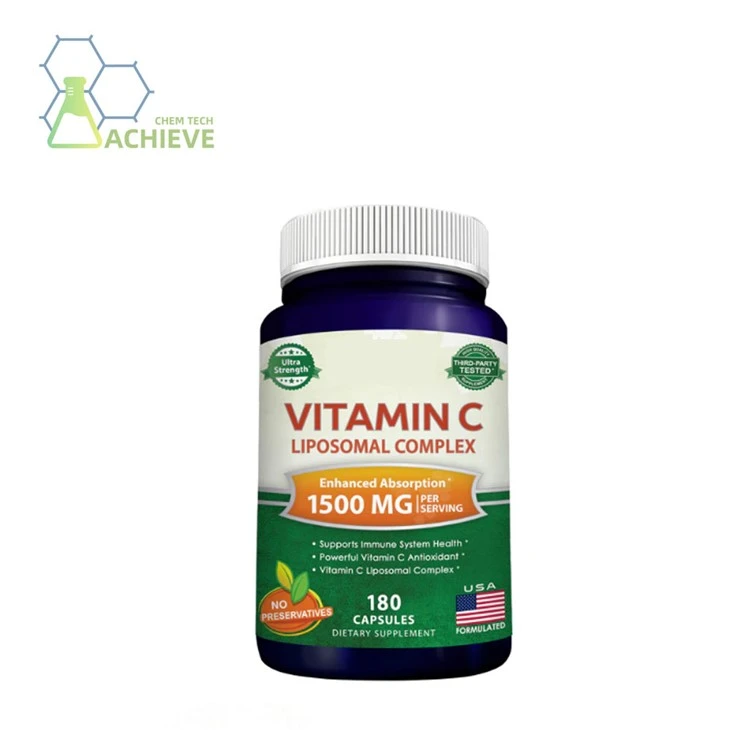


In the vitamin C supplement market, Liposomal Vitamin C Capsules, as a new form of product, have gradually attracted the attention of consumers.
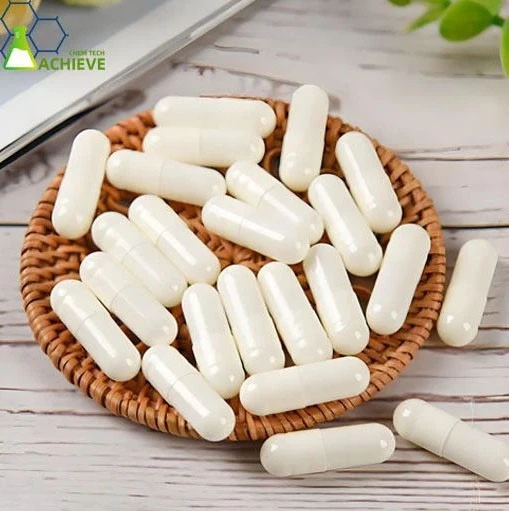
Liposome Vitamin C Capsules are a supplement that encapsulates vitamin C within a phospholipid bilayer through advanced encapsulation technology. This cell-like membrane structure significantly enhances the stability of vitamin C in the digestive tract, effectively resisting the damage caused by stomach acid, and leveraging the lipophilic nature of phospholipids to facilitate absorption by the intestinal villi, allowing more active components to reach the bloodstream directly. Compared to regular vitamin C, its bioavailability can be increased by several times, and its sustained-release property extends the duration of action, enabling more sustained support for antioxidant, immune regulation, and collagen synthesis. This formulation also avoids the potential gastrointestinal irritation caused by high-dose regular vitamin C, making it suitable for people who need efficient supplementation. However, it is important to choose products with reliable phospholipid sources and mature manufacturing processes to ensure effectiveness.
At the same time, our company not only provides pure powders, but also tablets and injections. If needed, please feel free to contact us at any time.
|
|
|
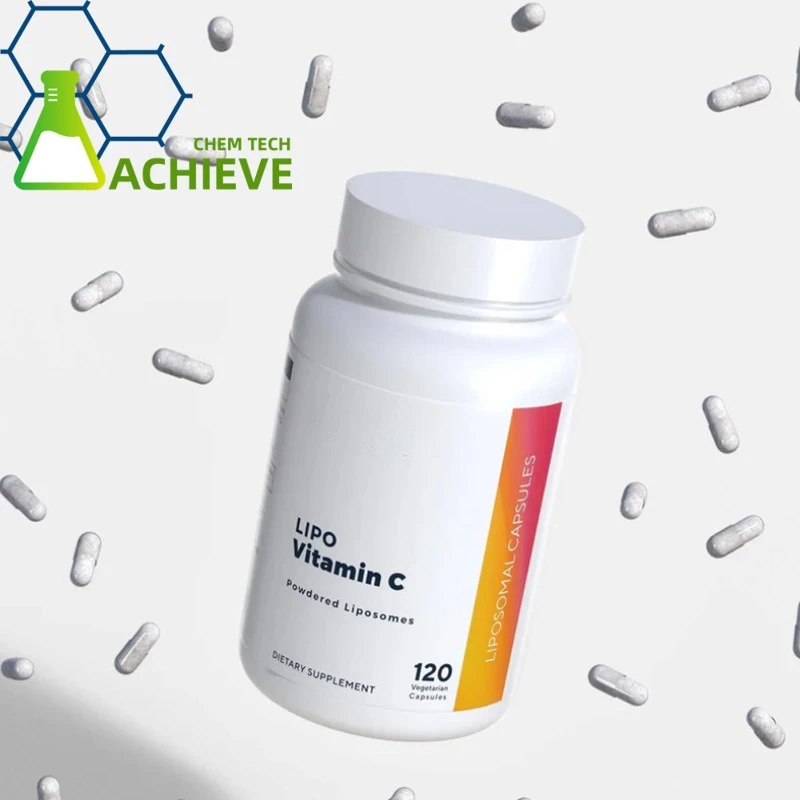


Vitamin C COA


Vitamin C is one of the essential nutrients for the human body, playing an important role in antioxidation, enhancing immunity, and promoting collagen synthesis. However, traditional vitamin C supplements have problems such as low bioavailability and unstable absorption. Liposome technology, as an advanced drug delivery system, can encapsulate vitamin C in lipid bilayers, significantly improving its bioavailability and stability. Liposomal Vitamin C Capsules are products made based on this technology.
Manufacturing materials and equipment
Manufacturing materials
Vitamin C: It is the core component of capsules and has various physiological functions such as antioxidant and promoting collagen synthesis. When choosing vitamin C, it is important to ensure its high purity and reliable quality to ensure the effectiveness of the final product.
Phospholipids: Common sources of phospholipids include soybean lecithin and sunflower lecithin. Phospholipids are the main components that make up the bilayer of liposomes, which help to encapsulate vitamin C within the liposomes, protect it from damage by stomach acid, and promote its absorption in the intestine. Sunflower lecithin may be a better choice as it can eliminate concerns about genetically modified organisms and produce more stable liposomes. The ideal phospholipid content range in liposome vitamin C formula should be 250-500mg per dose.
Solvent: such as purified water, used to dissolve components such as vitamin C and phospholipids, allowing them to mix evenly and form liposomes. The quality of purified water directly affects the purity and stability of the final product, and high-quality purified water that meets relevant standards should be selected.
Manufacturing equipment
Cooking machine: used to preliminarily mix and stir raw materials such as vitamin C powder and phospholipids to form a uniform mixture. The speed and stirring method of the food processor will affect the mixing effect, and equipment that can provide uniform stirring should be selected.
Ultrasonic cleaning machine: Utilizing the power of ultrasonic cavitation to encapsulate vitamin C in liposomes. Ultrasonic treatment can reduce the particle size of the product to around 1/2 micron, and smaller particle sizes may be related to improved absorption in the body. Ultrasonic frequency is generally measured in kilohertz (kHz) or thousands of cycles per second, and a frequency of 37kHz is usually sufficient for liposome encapsulation. Ultrasonic power is also important, and the magnitude of power (expressed in watts) is directly related to the particle size of liposomes. Higher power typically produces smaller liposomes. It is recommended to use an ultrasonic cleaner equipped with a timer to automatically shut down the device at the end of the processing time.
Glass beaker: used to hold and process mixtures. Glass beakers allow for careful measurement of batch sizes, making it easier and neater to pour out from a beaker than from a jar. Additionally, beakers are easier to clean after each batch is processed. The capacity of glass beakers can be selected according to actual production needs, with common specifications including 600 milliliters and 1000 milliliters.
Stainless steel can cover, rubber ring, and beaker cover: The stainless steel can cover is used to support the beaker, the rubber ring fixes the beaker in the correct position above the bottom of the water tank, and the beaker cover is used to loosely cover the beaker during processing to prevent external pollutants from entering.
Production steps
raw material preparation
Accurately weigh raw materials such as vitamin C powder and phospholipids according to the formula ratio. For example, a common formula is 16 grams of vitamin C powder, 20 grams of lecithin, and 500 milliliters of purified water. During the weighing process, an accurate electronic balance should be used to ensure the accurate and precise amount of various raw materials used, in order to guarantee the quality and effectiveness of the final product.

Preliminary mixing
Put the weighed vitamin C powder and phospholipids into the blender, and add an appropriate amount of purified water. Start the food processor and stir at high speed to thoroughly mix vitamin C powder and phospholipids, forming a preliminary mixture. The mixing time should be adjusted according to the actual situation, usually a few minutes, to ensure that there are no obvious particles or lumps in the mixture.

ultrasonication
Add an appropriate amount of water to the ultrasonic cleaning machine and add a wetting agent (such as liquid dishwashing soap) solution as needed. Place the glass beaker containing the mixture into the ultrasonic cleaning machine, and use a rubber ring to secure the beaker in the correct position above the bottom of the water tank, ensuring that the beaker is stable and in good contact with ultrasonic energy. Set the frequency, power, and processing time of the ultrasonic cleaning machine. As mentioned earlier, the frequency can be selected around 37kHz, and the power can be adjusted according to actual needs. The processing time is generally several tens of minutes, and the specific time can be optimized based on experimental results. Start the ultrasonic cleaning machine and begin ultrasonic treatment of the mixture. During the processing, ultrasonic energy will pass through the beaker wall and act on the mixture, generating tiny vacuum bubbles that will burst inside the surface, encapsulating vitamin C in liposomes with a diameter of less than 1 micron.

Post processing
After ultrasonic treatment, pour the formula milk (here is the processed liposome vitamin C mixture) into a storage container. Storage containers should be selected from glass or plastic bottles with good sealing properties, avoiding direct sunlight and high temperature environments, and sealed and refrigerated for storage. Liposomal vitamin C has a limited shelf life in the refrigerator, approximately 30 days, so it should be used as soon as possible. After processing, promptly and thoroughly clean equipment such as glass beakers and ultrasonic cleaning machines. Clean the beaker with clean water and appropriate cleaning agent to ensure there is no residual mixture. For ultrasonic cleaning machines, the water tank should be regularly emptied and cleaned according to the instructions in the user manual to avoid contamination between batches and damage to the equipment itself.

quality control
Particle size detection: Particle size is one of the important factors affecting the absorption and stability of vitamin C in liposomes. According to the particle size and particle size distribution determination method (such as the second method of General Rule 0982, double sieving method), the total amount that cannot pass through the first sieve and can pass through the fifth sieve shall not exceed 15%. The specific operation is to take about 10g of the test sample, weigh it precisely, sieve it in the drug sieve for 3 minutes, and calculate the percentage of coarse powder that cannot pass the first sieve and fine powder that can pass the fifth sieve to the total weight. If the particle size does not meet the requirements, it may be necessary to adjust the parameters of ultrasonic treatment, such as frequency, power, or processing time, to obtain a suitable particle size distribution.
Content determination: Use appropriate methods to determine the content of vitamin C in liposome vitamin C capsules to ensure that they meet product specifications. The commonly used methods for content determination include high-performance liquid chromatography (HPLC) and others. By measuring the content, we can understand the actual content of vitamin C in the product, judge whether the production process is stable, and whether the quality of the product is consistent.
Stability assessment: Liposomal vitamin C capsules are placed under different environmental conditions (such as high temperature, high humidity, light exposure, etc.), and their appearance, content, particle size, and other indicators are regularly tested to evaluate the stability of the product. The time for stability assessment generally ranges from several months to several years, depending on the characteristics and requirements of the product. Through stability testing, the shelf life and storage conditions of the product can be determined, providing a basis for the production and sales of the product.
Comparison with other production methods
Comparison with industrial large-scale production methods: Industrial large-scale production of liposome vitamin C capsules usually uses more advanced equipment and stricter production processes. For example, equipment such as high-pressure homogenizers may be used to further reduce the particle size of liposomes and improve the uniformity and stability of the product. In addition, industrial production will undergo more comprehensive quality control and testing to ensure that products comply with relevant standards and regulatory requirements. The DIY production method is relatively simple, with lower equipment and technical requirements, but the quality and stability of the product may not be as good as those produced in industry.
Comparison with the traditional method of making vitamin C supplements: Traditional vitamin C supplements are usually made by mixing vitamin C with some excipients to form tablets, capsules, or granules. This method produces products with low bioavailability because vitamin C is easily destroyed by stomach acid in the gastrointestinal tract and has low absorption efficiency. Liposomal vitamin C capsules encapsulate vitamin C through liposome technology, protecting it from being destroyed by stomach acid and improving its absorption efficiency in the intestine, thereby significantly enhancing the bioavailability of vitamin C.
precautions
Raw material quality: Select high-quality raw materials such as vitamin C and phospholipids to ensure their purity and activity meet the requirements. Low quality raw materials may affect the formation and stability of liposomes, thereby reducing the effectiveness of the product. When purchasing raw materials, reputable suppliers should be selected and strict quality inspections should be conducted on the raw materials.
Production environment: The production process should be carried out in a clean and sterile environment to avoid microbial contamination. Microbial contamination may cause product spoilage, affecting its safety and effectiveness. Operations can be carried out in clean workshops or ultra clean workbenches, and operators should comply with relevant hygiene regulations, such as wearing masks, gloves, etc.
Equipment maintenance: Regularly maintain and calibrate the production equipment to ensure its normal operation and measurement accuracy. Equipment malfunctions or errors may affect product quality and production efficiency. For example, if the frequency and power of the ultrasonic cleaning machine are not accurate, it may result in the particle size of liposomes not meeting the requirements. Therefore, regular maintenance and calibration should be carried out according to the equipment's user manual.
Safe operation: During the operation, attention should be paid to safety, avoiding contact with harmful substances and accidents. For example, ultrasonic cleaning machines generate certain noise and heat during use, and operators should avoid prolonged contact and pay attention to preventing burns. Meanwhile, for some chemical reagents, they should be stored and used in accordance with relevant safety regulations.
FAQ
1. How is the clearance rate of this substance different from that of traditional vitamin C in the body?
Because liposomes encapsulation delays renal filtration, their plasma half-life is significantly longer than that of ordinary vitamin C, which may result in a prolonged retention time in the body. Therefore, attention should be paid to the potential oxidative risk of long-term accumulation.
2. Does the material source of the lipid bilayer membrane affect the absorption efficiency?
Yes, the source of phospholipids (such as from soybeans or egg yolks) and the proportion of cholesterol can affect the stability of liposomes and their ability to fuse with cells, thereby leading to differences in the bioavailability of products from different brands.
3. Can it have any special interactions with certain drugs?
The structure of liposomes may alter the permeability of the cell membrane. In theory, there is a risk of enhancing the cellular uptake of certain drugs (such as anthracycline chemotherapy drugs or lipid-soluble toxins). Therefore, caution is required when using in combination.
Hot Tags: liposomal vitamin c capsules, suppliers, manufacturers, factory, wholesale, buy, price, bulk, for sale