




Shaanxi BLOOM Tech Co., Ltd. is one of the most experienced manufacturers and suppliers of thymulin injection in China. Welcome to wholesale bulk high quality thymulin injection for sale here from our factory. Good service and reasonable price are available.
The maintenance of immune homeostasis and precise regulation of inflammatory response are the core links for the body to resist external invasion and avoid self damage. As a thymic regulatory factor, thymulin injection plays an irreplaceable role in the repair and reconstruction of immune function after damage, as well as targeted regulation of autoimmune inflammation. Its pathway of action is both specific and multidimensional, providing a new entry point for intervention in related pathological states. The following focuses on the two core directions of immune reconstruction and autoimmune inflammation regulation for detailed explanation.
Products Description


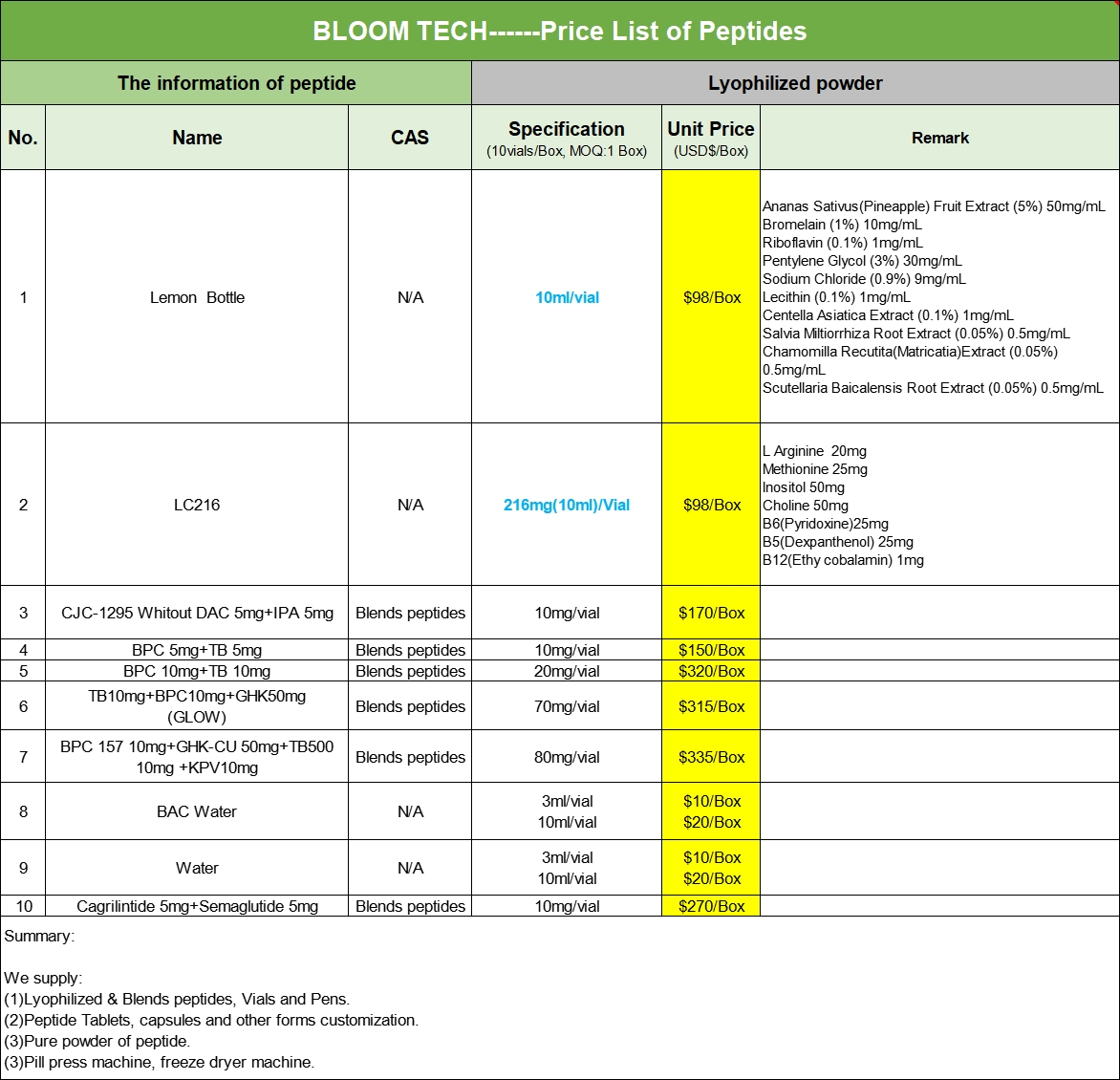

Thymulin COA


The role and characteristics of Thymulin in immune reconstitution
Immune reconstitution is a dynamic process of gradually restoring immune recognition, immune response, and immune homeostasis after impaired immune function in the body. Thymulin injection targets and regulates the differentiation, proliferation, and functional recovery of immune cells, exhibiting differentiated and efficient regulatory effects in three typical immune low scenarios: elderly, post radiotherapy and chemotherapy, and post infection. Its core characteristics are reflected in precise repair and steady-state remodeling of immune damage.
01.Reconstruction effect on immune decline in the elderly.
As the aging process progresses, thymic tissue will undergo progressive atrophy, and the ability of immune cells to generate and activate will significantly decline, leading to a decrease in the body's ability to resist pathogens and immune memory function, resulting in age-related immune dysfunction.It can promote the directed differentiation and maturation of immature immune cells by revitalizing the functional activity of thymic epithelial cells.Filling the gap in the insufficient generation of immune cells in the elderly body.


At the same time, it can maintain the balance of lymphocyte subpopulations, enhance the recognition sensitivity of immune cells to specific antigens, strengthen the retention and awakening of immune memory, thereby reversing the process of immune decline in the elderly, enhancing the body's anti infection ability, and reducing the risk of infection in the elderly population. This process is different from conventional immune enhancement methods, focusing more on the fundamental repair of immune function rather than simply increasing activity.
02.The reconstruction effect of immune exhaustion after radiotherapy and chemotherapy.
Chemotherapy and radiotherapy can cause widespread damage to normal immune cells in the body while clearing diseased cells, leading to a sharp decrease in the number and exhaustion of immune cells, forming an immunosuppressive state, and increasing the risk of secondary infection and disease recurrence.Thymulin injection can promote the repair of the bone marrow hematopoietic microenvironment.


Accelerate the proliferation and renewal of immune cells, and compensate for the loss of immune cells caused by radiotherapy and chemotherapy by regulating the proliferation signaling pathway of immune cells; At the same time, it can relieve the exhaustion state of immune cells, restore the killing activity and response ability of immune cells, rebuild the body's immune defense barrier, provide immune support for the recovery of the body after radiotherapy and chemotherapy, and its regulatory process is mild, which can avoid tissue damage caused by excessive immune activation.
03.Reconstruction effect on immune damage after infection.
Severe or chronic infections can lead to a significant depletion of immune cells and an imbalanced inflammatory response in the body. Even if the infection is controlled, it may still result in weakened immune function, making it difficult to resist reinfection.This can reset the body's inflammatory response by regulating the secretion of immune effector molecules.


Avoiding sustained damage to immune cells caused by excessive inflammation after infection; At the same time, it can promote the generation and activation of immune memory cells, strengthen the body's specific immune response to pathogens, achieve rapid recovery of immune function after infection, and reduce the probability of reinfection.
Its core function is to repair immune disorders caused by infection, rather than simply inhibiting inflammatory reactions.
Source of information:
Pan Xinghua, Shu Liping, Zhao Xiaojuan The anti-inflammatory effect and mechanism of this drug in rheumatoid arthritis Journal of Practical Medicine, 2006, 10 (10): 1223-1225
Mireille Dardenne, Saade N, Safieh-Garabedian B. Role of thymulin or its analogue as a new analgesic molecule. Annals of the New York Academy of Sciences, 2006, 1088(1): 153-163.
John J. Haddad, Nayef E Saadé, Bared Safieh-Garabedian. Thymulin: An Emerging Anti-Inflammatory Molecule. Current Medicinal Chemistry - Anti-Inflammatory & Anti-Allergy Agents, 2005, 4(3): 333-338.
The role and characteristics of hymulin in the regulation of autoimmune inflammation
The core pathological mechanism of autoimmune inflammation lies in the imbalance of immune tolerance in the body, abnormal activation of self reactive immune cells, and the triggering of inflammatory damage to one's own tissues and organs. Thymulin injection plays a dual role in anti-inflammatory and immune regulation in three typical autoimmune diseases: rheumatoid arthritis, multiple sclerosis, and inflammatory bowel disease, by precisely regulating the balance between immune tolerance and inflammatory response. Its characteristics are strong targeting and low side effects, which can effectively alleviate inflammatory damage and delay disease progression.


The regulatory effect on rheumatoid arthritis. The core pathological features of rheumatoid arthritis are chronic inflammatory infiltration of joint synovium, progressive damage to joint cartilage and bone. Its essence is abnormal activation of self reactive immune cells, leading to excessive release of inflammatory mediators. This med can alleviate joint redness, pain, and stiffness symptoms by clearing abnormally activated self reactive lymphocytes, inhibiting the infiltration of inflammatory cells into joint synovium, reducing the release of pro-inflammatory mediators.
At the same time, it can regulate the expression of immune tolerance related molecules, rebuild the body's immune tolerance to its own joint tissues, prevent the continuous progression of inflammatory reactions, and delay the occurrence of joint deformities.Compared with traditional anti-inflammatory methods, it focuses more on regulating inflammation from the immune source rather than simply relieving symptoms.The regulatory effect on multiple sclerosis. Multiple sclerosis is an autoimmune disease of the central nervous system, characterized by demyelinating damage to the myelin sheath, accompanied by abnormal activation of glial cells and inflammatory infiltration, leading to impaired nerve signal transduction.


This peptide can penetrate the blood-brain barrier, inhibit the activation of glial cells, reduce the damage of inflammatory mediators to myelin sheaths,promote the repair and regeneration of myelin sheath cells, and improve nerve signal transduction function; In addition, it can regulate the immune homeostasis of the central nervous system, inhibit the infiltration of self reactive immune cells into the center, reduce neuroinflammatory damage, alleviate clinical symptoms such as limb weakness and sensory abnormalities, delay the progression of the disease, and provide a new immune regulation approach for the intervention of multiple sclerosis.
The regulatory effect on inflammatory bowel disease. Inflammatory bowel disease is characterized by chronic inflammation, erosion, and ulceration of the intestinal mucosa, which is closely related to imbalanced gut microbiota, impaired intestinal mucosal immune barrier, and abnormal autoimmune response. Thymulin can regulate the activity of intestinal mucosal immune cells, inhibit abnormal inflammatory reactions, reduce inflammatory infiltration and damage of intestinal mucosa, promote intestinal mucosal repair and regeneration.


And improve intestinal absorption and barrier function;At the same time, it can regulate the composition and balance of intestinal microbiota, increase the abundance of beneficial bacteria, reduce the stimulation of harmful bacteria on intestinal mucosa, alleviate symptoms such as diarrhea, abdominal pain, mucus, pus, and bloody stools from the dual levels of intestinal microbiota and immune response, maintain intestinal homeostasis, and reduce the probability of disease recurrence.
Source of information:
Ye Qianqian, Pan Hang, Tian Chuan, etc The regulatory effect and mechanism of thymic nine peptide on immune function in elderly mice Chinese Journal of Tissue Engineering, 2026, 7 (1): 1720-1729
Protective Effect of PBCA Nanoparticles Loaded with it Against the Relapsing-Remitting Form of Experimental Autoimmune Encephalomyelitis in Mice. National Center for Biotechnology Information, 2019.
References
Gao Yongsheng, Fan Mingwei, Gao Rongji, etc The effect of Thymulin on immune function reconstruction in mice after radiotherapy and chemotherapy Journal of Shandong First Medical University (Shandong Academy of Medical Sciences), 2025, 2 (2): 94-99
Bared Safieh-Garabedian, Mayasi Y, Saadé NE. Targeting neuroinflammation for therapeutic intervention in neurodegenerative pathologies: a role for the peptide analogue of thymulin (PAT). Expert Opin Ther Targets, 2012, 16(11): 1065-1073.
Yang Hongmiao, Fan Huihong The regulatory effect of thymic nine peptide on intestinal mucosal immunity in rats with inflammatory bowel disease
Chinese Journal of Biopharmaceuticals, 2012, 2 (2): 204-206
Wade S, Bleiberg F, Mossé A, et al. Thymulin (Zn-facteur thymique serique) activity in anorexia nervosa patients. American Journal of Clinical Nutrition, 1985, 42(2): 275-280.
FAQ
Zinc Thymulin is used to support follicle activity and help encourage a stronger growth cycle. In research on thymic peptides and hair follicles, thymulin has been linked with supporting the growth phase and helping follicles stay healthy and active longer.
Thymulin appears to enhance immunological response by promoting the cytokine-driven differentiation of T lymphocytes and by increasing cytokine release. Since release of thymulin is not activated, as are cytokines, by antigenic or tissue insults, endocrine control of release may be of major importance.
Hot Tags: thymulin injection, suppliers, manufacturers, factory, wholesale, buy, price, bulk, for sale