




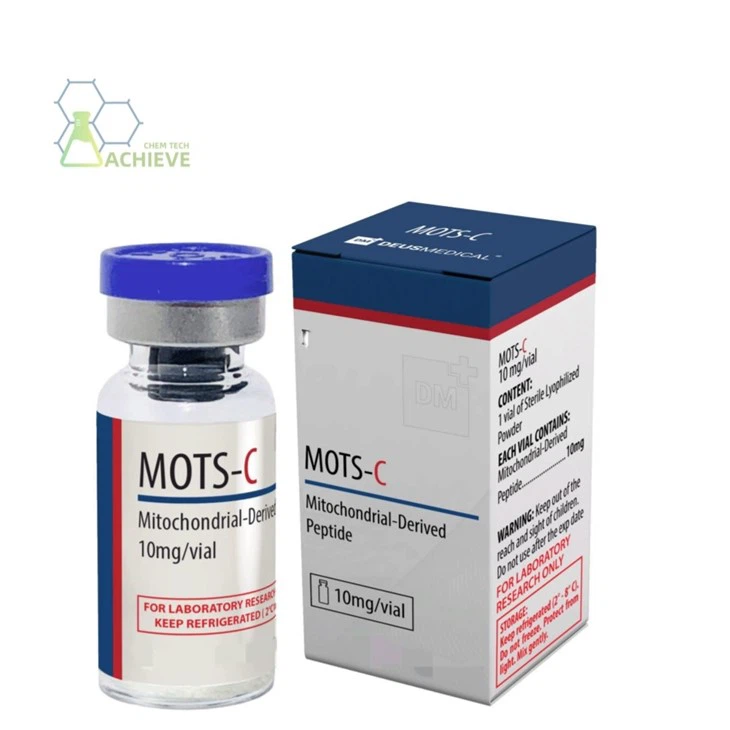

MOTS-c injection, It is a mitochondrial derived peptide encoded by the mitochondrial genome. It is a small peptide composed of 16 amino acids with a relatively small molecular structure, which allows it to diffuse relatively easily within cells and interact with various intracellular targets. The molecular weight is approximately 2174.62 (different calculation methods may vary slightly). It usually exists in the form of freeze-dried powder, with a solid appearance, a storage temperature of -20 ° C, and a density of about 1.44 ± 0.1 g/cm ³ (predicted value). Mitochondria are often considered as the "energy factories" of cells, capable of producing biologically active peptides in addition to their function of energy production. After synthesis in mitochondria, it is released into the cell to exert its function. It was discovered based on the latest advances in high-resolution sequencing technology, and multiple unique peptides derived from the mitochondrial genome have been identified, including MOTS c.
Our product




Additional information of chemical compound:

Our Product


MOTS-c+. COA


Research in metabolic disease models
Diabetes Model
In diabetes models, MOTS c can improve insulin resistance and blood glucose control. For example, in the male Sprague Dawley rat model of type 2 diabetes, MOTS c (0.5 mg/kg; intraperitoneal injection; Once a day; 8 weeks) can reduce fasting blood glucose, glycosylated serum protein, and blood lipid levels, improve myocardial ultrastructure damage, and activate the myocardial AMPK/Nrf2 antioxidant pathway.
Obesity Model
MOTS c can reduce fat deposition induced by high-fat diet. It can inhibit the expression of fat synthesis genes and promote glucose metabolism, thereby helping to reduce weight and fat accumulation.
Research in cardiovascular disease models
Myocardial ischemia-reperfusion injury (MIRI) model
In the MIRI model, MOTS-c injection can promote mitochondrial biosynthesis in myocardial cells, inhibit myocardial cell apoptosis, and improve myocardial injury in MIRI rats. Its mechanism may be related to upregulation PGC-1α(Peroxisome Proliferator-Activated Receptor Gamma Coactivator 1-Alpha) Expressing related. PGC-1 α is a key regulatory factor in mitochondrial biosynthesis and function. MOTS c promotes mitochondrial biosynthesis and functional recovery by upregulating the expression of PGC-1 α, thereby reducing myocardial injury.
Coronary heart disease (CHD) model
MOTS c has a protective effect on endothelial function and may affect the development of atherosclerosis. It is currently a new target for the diagnosis and treatment of CHD.


Research in liver disease models
In a non-alcoholic steatohepatitis (NASH) model, a research team from the Fourth Military Medical University found that MOTS c can increase the stability of Bcl-2 protein and inhibit ubiquitination, thereby suppressing the development of NASH. Compared with the control group, mice treated with MOTS c had lower body weight and lighter liver weight, and MOTS c treatment significantly reversed hepatic steatosis and inhibited larger lipid droplet deposition. TUNEL staining and F4/80 and aSMA immunoblotting analysis showed that MOTS c treatment can alleviate the progression of liver cell apoptosis, inflammation, and fibrosis. In addition, MOTS c significantly inhibits the expression of pro-inflammatory, pro fibrotic, and DNA sensing genes caused by NASH. In addition to reducing liver fat accumulation, MOTS c treatment also inhibits the expression of fat synthesis genes.
Research in Neurological Disease Models
In the traumatic brain injury model of male C57BL/6 mice, MOTS c (25-50 mg/kg; intraperitoneal injection; Once a day; 21 days) can alleviate neurological deficits and inhibit the HMGB1/TLR4/NF - κ B inflammatory pathway in brain tissue.


Regulating insulin sensitivity
It can regulate insulin sensitivity and promote glucose uptake. In the cell model of insulin resistance, It can enhance the cell's response to insulin, allowing the cell to better uptake and utilize glucose, like opening a "door" for the cell to uptake nutrients. For example, in the serum of patients with diabetes or obesity, the level of MOTS c has significantly decreased, which indicates that it is closely related to insulin resistance and abnormal glucose metabolism.
Participate in the regulation of fatty acid oxidation
It participates in the regulation of fatty acid oxidation and helps maintain the balance of intracellular lipid metabolism. It can bind to receptors on adipocyte membranes, promote the expression of glucose transporter genes, facilitate glucose metabolism, and inhibit the expression of fat synthesis genes, thereby reducing fat deposition induced by high-fat diets.

Anti inflammatory effect

Inhibit the expression of inflammatory factors
It inhibits the expression of pro-inflammatory cytokines (TNF - α, IL-6, IL-1 β) and promotes the expression of anti-inflammatory cytokine (IL-10) by suppressing the MAPK signaling pathway and enhancing the Ahr/STAT3 signaling pathway, thereby exerting a regulatory effect on inflammation. TNF - α and IL-6 are both important factors involved in atherosclerosis. Clinically, the level of IL-6 in the serum of patients with coronary heart disease (CHD) is significantly increased, and MOTS c can reduce inflammatory reaction by regulating the expression of these inflammatory factors.
Inhibit the activation of inflammatory signaling pathways
The activation of MAPK/NF kB pathway will affect the expression of many adhesion molecules and a variety of inducible enzymes (COX2, iNOS), and participate in the occurrence of endothelial dysfunction. It will inhibit the development of inflammation by regulating the signal pathway, thereby protecting endothelial function and delaying the occurrence of atherosclerosis.
Regulating cellular aging phenotype
Research has found that MOTS c is closely related to the aging process. It can regulate the aging phenotype of cells, delay cell aging by improving cellular metabolism and stress response ability. In some model biology experiments, increasing the level of MOTS c can prolong the lifespan of organisms, which may be achieved by activating a series of anti-aging genes and signaling pathways.
Improve mitochondrial mediated metabolic disorders
In diseases such as non-alcoholic steatohepatitis (NASH), it treatment improves mitochondrial mediated metabolic disorders in NASH. Carnitine shuttle, tricarboxylic acid cycle, and degradation reactions related to amino acid and urea metabolism all involve enzyme dependent reactions in the mitochondrial matrix, which are crucial for maintaining mitochondrial homeostasis. Metabolomics analysis showed that MOTS c treatment partially reversed the reduction of key intermediate metabolites in the acylcarnitine shuttle pathway caused by NASH. Key intermediate metabolites in the urea cycle and tricarboxylic acid cycle were inhibited under NASH conditions and significantly improved after MOTS c treatment.

Antioxidant stress

When cells are subjected to stress, such as oxidative stress, the expression level of MOTS c changes. It can activate stress signaling pathways within cells, induce the expression of antioxidant enzymes, help cells clear excessive free radicals, reduce oxidative damage, and thus protect cell integrity and function. For example, under oxidative stress conditions, MOTS-c injection can induce the expression of antioxidant enzymes and enhance the antioxidant capacity of cells.

Clinical application prospects
Type 2 diabetes
Given the role of MOTS c in regulating insulin sensitivity and glucose metabolism, it has potential application value in the treatment of type 2 diabetes. By regulating the insulin signaling pathway and promoting glucose uptake, MOTS c injection may help lower blood sugar levels and improve symptoms in diabetic patients.
obesity
It can inhibit the expression of fat synthesis genes, promote glucose metabolism, reduce fat deposition, and therefore may play a role in the treatment of obesity. By regulating energy metabolism balance, MOTS c injection may help reduce weight and improve obesity related metabolic disorders.
coronary heart disease
It has the potential to protect endothelial function and inhibit the development of atherosclerosis, making it a promising candidate for the treatment and prevention of coronary heart disease. By regulating the expression of inflammatory factors and signaling pathways, MOTS c injection may help alleviate vascular inflammation, stabilize plaques, and reduce the risk of cardiovascular events.
myocardial infarct
In the myocardial ischemia-reperfusion injury model, it exhibits a promoting effect on mitochondrial biosynthesis and inhibiting myocardial cell apoptosis, which may play a role in the treatment of myocardial infarction. By protecting myocardial cells, it may help improve myocardial function and reduce complications after myocardial infarction.
In non-alcoholic steatohepatitis and other diseases, It can improve mitochondrial mediated metabolic disorders, alleviate the progression of hepatic steatosis, apoptosis, inflammation, and fibrosis, and therefore may have practical value in the treatment of liver diseases. By regulating the metabolism and inflammatory response of the liver, MOTS c injection may help improve liver function and delay the progression of liver diseases.
In models of neurological disorders such as traumatic brain injury, MOTS c exhibits a role in reducing neurological deficits and inhibiting inflammatory pathways, thus potentially having potential applications in the treatment of neurological disorders. By protecting nerve cells and reducing inflammatory damage, injection may help improve the prognosis of patients with neurological disorders.
Due to the close relationship between MOTS c and the aging process, which can regulate the aging phenotype of cells, it may have practical value in the treatment of aging related diseases. By activating anti-aging genes and signaling pathways, it may help delay the aging process and improve the health status of elderly people.
R&D Challenge
Stability issues
As a short peptide drug, MOTS c has poor stability and is easily degraded by enzymes in the body, which affects its bioavailability and efficacy. In the development process of injections, it is necessary to address the stability issue of MOTS c to ensure its effective concentration and duration of action in the body.
Administration method and dosage selection
How to optimize the administration method, improve bioavailability, and reduce side effects is an important issue that needs to be addressed in the development process of MOTS c injections. Different administration methods (such as intravenous injection, subcutaneous injection, etc.) may affect the absorption, distribution, and metabolism of drugs, so in-depth research is needed to select the most suitable administration method. At the same time, it is necessary to determine the appropriate dosage range to achieve the best therapeutic effect and safety.
Safety assessment
Before introducing MOTS-c injection into clinical practice, a comprehensive safety assessment is required. This includes research on the toxicity, immunogenicity, reproductive toxicity, and other aspects of drugs to ensure their safety in the human body.
MOTS-c injection represents a groundbreaking advancement in mitochondrial medicine, offering a multifaceted approach to treating metabolic disorders, aging-related diseases, and enhancing physical performance. Its unique mechanism of action-bridging mitochondrial and nuclear signaling-positions it as a potential first-in-class therapy.
While early clinical data are promising, larger trials are needed to confirm long-term efficacy and safety. Challenges include optimizing formulations for sustained release, reducing costs, and expanding indications beyond metabolic health.
As research progresses, MOTS-c may redefine therapeutic strategies for improving human healthspan, offering hope for millions suffering from chronic diseases linked to mitochondrial dysfunction.
Hot Tags: mots-c injection, suppliers, manufacturers, factory, wholesale, buy, price, bulk, for sale