




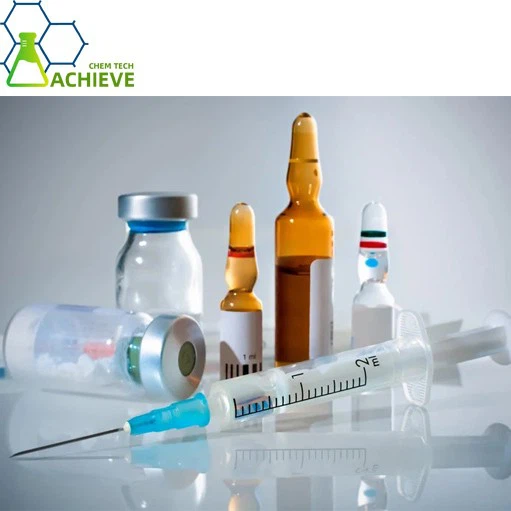


Shaanxi BLOOM Tech Co., Ltd. is one of the most experienced manufacturers and suppliers of loratadine injection in China. Welcome to wholesale bulk high quality loratadine injection for sale here from our factory. Good service and reasonable price are available.
The main active ingredient of loratadine injection is loratadine, whose chemical name is 4- (8-chloro-5,6-dihydro-11H-benzo [5,6] cycloheptyl [1,2-b] pyridin-11-yearyl) -1-piperidinecarboxylic acid ethyl ester. Auxiliary materials usually include injection water, possible stabilizers, pH adjusters, etc., to ensure the stability and appropriate acidity of the drug, ensuring safety and effectiveness during injection. It is generally a colorless or almost colorless clear liquid.

Additional information of chemical compound:

|
|
|


Loratadine COA

Adverse reactions
Allergic diseases are showing a high incidence worldwide, seriously affecting the quality of life of patients. Loratadine, as a second-generation antihistamine, is widely used in the treatment of various allergic diseases such as allergic rhinitis and chronic urticaria due to its high efficacy, long duration, and minimal central nervous system side effects. Loratadine injection, as its injectable form, provides an important treatment option for patients who cannot be orally administered or require rapid onset of action. However, any medication that exerts therapeutic effects may also be accompanied by the occurrence of adverse reactions. A deep understanding of the adverse reactions of loratadine injection is of great significance for ensuring patient medication safety and improving clinical treatment efficacy.
Common adverse reactions of loratadine injection
Skin and accessory reactions
The medication should be stopped immediately and the changes in the rash should be observed. If the rash gradually subsides, no special treatment is required; If the rash worsens or is accompanied by other discomfort symptoms such as fever, difficulty breathing, etc., seek medical attention promptly.

Skin rash
Rash is one of the possible skin adverse reactions caused by loratadine. The appearance of rashes is diverse and can manifest as erythema, papules, maculopapules, etc., accompanied by itching or pain symptoms. The occurrence of rash may be a manifestation of drug allergy or a direct irritant effect of the drug on the skin.
Itching
In addition to itching accompanied by rash, some patients may experience skin itching symptoms alone after using loratadine. Itching can be limited to a specific part of the body, or it can spread throughout the entire body. The mechanism of itching may be related to drug induced histamine release or stimulation of skin nerve endings. Patients should avoid scratching their skin to prevent skin damage and infection. Mild anti itch drugs or topical calamine lotion can be used to alleviate itching symptoms.

Serious adverse reactions of loratadine injection
Allergic shock
Allergic shock is an extremely serious systemic allergic reaction. Although the probability of loratadine injection causing allergic shock is low, once it occurs, the condition is dangerous and can be life-threatening. Allergic shock typically occurs rapidly within minutes to hours after medication, characterized by a sharp drop in blood pressure, difficulty breathing, loss of consciousness, and other symptoms. The mechanism of its occurrence is that drugs act as allergens, triggering a strong immune response in the body, leading to the release of a large amount of inflammatory mediators such as histamine, causing systemic vasodilation, increased permeability, plasma extravasation, and reduced effective circulating blood volume, resulting in shock symptoms. Once allergic shock is suspected, medication should be immediately stopped, the patient should be placed flat, oxygen should be given, a venous channel should be quickly established, and emergency drugs such as adrenaline should be used for rescue.


Arrhythmia
Severe arrhythmia is another serious adverse reaction that may be caused by loratadine. Arrhythmia includes various types of rapid arrhythmias (such as supraventricular tachycardia, ventricular tachycardia, atrial fibrillation, etc.) and bradycardia (such as sinus bradycardia, atrioventricular block, etc.). The occurrence of arrhythmia may be related to the serious impact of drugs on cardiac electrophysiological activity, which can lead to abnormal rhythm and conduction of the heart, affecting the pumping function of the heart. Severe arrhythmia can cause symptoms such as dizziness, blackout, fainting, and may even lead to cardiac arrest. During the use of loratadine, the patient's electrocardiogram changes should be closely monitored. Once arrhythmia is detected, the treatment plan should be adjusted in a timely manner.
Liver function impairment
Long term or excessive use of loratadine may cause damage to the liver, leading to abnormal liver function. Patients may experience symptoms such as fatigue, loss of appetite, jaundice, etc. Laboratory tests may reveal elevated liver function indicators such as alanine aminotransferase and aspartate aminotransferase. The mechanism of liver function impairment may be related to the damage to liver cells caused by toxic metabolites produced by drugs during liver metabolism. For patients with a history of liver disease or who are currently using other drugs that can damage the liver, liver function should be monitored regularly when using loratadine injection. Once abnormal liver function is detected, the medication should be stopped promptly and liver protection treatment should be given.

Factors affecting the occurrence of adverse reactions to loratadine injection
During the storage process, the medication should be strictly stored according to the instructions, avoiding adverse factors such as direct sunlight, high or low temperatures, to prevent deterioration of the medication and affect its quality and efficacy. After intravenous injection, the substance directly enters the bloodstream and can quickly reach an effective blood drug concentration, with a fast onset of action. Compared with oral preparations, it avoids first pass effects and has higher bioavailability. The first pass effect refers to the phenomenon where a drug is absorbed into the portal vein system through the gastrointestinal tract after oral administration, and partially metabolized in the liver, resulting in a reduction in the amount of drug entering the systemic circulation. Injecting medication bypasses this process, ensuring that the drug can fully exert its therapeutic effect.
There are differences in the tolerance and reactivity of loratadine among individuals. This difference may be related to genetic factors, age, gender, physical condition, and other factors.

Individual Differences
For example, elderly people are more prone to adverse drug reactions due to physical decline, weakened liver and kidney function, decreased metabolism and excretion ability of drugs; Children's physical development is not yet mature, their organ functions are incomplete, and they are highly sensitive to drugs. Therefore, medication safety should also be taken into account. In addition, genetic factors may lead to different metabolic enzyme activities of individuals towards drugs, thereby affecting the metabolic rate and concentration of drugs in the body, and thus affecting the occurrence of adverse reactions.
Drug Interactions
When loratadine is used together with other drugs, drug interactions may occur, increasing the risk of adverse reactions. For example, when loratadine is used in combination with certain antibiotics (such as erythromycin, clarithromycin, etc.) and antifungal drugs (such as ketoconazole, itraconazole, etc.), these drugs can inhibit the metabolism of loratadine in the liver, leading to an increase in loratadine blood concentration and thus increasing the likelihood of adverse reactions. In addition, when loratadine is used in combination with central nervous system inhibitors (such as alcohol, sedatives, hypnotics, etc.), it may enhance the inhibitory effect on the central nervous system, leading to worsening symptoms such as drowsiness and fatigue.


Medication dosage and treatment course
Excessive dosage or prolonged treatment course is one of the important factors causing adverse reactions to loratadine. Using drugs beyond the recommended dosage may lead to drug accumulation in the body, increasing toxicity to various organ systems and causing adverse reactions. Similarly, long-term continuous use of loratadine may also lead to the development of drug tolerance in the body and increase the risk of adverse reactions. Therefore, when using loratadine, the dosage and course of treatment should be strictly controlled according to the doctor's advice, avoiding self adjustment of dosage or prolongation of medication time.
The difference in drug concentration between capillaries and veins in sepsis patients with this substance
Sepsis is an acute systemic infection caused by pathogenic bacteria invading the bloodstream, growing and reproducing in the bloodstream, producing toxins, and often leading to multiple organ dysfunction syndrome, with a high mortality rate. Loratadine injection, as a commonly used drug, has significant impact on therapeutic efficacy due to its pharmacokinetic characteristics. Blood drug concentration is an important indicator reflecting the absorption, distribution, metabolism, and excretion of drugs in the body, and capillaries and veins are common sites for obtaining blood samples for blood drug concentration determination.
Blood drug concentration determination method
HPLC is currently a widely used method for determining blood drug concentrations. This method is based on the difference in distribution coefficients of different substances between the stationary phase and the mobile phase for separation analysis.

High Performance Liquid Chromatography (HPLC)
For the determination of Loratadine and its metabolites, it is usually necessary to first preprocess the blood sample, such as protein precipitation, liquid-liquid extraction, or solid-phase extraction, to remove proteins and other interfering substances from the blood and extract the target drug. Then, inject the extracted sample into a high-performance liquid chromatograph for separation and detection under specific chromatographic conditions. HPLC has the advantages of high sensitivity, good selectivity, and high accuracy, and can simultaneously determine multiple drug components. However, this method is relatively complex to operate and requires professional instruments, equipment, and technical personnel.
Liquid chromatography-mass spectrometry (LC-MS/MS)
LC-MS/MS combines the separation ability of liquid chromatography with the qualitative and quantitative analysis ability of mass spectrometry, and is the development direction in the field of blood drug concentration determination in recent years. It separates target drugs from other components in blood samples through liquid chromatography, and then enters a mass spectrometer for ionization. Qualitative analysis is performed based on the mass to charge ratio of ions, and quantitative determination is carried out by selecting specific ion pairs. LC-MS/MS has higher sensitivity, specificity, and accuracy, and can detect lower concentrations of drugs with faster analysis speed. However, the expensive equipment and high requirements for operation and maintenance of this method limit its widespread application in some primary healthcare institutions.

Its manifestation in the difference of drug concentration between capillary and venous blood in sepsis patients
Differences in concentration levels.Related studies have shown that there may be differences in the blood drug concentration of Loratadine Injection between capillaries and veins in patients with sepsis. In general, the capillary blood drug concentration may be slightly lower than the venous blood drug concentration. This may be due to the more frequent exchange of blood and tissue fluid between capillaries, making it easier for drugs to distribute to surrounding tissues at the capillary site, resulting in a relative decrease in drug concentration in the blood. However, the magnitude of this difference can be influenced by multiple factors, and not all sepsis patients exhibit the same pattern.

Difference in Peak Time
In addition to differences in concentration levels, there may also be differences in the peak time of Loratadine in capillaries and veins. After intravenous administration, the drug directly enters the bloodstream, and the concentration of the drug in the venous blood can usually quickly reach its peak. However, due to relatively slow blood perfusion, capillaries may experience a delay in the time for drugs to reach their peak concentration from the veins. The difference in peak time may affect the speed and efficacy of medication, especially in situations where rapid symptom control is required, such as emergency treatment for severe allergic reactions.
Difference in Area Under the Medication Time Curve (AUC)
The area under the drug time curve is an important indicator reflecting the degree of drug exposure in the body. In sepsis patients, there may also be differences in the area under the drug time curve of Loratadine between capillaries and veins. If the capillary blood drug concentration remains low, the area under the drug time curve may be smaller than that of the vein, which means that the overall exposure of the drug at the capillary site is relatively small. This may affect the therapeutic effect of drugs on local tissues, and have a certain impact on the control of local inflammatory and allergic reactions that may exist in sepsis patients.

Hot Tags: loratadine injection, suppliers, manufacturers, factory, wholesale, buy, price, bulk, for sale