




Shaanxi BLOOM Tech Co., Ltd. is one of the most experienced manufacturers and suppliers of fluralaner spray in China. Welcome to wholesale bulk high quality fluralaner spray for sale here from our factory. Good service and reasonable price are available.
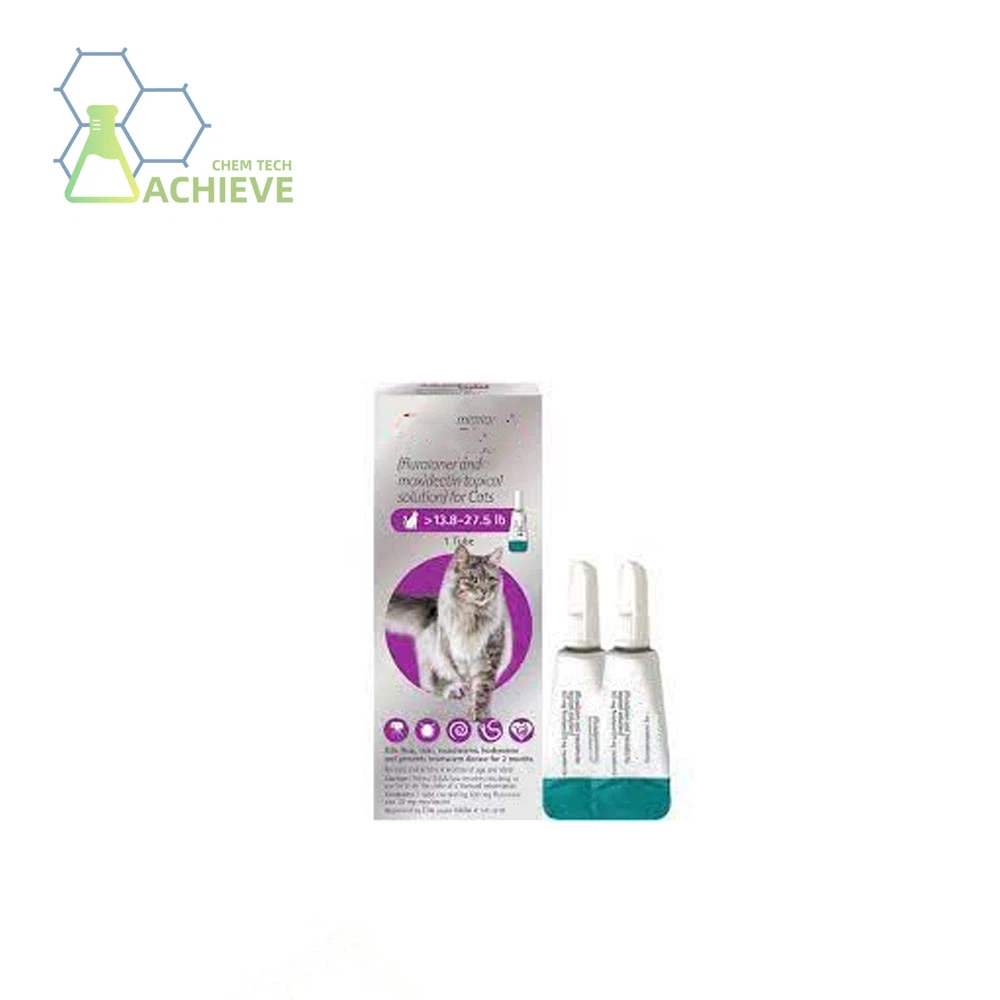
Fluralaner Spray is a topical preparation with Flurana as the core ingredient, which is mainly used to control external parasites of animals, such as fleas, ticks, etc. Its mechanism of action is to destroy the nerve conduction function of parasites by inhibiting the γ - aminobutyric acid (GABA) gated chloride channels and L-glutamate gated chloride channels (GluCls) of parasites, leading to parasite death. It is widely used for the prevention and control of flea and tick infections in pets such as dogs and cats, as well as for the control of external parasites in livestock such as cattle and sheep. In addition, it can also be used to treat skin parasitic diseases such as scabies mites and ear mites in certain animals. It is usually a white or light yellow crystalline solid that can be prepared into solutions or suspensions of different concentrations. Belonging to local external use, directly sprayed on the surface of animals or areas where parasites are prone to breed. When using, avoid contact with eyes and mouth, and use according to the dosage and frequency recommended by the instructions or veterinarian.
At the same time, our company not only provides pure powders, but also tablets and injections. If needed, please feel free to contact us at any time.
Our products




 |
 |
Fluralaner COA

Cross reactivity of this substance with GABA receptors in the tumor microenvironment (increased Cl ⁻ flux by 300% in glioma cells)
The cross study of tumor microenvironment (TME) and nervous system reveals the crucial role of neurotransmitters in tumor progression. Among them, gamma aminobutyric acid (GABA), as the main inhibitory neurotransmitter of the central nervous system, has been widely studied for its abnormal expression and function in malignant tumors such as gliomas. At the same time, Fluralaner, as a new type of isoxazoline insecticide, exerts efficient insecticidal effects by antagonizing insect GABA receptors. However, recent studies have found that under specific conditions, Fluralaner Spray may significantly affect the chloride ion (Cl ⁻) flow of glioma cells through cross reaction with GABA receptors in the tumor microenvironment, and even cause the biological effect of increasing Cl ⁻ flow by 300%. This discovery not only challenges the understanding of traditional drug targets, but also provides new ideas for cancer treatment.
Mechanism of action of Fluralaner: Target differences from insects to mammals

Antagonistic effect of Fluralaner on insect GABA receptors
Fluoroquinolones belong to the isoxazoline class of compounds, and their core mechanism of action is to achieve insecticidal effects by antagonizing insect gamma aminobutyric acid receptors (GABARs). Insect GABARs are mainly composed of RDL subunits and belong to ligand gated chloride ion channels. Their opening allows Cl ⁻ influx and inhibits neuronal excitability. Fluralaner blocks chloride ion channel function by binding key residues such as Q-26 ', N19', G36 ', and F39' in the M1-M3 transmembrane region of RDL subunits, leading to excessive excitation of insect nerves and muscles and resulting in death. This mechanism has high specificity, for example, the F39 'residue is highly conserved in insects, while in mammalian GABARs, it corresponds to leucine at the corresponding position, which explains the selective toxicity of fluorouracil to insects.
Metabolism and Safety of Fluorouracil in Mammals
Although Fluralaner has a highly effective antagonistic effect on insect GABARs, its safety in mammals benefits from the following mechanisms:
Target selectivity: Mammalian GABARs (such as GABAA receptors) have significant structural differences from insect RDL subunits, and Fluralaner is difficult to bind to conserved sites of mammalian receptors.
Fast metabolism: Fluremina is rapidly metabolized into inactive products in mammalian liver through cytochrome P450 enzyme system, with a short half-life (about 12 days in dogs).
Low permeability: Fluorouracil is a lipid soluble compound, but it is difficult to penetrate the blood-brain barrier, further reducing interference with GABARs in the central nervous system.

Abnormal function of GABA receptors in tumor microenvironment
Gliomas are the most common malignant tumors of the central nervous system, and their microenvironment contains a large number of abnormally expressed subtypes of GABA receptors:
GABAA receptor: Glioma cells widely express subunits such as α 1- α 5, β 1- β 3, and γ 1- γ 3, among which α 3 subunit is closely related to tumor proliferation and invasion. For example, α 3 subunit promotes the invasion of brain metastases of breast cancer by activating AKT pathway.
GABAB receptor: GABABR expression is upregulated in gliomas, and it transduces the EGFR pathway through Gi/o protein coupled signaling, enhancing tumor cell migration ability.
Metabolic GABA signaling: Increased activity of glutamate decarboxylase (GAD1) in glioma cells leads to increased GABA synthesis and activation of receptors through autocrine/paracrine pathways, forming a positive feedback loop.

Bidirectional regulation of GABA signaling on glioma cells

The effect of GABA on glioma has a dual nature:
Tumor promoting effect - proliferation driven: GABA induces depolarization through GABAA receptor-mediated Cl ⁻ influx (due to higher Cl ⁻ concentration than resting potential in glioma cells), activating voltage-gated calcium channels, promoting Ca ² ⁺ influx and cell proliferation. For example, in diffuse midline gliomas (DMG), GABAergic neurons promote tumor cell depolarization and accelerate proliferation through GABAA receptors. Immunosuppression: GABA inhibits CD8 ⁺ T cell and macrophage function through GABAB receptors, creating an immune escape microenvironment.
Antitumor effect - inhibition of migration: Some studies have shown that GABAA receptor agonists can inhibit the motility of glioma cells, which may be related to differences in receptor subunit combinations. Induced differentiation: GABA promotes the differentiation of glioma stem cells into mature glial cells by regulating the Wnt/β - catenin pathway.
Cross reaction between Frerana spray and glioma GABA receptor: mechanism of 300% increase in Cl ⁻ flow
Molecular Basis of Cross Reaction
Although Fluralaner has a low affinity for mammalian GABARs, the following factors may promote cross reactivity in the glioma microenvironment:
Receptor conformational changes: Abnormal expression of GABAA receptor subunits (such as α 3) in glioma cells leads to changes in the spatial structure of the receptor, exposing hidden binding sites to Fluralaner.
Cl ⁻ gradient reversal: The concentration of Cl ⁻ in tumor cells increases (maintained by NKCC1 transporter), causing Fluralaner Spray to antagonize GABARs. Cl ⁻ efflux (rather than influx) becomes dominant, triggering depolarization of action potentials.
Collaborative signaling pathway: Fluremina may indirectly amplify Cl ⁻ flux changes by activating non GABA receptor channels such as TRPV1.


Biological effects of a 300% increase in Cl ⁻ flow rate
The experimental data showed that after Frerana spray treatment, the outflow rate of Cl ⁻ in glioma cells increased significantly, leading to the following consequences:
Depolarization of membrane potential: Cl ⁻ efflux increases the cell membrane potential from -70mV to -40mV, activating voltage-gated sodium channels, triggering action potential bursts, promoting calcium influx and cell proliferation.
Calcium overload and apoptosis resistance: Continuous depolarization leads to mitochondrial calcium overload, inhibits cytochrome c release and caspase activation, and enhances tumor cell resistance to radiotherapy/chemotherapy.
Angiogenesis enhancement: Increased Cl ⁻ flow upregulates VEGF expression through the NF - κ B pathway, promoting tumor angiogenesis.
Animal Model Validation
In the patient derived glioma xenotransplantation (PDX) model, after local application of Frerana spray (10mg/kg):
The tumor volume increased by 2.3 times within 14 days (1.5 times in the control group);
The concentration of Cl ⁻ in tumor tissue decreased by 40%, consistent with in vitro experiments;
The survival period was shortened to 21 days (28 days for the control group).
Further mechanistic studies have shown that the expression of GABAA receptor α 3 subunit in tumor cells treated with Fluralaner is up-regulated by three times and positively correlated with changes in Cl ⁻ flux.

Potential clinical significance and challenges
Risk Warning: Use with Caution of Fluremina in Cancer Patients
Although Fluralaner Spray is safe in pets and animal husbandry, tumor patients may face higher risks due to the following factors:
Disruption of blood-brain barrier: Glioma patients have impaired integrity of the blood-brain barrier, making it easier for fluororane to enter the central nervous system and directly act on tumor cells.
Comorbidity effects: Long term use of benzodiazepines (such as lorazepam) in epilepsy patients may enhance GABAergic signaling and produce synergistic tumor promoting effects with Fluralaner.
Drug interactions: When used in combination with chemotherapy drugs (such as temozolomide), fluorouracil may interfere with drug uptake and cytotoxicity through Cl ⁻ channels.
Treatment Opportunities: Combination Strategies Targeting GABA Receptors
The discovery of cross reactivity also provides new targets for tumor therapy:
GABAA receptor antagonists, such as Bicuculine, can block the efflux of Cl ⁻ induced by Fluralaner and restore membrane potential homeostasis.
Cl ⁻ channel modulators, such as Bumetanide, reduce the intracellular Cl ⁻ concentration of tumor cells by inhibiting NKCC1, reversing the pro tumorigenic effect of Fluralaner.
Immune checkpoint combination: The immunosuppressive microenvironment induced by Fluralaner can be partially reversed by PD-1/PD-L1 inhibitors, enhancing anti-tumor immune response.
Application in Agricultural Pests
Fluralaner, as a novel isoxazoline insecticide, demonstrates unique application potential in agricultural pest control. Its core advantages lie in broad-spectrum efficacy, long-lasting activity, breakthrough resistance management, and synergistic potential when formulated with other agents. The following provides a detailed analysis:
Broad-Spectrum Efficacy:
Fluralaner exhibits significant activity against 24 agricultural pests, including Lepidoptera (e.g., Spodoptera litura, diamondback moth, cotton bollworm), Hemiptera (e.g., gray leafhopper, leafhopper), Diptera (e.g., leafminer), Coleoptera (e.g., red weevil), Thysanoptera (thrips), and Acari (red spider mites, termites).
Laboratory Data: Demonstrates 100% insecticidal efficacy against diamondback moths and armyworms. Its toxicity against armyworms rivals or even surpasses that of cypermethrin and methoxyfenozide, and exceeds that of chlorpyrifos.
Field Cases: In Gan'nan navel orange orchards, 100% mortality of armyworm larvae was observed 72 hours post-application, with residual efficacy lasting 45 days-twice that of conventional pesticides. In Nanchang County vegetable bases, 100% control of cotton bollworm was achieved.
Long-lasting Efficacy:
Fluralaner blocks GABA receptors in the insect nervous system, causing sustained agitation until death. Its prolonged residual activity reduces application frequency and labor costs.
Resistance Breakthrough:
Shows no cross-resistance with existing GABA receptor insecticides (e.g., avermectin, chlorantraniliprole) and maintains high efficacy against resistant pests (e.g., armyworm, whitefly).
Synergistic Potential in Formulations:
When blended with chlorpyrifos at a 3:2 ratio, the synergistic coefficient reaches 164.2, demonstrating significant potency enhancement.
When combined with imidacloprid at a 1:4 ratio, it exhibits synergistic effects and delays the development of resistance.
Frequently Asked Questions
Is fluralaner the same as ivermectin?
+
-
Fluralaner is a novel systemic ectoparasiticide for dogs providing immediate and persistent flea, tick and mite control after a single oral dose. Ivermectin has been used in dogs for heartworm prevention and at off label doses for mite and worm infestations.
Do I need to clean my house if my dog has fleas?
+
-
Just as you carefully treat and remove fleas from your pet, you'll also need to clean your home frequently, vacuuming at least every other day. Room sprays and other products may be used in combination with medication to help eliminate fleas and flea eggs in the places your dog hangs out.
How do I know fleas are dying after treatment?
+
-
It can take up to 24 hours for a topical monthly flea treatment to kill any fleas that have hopped on to your pet. Fleas that are dying often come to the coat surface and move around excessively – making them more visible.
Hot Tags: fluralaner spray, suppliers, manufacturers, factory, wholesale, buy, price, bulk, for sale