




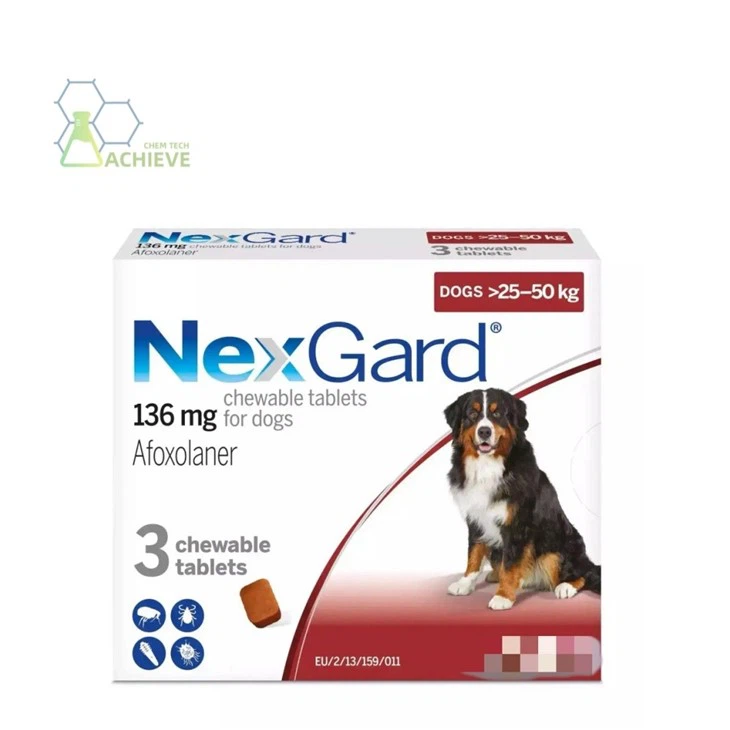

Shaanxi BLOOM Tech Co., Ltd. is one of the most experienced manufacturers and suppliers of afoxolaner chewable tablets in China. Welcome to wholesale bulk high quality afoxolaner chewable tablets for sale here from our factory. Good service and reasonable price are available.
Afoxolaner chewable tablets are an oral antiparasitic medication designed specifically for dogs, administered by NexGard ®) FRONTPRO ®) Wait for the product name to circulate in the market. The main component of this medication, Aflana, belongs to the isoxazoline class of compounds. It inhibits the neurotransmitter gamma aminobutyric acid (GABA) - gated chloride ion channels, blocking the transmembrane transmission of chloride ions, leading to excessive excitation and death of insect and mite neurons. Its mechanism of action is efficient and selective, with high safety for mammals.
Our product


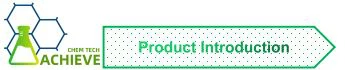

Additional information of chemical compound:

Afoxolaner +. COA
 |
||
Certificate of Analysis |
||
|
Compound name |
Afoxolaner | |
|
CAS No. |
1093861-60-9 | |
|
Grade |
Pharmaceutical grade | |
|
Quantity |
Customized | |
|
Packaging standard |
Customized | |
| Manufacturer | Shaanxi BLOOM TECH Co., Ltd | |
|
Lot No. |
20250109001 |
|
|
MFG |
Jan 12th 2025 |
|
|
EXP |
Jan 8th 2029 |
|
|
Structure |
|
|
| TEST STANDARD | GB/T24768-2009 Industry. Stnndard | |
|
Item |
Enterprise standard |
Analysis result |
|
Appearance |
White or almost white powder |
Conformed |
|
Water content |
≤4.5% |
0.30% |
| Loss on drying |
≤1.0% |
0.15% |
|
Heavy Metals |
Pb≤0.5ppm |
N.D. |
|
As≤0.5ppm |
N.D. | |
|
Hg≤0.5ppm |
N.D. | |
|
Cd≤0.5ppm |
N.D. | |
|
Purity (HPLC) |
≥99.0% |
99.5% |
|
Single impurity |
<0.8% |
0.48% |
|
Residue on ignition |
<0.20% |
0.064% |
|
Total microbial count |
≤750cfu/g |
80 |
|
E. Coli |
≤2MPN/g |
N.D. |
|
Salmonella |
N.D. | N.D. |
|
Ethanol (by GC) |
≤5000ppm |
400ppm |
|
Storage |
Store in a sealed, dark and dry place at-20 degrees |
|
|
|
||


This medication is suitable for treating canine flea (cat flea, dog flea), tick (reticulated tick, castor tick, etc.), and mite (dog scabies mite, dog demodex) infections. Pharmacodynamic studies have shown that Aflana is rapidly absorbed in dogs, with a bioavailability of 74% -88% and a plasma half-life of approximately 2 weeks, providing long-lasting protection. In clinical applications, fleas can be killed within 8 hours, ticks can be controlled within 48 hours, and for mite infections, medication should be administered once a month, twice in a row, and the treatment course should be extended based on the results of skin scraping.


The product specifications cover multiple doses ranging from 11.3mg to 136mg, and require precise administration based on the dog's body weight (2.7-7.0mg/kg). Its palatability design facilitates direct feeding or mixing with food, and the monthly dosing regimen significantly improves pet owner compliance. In terms of safety, mild gastrointestinal reactions (vomiting, diarrhea), drowsiness or itching may occasionally occur, and most adverse reactions have strong self limitation. However, it should be noted that puppies under 8 weeks of age, dogs weighing less than 2kg, pregnant dogs, and nursing dogs require veterinary evaluation before use, and special breeds such as Collies require strict dosage control.
As a new generation of oral deworming medications, it has become an important choice for the prevention and control of canine ectoparasites due to its broad-spectrum activity, long-lasting protection, and convenience, especially suitable for flea/tick high incidence seasons or mite infection treatment scenarios.

Afoxolaner chewable tablets as a new type of isoxazoline antiparasitic medication, marks a technological breakthrough in the field of canine deworming through its development and application. As a core component of NexGard and NexGard Spectra, Aflana achieves efficient and long-lasting in vitro deworming effects by targeting the nervous system of arthropods.
Molecular mechanism of action: Targeted binding of isoxazoline structure
Belonging to the class of isoxazoline compounds, its chemical structure contains a key isoxazoline ring, which is modified by specific substituents (such as trifluoromethyl, chlorine atoms) to endow medications with specific affinity for the nervous system of arthropods. Its target is ligand gated chloride channels (LGCCs) in the presynaptic membrane of arthropod neurons, particularly the chloride channel subtypes regulated by gamma aminobutyric acid (GABA) and glutamate.
In the nervous system of arthropods (such as fleas and ticks), GABA is the main inhibitory neurotransmitter, which activates GABA gated chloride channels on the postsynaptic membrane to promote chloride ion (Cl ⁻) influx, leading to neuronal hyperpolarization and inhibiting nerve impulse transmission. Afurana interferes with this process through the following steps:
Competitive binding: The isoxazoline ring in its molecule specifically binds to the GABA receptor binding site, with a significantly higher binding affinity than endogenous GABA molecules.


Channel conformational changes: Medication binding induces conformational changes in receptor proteins, causing the pore size of chloride ion channels to shrink or the closure mechanism to fail, hindering Cl ⁻ influx.
Neuronal disinhibition: Due to the obstruction of Cl ⁻ influx, neurons are unable to maintain a hyperpolarized state, resulting in an increase in resting membrane potential (depolarization) and enhanced neuronal excitability.
In addition to GABA receptors, it can also act on glutamate regulated chloride channels (GluCls). GluCls are ion channels unique to arthropods, widely distributed in the central and peripheral nervous systems, responsible for regulating neuronal activity. Afurana interferes with GluCls function through the following mechanisms:
Non competitive antagonism: The medication binds to the allosteric regulatory site of GluCls instead of the glutamate binding site, inhibiting Cl ⁻ influx by altering the probability of channel opening.
Neuronal overactivation: The impaired function of GluCls leads to increased sensitivity of neurons to glutamate, causing sustained depolarization and further exacerbating the disorder of neural impulse transmission.

Pharmacokinetic characteristics: efficient absorption and long-lasting maintenance
Its oral bioavailability, tissue distribution, and metabolic characteristics are the basis for its long-lasting deworming effect. Taking dogs as an example, after a single oral administration of Aflana, the dynamic changes of the medication in the body are as follows:

Rapid absorption: The peak blood medication concentration (Cmax) is reached 2-4 hours after oral administration, with an absolute bioavailability of 74% -88%, indicating high absorption efficiency of the medication in the gastrointestinal tract.
Widely distributed: The medication rapidly distributes to tissues throughout the body, with an apparent distribution volume (Vd) of 2.6 ± 0.6 L/kg, indicating that the medication can penetrate the blood-brain barrier and accumulate in target tissues such as skin and fat.
Target tissue enrichment: In the skin and subcutaneous tissues, its concentration is significantly higher than the plasma concentration (skin/plasma concentration ratio>10), forming a "drug reservoir" that is continuously released to the surface, killing attached parasites.
Liver metabolism: In the liver, afoxolaner chewable tablets undergoes oxidative metabolism by the cytochrome P450 enzyme system (mainly the CYP3A subfamily), producing more hydrophilic metabolites such as hydroxylated and glucuronide derivatives.
Bile excretion is predominant: The prototype medication and its metabolites are mainly excreted through bile into the intestine and excreted with feces, without hepatic intestinal circulation, reducing the risk of medication accumulation in the body.
Urine excretion is secondary: about 10% -15% of medications are excreted through the kidneys in their original form or as metabolites, and can still be safely used in dogs with renal insufficiency.

2.3 Half life and dosing cycle

Long term half-life: The plasma half-life in dogs is about 2 weeks (14-17 days), which may be extended to 47.7 days for different breeds of dogs (such as Collies), supporting a monthly dosing regimen.
Continuous insecticidal effect: The half-life of the medication in the skin is significantly longer than the plasma half-life (skin half-life>30 days), ensuring that the surface medication concentration is maintained above the minimum effective concentration (MEC) for a long time.
Transmembrane signal transduction interference: imbalance of neural electrical activity
Afurana directly disrupts the transmembrane signal transduction of arthropod neurons by blocking chloride ion channels, causing a series of electrophysiological disorders:
Normal state: The resting membrane potential of arthropod neurons is approximately -60 mV, maintained at a chloride ion gradient balance regulated by GABA and glutamate.
After medication action: Cl ⁻ influx obstruction leads to depolarization of membrane potential to -40 mV to -50 mV, approaching the action potential threshold (-55 mV), and neurons are in a state of irritability.

3.2 Abnormal release of action potential

Spontaneous discharge: Depolarized membrane potential reduces the threshold for action potential release, causing neurons to spontaneously generate high-frequency action potentials (>100 Hz), leading to loss of control in nerve impulse transmission.
Synaptic transmission disorder: Continuous depolarization increases the release of neurotransmitters (such as acetylcholine and glutamate), leading to excessive excitation of postsynaptic neurons and causing muscle spasms and paralysis.
Uncontrolled muscle contraction: Abnormal transmission of nerve impulses to muscle fibers, leading to uncoordinated contractions (such as persistent contraction of tick mouthparts that cannot fall off, and disappearance of flea jumping reflex).
Energy depletion: Continuous muscle contraction accelerates the consumption of adenosine triphosphate (ATP), causing intracellular calcium overload and mitochondrial dysfunction, ultimately leading to cell apoptosis.

Parasitic death pathway: a multi-stage process from excitation to exhaustion
Induced parasite death goes through the following stages:
Behavioral changes: Fleas exhibit excessive jumping and twitching; Tick mouthparts contract and limbs spasm.
Physiological indicators: The frequency of neuronal action potentials increases by 3-5 times, and muscle electrical activity is enhanced.
Loss of motor function: Fleas cannot jump, ticks fall off or fix on the host's skin but cannot feed on blood.
Metabolic disorders: inhibition of aerobic respiration, accumulation of lactate leading to acidosis, and increased cell membrane permeability.
Cell death: Neurons and muscle cells undergo necrosis or apoptosis, and parasites die.
Immune clearance: The host immune system recognizes dead parasites and accelerates clearance through macrophage phagocytosis and antigen presentation.
Clinical application advantages: high efficiency, safety, and convenience
5.1 Broad spectrum insecticidal activity
Extracorporeal parasites: have a 100% killing effect on fleas (cat flea, dog flea) and ticks (reticulated tick, castor tick, hexagonal tick, hemochromatid tick).
Parasites in the body: Highly reliable (Aflana+Mirbeixime) can prevent heartworm infection and treat gastrointestinal nematodes (such as roundworms and hookworms).
5.2 Rapid onset and long-term protection
Killing fleas within 8 hours: The peak blood concentration is reached within 4 hours after oral administration, and over 98% of fleas are killed within 8 hours.
48 hour tick control: The killing effect on ticks reaches over 95% within 48 hours, with continuous protection for 30 days.

Afoxolaner chewable tablets target and inhibit GABA and glutamate gated chloride ion channels in the nervous system of arthropods, causing neuronal overexcitement, muscle paralysis, and energy depletion, ultimately leading to parasite death. Its efficient absorption, wide distribution, and long-lasting metabolic characteristics, combined with broad-spectrum deworming activity and excellent safety, make it the preferred medication in the field of dog deworming.
Hot Tags: afoxolaner chewable tablets, suppliers, manufacturers, factory, wholesale, buy, price, bulk, for sale