




Shaanxi BLOOM Tech Co., Ltd. is one of the most experienced manufacturers and suppliers of gonadorelin pills in China. Welcome to wholesale bulk high quality gonadorelin pills for sale here from our factory. Good service and reasonable price are available.
Gonadorelin pills are an oral form of gonadotropin-releasing hormone (GnRH), with its active ingredient being a synthetic ten-peptide that has the exact same structure as the naturally produced GnRH in the human body. This drug acts by mimicking the pulsatile secretion of the hypothalamus and stimulating the anterior pituitary gland, thereby triggering the release of luteinizing hormone (LH) and follicle-stimulating hormone (FSH). These two hormones are crucial for regulating the function of the gonads: in men, they promote testosterone synthesis and sperm production; in women, they regulate follicle development, ovulation, and estrogen secretion.
our products form


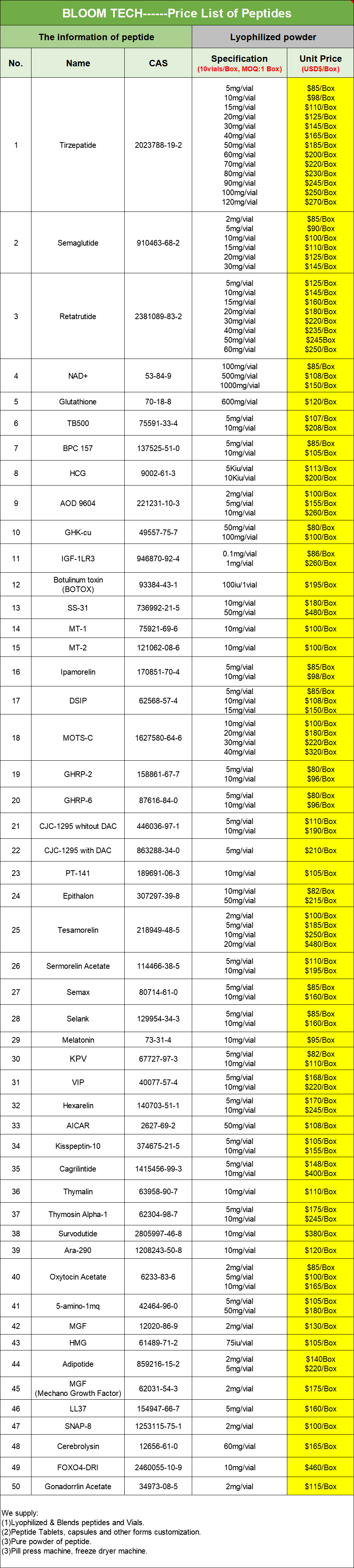
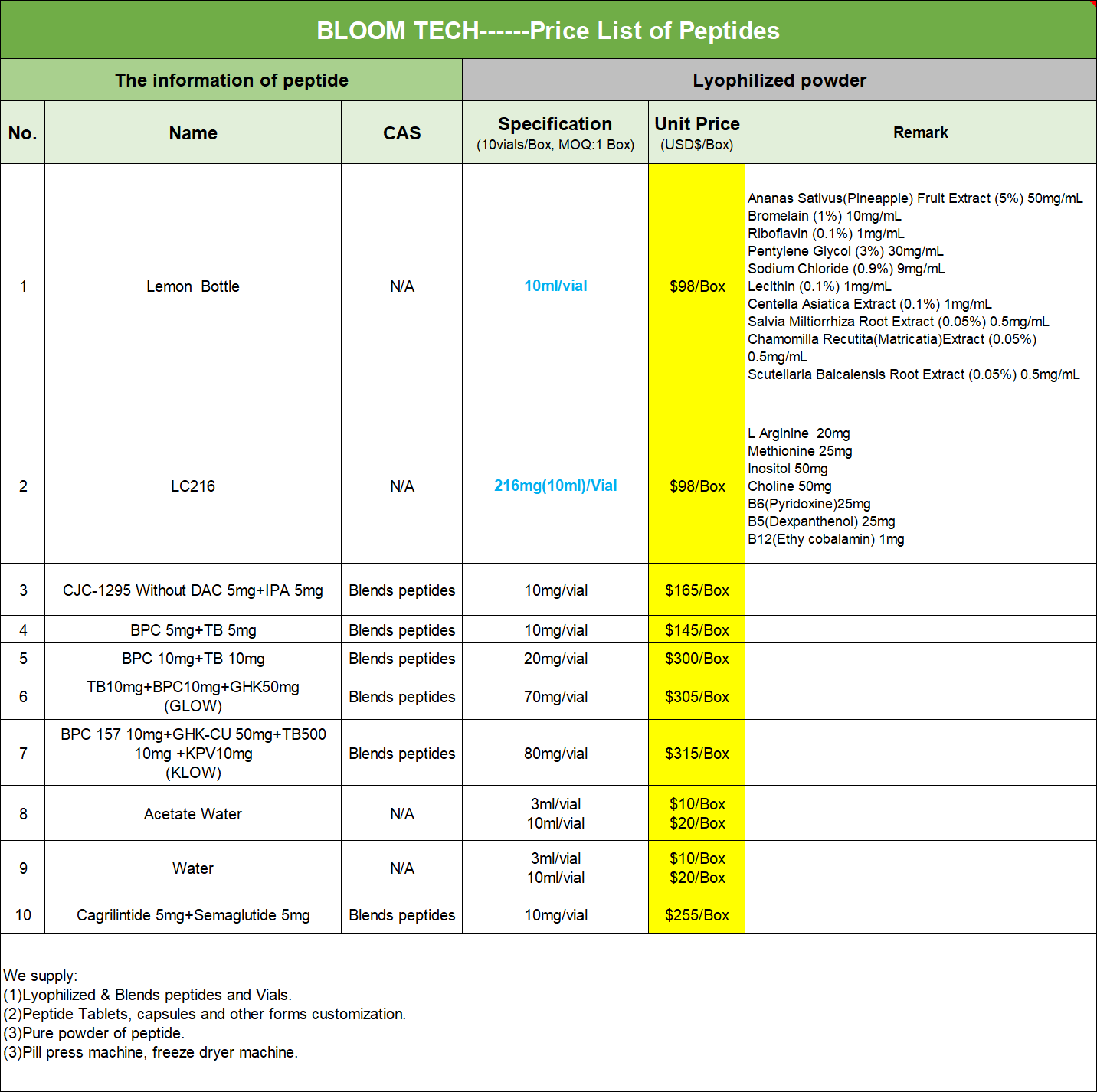


Gonadorelin COA


Cross-field Application of Veterinary Drugs in Animal Reproduction
Regulation of animal reproduction represents the core cross-field application scenario of gonadorelin pills. Unlike its therapeutic purpose in human clinical medicine, its veterinary application targets quality improvement and efficiency gain in large-scale breeding, optimization of animal procreative rhythms, and elevation of germplasm utilization rate. Via precise activation of the hypothalamic-pituitary-gonadal (HPG) axis in animals, gonadoreline stimulates the pituitary to secrete follicle-stimulating hormone (FSH) and luteinizing hormone (LH).


It enables estrus synchronization, precise ovulation induction, and improved fertilization success rate. Widely deployed across all breeding scenarios for livestock, poultry, aquatic species and fur animals, gonadoreline has become a core veterinary drug for procreative regulation in modern intensive farming.
Precise procreative Regulation in Livestock Farming
In large-scale livestock production, inconsistent estrous cycles, scattered ovulation timing and low accuracy of artificial insemination constitute primary bottlenecks restricting breeding efficiency.
Conventional farming relies on natural estrus mating, which suffers from extended breeding cycles, unstable conception rates and difficult large-scale management. The adoption of gonadoreline formulations fundamentally addresses this industry pain point, and the product is now extensively used in procreative production of major domestic animals including sows and cows.
Application in Estrus Synchronization and Ovulation Induction of Sows
Within the pig farming sector, gonadoreline is mainly applied for estrus synchronization and targeted ovulation induction in gilts and multiparous sows.


Highly intensive commercial pig farms demand uniform cycles of estrus, insemination and farrowing to facilitate batch production management.Under natural conditions, individual sows exhibit a 3–5 day variation in estrous cycles, easily causing disordered production batches and higher artificial insemination costs. Timed quantitative injection of gonadoreline rapidly activates the HPG axis, eliminates individual differences in estrous cycles and achieves group-wide estrus synchronization in sows.
Meanwhile, the drug precisely stimulates follicle maturation and ovulation, preventing follicular atresia and delayed ovulation, and markedly enhancing oocyte quality and ovulation quantity. Extensive on-farm data demonstrate that gonadoreline-treated sows achieve an estrus synchronization rate exceeding 90%, artificial insemination conception rate increased by 10%–15%, and an average rise of 1–2 piglets per litter, significantly boosting production efficiency and economic returns of pig production. Furthermore, for sows with lactation-induced anestrus post-partum, gonadoreline effectively reactivates dormant procreative systems, shortens non-productive days and raises annual procreative parity.


Application in Optimizing procreative Rhythms of Cows
In cattle farming, particularly intensive dairy and beef production, procreative efficiency directly determines farm profitability. Cows display subtle natural estrus signs, variable ovulation timing and prolonged post-partum estrus recovery intervals, leading to extremely high rates of missed and incorrect insemination under traditional breeding models. Gonadoreline formulations deliver targeted solutions to cattle procreative challenges. On one hand, they trigger post-partum estrus resumption, accelerate recovery of the procreative tract and shorten calving intervals.
On the other hand, they support herd estrus synchronization to enable large-scale batch insemination. Accurate control of ovulation timing is critical to conception success during artificial insemination. Gonadoreline induces timed ovulation in cows, aligning artificial insemination operations precisely with ovulation and completely resolving mismatched timing in conventional breeding practices. Clinical applications show that gonadoreline-treated cows achieve a stabilized artificial insemination conception rate above 85%, with post-partum anestrus duration shortened by 15–20 days. This substantially improves annual procreative utilization of cows and meets standardized, batch-oriented production requirements of modern cattle farms.


procreative Regulation in Aquaculture and Fur Animal Breeding
Beyond livestock and poultry, cross-field adoption of gonadoreline in aquaculture and special fur animal farming is gradually expanding, filling market gaps for procreative regulators for special breeding sectors. Procreative rhythms of aquatic species and fur animals are heavily influenced by environment and seasons, resulting in low natural procreative efficiency and unstable seedling survival rates. Thanks to its broad-spectrum procreative regulatory capacity, gonadoreline has emerged as a key veterinary drug to lift output and profitability in special animal farming.
procreative Regulation for Artificial Seedling Production of Aquatic Animals
Most commercially valuable aquatic species suffer from asynchronous natural ovulation, short breeding seasons and low seedling yields, and wild seed collection cannot satisfy demands of intensive aquaculture. Gonadoreline modulates the procreative endocrine system of farmed fish, shrimp and crabs to induce synchronized estrus and ovulation in broodstock, breaking seasonal and environmental constraints on natural reproduction.


Compared with conventional aquaculture spawning agents, gonadoreline operates in line with physiological procreative patterns of aquatic organisms without triggering hormonal disorders or elevated larval deformity rates, offering superior safety for seedling production. For major farmed aquatic varieties including grass carp, common carp and Pacific white shrimp, gonadoreline enables mass ovulation of broodstock and centralized seedling cultivation, greatly improving seedling efficiency and larval uniformity, and securing sufficient fry supply for large-scale aquaculture.
Efficiency Improvement in Fur Animal Reproduction
Fur animals such as mink, fox and raccoon dog are seasonal monoestrous species characterized by short natural estrus cycles, random ovulation and prevalent silent estrus, leading to extremely low conception rates from natural mating - a major bottleneck limiting development of the fur farming industry.


Gonadoreline effectively activates the procreative system of fur animals, induces normal estrus in silent-estrus individuals, precisely controls ovulation timing and enables synchronized mating across herds. Pharmacological intervention significantly elevates estrus rate, mating success rate and litter size, reduces non-pregnant individuals, cuts farming losses, and accelerates transformation of fur animal production from traditional free-range systems to intensive, standardized farming.
Cross-field Utilization as a Research Tool in Pharmacological Models
Beyond its role as a dedicated veterinary drug for animal husbandry, gonadorelin pills serves as a core modeling tool in life science, pharmacology and toxicology research. Owing to its bidirectional modulatory effect on the HPG axis, adjustment of administration route, frequency and dosage enables precise construction of two mutually exclusive standardized animal models that mimic activated normal procreative axis status and reversible procreative suppression status respectively. These two model types feature high stability, reproducibility and controllability.


They are widely adopted in procreative toxicology research, contraceptive drug screening, exploration of endocrine disease mechanisms, veterinary drug safety evaluation and other research areas, representing central experimental models for basic procreative medicine research and pharmaceutical development.
Modeling Principles and Operating Protocols
Under physiological conditions, the mammalian hypothalamus secretes GnRH in a pulsatile pattern to maintain normal pituitary and gonadal function and sustain homeostasis of the procreative axis. Intermittent pulsatile administration of gonadoreline fully imitates natural endogenous hormone secretion rhythms.
Intermittent micro-dosing supplies exogenous GnRH to experimental animals to activate and preserve normal physiological activity of the HPG axis. This modeling approach adopts low-dose discontinuous treatment with dosing intervals aligned with endogenous hormone cycles, avoiding hormone accumulation and endocrine disruption, and maximally recapitulating normal procreative physiology in animals. Commonly used laboratory animals for this model include mice, rats, rabbits and miniature pigs, compatible with diverse fundamental procreative experiments.


Research Application Scenarios of the Model
This model is primarily used to investigate regulatory mechanisms of the intact procreative endocrine axis and positive intervention effects of exogenous factors on the procreative system. It can also act as a blank control model for comparison of procreative functional differences under pathological conditions. In pharmacological research, it supports efficacy assessment of various pro-procreative agents and farm efficiency-enhancing veterinary drugs, and verifies drug-mediated modulation of animal estrus, ovulation and procreative hormone secretion.
In environmental toxicology, it detects impacts of environmental pollutants and feed additives on an intact procreative axis and clarifies procreative safety of various factors. In animal breeding research, it facilitates exploration of procreative rhythm regulatory mechanisms across different germplasms and provides theoretical support for selective breeding of superior strains. The core value of this model lies in standardized reconstruction of normal procreative physiological status, overcoming intense stress and severe physiological disturbance associated with conventional modeling methods, and delivering experimental data with higher authenticity and reliability.


Modeling Principles and Operating Protocols
Contrary to the activating effect of intermittent pulsatile dosing, continuous micro-infusion of gonadoreline induces pituitary desensitization and establishes a reversible gonadal function suppression model. The core mechanism is as follows: pituitary gonadotropes rely on rhythmic stimulation to respond to GnRH. Uninterrupted persistent GnRH exposure triggers desensitization and endocytic inactivation of pituitary receptors, rendering them incapable of responding to hormonal signals normally. This inhibits synthesis and release of FSH and LH, ultimately achieving temporary suppression of gonadal function.
This modeling method relies on continuous delivery via microinjection pumps to maintain constant low in vivo gonadoreline concentrations; stable desensitization can be achieved without high-dose administration. Moreover, suppression is fully reversible. Upon drug withdrawal, pituitary receptor activity gradually recovers, HPG axis function returns to baseline, and no permanent damage to the procreative system occurs.


Core Research Purposes of the Model
The reversible gonadal function suppression model constitutes an essential tool for procreative toxicology research and contraceptive drug screening with extremely broad application prospects.First, it is applied in procreative toxicology studies to simulate pathological states of suppressed procreative function and endocrine disruption. It is used to detect procreative toxicity of chemical pharmaceuticals, veterinary drug residues and environmental toxins, and characterize inhibitory effects and injury mechanisms of harmful factors on gonadal development, hormone secretion and germ cell generation.
Second, it supports research and development of contraceptives and procreative inhibitors. It acts as a primary screening model for novel contraceptive agents and animal procreative suppressors, enabling accurate evaluation of drug-induced procreative inhibition efficacy, duration of action and safety, and providing standardized experimental support for drug development.Third, it serves endocrine disease research by simulating pathological conditions such as hypogonadism and abnormal puberty development, to investigate pathogenesis and intervention strategies for procreative endocrine disorders.


The stability of gonadorelin pills, a synthetic polypeptide drug, is critical to ensuring its therapeutic efficacy and safety, as gonadoreline is prone to degradation due to its peptide structure. Its stability is mainly affected by internal factors such as chemical structure and external factors including storage conditions, formulation excipients, and preparation processes. Gonadoreline is extremely hygroscopic, so moisture absorption during storage can easily cause peptide chain hydrolysis and reduce drug activity. Additionally, extreme pH values and high temperatures accelerate its degradation, with the most stable state achieved at pH 5.0-5.5.
To maintain stability, the product adopt optimized formulation and packaging designs. Excipients such as mannitol are added as protective agents to form a glassy matrix that wraps peptide molecules and inhibits degradation. The pills are packaged in tight, well-sealed containers to prevent moisture and oxygen exposure, and brown packaging can avoid ultraviolet-induced oxidation. Under standard storage conditions (2-8℃, dry and dark environment), the pills can maintain stable efficacy for 12-24 months, with a degradation rate controlled below 1%.
Notably, repeated temperature fluctuations and moisture exposure should be avoided during storage and transportation, as they can increase the content of degradation products and reduce bioactivity. Accelerated stability tests show that the pills remain stable under 40℃ and 75% relative humidity for 6 months, meeting pharmacopeial standards. Proper stability control ensures that the product retain their ability to regulate the hypothalamic-pituitary-gonadal axis during clinical use.
FAQ
Is gonadoreline safe for long-term use?
+
-
Some patients may experience palpitations or an increase in blood pressure. These symptoms should be reported to a healthcare provider, especially if they persist or worsen. Long-term use of Gonadorelin Acetate has not been extensively studied, so the long-term side effects are not well understood.
Does gonadoreline restore testicle size?
+
-
Patients on testosterone who wish to stem or reverse testicular shrinkage may use either gonadorelin or low-dose hCG. Gonadorelin may come with fewer estrogenic effects compared to hCG and is generally considered the drug of choice in younger patients with fertility aspirations.
Hot Tags: gonadorelin pills, suppliers, manufacturers, factory, wholesale, buy, price, bulk, for sale