


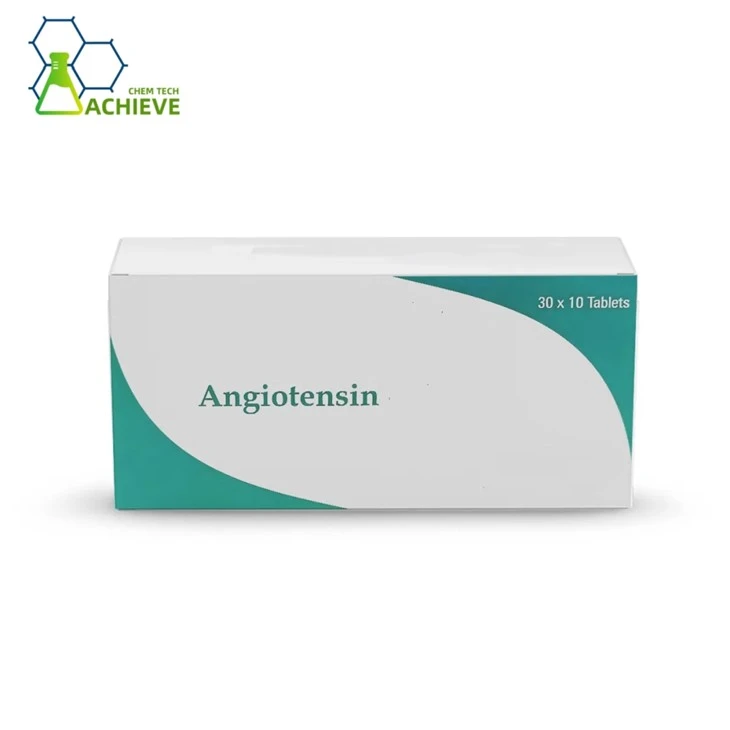


Shaanxi BLOOM Tech Co., Ltd. is one of the most experienced manufacturers and suppliers of angiotensin tablet in China. Welcome to wholesale bulk high quality angiotensin tablet for sale here from our factory. Good service and reasonable price are available.
Angiotensin is the core active component of the renin-angiotensin system (RAS). As its pharmaceutical formulation, angiotensin tablet play a vital physiological role in regulating cardiovascular homeostasis, fluid balance, tissue metabolism and other physiological processes in the body. Its core physiological functions mainly focus on three aspects: sympathetic nervous system activation, central effects, and long-term cell growth and remodeling.
These functions cooperate and interact with each other to maintain normal physiological activities of the body, and are also closely associated with the occurrence and progression of various diseases.
Our Products Form



Angiotensin COA


Sympathetic Nervous System Activation

The sympathetic nervous system is the core regulatory system of the body's stress response, mainly responsible for modulating cardiovascular activities and metabolic levels. One of the most direct physiological functions of angiotensin tablet is to activate the sympathetic nervous system. It enhances sympathetic excitability through dual mechanisms, thereby strengthening cardiovascular contractile responses and maintaining arterial pressure stability, especially exerting an important compensatory effect when arterial pressure drops or blood volume is insufficient.
(I) Promoting Norepinephrine Release from Sympathetic Nerve Terminals
Norepinephrine is the main neurotransmitter released by sympathetic nerve terminals, and its release amount directly determines the degree of sympathetic activation, which in turn affects the contractile function of the cardiovascular system. The active ingredient in it can specifically act on the presynaptic membrane of sympathetic nerve terminals. By activating Ang II type 1 receptors (AT₁R) on the presynaptic membrane, it triggers calcium ion influx and promotes the fusion of synaptic vesicles with the presynaptic membrane, thus accelerating the release of norepinephrine.


(II) Inhibiting Norepinephrine Reuptake
In addition to promoting norepinephrine release, it can also prolong its action time in the synaptic cleft by inhibiting norepinephrine reuptake, further enhancing the excitatory effect of the sympathetic nervous system. Under normal physiological conditions, most norepinephrine released by sympathetic nerve terminals is recycled back to the nerve terminals through reuptake transporters on the presynaptic membrane, thereby terminating its physiological effect and preventing excessive sympathetic activation.
Data source: National Center for Biotechnology Information. Interaction between the renin-hypertensin-aldosterone and sympathetic nervous systems[J]. PubMed, 1993; Chinese Association of Pathophysiology, Vascular Medicine Committee. Renin-hypertensin-aldosterone system[J]. Chinese Journal of Pathophysiology, 2024.
Central Effects
It can not only act on the peripheral sympathetic nervous system but also cross the blood-brain barrier into the central nervous system, acting on core central regions such as the hypothalamus and medulla oblongata to exert a series of central regulatory effects, mainly including stimulating the thirst center, regulating the arterial pressure center, and participating in baroreflex regulation. These effects cooperate with peripheral regulatory mechanisms to jointly maintain the body's fluid balance and arterial pressure homeostasis.


(I) Stimulating the Thirst Center and Increasing Water Intake
The thirst center is mainly located in the supraoptic and paraventricular nuclei of the hypothalamus, responsible for sensing the body's water metabolism status. When the body is dehydrated, the thirst center is activated to generate thirst, prompting active water intake to replenish fluids and maintain fluid balance. It act on the thirst center through two pathways: first, directly crossing the blood-brain barrier to act on AT₁R in the hypothalamic thirst center, directly activating thirst-related neurons and inducing thirst; second, indirectly transmitting central signals by stimulating peripheral vascular baroreceptors to synergistically activate the thirst center.
(II) Central Regulation of Blood Pressure Elevation
There is a specialized arterial pressure regulatory center in the central nervous system, mainly located in the cardiovascular center of the medulla oblongata, including the vasoconstrictor center and vasodilator center. The balance between the two determines the body's basal arterial pressure level. The active ingredient in angiotensin tablet can act on the medullary cardiovascular center to enhance the excitability of the vasoconstrictor center and inhibit the activity of the vasodilator center, thereby achieving the central regulatory effect of raising arterial pressure.


(III) Participation in Baroreflex Regulation
Baroreflex is an important negative feedback regulatory mechanism for maintaining arterial pressure stability. When arterial pressure rises, baroreceptors in the carotid sinus and aortic arch are activated, and afferent nerves transmit signals to the center, inhibiting the vasoconstrictor center and activating the vasodilator center to lower arterial pressure.
When arterial pressure drops, afferent signals from baroreceptors weaken, and the center activates the vasoconstrictor center and inhibits the vasodilator center to raise arterial pressure. It participate in the fine regulation of arterial pressure by modulating the sensitivity of baroreflex.

Data source: American Physiological Society. Hypertensin, Thirst, and Sodium Appetite[J]. Physiol. Rev, 1998; American Physiological Society. Effects of hypotension and fluid depletion on central hypertensin-induced thirst and salt appetite[J].
Cell Growth and Remodeling (Long-Term Effects)

In addition to short-term sympathetic activation and central regulatory effects, long-term use of it also produces significant cell growth and remodeling effects, mainly targeting target organs such as the myocardium, blood vessels and kidneys. By promoting the proliferation and hypertrophy of related cells, it leads to structural remodeling of tissues and organs. While maintaining tissue homeostasis, this long-term effect is also closely related to the occurrence and development of cardiovascular and renal diseases, constituting an indispensable part of the physiological functions of it.
(I) Promoting Cardiomyocyte Hypertrophy and Fibroblast Proliferation, Inducing Myocardial Hypertrophy
Myocardial tissue is mainly composed of cardiomyocytes and cardiac fibroblasts, in which cardiomyocytes are responsible for myocardial contraction and fibroblasts synthesize extracellular matrix to maintain the structural integrity of myocardial tissue. When it act on myocardial tissue for a long time, they can promote cardiomyocyte hypertrophy and cardiac fibroblast proliferation by activating AT₁R, thereby inducing myocardial hypertrophy, which is one of the core manifestations of its long-term cell remodeling effect.


(II) Promoting Glomerular Mesangial Proliferation, Inducing Renal Injury and Proteinuria
The kidney is one of the important target organs of angiotensin tablet. Its long-term cell growth and remodeling effect is mainly manifested in promoting glomerular mesangial cell proliferation, which in turn causes renal injury and proteinuria. Glomerular mesangial cells are located between glomerular capillary loops, responsible for supporting glomerular structure and regulating glomerular filtration function.
Their abnormal proliferation damages the glomerular filtration membrane and impairs normal renal function.Ang II can act on AT₁R on glomerular mesangial cells to activate related signaling pathways, promote mesangial cell proliferation, and stimulate mesangial cells to synthesize a large amount of extracellular matrix, leading to expansion of the glomerular mesangial area and thickening of the glomerular filtration membrane.

Data source: PMC. Ang II-Induced Signal Transduction Mechanisms for Cardiac Hypertrophy[J]. PubMed Central, 2022; PMC. Pathophysiology of Ang II-Mediated Hypertension, Cardiac Hypertrophy, and Failure: A Perspective from Macrophages[J]. PubMed Central, 2023.

I. Chemical Synthesis of the Core Active Component
At present, the liquid-phase "liquid-holding method" is mainly used industrially to synthesize hypertensin active polypeptides (taking clinically commonly used Ang II as an example).
This method is efficient and ensures product purity. The synthesis uses amino acids as raw materials and 1,2-dichloroethane as an organic solvent, gradually extending the peptide chain through repeated cycles of acylation, washing, deprotection, neutralization and other steps.
First, the C-terminal amino acid benzyl ester undergoes acylation with Boc-amino acids under the action of a coupling agent to form a dipeptide; subsequently, the α-amino protecting group is removed, and the acylation step is repeated to sequentially link the required amino acids until a complete octapeptide precursor is formed.
Finally, protecting groups are removed via hydrogenation to obtain highly active Ang II polypeptide, with an overall yield of approximately 78%. In addition, high-performance liquid-phase reversed-phase chromatography using polystyrene-divinylbenzene copolymer as a filler can be adopted for purification and desalination of crude products to achieve large-scale preparation.
II. Tablet Formulation Processing Flow
After purification, hypertensin polypeptide needs to be mixed with suitable excipients and processed into tablets through pharmaceutical technology to ensure its stability and bioavailability.
The first step is raw material pretreatment: high-purity hypertensin polypeptide is mixed with fillers and binders, and wet granulation is adopted to prepare the mixture into uniform granules. After drying and sizing, lubricants are added to ensure granule fluidity.
The second step is tableting: qualified granules are fed into a tablet press and compressed into tablets under appropriate pressure, with tablet weight, hardness and disintegration time strictly controlled to avoid overly brittle or hard tablets affecting dissolution.
The third step is quality inspection: strict testing is conducted on tablet purity, content uniformity, disintegration rate and other indicators, and qualified products are packaged. The entire formulation process requires strict control of ambient temperature and humidity to prevent degradation of the polypeptide active ingredient.
Data source: PubChem. Method for preparing hypertensin and hypertensin acetate - Patent CN-103965296-B[P]; OSD Machinery. Cómo se fabrican las tabletas: un proceso paso a paso[EB/OL].
IV. Adverse Reactions
Dry cough (ACEI)
01
Angioedema (ACEI/ARB)
02
Hyperkalemia (ACEI/ARB)
03
Thrombotic events with Ang II injection
04
Mesenteric/acral ischemia (Ang II)
05
Data source: Advances in perioperative application of Ang II.
FAQ
Where is hypertensin produced?
+
-
Hypertensin is produced through a multi-organ cascade: the liver creates the precursor angiotensinogen, which is cleaved by renin (from the kidneys) into inactive hypertensin I, which is finally converted into active Ang II primarily by hypertensin-converting enzyme (ACE), found heavily in the lungs and kidneys.
What causes high hypertensin levels?
+
-
Elevated serum ACE levels are reported in granulomatous-inflammatory diseases such as sarcoidosis and mixed connective tissue disease, nephropathies associated with diabetes and glomerulonephritis, cardiovascular diseases (such as left ventricular hypertrophy), brain and myocardial infarction.
Hot Tags: angiotensin tablet, suppliers, manufacturers, factory, wholesale, buy, price, bulk, for sale