




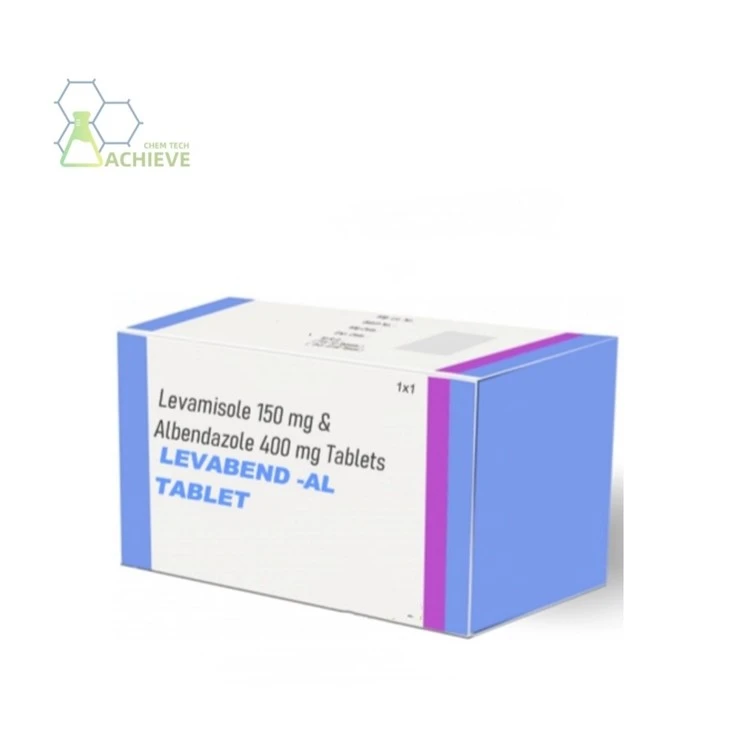


Shaanxi BLOOM Tech Co., Ltd. is one of the most experienced manufacturers and suppliers of levamisole tablets in China. Welcome to wholesale bulk high quality levamisole tablets for sale here from our factory. Good service and reasonable price are available.
Levamisole tablets are a classic drug with dual pharmacological effects, with its core component being Levamisole. Initially developed as a broad-spectrum deworming drug, it was later discovered to have immunomodulatory functions and has demonstrated unique value in clinical applications. It is a derivative of thiazole compounds and a broad-spectrum anthelmintic drug mainly used to drive roundworms and hookworms. The therapeutic effect on intestinal parasitic infections such as roundworms, hookworms, and pinworms is significant, especially with a deworming efficiency of over 90% for roundworms. Its mechanism of action involves selectively inhibiting succinate dehydrogenase in the muscle of the parasite, blocking energy metabolism pathways, leading to paralysis and death of the parasite, while cholinergic effects promote parasite excretion. Compared with tetraimidazole (racemic form), levamisole has stronger activity and fewer side effects, making it one of the preferred drugs for deworming treatment.



Additional information of chemical compound:
| Product Name | Levamisole Powder | Levamisole Tablets | Levamisole Injection | Levamisole Hcl |
| Product Type | Powder | Tablet | Injection | Powder |
| Product Purity | ≥99% | ≥99% | ≥99% | ≥99% |
| Product Specifications | Customizable | Customizable | Customizable | Customizable |
| Product Package | Customizable | Customizable | Customizable | Customizable |
Our Product


Levamisole +. COA
 |
||
Certificate of Analysis |
||
|
Compound name |
Levamisole | |
|
CAS No. |
14769-73-4 | |
|
Grade |
Pharmaceutical grade | |
|
Quantity |
Customized | |
|
Packaging standard |
Customized | |
| Manufacturer | Shaanxi BLOOM TECH Co., Ltd | |
|
Lot No. |
20250109001 |
|
|
MFG |
Jan 12th 2025 |
|
|
EXP |
Jan 8th 2029 |
|
|
Structure |
|
|
| TEST STANDARD | GB/T24768-2009 Industry. Stnndard | |
|
Item |
Enterprise standard |
Analysis result |
|
Appearance |
White or almost white powder |
Conformed |
|
Water content |
≤4.5% |
0.30% |
| Loss on drying |
≤1.0% |
0.15% |
|
Heavy Metals |
Pb≤0.5ppm |
N.D. |
|
As≤0.5ppm |
N.D. | |
|
Hg≤0.5ppm |
N.D. | |
|
Cd≤0.5ppm |
N.D. | |
|
Purity (HPLC) |
≥99.0% |
99.5% |
|
Single impurity |
<0.8% |
0.48% |
|
Residue on ignition |
<0.20% |
0.064% |
|
Total microbial count |
≤750cfu/g |
80 |
|
E. Coli |
≤2MPN/g |
N.D. |
|
Salmonella |
N.D. | N.D. |
|
Ethanol (by GC) |
≤5000ppm |
400ppm |
|
Storage |
Store in a sealed, dark and dry place at-20 degrees |
|
|
|
||


Levamisole tablets, as a classic drug that combines deworming and immune regulation functions, have played an important role in clinical medicine since their inception. Its core component is levamisole hydrochloride. As the left-handed form of tetraimidazole, its activity is about 1-2 times that of the racemic form, but its toxic side effects are significantly reduced.
It has a strong killing effect on various nematodes, and its mechanism of action is to selectively inhibit succinate dehydrogenase in the insect muscle, block the process of reducing fumarate to succinic acid, resulting in the obstruction of anaerobic metabolism in the insect muscle, interruption of energy supply, and ultimately excretion with feces due to muscle paralysis. This mechanism makes it the preferred drug for treating the following parasitic infections:
1. Intestinal nematode infection
Ascaris infection: The effective rate of single dose oral administration exceeds 90%, with an adult dose of 1.5-2.5mg/kg and a child dose of 2-3mg/kg, taken on an empty stomach or before bedtime.


Hookworm disease: It needs to be taken continuously for 3 days, with the same dosage as for roundworm disease. The effectiveness of expelling American hookworms can be further improved by combining with thiacloprid.
Pinworm disease and fecal roundworm disease: Single dose treatment can significantly reduce the positive rate of worm eggs, and the effect is particularly prominent when treated collectively.
2. Filariasis
The activity of Ban's filarial worm, Malay filarial worm adults, and microfilaments is superior to traditional drugs such as ethambutol, but the long-term efficacy is poor. The recommended dosage is 4-6mg/kg, taken in 2-3 doses for 3 consecutive days.
Sequential treatment with amiodarone citrate can enhance efficacy and reduce the risk of drug resistance.


3. Special parasitic infections
Onchocerciasis: It has a direct killing effect on microfilaments, but it should be noted that it may cause serious allergic reactions.
Taenia solium: Combined with thiabendazole, it can treat mixed infections of intestinal nematodes and expand the antibacterial spectrum.
Clinical case: In African filariasis endemic areas, the combination treatment of levamisole and ethambutol reduced the positive rate of microfilaments from 62% to 8%, and the recurrence rate was lower than that of the monotherapy group.
The immunomodulatory effect of levamisole is bidirectional: it enhances the response when immune function is low and inhibits overreaction in autoimmune diseases. The mechanism involves T cell activation, enhanced macrophage phagocytic function, and regulation of cytokine secretion.
1. Autoimmune diseases
Rheumatoid arthritis: As a slow acting anti rheumatic drug, it can reduce the production of autoantibodies and alleviate joint symptoms. The initial dose is 50mg/day, gradually increasing to 150mg/day, and close monitoring of blood routine is required to prevent granulocyte deficiency.


Systemic lupus erythematosus: By inhibiting excessive activation of B cells, reducing levels of anti dsDNA antibodies, and improving skin and joint symptoms.
2. State of immune dysfunction
Chronic hepatitis B: Combination with interferon can increase the serum conversion rate of HBeAg, and its mechanism is related to enhancing Th1 cell response.
AIDS opportunistic infection: by stimulating the proliferation of bone marrow hematopoietic stem cells, increase the CD4+T cell count, and reduce the incidence of Kaposi's sarcoma.
After organ transplantation: Combination with low-dose glucocorticoids can reduce the dosage of immunosuppressants and lower the risk of infection.
3. Primary immunodeficiency disease
For patients with common variant immunodeficiency diseases (CVID), levamisole can increase IgG levels and reduce the frequency of recurrent respiratory infections.
Research data: A randomized controlled trial targeting rheumatoid arthritis showed that the 2-year progression rate of joint destruction in the levamisole treatment group was 43% lower than that in the placebo group, but caution should be taken against granulocyte deficiency (incidence rate of approximately 2.8%).

The role of levamisole in tumor treatment is gradually shifting from adjuvant therapy to multi-target therapy, with mechanisms including immune activation, anti angiogenesis, and epigenetic regulation.
1. Adjuvant therapy for solid tumors
Lung cancer: Postoperative combination chemotherapy can prolong median survival (MST) by 3.2 months and increase 5-year survival rate by 12%.
Breast cancer: combined with cyclophosphamide and methotrexate (CMF scheme) can reduce the recurrence risk by 19%.
Colorectal cancer: Improving the prognosis of stage III patients by upregulating the density of tumor infiltrating lymphocytes (TILs).


2. Hematological malignancies
Chronic lymphocytic leukemia: Low dose levamisole (25-50mg/day) can delay disease progression, and its mechanism is related to the inhibition of Bcl-2 protein expression.
Multiple myeloma: Combined use with thalidomide can enhance dendritic cell antigen presentation function and improve complete remission rate.
Direct anti-tumor effect
In vitro experiments have shown that levamisole can induce apoptosis in leukemia HL-60 cells, and its mechanism involves caspase-3 activation and mitochondrial membrane potential collapse.
Clinical guidelines: NCCN guidelines recommend levamisole as an optional adjuvant therapy for postoperative treatment of stage III colorectal cancer, especially for patients who cannot tolerate oxaliplatin.
The application of levamisole in dermatology is based on its dual effects of immune regulation and antiviral, making it a treatment option for various refractory skin diseases.
1. Viral skin diseases
Flat warts: Local application of levamisole ointment combined with vitamin A yogurt cream has a cure rate of 78% within 4 weeks, and its mechanism is related to enhancing the local cellular immune response of the skin.
Condyloma acuminatum: combined with interferon α -2b gel can reduce the recurrence rate, especially for cervical lesions.


2. Autoimmune skin diseases
Chronic urticaria: In patients with histamine resistance, levamisole (50mg/day) can significantly reduce the frequency of wheal attacks, and its effect is related to regulating Th1/Th2 balance.
Bullous pemphigoid: Low dose levamisole (25mg/every other day) can reduce the dosage of glucocorticoids and lower the risk of osteoporosis.
3. Infectious skin diseases
Chronic skin ulcer: Levamisole can accelerate wound healing by promoting fibroblast proliferation and angiogenesis, especially for diabetes foot ulcer.
Research evidence: An open trial on recurrent genital herpes showed that the levamisole treatment group had a 61% lower recurrence rate at 6 months compared to the control group, and did not increase the risk of developing drug-resistant viral strains.
The immune enhancing effect of levamisole makes it uniquely valuable in the field of infection prevention, especially for immunocompromised populations.
1. Vaccine adjuvant effect
Influenza vaccine: Combined with aluminum adjuvant, levamisole tablets can increase the serum protection rate of elderly people to 82%, and its mechanism is related to enhancing dendritic cell antigen presentation function.
Hepatitis B vaccine: For non responders, pretreatment with levamisole can increase the antibody positive conversion rate from 31% to 67%.


2. Control of drug-resistant bacterial infections
Methicillin resistant Staphylococcus aureus (MRSA): Levamisole restores sensitivity to β - lactam antibiotics by downregulating the expression of penicillin binding protein 2a (PBP2a).
Multidrug resistant Mycobacterium tuberculosis: In vitro experiments have shown that levamisole can enhance the bactericidal activity of rifampicin, and its mechanism is related to the destruction of bacterial biofilms.
Clinical practice: In measles vaccination for African children, levamisole adjuvant increased serum conversion rate by 29% without increasing the incidence of adverse reactions.
The biological effects of levamisole extend to multiple medical fields, and its potential value is still being explored.
1. Promotion of children's growth and development
For children with idiopathic short stature, the combination of levamisole (0.5mg/kg/day) and growth hormone treatment can significantly increase annual growth rate (8.2cm vs 6.5cm), and its mechanism is related to upregulation of IGF-1 expression.
2. Anti aging research
Animal experiments have shown that levamisole can extend the lifespan of fruit flies by 18%, and its mechanism is related to the activation of the SIRT1 longevity gene, but human research is still lacking.
3. Reproductive Medicine
For infertile patients with repeated implantation failures, levamisole improves embryo implantation rate (from 28% to 41%) by regulating the Th1/Th2 balance in the endometrium.

As a "versatile" in the history of medicine, the value of levamisole tablets is not only reflected in current clinical applications, but also in the possibility of continuously stimulating medical innovation. In the future, with the development of personalized therapy and translational medicine, levamisole is expected to demonstrate unique therapeutic effects in more disease fields and contribute greater strength to human health.
Frequently Asked Questions
Who is the potential "stability killer" in its tablet excipients?
+
-
Lactose. Lactose, a commonly used excipient in levamisole tablets, may undergo Maillard reaction with the main drug during storage, resulting in discoloration of the tablets and the production of trace amounts of related impurities. This explains why the stability of certain compound preparations (especially when combined with macrolides) significantly decreases - other API concentrations that are more than 10 times higher can seriously affect the stability of the preparation, leading to unknown impurities exceeding the standard.
Why is the prepared oral liquid "stable in the original medicine but prone to tablet collapse"?
+
-
90 day stability: Original drug powder>96%, tablet liquid only 64% remaining.
The key experiment showed that the levamisole solution (25 mg/mL) prepared with pure powder still retained>96% after being stored at 25 ° C for 90 days, but only 63.56% of the same concentration solution prepared with tablets remained. Cold mechanism: The extract of tablet excipients changes pH (from 5.3 to 6.87), while the degradation of levamisole accelerates at pH 5-7, with a degradation rate 70 times faster at pH 8 than at pH 2.
Why is the pharmacopoeia mandatory to monitor an 'invisible impurity peak'?
+
-
Because the relative retention time of the forced degradation products is about 1.3, and the separation degree requirement is ≥ 6.0.
The International Pharmacopoeia stipulates that after forced degradation under alkaline conditions (0.1 mol/L NaOH) at 100 ° C for 5 hours, the main peak and the main degradation product peak must be completely separated (separation degree ≥ 6.0). This' invisible 'peak is the key to verifying whether the analytical method can detect potential impurities.
How high is its oral bioavailability?
+
-
Up to 92.3%, almost catching up with injections.
The latest pharmacokinetic data shows that the absolute bioavailability (F) of oral administration of levamisole is 92.3%, which is almost indistinguishable from intramuscular injection. But the absorption rate is significantly different: the peak time for oral administration (Tmax) is 2.63 hours, while intramuscular injection only takes 1.41 hours.
Why is the milligrams on the tablet label inconsistent?
+
-
50 mg levamisole ≈ 58 mg hydrochloride.
The International Pharmacopoeia mandates that labels must indicate the base content of levamisole, but the actual active ingredient is its hydrochloride salt. The conversion formula is: 1 mg of levamisole hydrochloride=0.848 mg of levamisole. This leads to an excess of 18% when feeding the formulation to ensure that the base labeling level meets the standard.
Hot Tags: levamisole tablets, suppliers, manufacturers, factory, wholesale, buy, price, bulk, for sale