


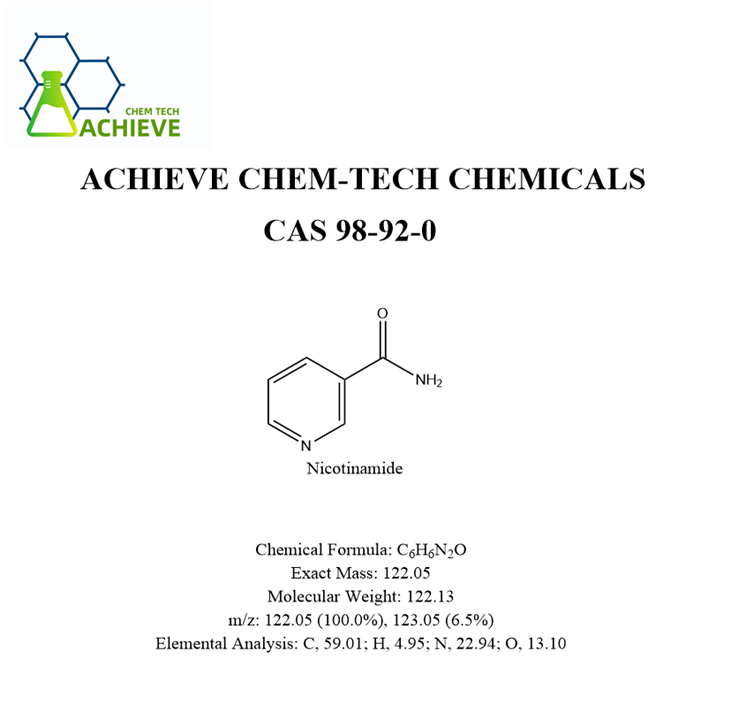


Nicotinamide powder is a white crystalline, colorless needle shaped crystal or white powder. Odorless or almost odorless, with a bitter taste; Molecular formula C6H6N2O, CAS 98-92-0. Slightly hygroscopic, easily soluble in water or ethanol, soluble in glycerol, 1g of this product is soluble in 1ml of water, 1.5ml of alcohol, and 10ml of glycerol, insoluble in ether. In aqueous solution, the solubility of nicotinamide is temperature dependent, and as the temperature increases, the solubility increases. In a 1% aqueous solution, the pH value is between 6.5 and 7.5, indicating a slightly acidic state. Nicotinamide is stable to heat, acid, and alkali. In alkaline media, nicotinamide is easily oxidized. It is a type of vitamin B family, also known as vitamin B3. It is a water-soluble vitamin that is crucial for human health. Nicotinamide is involved in various metabolic processes in the human body, such as energy metabolism, nerve conduction, hemoglobin synthesis, etc. Therefore, it plays an important role in maintaining normal physiological functions in the human body. Shanxi BLOOM Tech Co., Ltd has nicotinamide for sale. If you need to buy niacinamide powder and also want to know about the niacinamide powder price, please send us an email.

|
|
|

|
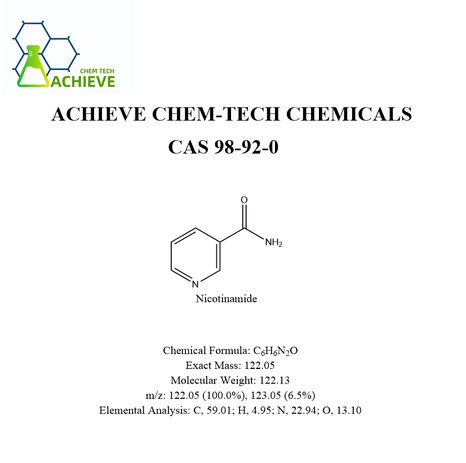
Chemical Formula |
C6H6N2O |
|
Exact Mass |
122.05 |
|
Molecular Weight |
122.13 |
|
m/z |
122.05 (100.0%), 123.05 (6.5%) |
|
Elemental Analysis |
C, 59.01; H, 4.95; N, 22.94; O, 13.10 |


Medical Treatment
Prevention and Treatment of Skin Conditions: Nicotinamide is used clinically to prevent and treat conditions such as pellagra (a skin disease caused by niacin deficiency), stomatitis (inflammation of the mouth), and glossitis (inflammation of the tongue).
Cardiovascular Support: It has been studied for its potential role in managing heart conditions like sick sinus syndrome and atrioventricular block, though its primary use in these areas is still under investigation.
Dietary Supplementation
As a water-soluble vitamin, nicotinamide is essential for maintaining proper cellular function and energy production. It is commonly included in multivitamin supplements to ensure adequate intake.


Skin Brightening and Evening
Nicotinamide is a popular ingredient in skincare products due to its ability to improve skin tone and reduce the appearance of hyperpigmentation. It helps to brighten the skin by inhibiting melanin transfer and promoting skin cell turnover.
Anti-Aging Effects
By strengthening the skin's barrier function and stimulating collagen production, nicotinamide contributes to the reduction of fine lines, wrinkles, and skin roughness.


Soothing and Calming Properties
It is also known for its soothing effects on the skin, making it a suitable ingredient for those with sensitive skin or prone to irritation.
Acne Management
Recent studies suggest that nicotinamide may help regulate sebum production and reduce inflammation associated with acne.

Formulations and Administration
Oral Supplementation: Nicotinamide is available in tablet, capsule, and powder forms for oral consumption.
Topical Applications: In cosmetics, it is commonly found in the form of serums, creams, and lotions. It is recommended to apply these products as part of a regular skincare routine, either in the morning or evening, depending on the product instructions.

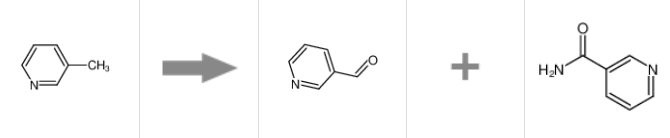
The traditional synthesis methods of nicotinamide powder include chemical method and biological method. The chemical method is mainly divided into two steps: the first step is to synthesize nicotinic acid with 3-methylpyridine, and the second step is to synthesize nicotinamide with nicotinic acid; β- Picoline is oxidized to nicotinic acid by air, which reacts with ammonium hydroxide and then dehydrates to obtain nicotinamide. Nicotinamide is obtained by salt formation of niacin and ammonia and dehydration. The biological method is mainly to produce 3-cyanopyridine through the reaction of 3-methylpyridine under the catalysis of microorganisms, and 3-cyanopyridine is hydrolyzed to obtain nicotinamide. In this paper, the one-step method of producing nicotinamide from 3-methylpyridine was studied, and the reaction conditions were optimized. The synthesis reaction formula of nicotinamide is as follows:
Experimental operation
Method I
Put nicotinic acid, boric acid and ammonia water into the reaction pot, add ammonia under stirring, and heat up to dissolve; Then distill and recover the ammonia, and move it to the dehydration pot for further concentration after reaching 120 ℃; When the temperature reaches 145 ℃, start to add liquid ammonia, and continue to pass ammonia at 185~190 ℃ for 20~30h. Then it is cooled to 130 ℃, diluted with distilled water, added with active carbon, and decolorized with ammonia at 70~80 ℃ for 2h; After the reaction, the filtrate was filtered while it was hot. The filtrate was cooled out in water for 24h, separated and crystallized, washed with ethanol, and dried to obtain a finished product with a yield of 89%.

Method II
In the high-pressure reactor, 93g of 3-methylpyridine was added, and then appropriate manganese dioxide and urea were added. Oxygen is introduced under high temperature and pressure. After the reaction, remove the manganese dioxide catalyst by cooling and filtering, and wash it with ethanol. After washing, the ethanol is evaporated, and then the unreacted 3-methylpyridine is removed by decompression desolventization. The remaining solid is washed with ether to obtain pure nicotinamide powder.

The toxicity research of nicotinamide mainly focuses on its side effects and possible toxic effects. The following is a detailed description of the toxicity of nicotinamide:
1. Firstly, nicotinamide may cause allergic reactions such as skin flushing, itching, and rashes in certain situations. These reactions may vary due to individual differences, but they usually gradually disappear after discontinuing the use of nicotinamide. Therefore, before using nicotinamide, it is recommended to conduct a skin test or consult a doctor for advice.
2. Secondly, excessive intake of niacinamide may have adverse effects on the human body. Although niacinamide is a water-soluble vitamin, high intake can also lead to poisoning. Symptoms of poisoning may include nausea, vomiting, diarrhea, dizziness, arrhythmia, etc. In addition, excessive intake of niacinamide may also lead to skin problems such as vitiligo and pigmentation. Therefore, when using niacinamide, it is necessary to pay attention to appropriate supplementation and avoid excessive intake.
3. In addition, nicotinamide may also interact with other drugs. For example, niacinamide can enhance the effect of anticoagulants, leading to prolonged bleeding time. Therefore, when using anticoagulants before or at the same time as nicotinamide, it is necessary to consult a doctor for advice. In addition, niacinamide can also enhance the metabolism and excretion of alcohol, so it is necessary to limit alcohol intake when using niacinamide to avoid causing alcoholism.
Overall, the toxic effects of nicotinamide are mainly related to its side effects and excessive intake. When using niacinamide, it is necessary to supplement it in moderation, avoid excessive intake, and pay attention to the interaction with other drugs as well as the usage of pregnant and lactating women. If you have any doubts, please consult a professional doctor or nutritionist for advice.

Nicotinamide, also known as 3-pyridinecarboxamide, is a white crystalline powder that is easily soluble in water or ethanol. As an important derivative of vitamin B3, it plays an irreplaceable role as a key reagent in scientific research, industry, and biotechnology. Its core application value lies in its role as a component of coenzyme I (NAD ⁺) and coenzyme II (NADP ⁺), participating in cellular redox reactions, energy metabolism, and signal transduction processes.

Core reagents in scientific research experiments
In life science research, it is an essential reagent for cell culture, enzyme activity analysis, and molecular biology experiments. As a nutritional enhancer for tissue culture medium, it can maintain normal metabolic function of cells. For example, in mammalian cell culture, by participating in NAD ⁺ synthesis, it supports cellular energy metabolism, promotes cell proliferation and differentiation. Experimental data shows that adding 1-10 mM nicotinamide to stem cell culture medium can significantly improve the maintenance efficiency of stem cell pluripotency while inhibiting spontaneous differentiation.
In enzymatic research, it participates in the determination of dehydrogenase activity as a coenzyme. For example, in lactate dehydrogenase (LDH) activity detection, nicotinamide adenine dinucleotide (NAD ⁺) acts as a hydrogen receptor to quantify enzyme activity through color reaction or fluorescence signal changes. In addition, nicotinamide derivatives such as β - nicotinamide mononucleotide (NMN) are widely used in aging related research to activate NAD ⁺ - dependent sirtuins family proteins and explore anti-aging mechanisms.


Multi functional additives in the field of biotechnology
In biopharmaceuticals and genetic engineering, as stabilizers and functional additives, it can improve the quality of biological products. For example, in vaccine production, nicotinamide improves the thermal stability of vaccines by stabilizing the structure of virus particles. Data shows that adding 0.5% nicotinamide to influenza vaccine formulations can extend the shelf life of the vaccine to 24 months at 4 ℃ without significantly reducing immunogenicity.
In gene editing technology, as an auxiliary reagent of the CRISPR-Cas9 system, it optimizes gene editing efficiency by regulating cellular NAD ⁺ levels. Research has shown that simultaneous delivery of Cas9 protein and nicotinamide in human embryonic stem cells can increase HDR (homologous directed repair) efficiency by 30% while reducing off target effects. In addition, as a molecular partner in protein expression systems, it promotes the correct folding of recombinant proteins and increases soluble expression levels.


Key raw materials in industrial production
In the field of chemical engineering and materials, it is widely used as an intermediate or functional additive in electroplating, light stabilizers, and polymer material synthesis. In the electroplating industry, as a brightener for nickel plating solution, it forms a complex with nickel ions to make the coating uniform and dense. Experiments have shown that adding 2 g/L nicotinamide to Watt type nickel plating solution can increase the glossiness of the coating by 40% and reduce the porosity.
In plastic processing, as an ultraviolet absorber, it can significantly improve the anti-aging performance of polyethylene (PE) films. In the UV accelerated aging test, the PE film with 0.3% nicotinamide added showed a 65% increase in the retention rate of elongation at break compared to the untreated group, and the service life was extended to more than 3 years. In addition, as an anti coking agent in the rubber industry, it improves the flowability of rubber processing by inhibiting excessive crosslinking in the early stage of vulcanization reaction.

FAQ
What is nicotinamide used for?
Nicotinamide may be used to treat diabetes and certain skin conditions and is being studied in the treatment of some types of cancer. It may increase blood flow to cancer cells and block certain enzymes they need to repair damage to their DNA.
Is nicotinamide a steroid?
Nicotinamide can thus be used as a steroid sparing agent. The enzyme PARP-1, which is inhibited by nicotinamide, is involved in cell senescence, ageing, and cancer. The excessive activation of PARP-1 by UV rays result in depletion of cellular NAD, which further cause glycolytic failure leading to cell necrosis.
Is nicotinamide good for your face?
It can improve skin barrier function by decreasing water loss through the epidermis (the outer skin layer) thus increasing skin hydration. It is reported to improve complexion, by improving the pigmentation, blotchiness and redness of ageing skin; it is used in some cosmeceutical products.
Can nicotinamide lighten skin?
Niacinamide is dermatologist-approved for brightening skin tone. Some research suggests skin care formulas with 5% niacinamide can also help lighten dark spots. In one small study, a combination of skin brighteners including retinol and niacinamide reduced dark spots and fine lines.
Hot Tags: nicotinamide powder cas 98-92-0, suppliers, manufacturers, factory, wholesale, buy, price, bulk, for sale, Pure Erythritol Powder CAS 149 32 6, Sclareolide CAS 564 20 5, L Carnitine Fumarate Powder, 5 hydroxymethylfurfural synthesis, spermidine powder, p Anisaldehyde liquid