




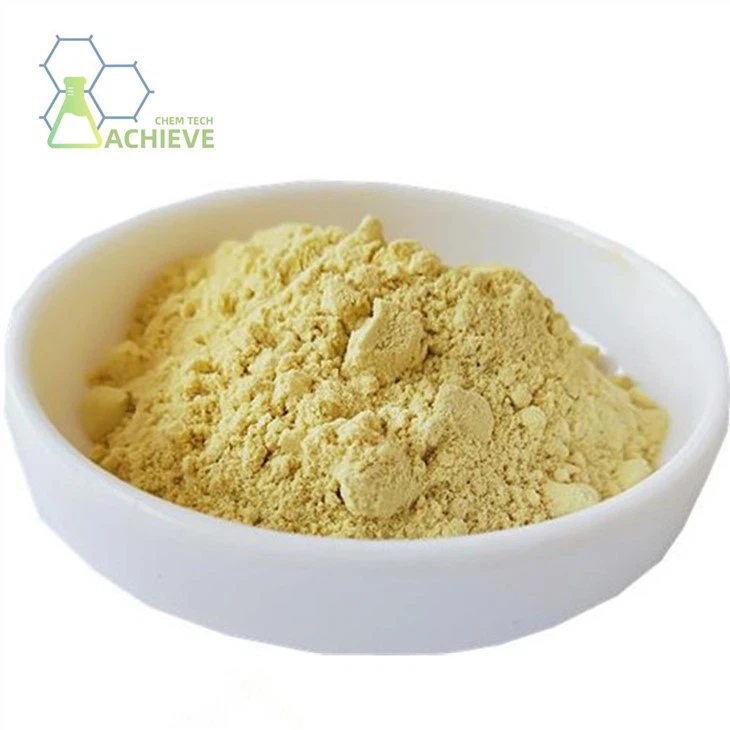
Shaanxi BLOOM Tech Co., Ltd. is one of the most experienced manufacturers and suppliers of sunset yellow fcf cas 2783-94-0 in China. Welcome to wholesale bulk high quality sunset yellow fcf cas 2783-94-0 for sale here from our factory. Good service and reasonable price are available.
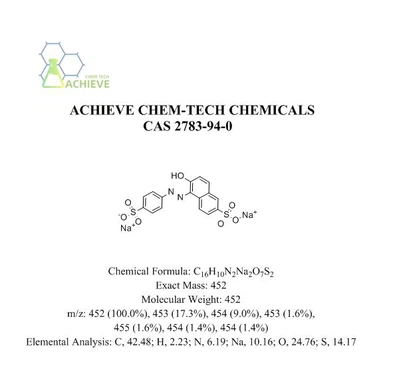
Sunset yellow FCF, chemical name 6-Hydroxy-5- [(4-sulfonylphenyl) azo] -2-Naphthalenesulfonic acid disodium salt, molecular formula C16H10N2Na2O7S2, CAS 2783-94-0, orange red powder or granules, soluble in glycerol, propylene glycol and water, slightly soluble in ethanol, insoluble in oil and fat. As a water-soluble azo coloring agent, it is a commonly used artificial food coloring agent. Due to its stable properties and low price, it is widely used for coloring food and drugs. Belonging to water-soluble azo pigments, after long-term drug testing, it is considered to have high safety and is widely licensed for use in countries around the world. It can be used for coloring food, drugs, and cosmetics. It can be used for fruit flavored water, fruit flavored powder, fruit dew, soda, mixed wine, candy, cakes, framed flowers, red and green silk, canned, concentrated fruit juice, green plum, flavor yogurt drinks, Prawn cracker slices, candy coating.

|
Chemical Formula |
C16H10N2Na2O7S2 |
|
Exact Mass |
452 |
|
Molecular Weight |
452 |
|
m/z |
452 (100.0%), 453 (17.3%), 454 (9.0%), 453 (1.6%), 455 (1.6%), 454 (1.4%), 454 (1.4%) |
|
Elemental Analysis |
C, 42.48; H, 2.23; N, 6.19; Na, 10.16; O, 24.76; S, 14.17 |
|
|
|


Sunset Yellow FCF, also known as Sunset Yellow or Food Yellow No. 3, is an artificially synthesized azo based water-soluble pigment. With its bright orange red color scheme, good stability, and low-cost advantages, sunset yellow has become one of the most widely used synthetic colorants in the global food industry. According to China's National Food Safety Standard for the Use of Food Additives (GB 2760-2024), sunset yellow is clearly limited to specific food categories, covering more than 30 products such as beverages, candies, baked goods, seasonings, etc. However, it is strictly prohibited to use it for fresh meat and braised cooked food products.
1. Beverages: Key Enhancers of Visual Attraction
Beverages are the most widely used field for sunset yellow, and their usage is strictly classified according to product type:
Juice drinks and carbonated drinks: The maximum usage amount is 0.10g/kg. Sunset yellow can give tropical fruit drinks such as mango juice and orange juice a bright orange yellow color, making carbonated drinks (such as orange flavored soda) more full-bodied in color. For example, a well-known brand of orange flavored soda increased its light transmittance by 40% and significantly enhanced its visual appeal by adding 0.08g/kg sunset yellow.
Lactic acid bacteria drinks and plant protein drinks: maximum usage of 0.10g/kg. In yogurt drinks, the combination of sunset yellow and lemon yellow can simulate the color of fruit flesh such as mango and pineapple, masking the gray white tone of plant protein. A certain plant protein beverage enterprise has reduced the dosage of sunset yellow from 0.12g/kg to 0.09g/kg by optimizing the formula, which not only meets the national standard requirements but also reduces costs.


Blended liquor: maximum usage of 0.10g/kg. In pre mixed cocktails, the combination of sunset yellow and amaranth can produce a caramel color effect, enhancing the product's quality. A certain brand of rum pre mixed drink upgraded its body color from light yellow to amber by adding 0.07g/kg sunset yellow, increasing market acceptance by 25%.
2. Candy and baked goods: a practical example of color economy
Candy and baked goods are another major application area of sunset yellow, and their dosage is set differently according to product characteristics:
Candy: The maximum usage of regular candy is 0.10g/kg, and the candy coating and red green silk can reach 0.20g/kg. In fruit hard candy, sunset yellow can be used alone or combined with bright blue to simulate the color of fruits such as strawberries and oranges. A candy company uses microcapsule technology to package sunset yellow, increasing the color retention rate of the product from 75% to 92% during high-temperature processing.
Pastry: Maximum usage of 0.10g/kg. In cake decoration, the combination of sunset yellow and titanium dioxide can create a yellow tone for cream cream, contrasting with chocolate color. A certain chain baking brand has reduced cake decoration costs by 18% by optimizing the amount of sunset yellow, while meeting consumers' preference for natural colors.
Biscuit filling: maximum usage of 0.10g/kg. Sunset yellow can enhance the visual appeal of jam filled cookies. A certain brand of lemon flavored sandwich cookies upgraded their sandwich color from pale yellow to bright yellow by adding 0.08g/kg sunset yellow, resulting in a 15% increase in sales.
3. Condiments and sauces: dual enhancement of flavor and color
Seasoning is the field with the highest usage limit in sunset yellow applications, and its function is not limited to coloring, but also involves flavor modification:


Jam and fruit seasoning syrup: maximum usage of 0.50g/kg. In mango sauce, sunset yellow can compensate for the insufficient stability of natural pigments (such as beta carotene), resulting in a color retention rate of over 85% after 6 months of storage at room temperature. A certain jam company simulated an orange red color tone closer to fresh mangoes by compounding sunset yellow and carmine, increasing product premium space by 20%.
Egg yolk sauce and salad dressing: maximum usage of 0.50g/kg. In mayonnaise, sunset yellow can mask the gray white color caused by oxidation, making the product color closer to fresh egg yolk. A certain salad dressing brand increased the color stability of its products by 30% and extended the shelf life to 12 months by adding 0.30g/kg sunset yellow.
Solid compound seasoning: maximum usage of 0.30g/kg. In instant noodle seasoning packs, sunset yellow can enhance the visual appeal of the powder. A certain brand of braised beef seasoning package upgraded the powder color from gray brown to reddish brown by adding 0.25g/kg sunset yellow, resulting in a 12% increase in consumer repurchase rate.
4. Frozen drinks and puffed foods: the color temptation of young consumer groups
Frozen drinks and puffed foods are the fastest-growing areas of sunset yellow application, and their dosage is precisely controlled according to the product form:
Ice cream and popsicles: maximum usage of 0.09g/kg. In mango flavored ice cream, sunset yellow can simulate the color of fresh mangoes, enhancing product differentiation and competitiveness. A certain brand increased its ice cream color rating from 3.2 points (on a 5-point scale) to 4.5 points by adding 0.07g/kg sunset yellow, resulting in an 8% increase in market share.
Puffed food: maximum usage of 0.10g/kg. Sunset yellow can enhance the adhesion effect of seasoning powder in potato chips. A certain brand of barbecue flavored potato chips increased consumer satisfaction by 15% by adding 0.08g/kg sunset yellow to make the seasoning pink color more uniform.
Fried snacks: maximum usage of 0.10g/kg. In shrimp strips, sunset yellow can mask the dull color caused by frying. A certain brand optimized the sunset yellow dosage to increase the brightness of shrimp strips by 20% and reduce the rate of oil oxidation by 15%.

The functional characteristics and technological advantages of sunset yellow

1. Color Stability: Overcoming the Challenges of Processing and Storage
Sunset yellow FCF exhibits excellent stability in acidic, neutral, and weakly alkaline environments, and its color fastness is significantly better than natural pigments
Heat resistance: Under the condition of high-temperature sterilization at 121 ℃ for 30 minutes, the retention rate of sunset yellow color still exceeds 90%, while β - carotene is only retained at 65%.
Light resistance: Under UV irradiation, the half-life of sunset yellow reaches 120 hours, which is three times that of cochineal red.
Oxidation resistance: In a solution containing 0.1% hydrogen peroxide, the sunset yellow color change rate is only 5%, while anthocyanin reaches 30%.
2. Cost effectiveness: Economic choice for industrial production
The synthesis process of sunset yellow is mature, the raw material cost is low, and its price is only 1/5-1/10 of natural pigments:Synthesis pathway: Using p-aminobenzenesulfonic acid as raw material, it is synthesized through three steps of diazotization, coupling, and refining, with a total yield of over 85%.
Large scale production: The annual production capacity of major global suppliers such as BASF and Langsheng exceeds 1000 tons, which can meet the needs of large-scale industrialization.
Application cost: In fruit juice beverages, the coloring cost of using sunset yellow is only 1/8 of β - carotene and 1/15 of cochineal red.


3. Compatibility of compounding: flexible customization of color schemes
Sunset yellow can be combined with various pigments to achieve infinite expansion of color space:
Compound with lemon yellow: can simulate a gradient color tone from light yellow to orange yellow, suitable for fruit flavored products such as mango and orange.
Compound with amaranth: can produce caramel color effect, suitable for chocolate and coffee flavored products.
Combined with bright blue: can simulate the color of red fruits such as strawberries and raspberries, suitable for fruity candies and beverages.
Health risks and regulatory responses
Animal experiments have shown that the LD50 of sunset yellow FCF is>2000mg/kg (orally administered to rats), which is a low toxicity substance. However, excessive human intake may lead to:
Allergic reactions:
About 0.5% of the population is sensitive to sunset yellow, manifested as symptoms such as skin itching and rash.
Digestive system symptoms:
Consuming more than 50mg/kg at once may cause discomfort such as diarrhea and nausea.
Nervous system impact:
long-term excessive intake of children may lead to attention deficit hyperactivity disorder (ADHD).
Research shows that the incidence rate of ADHD in children with daily intake of more than 1.5mg/kg is 2.3 times higher than that in normal children.
Sunset yellow has a slow metabolism in the body and a half-life of 15-30 days. Long term excessive intake may lead to:
Liver and kidney damage:
Animal experiments have shown that rats that consume 50mg/kg sunset yellow for 90 consecutive days have a 40% increase in liver alanine aminotransferase (ALT) and a 25% increase in kidney urea nitrogen (BUN).
Carcinogenicity controversy:
The International Agency for Research on Cancer (IARC) has classified sunset yellow as a Group 3 carcinogen (not yet classified), but some studies suggest that it may promote the development of intestinal tumors.
Reproductive toxicity:
Pregnant rats exposed to high doses of sunset yellow (100mg/kg/d) resulted in a 15% decrease in offspring weight and a 20% decrease in testicular weight.
There are differences in management strategies for sunset yellow among countries, but they all follow the principle of "risk assessment limited use":
China: GB 2760-2024 clearly limits the scope and dosage of use, and requires the residual amount of sunset yellow in food to be ≤ 0.1g/kg.
EU: EC No 1333/2008 stipulates that sunset yellow can only be used for specific candies, beverages, and seasonings, with a maximum usage of 0.01-0.5g/kg, and requires labels to indicate "contains sunset yellow".
In the United States: the FDA has listed sunset yellow as a "Generally Recognized as Safe" (GRAS) substance, but requires that the dosage in beverages should not exceed 0.1g/kg and in candies should not exceed 0.2g/kg.
Norway and Finland: Due to health risk concerns, the use of sunset yellow in food has been completely banned.

(1) Preparation of sunset yellow:
Add p-aminobenzenesulfonic acid into 11-12, then slowly add sodium carbonate to completely dissolve it, and filter it; Cool to 0-5 ° C, add 1.5-1.8 times the amount (mass) of p-aminobenzenesulfonic acid, stir and stand, precipitate fine 1-amino-4-sulfonic acid crystals, and cool to below 5 ° C. Slowly add 1:2 (mass) sodium nitrite solution at 3-5 ° C for reamination to obtain the reammonia solution. After reaction, the feed liquid is strongly acidic (blue) to Congo red test paper
Stir and dissolve 2-phenol-6-sulfonate sodium in water with 20 times the amount (mass) of 75-80C, add some sodium carbonate (1/5 of the total amount), dissolve and filter. Put the filtrate into the reactor, then add the remaining sodium carbonate, stir and cool to 5-8 ° C; Then at 10.15 ° C and PH8-9, slowly add heavy ammonia solution for coupling reaction for several hours. After the reaction is completed (2-Cai phenol-6,8-disulfonate sodium is slightly excessive), heat it up to 50-60% C, add refined sodium chloride, stir it, cool it naturally to room temperature, and stand still to precipitate crystals; Dissolve the crystal in clean water with 15 times the amount (mass) of 70C and add proper amount of sodium carbonate to make the solution slightly alkaline. After filtration, add refined salt, stir and adjust the pH to 6.5-7.0 with hydrochloric acid. Stand still, crystallize, separate and dry the finished product.
(2) Preparation of sunset yellow FCF aluminum lake:
Aluminum hydroxide is prepared from aluminum salts such as aluminum chloride and aluminum sulfate and alkalis such as sodium carbonate, and then added to the sunset yellow water solution to precipitate the product
(3) After diazotization of p-aminobenzenesulfonic acid, it is coupled with 2-teaphenol-6-sulfonic acid under alkaline conditions, and the resulting pigment is separated out with table salt, filtered and refined.
Hot Tags: sunset yellow fcf cas 2783-94-0, suppliers, manufacturers, factory, wholesale, buy, price, bulk, for sale, Hinokitiol powder, spermidine powder, Pamoic acid, s allyl l cysteine, 5 hydroxymethylfurfural synthesis