




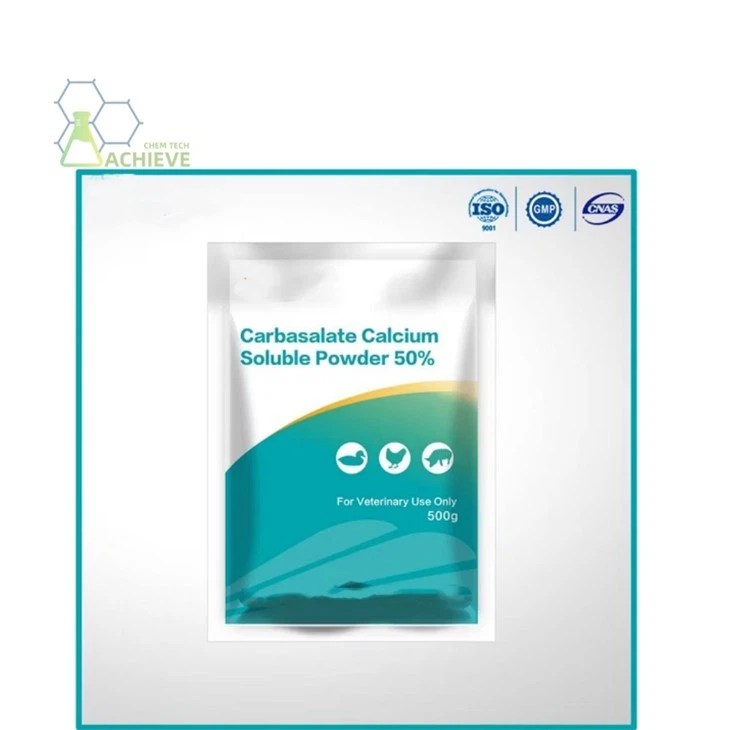


Shaanxi BLOOM Tech Co., Ltd. is one of the most experienced manufacturers and suppliers of carbasalate calcium in China. Welcome to wholesale bulk high quality carbasalate calcium for sale here from our factory. Good service and reasonable price are available.
Carbasalate calcium, molecular formula C10H14CaN2O5, CAS 5749-67-7, is a derivative of aspirin formed by the complexation of calcium acetylsalicylate with urea. The metabolic characteristics and pharmacological effects are the same as aspirin. In water, carbapenem calcium hydrolyzes to produce acetylsalicylic acid, which effectively has antipyretic, analgesic, anti-inflammatory, and aggregation inhibiting effects. It can treat fever and inflammation in poultry and livestock. When treating avian diseases such as avian influenza and kidney swelling, it can be used as an adjuvant medication. Used for fever, pain, and inflammation caused by various reasons. It can also be used for kidney swelling and urate deposition in chickens. It can alleviate symptoms of unknown high fever in pigs, chicken flu, atypical Newcastle disease, infectious bursitis, infectious bronchitis, etc., and has an auxiliary therapeutic effect.
Our product


Carbalate calcium, as a chelate of calcium acetylsalicylate and urea, occupies an important position in both human and animal healthcare fields due to its unique chemical structure and pharmacological properties. Its molecular formula is C10H14CaN2O5, with a molecular weight of 458.43 and a CAS number of 5749-67-7. Since its emergence in the 20th century, carbapenem calcium has become a widely used antipyretic, analgesic, and anti-inflammatory drug worldwide through continuous optimization of dosage forms and administration methods.
Chemical Essence and Metabolic Characteristics
1. Chemical structure and hydrolysis mechanism
Carbasalate calcium is formed by the complexation reaction between acetylsalicylic acid calcium (aspirin calcium) and urea, which endows it with unique water solubility. After oral administration, carbapenem calcium rapidly hydrolyzes into acetylsalicylic acid (aspirin) and urea in the gastrointestinal tract, liver, and blood. Acetylsalicylic acid is further metabolized into salicylates, which exert core pharmacological effects. The hydrolysis process conforms to the two chamber open model, with a binding rate of 65% -90% between salicylate and plasma protein. It is mainly metabolized by the liver into salicylic acid and glucuronic acid complexes, with a small amount oxidized to gentian acid, which is ultimately excreted through the kidneys.


2. Pharmacokinetic advantages
Absorption efficiency: The peak blood concentration of acetylsalicylic acid is reached 20 minutes after oral administration, and the peak concentration of salicylic acid is reached 1 hour.The bioavailability is about 6.7% higher than that of ordinary aspirin.
Distribution characteristics: Widely distributed in tissues throughout the body, with stable plasma protein binding rate, ensuring long-lasting efficacy.
Half life dynamics: The elimination half-life increases with dose, with a half-life of about 15-20 minutes at low doses and several hours at high doses, supporting flexible dosing regimens.
3. Metabolic safety
According to the target animal safety test conducted by China Agricultural University, no adverse reactions were observed at 6 times the recommended dose, indicating that its metabolic pathway is efficient and safe. Animal experiments have shown that carbapenem calcium can be completely degraded into aspirin in chickens, with no drug residues, in compliance with food animal medication standards.


Clinical application and therapeutic mechanism
1. Human medical field
(1) Antipyretic, analgesic, anti-inflammatory
Indications: It is widely used in the clinical treatment of various fever and pain symptoms, including fever caused by common cold and influenza, mild to moderate pain such as headache, toothache, neuralgia, muscle soreness and menstrual cramps, as well as the adjuvant treatment of rheumatic and rheumatoid arthritis to alleviate joint swelling and pain and improve joint mobility.
Anti inflammatory: It selectively inhibits the activity of cyclooxygenase-2 (COX-2) enzyme, which is closely related to the inflammatory response. By inhibiting COX-2, it reduces the release of inflammatory mediators such as prostaglandins and leukotrienes, thereby effectively alleviating the four typical symptoms of inflammation: redness, swelling, heat and pain.
Comparison of therapeutic effects: Clinical trials show that after oral administration of carbasalate calcium, the plasma salicylate concentration rises rapidly, reaching a peak concentration of 72.2 μ g/ml in one hour. Compared with regular aspirin, which takes two hours to reach a peak concentration of 67.7 μ g/ml, carbasalate calcium has faster onset, stronger efficacy and higher peak plasma concentration, and the therapeutic effect is more significant.
Mechanism of action:
Antipyretic: It exerts an antipyretic effect by specifically inhibiting the synthesis and release of prostaglandin E2 (PGE2) in the hypothalamic thermoregulatory center. This inhibition can adjust the body's thermoregulatory set point back to normal, thereby expanding peripheral blood vessels, increasing skin blood flow and sweat gland secretion, and promoting heat dissipation to reduce body temperature.
Analgesia: It blocks the synthesis of prostaglandins in peripheral pain receptors. Prostaglandins are important pain mediators that can sensitize pain receptors. By reducing their content, the drug can alleviate inflammatory pain, especially for chronic dull pain such as muscle pain, neuralgia and menstrual pain, with significant and lasting effects.


(2) Antithrombotic formation
Mechanism: It exerts an antithrombotic effect by inhibiting the activity of cyclooxygenase-1 (COX-1) enzyme in platelets. This inhibition can reduce the synthesis of thromboxane A2 (TXA2) in platelets. TXA2 is a strong platelet aggregating agent and vasoconstrictor, so reducing its content can significantly lower the risk of platelet aggregation and prevent thrombosis.
Application: It is clinically used for the prevention of thrombotic diseases, including transient ischemic attacks, acute myocardial infarction, and postoperative thrombosis (such as orthopedic, cardiovascular and abdominal surgery). It is often used in combination with anticoagulant drugs (such as warfarin, clopidogrel) to enhance the antithrombotic effect, especially for patients with high risk of thrombosis such as the elderly, patients with hypertension and diabetes.
2. Animal health field
(1) Indication extension
Poultry: It is mainly used for the treatment of fever caused by viral diseases such as avian influenza, Newcastle disease and infectious bursitis in chickens, ducks, geese and other poultry. It can effectively reduce the body temperature of sick poultry, alleviate symptoms such as mental depression and loss of appetite, and at the same time relieve kidney swelling and urate deposition caused by viral infection or drug use, protect renal function.


Livestock: It is used for the adjuvant treatment of bacterial and viral infections in pigs, cattle, sheep and other livestock, such as unnamed high fever, blue ear disease, pleuropneumonia, streptococcosis, etc. It can quickly reduce the inflammatory reaction of sick livestock, alleviate symptoms such as fever, cough, dyspnea and joint swelling, improve the cure rate and reduce the mortality rate.
General advantages: As the only oral antipyretic and analgesic drug approved for food animals by both the European Pharmacopoeia and the Chinese Ministry of Agriculture, carbasalate calcium has obvious advantages: good water solubility, easy to dissolve in drinking water and feed, convenient for group medication; no drug residue in animal products (meat, eggs, milk), safe for human consumption; no need for withdrawal period, which greatly facilitates the breeding and production.
(2) Efficacy verification
Chicken antipyretic test: Research results from the College of Veterinary Medicine of China Agricultural University show that high and medium doses of carbasalate calcium can significantly reduce the body temperature elevation of chickens induced by endotoxin, and the antipyretic effect is rapid and lasting, which is better than that of metamizole sodium (a common antipyretic drug for animals), and has no obvious toxic and side effects on chickens.

Pig anti-inflammatory test: A research report from Huazhong Agricultural University indicates that soluble carbasalate calcium powder can quickly alleviate the symptoms of arthritis in pigs (such as joint swelling, pain and movement disorder), reduce the limping rate of sick pigs, promote the recovery of joint function, and the effective rate is more than 85%, which is suitable for the adjuvant treatment of swine arthritis caused by various reasons.

(3) Medication regimen
Poultry drinking water: For chickens, ducks, geese and other poultry, add 50-100g of carbasalate calcium per ton of drinking water, stir evenly to dissolve completely, and use continuously for 3-5 days; alternatively, calculate the daily dosage according to 20-40mg per kg of body weight, divide it into two times a day, and mix it into drinking water for free drinking, which can be adjusted appropriately according to the severity of the disease.
Livestock mixing: For growing and fattening pigs, add 1-2g of carbasalate calcium per pig each time, twice a day, mixed into the feed for feeding; for piglets, calculate the dosage according to 20-40mg per kg of body weight, mix it into the feed or dissolve it in warm water for oral administration, once a day, and use continuously for 3-5 days.

Safety and Adverse Reaction Management
1. Common adverse reactions
Gastrointestinal reactions: nausea, vomiting, upper abdominal discomfort (with an incidence rate of about 15% -30%), high-dose use may cause gastrointestinal bleeding or ulcers.
Allergic reactions: bronchospasm asthma (incidence about 2% -5%), rash, urticaria.
Other: Hematuria, dizziness, liver damage (rare).
2. Risk prevention and control measures
Dose limit: Antipyretic treatment should not exceed 3 days, analgesic treatment should not exceed 5 days, and no more than 4 times within 24 hours.
Taboos of drug interactions:
Avoid combining with antacids (such as sodium bicarbonate) and other NSAIDs (such as ibuprofen) to prevent a decrease in blood drug concentration or an increased risk of gastrointestinal bleeding.
Be cautious when using anticoagulants (such as warfarin) and monitor coagulation function.
Special population monitoring:
Patients with liver and kidney dysfunction need to adjust the dosage and regularly test liver enzymes and creatinine.
Asthma patients need to undergo aspirin provocation test before use.
Drug Interactions and Compatibility Taboos
1. Contraindications for in vitro compatibility
Alkaline drugs such as sodium bicarbonate, iodine supplements, calcium supplements, and vitamin D can neutralize salicylic acid, leading to drug failure.
Protein binding competition: When used in combination with penicillin and sulfonamide drugs, the efficacy may be affected by competition for plasma protein binding sites.
2. Interactions within the body
Pharmacokinetic effects:
Acid suppressants such as ranitidine and omeprazole may lower the pH value in the stomach and delay the dissolution and absorption of carbapenem calcium.
Ethanol can increase the permeability of gastrointestinal mucosa and increase the risk of bleeding.
Pharmacodynamic synergy:
Combined use with penicillin antibiotics can enhance antibacterial efficacy and is suitable for adjuvant treatment of bacterial infections in livestock and poultry.
Combined use with antiviral drugs such as Radix Isatidis and Astragalus polysaccharides can alleviate symptoms of viral diseases.

Future development direction and challenges
1. Research and development of new formulations
Extended release formulation: Extending drug action time and reducing dosing frequency through microencapsulation technology.
Targeted drug delivery system: using nanocarriers to deliver drugs to the site of inflammation in a targeted manner, reducing systemic adverse reactions.
2. Drug resistance management
Combination therapy strategy: Explore the synergistic effect with COX-2 inhibitors and traditional Chinese medicine anti-inflammatory ingredients to delay the development of drug resistance.
Medication cycle optimization: Establish an individualized dosing regimen based on pharmacokinetics to avoid long-term low-dose use.
3. Global regulatory coordination
Standardization: Promote mutual recognition of quality standards for carbasalate calcium in the International Pharmacopoeia, and facilitate global trade.
Residue monitoring: Improve the detection methods for salicylate residues in animal derived foods to ensure food safety.
Kabapilin calcium has become a core drug in the field of antipyretic, analgesic, and anti-inflammatory due to its unique chemical structure, efficient pharmacokinetic properties, and wide range of clinical indications. From human healthcare to animal health, its application scenarios are constantly expanding, but safety management and rational drug use remain key.
FAQ
What is carbasalate calcium?
+
-
Carbasalate calcium is a calcium-urea chelate of aspirin (Item No. 70260) that has analgesic, anti-inflammatory, and antipyretic effects.
What is the mechanism of action of carbasalate calcium?
+
-
In summary, the mechanism of carbasalate calcium is multifaceted, involving the inhibition of COX enzymes, reduction of prostaglandin synthesis, and antiplatelet effects. Its formulation with calcium not only facilitates rapid absorption but also mitigates gastrointestinal side effects.
Hot Tags: carbasalate calcium, suppliers, manufacturers, factory, wholesale, buy, price, bulk, for sale, 3 Dimethylaminophenol, Adrenochrome Powder, Camptothecin Powder CAS 7689 03 4, Methylergonovine Maleate Salt CAS 57432 61 8, TUBERCIDIN CAS 69 33 0, chondroitin sulfate powder