


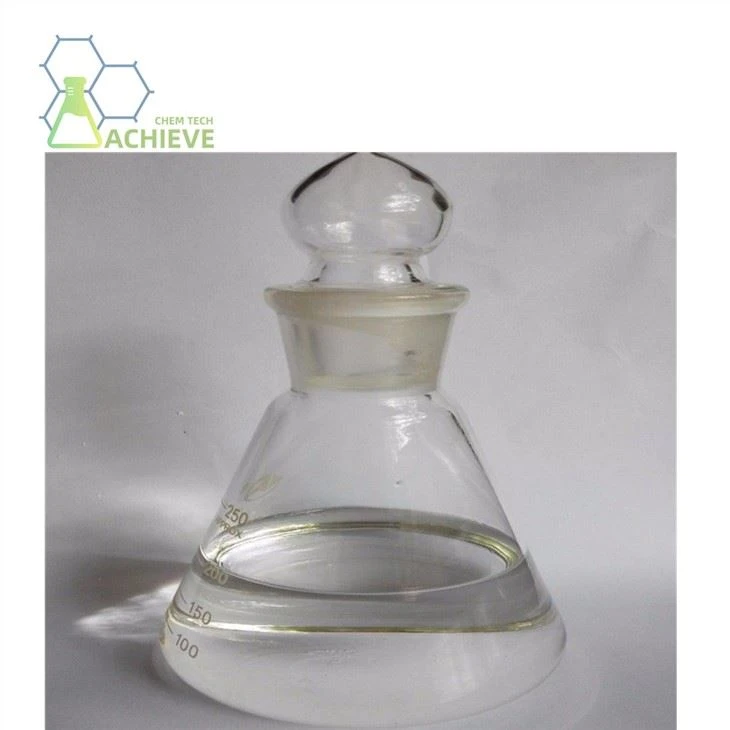


Shaanxi BLOOM Tech Co., Ltd. is one of the most experienced manufacturers and suppliers of isoquinoline cas 119-65-3 in China. Welcome to wholesale bulk high quality isoquinoline cas 119-65-3 for sale here from our factory. Good service and reasonable price are available.
Isoquinoline, also known as benzopyridine, is a colorless crystal that is miscible with various organic solvents and soluble in dilute acids; It has water absorption and is more alkaline than quinoline; It smells like anise oil and anise ether. The isomers of quinoline are usually colorless plate-like crystals or liquids that can evaporate with water vapor. After storage, the color turns yellow. N can undergo acylation and alkylation reactions, and its methyl iodide has a melting point of 159 ℃. Electrophilic substitution occurs at 5 or 8 positions. Nucleophilic substitution occurs at position 1. Easy to undergo redox reactions. It exists in coal tar and can be synthesized by Bischler Napierski or Pomeranz Frisch reaction. Some important alkaloids contain the ring of this substance.

|
Chemical Formula |
C9H7N |
|
Exact Mass |
129 |
|
Molecular Weight |
129 |
|
m/z |
129 (100.0%), 130 (9.7%) |
|
Elemental Analysis |
C, 83.69; H, 5.46; N, 10.84 |
 |
 |

Isoquinoline is an organic compound with a unique chemical structure, which has a wide and diverse range of applications. The following is a detailed overview of its use:
This compound and its derivatives have important application value in the field of medicine. Many of these drugs have been developed and used to treat various diseases, including but not limited to:
- Antitumor drugs: Some derivatives of this substance have anti-tumor activity and can be used for the treatment of cancer. They inhibit the development of tumors by interfering with the growth and division processes of tumor cells.
- Antibacterial drugs: Some of these drugs have antibacterial effects and can be used to treat infections caused by bacteria. They kill or inhibit bacterial growth by disrupting their cellular structure or suppressing their metabolic processes.
- Central nervous system drugs: These drugs can also act on the central nervous system to regulate neural transmission processes, thereby treating certain neurological disorders such as anxiety and depression.

Pesticide field

In the field of pesticides, this compound and its derivatives are also widely used to prepare compounds with insecticidal, bactericidal, or herbicidal activity. These pesticide products protect crops from pests or pathogens by interfering with their growth and reproduction processes.
The derivatives of this substance can also be used to synthesize dyes with specific colors. These dyes typically have excellent color fastness and stability, and can be used for coloring in fields such as textiles, leather, and paper. It can be used to manufacture drugs and highly efficient pesticides, and can be oxidized to produce pyridine carboxylic acid. Its derivatives can be used to manufacture colored films and dyes. Used as an intermediate for synthesizing drugs, dyes, pesticides, and as a stationary phase for gas chromatography. It is also used as a raw material for pharmaceuticals, dyes, insecticides, anion exchange resins, as a preservative for iron, and as a curing agent for soluble phenolic resins.

Other applications

In addition to the above-mentioned fields, this compound and its derivatives can also be used to prepare other organic compounds, such as fragrances, surfactants, fluorescent dyes, etc. These compounds have a wide range of applications in fields such as food, cosmetics, detergents, and optical materials. Additive compounds that can form with metals can be used for quantitative determination of nickel and cadmium, as well as qualitative determination of precious metals. Benzoylation reaction and α - isoquinoline can also be used as catalysts in olefin polymerization. Isoquinoline alkaloids are the largest class of alkaloids in nature, and their main physiological functions include
- Anti inflammatory effect: This alkaloid has strong anti-inflammatory effects and can have anti-inflammatory and bactericidal effects on infections caused by various reasons.
- Antitumor effect. Due to the unique properties of alkaloids, they can inhibit the rapid growth of tumors.
With the continuous advancement of science and technology, the application fields of this compound and its derivatives are also constantly expanding. At present, many researchers are committed to developing new products such as compound based drugs, pesticides, and dyes to meet the needs of different fields.


1. Distillation crystallization method: (the main production method in China) using tar alkali extracted from high-temperature coal tar as raw material, prepared by washing distillation or cooling crystallization. This compound is similar in properties to quinoline, but its content in tar base is lower than quinoline. The crude product extracted from tar alkali is usually crude quinoline, containing 83% quinoline; Isoquinoline 15%; The crude quinoline of 2% methylquinoline can be used as the source of this compound, but generally speaking, after cutting the crude quinoline distillation section at 237.5-239.5 ℃, it is further cut at 243-246 ℃ as the raw material for extracting it. 13-28% of 2-methylquinoline is partially separated from the distillation section in the form of hydrochloric acid compounds; The content of quinoline is about 3.9%. Isoquinoline fraction reacts with 98% sulfuric acid in an alcohol solution at 35% ℃ to form isoquinoline sulfonate. When it cools, isoquinoline sulfonate crystallizes before its homologous sulfonate. After filtration, the compound was recrystallized with 85% ethanol, decomposed with 20% ammonia solution, washed with water for the oil layer, distilled and cut into fractions at 242-243 ℃ to obtain a purity greater than 95%.

2. Bischler Napieralski method: also known as Bischler Pilarski sodium reaction in Chinese. Firstly, phenylethylamine forms amides with carboxylic acids or acyl chlorides, and then loses water under the action of dehydrating agents such as phosphorus pentoxide, phosphorus oxychloride, or phosphorus pentachloride, followed by dehydrogenation to obtain the compound.
3. Pictet Spengler method: Similar to the process in method 2, carboxylic acids or acyl chlorides are used to generate amides, which are then dehydrated. In this method, aldehydes are directly used to form double bonds with amino groups.
4. Pomeranz Frisch method: Chinese name Pomeranz Frisch reaction, which uses the condensation reaction of amino and aldehyde groups and the dealcoholization reaction of aldehyde to complete the ring closure.
5. Transition metal catalyzed synthesis of isoquinoline is widely used in scientific research and fine chemical engineering.
What are the biological activities of these compounds?
Antibacterial effect
This type of derivative has significant antibacterial effects and is one of the main directions for the development of modern new antibacterial drugs. Research has shown that certain compounds of this type have inhibitory effects on Gram positive bacteria and fungi. For example, alkaloids such as berberine, jatrorrhizine, palmatine, and berberine extracted from Coptis chinensis have better inhibitory effects on Gram positive bacteria. In addition, a tetrahydroisoquinoline compound exhibits significant antibacterial activity against five fungi, including Candida albicans.
Effects on the cardiovascular system
The effects of these compounds on the cardiovascular system are also complex. Some studies have shown that they have antiarrhythmic effects and can affect the electrophysiological activity of the heart, thereby regulating heart rate and rhythm. For example, berberine (berberine) has been found to have dose-dependent excitatory or inhibitory effects on the heart and anti arrhythmic effects.
Antitumor activity
These compounds also have good anti-cancer effects and are currently a hot research topic for scientists both domestically and internationally. Isoquinoline compounds may become potential anti-cancer drugs by affecting the growth, division, and apoptosis of tumor cells.
Other biological activities
In addition to the above-mentioned biological activities, these compounds also have various biological activities such as analgesia, regulation of immune function, and antiplatelet aggregation. These activities make these compounds potentially valuable for drug development.
What are the effects of this compound on soil and plants?
The synthesis, transportation, and storage of isoquinoline alkaloids in plants are closely related to the cellular biological processes of plants. Research has shown that these alkaloids are synthesized in specific cell types of plants and accumulate in specific locations, such as milk ducts and sieve tubes. These alkaloids have important physiological functions in plants, including various pharmacological effects such as anti-tumor, anti-inflammatory, and antiviral.
Pyridine alkaloids, as a complex compound in chemical ecology, have a protective effect on plants. This type of alkaloid is not a single source alkaloid like this type of alkaloid, but has multiple sources.
Studies have shown that berberine (BBR), as a type of alkaloid, is related to its degradation in soil water and its impact on bacterial diversity. BBR degrades in soil water and remains stable in tap water, river water, and aquaculture water. This degradation is closely related to the enrichment of methyl isoprene, and methylenetetrahydroisoquinoline N-methyltransferase is a key enzyme in the BBR degradation pathway.
Berberine (BBR), as a traditional Chinese medicine used for intestinal infections, has been applied as a plant insecticide for the prevention of fungal diseases in recent years. This study provides new insights into the degradation of BBR in the environment, laying the foundation for its application as a plant pesticide.
The degradation of BBR is related to the influence of bacterial diversity in soil, indicating that this type of alkaloid may have an impact on the structure and function of soil microbial communities.
Hot Tags: isoquinoline cas 119-65-3, suppliers, manufacturers, factory, wholesale, buy, price, bulk, for sale, 1 Butyl 3 Methylimidazolium Tetrafluoroborate, epinephrine powder, 1 3 dimethylpentylamine hydrochloride, Pravadoline, 3 DiMethylaMino 1 4 Methoxyphenyl prop 2 en 1 one CAS 18096 70 3, Scopolamine Butylbromide